|
Welcome to rascott.com
This is a
personal site that reflects my interests in news,
current affairs, aviation and travel.
email me:
robert@rascott.com
Home
Up
Now In Dubai:
Scott
Consulting
Photo Albums
My photographs have been moved off this site and are now stored on Picasa. They
were simply taking up too much space on my web host.
Please use
this link to see my list of photo albums.
Some
Useful links:
Information:
World Time
Clock
Exchange Rates
Journalism:
ForeignPolicy
Nationsonline.org
Project Syndicate
Amnesty International
Reporters w/o borders
The Guardian
BBC World News
CNN Asia
Bangkok Post
Daylife.com - news
Gulf News
Arabian Business
World News
WSJ - Asia
SCMP
Good causes:
Sister
Joan - Bangkok
Regional Info:
BKK Magazine
HK Magazine
In
Singapore Magazine
TimeOut Dubai
Back in the UK:
Newton Ferrers
And for fun:
Lin Ping live panda tv
EarthCam
History
BBC Archive
National Media
Museum
The British Library
Imperial War Museum
There are many other links on my
AOB blog page.
| |
|
Leveson's solutions may not be worth the cost
30 November
2012
It was a 16 months
of enquiry. There were 86 days of public hearings. There are far too many
suits and silks that have been employed on a full time basis.
Lord Justice
Leveson's led a public inquiry into "the culture, practices and ethics of
the press". His inquiry was set up by David Cameron and Nick Clegg in the
wake of the revelation that the mobile phone belonging to the missing
schoolgirl Milly Dowler had been hacked by the News of the World. At times
the inquiry appeared to become a celebrity shoot for Hello magazine giving
too many celebrities the opportunity to bemoan their loss of privacy - the
same people who try to get as much media publicity as possible. It is not an
easy line to find let alone stay on the right side of.
Just how much did
the Leveson report cost?
And what did we
get? 2,000 pages for a start. So Leveson learned plenty about writing but
not a lot about sub-editing. In summary he said that:
A statutory body
such as Ofcom should take responsibility for monitoring an overhauled Press
Complaints Commission.
The Press
Complaints commission has failed.
Leveson is not
seeking new legislation to control the press.He wants a robust independent
regulator of the press; this would be a self-regulatory system that the
press would have to sign up to. This new board would not have the power to
prevent publication but would be able to issue fines fro breaches of its
code. The board could also request a published correction or an apology.
This is really the
press complaints commission but with teeth.
He said that
politicians' conduct with the press has not been in the public interest.
That more transparency is needed about politician and press meetings,
contacts and frequency of contact.
Leveson was not
especially harsh on News International - so the big news there is that no
one else has resigned!
The proposal is
designed to reassure the public that newspapers are subject to an effective
and independent regulator to prevent a repetition of phone hacking or other
scandals. Leveson said that his proposed new law would enshrine "for the
first time" a "legal duty on the government to protect the freedom of the
press" – an attempt to provide a US-style "first amendment" provision in the
UK for the first time.
"There have been too many times when, chasing the story, parts of the press
have acted as if its own code, which it wrote, simply did not exist. This
has caused real hardship and, on occasion, wreaked havoc with the lives of
innocent people whose rights and liberties have been disdained," the judge
writes.
Leveson says people like the McCanns and the parents of Milly Dowler had
"devastating" experiences at the hands of the press, and that parts of the
industry viewed celebrities as little more than "fair game".
The judge treads very carefully when it comes to discussing relations
between owners, editors and politicians. But he says that "over the last
30-35 years and probably much longer" politicians of the government and
official opposition have "had or developed too close a relationship with the
press in a way which has not been in the public interest".
He adds that frontbenchers in government and opposition should disclose
their meetings with "executive decision-makers of the press" and disclose
"by way of general estimate" basic information about "the frequency and
density of other communications" – such as correspondence, phone, text and
email.
This could be very
hard to implement and to review since off the record briefings and leaks are
a part of modern journalism.
The politicians
appear confused : Nick Clegg made a separate statement in the Commons
setting out the Lib Dem response to the Leveson report. This is not the same
as PM Cameron's view.
Cameron has come
out against statutory underpining of a new regulatory system (the key
Leveson recommendation). He did not rule it out entirely, but as he went on,
it became clearer and clearer that he would not accept this.
Cameron suggested he was endorsing the main thrust of the Leveson
recommendations. But he did not fool his backbenchers. Many of them
congratulated him for ruling out statute.
Nick Clegg says he
agrees with much of what Cameron says. There are two big liberal principles
at stake: protecting a "raucous" press; and ensuring the weak and vulnerable
are protected from the press.
Clegg says he believes the report's core proposals - new regulation
underpined by statute - is workable. He always said he would support the
Leveson proposals if they were workable. These ones are.
But he has some concerns about giving Ofcom the new scrutiny role. Ofcom is
already very powerful, he said. If not Ofcom then who?
Clegg says he has thought deeply about using legislation. As a liberal, he
has concerns. But Leveson has looked at this and concluded that using law is
the only was of ensuring this works. This is not statutory regulation of the
press, he says. It is not "illiberal state regulation".
Clegg says the press does not operate in a vacuum. It has to abide by the
law. He agrees with the recommendation about enshrining freedom of the press
in law.
The worst thing he said would be to do nothing. For once Clegg made some
sense.
Key will be
keeping policians away from meddling in the media; many of the problems
discussed with Leveson have been due to the press being too cosy with
politicians and with the police force.
Yet if the police
had done their job properly and if journalists had refused to work in an
unethical and illegal way, no additional regulation would be necessary.
Really what Leveson is arguing would ideally not be necessary.
But Leveson is
still talking old media when old media is now confronted by new media.
Country specific media regulation really does not work. You can read about a
contempt of court ruling in the UK, the Google a related name and the
restricted identity is everywhere – in the image results, in dozens,
hundreds, maybe thousands of articles, and beyond that discussed on maybe
even millions of social media pages. Gossip cannot be easily calmed. Lord
McAlpine is suing half of Twitter on the basis that retweets of the BBC's
error are each worth £5 of damage. He could become a very wealthy man.
Leveson has talked
of the internet as "the elephant in the room". He then seems to ignore the
elephant. In many ways Leveson is a large vote of confidence in the power of
the press and its continuing influence over the tenor of the national
conversation.
The Guardian noted thath "there is an interesting passage in the evidence
given to Leveson by lawyer Graham Shear, who describes the difficulty of
controlling rumour and innuendo online. Leveson asks him if he has spoken to
"internet service providers". Shear says he has, but that as Google has no
servers in the UK "you seek to persuade them". Twitter he says "is more
difficult". So effectively the two most powerful platforms for news (and
gossip) dissemination in the world are already outside jurisdiction."
The free press of the 21st century consists of the distributed social
platforms, WordPress blogging software, Huffington Post and ProPublica,
twitter, zenjournalist; the free press has gone way beyond the Daily Mirrors
and Mails. The ability of small units of journalists to produce big stories
is now established and is unlikely to change and domestic regulation of the
press is already at odds with some of the freer aspects of the internet (as
with contempt law).
None of this is to say that those who are violated by intrusion should not
have suitable redress, or that anyone who operates outside the law should
necessarily be surprised if they are arrested. But it is clear that the
issues are wider than Leveson's rather narrow remit.
I do not have a
solution; other than a) common decency and b) existing laws that protect
privacy.
Myanmar's
capital ghost town
28 November
2012 The Financial Times
At Naypyidaw’s international airport, members of staff in stylish uniforms
are at their posts behind ranks of check-in counters. The large departure
hall is brightly lit and the air temperature pleasantly cooled. Two pilots
and a glamorous young air hostess in traditional Burmese dress breeze across
the polished marble floor of a terminal that would grace any European
capital.
The only thing missing in this palace of modernity is passengers.
The airport was completed last December on the edge of a ghostly city that
had itself not formally existed until November of 2005. After several years
of construction, the generals who then ran Myanmar announced without warning
that they had built a new capital in the interior of the country 200 miles
north of Yangon. Government ministries were to relocate immediately.
Naypyidaw’s airport, designed by the same company behind Singapore’s Changi,
can handle up to 3.5m passengers a year. On a recent morning, however, there
were just 11 people checking in for one of three departures. The flight to
Yangon, operated by FMI Air Charter, has only been running since September.
Most government officials still drive the five hours between the new capital
and Yangon.
Myanmar’s version of Brasilia was the parting gift of Than Shwe, the “senior
general” who headed the junta for nearly two decades until 2011. Last March,
he retired, ceding power to a government elected under a new constitution
that, while designed to preserve military authority, has triggered a
remarkably swift democratic transition. Censorship has been lifted,
political prisoners released and a new parliament opened.
In a sign of diplomatic rapprochement with the west, Barack Obama earlier
this month became the first US president to visit Myanmar, though he stopped
short of going to Naypyidaw, the Pharaonic legacy of the military junta.
U Soe Thane, industry minister, dismisses any suggestion that the capital
could move back to Yangon now that the generals have departed. “This will be
here for another hundred years,” he says. “This is our Washington DC.”
The decision to found Naypyidaw is in the tradition of Burmese kings who
regularly shifted capitals, often on the suggestion of astrologers. King
Mindon founded Mandalay in 1857 to fulfil a Buddhist prophecy. General Than
Shwe too sought to earn Buddhist “merit” – good deeds that carry over into
the next life – through the construction in Naypyidaw of a giant pagoda to
rival the ancient Shwedagon pagoda in Yangon.
Naypyidaw, whose name means “royal city in the sun”, is supposedly home to
1m people, although few of them are in evidence along the empty highways,
some of them 10 lanes wide. Illuminated fountains in the shape of giant
roses and lotus flowers stand in silent watch over roundabouts almost
entirely devoid of traffic. A few sweepers traipse across a highway, more of
a runway in scale, under the blazing heat. Colour-coded buildings in
Disneyesque design are visible through the lush undergrowth.
“However much you’ve been told about it, no one is prepared for the
strangeness of this city,” says one foreigner who travels to Naypyidaw
regularly.
In time, the new capital, located along the road to Mandalay, could yet
become the diplomatic and transport hub of a country many now expect to grow
rapidly as years of western economic sanctions come to an end.
In 2013, it will host the 27th Southeast Asian Games. The following year, it
will welcome leaders of the Association of Southeast Asian Nations when
Myanmar chairs a summit that should seal its transition from pariah nation
to newest member of the international community. The Bangladeshi embassy has
already shifted to Naypyidaw, though most ambassadors are still resisting a
move to the sterile grandeur of the new capital.
Against the odds, Gen Than Shwe’s fantasy is also becoming a seat of
genuine, if fledgling, democracy. Naypyidaw’s parliament, a building that
looks like a massive tiered cake in yellow frosting, has witnessed some
cut-and-thrust debates and the passage of progressive laws.
On Friday, Aung San Suu Kyi, now free and an elected parliamentarian, sat
amid the ranks of 664 MPs for the closing session of parliament. To the
right of the massive chamber, the military MPs who are guaranteed 25 per
cent of seats under the constitution formed a sea of green.
“We have lacked parliamentary experience for many years,” says U Hla Myint
Oo, chairman of the parliamentary international relations committee.
“Everything is new for us.” While under the military there was no
discussion, “now we have that chance”, he says.
Parliament is scrutinising more than 400 existing laws, some of which,
including the penal code, date back to British colonial times. MPs have
enacted a new foreign direct investment law and impeached all nine judges of
the constitutional court. The speaker of the house, Shwe Mann, has become a
powerful political figure in his own right as parliament flexes its
democratic muscles.
Soe Thane, a vice-admiral who once ran the navy, says the entire tenor of
the government has changed since the military days. “We have to move fast so
people can see a tangible democratic dividend,” he says.
Asked about the vast new capital, isolated geographically and inhuman in
proportions, Soe Thane says: “Military governments were thinking about
security.” Then he chuckles at the novelty of it. “Politicians are for the
people.”
English cricket's Everest beckons for Kevin Pietersen and Alastair Cook
27 November 2012 The Guardian
This is
interesting because the commentary dicusses at some length the remarkable
cricket career of Walter Hammond. Ronald Mason's biography of Hammond was
one of the first cricket books that my Dad gave me to read. I have always
wished that I could have seen Hammond bat; every report talks of his
elegance and timimg.
Anyway - well
done the the Guardian - at the start of a week when a 72 year old English
record could be broken.
"It is one of the oldest and most incongruous records in Test cricket. It
has stood for 72 years and in that time it has been approached, equalled,
but never surpassed. Give it another week or two. In Mumbai, Alastair Cook
and Kevin Pietersen, tortoise and hare, roundhead and cavalier, drew level
with the illustrious trio of Walter Hammond, Colin Cowdrey and Geoffrey
Boycott on 22 Test centuries. There were just 11 balls between their feats,
a short stretch of rope between two mountaineers. Each did it in suitable
style, Cook with a crisp drive for four through cover, and Pietersen with a
reverse-sweep to the boundary at third man. It seemed so easy, so
inevitable, that you could almost forget that English fans have waited for
three decades for it to happen – Boycott's final Test century was scored in
Delhi, at the Feroz Shah Kotla, back in December 1981.
In all the excitement of England's extraordinary win, the achievement was a
little lost. No doubt the celebrations will be renewed when one or the other
of them does what no English batsman has ever been able to and scores a
23rd. The rest of the world must look on in wonder, not through awe but
amusement. 22 Test centuries, after all, is a trifle in comparison to Sachin
Tendulkar's tally of 51. And he is only one of 22 men who have surpassed it,
along with two Sri Lankans, two South Africans, three Pakistanis, four West
Indians, four Indians and seven – name them, no peeking – Australians.
Looked at like that, this feels a little like celebrating conquering Ben
Nevis when the rest of the world is off tackling Everest.
Still, Hammond's total was too many for Andrew Strauss (21 Test centuries),
whose attempt on it was cut short by the strains of captaincy, Graham Gooch
(20) lost three years because of his lamentable decision to tour South
Africa, Len Hutton (19) and Denis Compton (17) both lost six years to the
second world war, David Gower (18) was forced to declare early by the whims
of the selectors, and ill health hobbled Michael Vaughan (18) and Ken
Barrington (20). Cook and Pietersen then, are both on the edge not just of
greatness but of being the greatest of English Test batsmen.
Quantity, of course, is only part of the measure. You might find a few folk
between the River Tees and River Don who reckon that Boycott was the best
that England ever had, but the man himself would never be so presumptuous,
or, to be blunt, ignorant. He has always deferred to Hutton, Hammond and
Jack Hobbs. Similarly, there will surely be a few old fellows in the
pavilion at Lord's who want to make a case for Cowdrey, epitome of the
"spirit of cricket" as he supposedly was. But neither would really be in the
reckoning for the title of the best batsman England has had. For a start,
their success owed a lot to sheer longevity: Boycott played 108 Tests,
Cowdrey 114.
Pietersen has played 90, Cook 85. That last, as it happens, is exactly the
same number as Hammond had. And while he now shares his plinth with four
other men, it is he, of them all, who should be seen as the greatest England
has had, measure for measure, and the man that Cook and Pietersen are about
to pass. And yet it has been Hammond's fate to be just a touch overlooked
when such discussions about the best-ever break out. Despite those 22
centuries and his average, 58.45, when Wisden held its poll to decide on the
five finest cricketers of the 20th century, it was Hobbs who was chosen from
among the Englishmen. He got 30 votes, Hammond only 18. That left him
eighth, behind Dennis Lillee and Frank Worrell, as well as the famous five.
Hobbs was the Master, a man with all the shots, but he still fits into a
tradition of fine English openers. But we've never had another quite like
Hammond.
If he has been a little overlooked, it is because Hammond is Test cricket's
Salieri. In the 1928-29 Ashes, he scored a record number of runs in a
series, 905, with two double centuries and then two hundreds in the same
match, and was acclaimed as the best batsman on the planet. And then Bradman
happened. In the 1930 Ashes, the Don made 974. For the rest of his career,
Hammond was destined to be only the second-best batsman in the world. "And
he was not," as Alan Gibson put it, "a man content to be second best." How
it must have irked him that he was one of Bradman's two Test wickets, bowled
for 85, even if it was in a match that England won.
In the fourth Test of 1936-37 Ashes, a series in which Australia overturned
a 2-0 lead to win 3-2, England were 148 for three on the fifth morning,
chasing 392 to win. Hammond, not out overnight, was bowled third ball.
England lost. "You wouldn't get the Don out in the first over with the Ashes
at stake," moped George Duckworth afterwards. And this, as Gibson says, was
always Hammond's problem. "It was not enough for him to do well. He had to
do better than Bradman." He never did, but then, who has?
It was Hammond's cross to bear. When he turned amateur in 1938, and became
the England captain, Hammond became so determined to "beat Bradman at his
own colossal game" that he orchestrated a series so crushingly dull that
Neville Cardus remarked that "a new game has been invented, which employs
the implements of cricket."
During the first Test, Hammond admonished Compton when he got out for 102
with the score 487 for five. Hammond's biographer Ronald Mason writes that
"he had told Compton to play himself in again on reaching his century, and
be blowed to pleasure, and excitement and fulfilment of a life's ambition as
they are no excuse for getting out when you have been told to stay in." It
was Compton's first Test ton. In the fifth Test at the Oval, Hammond's
instructions led Hutton to bat interminably onwards to score 364 and had Joe
Hardstaff, over 100 not out, playing out a maiden over from Bradman's own
bowling when the score was 770 for six. This, as much as anything, damaged
his reputation. And in later years, Hammond was remembered by his team-mates
as a moody, truculent man, despite all his talent.
It wasn't always so. The weight of the comparison with Bradman seems to have
crushed his spirit over time. "Hammond's method, when he is allowed to play
as he wishes, shows that he regards fun as the first reason for cricket,"
wrote RC Robertson-Glasgow in 1943. "He is, quite simply, the greatest
cricketer who began playing in the last 20 years." By that, he meant
all-rounder rather than batsman, for Hammond was a fine swing bowler and
superlative slip fielder as well as a batsman. But more than that, Crusoe –
as Robertson-Glasgow was known – was counting those things which cannot be
translated into words, "but belong to the brain and heart. I mean the effect
on a match of his presence alone; the influence on a bowler's feelings of
the sight of Hammond taking guard at about 11.50am, when lunch seemed far
and the boundary near."
The more you read about Hammond, the clearer it becomes that it is Pietersen
who is closer to being his heir rather than Cook, though he will no doubt go
on to outstrip them both. "Hammond never walked to the wicket," said Denzil
Batchelor. "He strode." Mason reckoned that as a batsman Hammond "lorded it
unabashed like an emperor" and that when taking guard there was "a suspicion
of what might be called hostility; the better the opposition the intenser
this became. On rare and special occasions it was reinforced by a flavour of
insolent contempt." The story goes that, after thumping a series of drives
past an energetic young amateur who was darting and diving about at cover in
a fruitless attempt to cut them off, Hammond called out "Don't worry, Sonny,
I won't hit you."
Hammond's batting, wrote Crusoe, was about "strength scientifically applied.
He had a combined power and grace that I have never seen in any other man. I
can't think human agency could do more to a ball. To field to him at cover
point was a sort of ordeal by fire." When he made 240 at Lord's during the
second Ashes Test of 1938, Hammond is said to have given only one chance,
and that so fiercely struck it split the fielder's finger as he attempted
the catch.
Cast in Bradman's considerable shade at the time, Hammond has come to be
completely overshadowed by his rival as the years have passed. If an
Australian batsman was about to beat one of Bradman's records, the brouhaha
would be heard around the world. Hammond does not have so very many records
left and his greatest of all is about to fall. Which is reason enough to
remember him here.
Another Dubai announcement
26 November
2012
The Dubai mega
project announcements are coming thick and fast.
First it was the
Business Bay canal.
Then the Mohammad
Bin Rashid City.
And now a new
entertainment hub in Jebel Ali, featuring five distinct theme parks.
The new complex, approved by His Highness Shaikh Mohammad Bin Rashid Al
Maktoum, Vice-President and Prime Minister of the UAE and Ruler of Dubai,
and announced on Monday night in a statement issued by Dubai Media Office,
will be located at Jebel Ali and feature theme parks based on movies,
animals and fun characters aimed at appealing to all demographics.
It will offer multi-faceted leisure and entertainment facilities and will
cater to both residents and tourists. Meraas Holding will oversee the new
development.
The first phase of the development will be Dubai Adventure Studios, which
was originally announced by Meraas in December 2011. It is set to host
Hollywood brands and will have a range of “adrenalin-challenging rides and
attractions that will be accessible to people of all ages.”
A second park will be named Bollywood Parks, and will focus the immense
global appeal of Indian cinema. Meraas has partnered with several major film
studios in Mumbai to provide content, while a large theatre within the park
is expected to showcase Broadway-style musicals. The theatre will also
become part of Dubai’s annual entertainment calendar.
A water and marine life park will showcase aquatic life, animal encounters
and live shows, besides rides and attractions. A theme park catering to the
need of toddlers, preschoolers and primary school children will also be
built, as will a night safari that will highlight the Arabian desert.
The theme parks will be connected by a district featuring retail and dining
offerings. The first component of the development is expected to be
completed by 2014.
“Meraas has been working with several industry experts to bring together a
powerful mix of components that fulfill the need for a pure
entertainment-based destination,” said Abdulla Ahmad Mohammad Al Habbai,
Chairman of Meraas Holding, who said the new complex will contribute to the
growth of the economy.
Al Ain airshow cancelled with just one week's
notice
24 November
2012
This is so inept
it is embarrassing. Only a week before the opening date the 2012 Al Ain
Aerobatic Show has been postponed until 2013.
Not that you would
know that from the airshow's website which still shows the 2012 dates and
advises how to obtain tickets. The show was meant to take place over the
National Day weekend from 30 November. The date was moved from the
traditional February weekend when the last show was held in 2011.
The National
newspaper reported the cancellation - although as an Abu Dhabi newspaper it
tries to call this a delay...."When asked about the reason for the delay a
spokesperson for the Abu Dhabi Tourism and Culture Authority, the air show's
organising body, said "the authority has embarked on a review of the annual
event aimed at its further enhancement and development".
The scheduling of the event around the holiday was intended to, "give UAE
residents and international visitors the chance to travel to Al Ain for a
long weekend break," said Faisal Al Sheikh, Events Manager at the
Authority."
The 2013 dates have yet to be announced.
I assume i) that
they realised that hosting the event on National Day would clash with other
events and b) that they did not have sufficient commitment from
international display teams. But canceling with just a week to go and
without explanation. Not good enough.
What is the
point of one million fans?
24 November
2012
Emirates actually
issued a press release to announce that it had reached one million
Facebook fans globally.
The airline hyped
"the remarkable traction of Emirates’ Facebook page positions the airline as
one of the most rapidly developing social media players around."
Its a bit
embarrassing really. A social media player - really. A few guys doing some
advertising. There is no interaction.
Emirates has also just launched a Google+ page.
Both social media platforms have been set up to support the airline's
evolution from a travel brand to a global lifestyle brand. Folks it is an
airline. It gets you from A to B, usually via Dubai.
Emirates claims
that it is now one of the most engaged brands, not only in the airline
category but amongst other lifestyle brands.
So let's take a different view and some wise counsel from the folks at
Simpliflying. Their advice: "you can’t be on social media and not engage
your audience. You think the job’s done when you (or your agency) create
that Facebook page with a fancy cover photo or even a Twitter profile to put
up a show of being social-savvy. It’s not."
Simpliflyings view is that "social media is designed for conversations, not
mindless advertisements and “closed” Facebook walls/timelines."
They point out
that some airlines (hello Emirates) still "follow the traditional
advertising ethos of the Stone Age. You still think your brand is owned by
you. That the customer should have no say in your brand and that you can
feed him advertisements day after day in the hope that he/she generously
channels some of his/her hard-earned money towards you."
So here are
Simpliflying's basic rules of being on social media.
"If you’re on
social media and have a Facebook or a Twitter page, your audience already
expects you to engage with them. If you’re not prepared for a two-way
conversation, don’t come here. You won’t be welcome.
Creating a Facebook page and stocking it with a million fans, but closing
the wall to fan posts is like releasing a movie in a theater and selling
tickets to it but not letting people in for the show. Guess what your
audience feels like?
(Cannot imagine who they are referring to!!)
You cannot control social media. Do not waste your time trying to. Most
audiences appreciate a brand that is attentive to its audiences on social
media. Blocking negative sentiment doesn’t create positive sentiment for
you. A genuine effort to engage your audience will take you places.
We know you cannot reply to everyone and everything. We don’t expect you to.
But the least you can do is listen. Don’t have a “dead” Facebook page that
is full of only push marketing materials. Make us feel that there are humans
running the brand.
Don’t ignore the flares that could become conflagrations. Information –
especially of the negative sort – spreads very quickly on social media. Be
nimble, be transparent, be aware.
Last and most obvious, if you care only about fan numbers and not your fans,
you will end up with a pile of wasted time and resources. Social media –
even the fun and games part of it – can be leveraged to drive very specific
goals: revenue, loyalty, customer service, crisis management and more. Build
a strategy around them.
You might think this is all an inexact science and nobody really knows what
really works, but the fact is that some basic rules apply here as well. For
example, if you’re being less than prompt in responding to a really
high-tier member of your loyalty program – someone who’s potentially worth
hundreds of thousands of dollars – on your Facebook page, you really need to
rethink not just your Facebook (and social media) strategy but Marketing and
Customer Service as well."
I am sure Emirates
is more than aware of this. But the self praise is tiresome; there is still
a great deal of work to be done.
New city to rise within Dubai
24 November 2012 WAM and The Gulf News
Sometimes I
simply wish that Dubai would complete what has been started before
announcing yet another mega project. We have been down this road before -
huge hype and unfulfilled promises. It is a dangerous path that feels far
too similar to 2006/2007.
A number of
obvious problems - the involvement of Dubai Properties who have zero track
record of successful delivery; the lack of metro access; yet another world's
largest mall - what impact will that have on the retail sector?; how much
will the whole development cost; how will it be funded (forget off plan
purchasing - no one will be that daft again) and when will it be finished.
Maybe not answering those last two questions is a good idea. This may remain
a paper project for a while.
Anyway here is the story from the Gulf News which of course reports it
all without comment or critique:
His Highness Shaikh Mohammad Bin Rashid Al Maktoum, Vice- President and
Prime Minister of the UAE and Ruler of Dubai, has announced the
establishment of a new city within Dubai, setting new benchmarks in urban
development in the region.
Comprising four key components, the new city, which will be called “Mohammad
Bin Rashid City”, will feature world class leisure facilities and provide an
integrated environment for the development of entrepreneurship and
innovation.
The first component focuses on family tourism, and will include a park that
is equipped to receive 35 million visitors and the largest family centre for
leisure and entertainment in the Middle East, Africa Indian subcontinent and
region.
This centre will be set up in collaboration with Universal Studios and
include over 100 hotel facilities to meet the needs of visitors from the
region.
The second component, focusing on retail, will feature the largest shopping
mall in the world. The third component will include the largest area for
arts galleries in Mena.
The fourth component will see the development of a unique area that will
provide an integrated environment for entrepreneurship and innovation in the
region.
Making the announcement, Shaikh Mohammad stressed that, “The current
facilities available in Dubai need to be scaled up in line with the future
ambitions for the city. Therefore we have to start work immediately on the
third phase of development that is aligned to our Vision till 2030 and boost
the UAE economy to enable it to enter a new era in which it will become the
capital of entrepreneurship, arts, culture, and family tourism for over 2
billion people.”
He highlighted that the current accelerated growth rates require Dubai to
start immediate preparations for the future because within just six years,
the number of passengers passing through Dubai airport will reach more than
90 million people.
“Our development initiatives concerning infrastructure in all sectors should
be aligned with this growth rate and we have the determination to reach our
objectives and be the first in the region to achieve them,” Shaikh Mohammad
said.
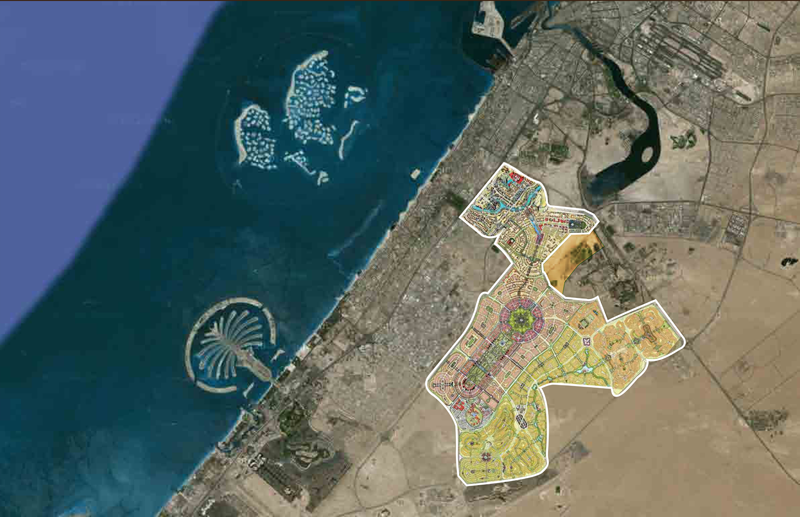
The new city will be located between Emirates Road, Al Khail Road and Shaikh
Zayed Road, and will include Mohammad bin Rashid Gardens Project. It will be
connected to Downtown Dubai and Business Bay through a crossing that will be
named the “Cultural Crossing” which will include art galleries and create
the largest area for arts in the region.
“Mohammad Bin Rashid City” will feature a massive park which will be 30 per
cent bigger than Hyde Park in London. It will be surrounded by the largest
mall in the world called “Mall of the World”, which will be capable of
receiving 80 million visitors a year, and include over 100 hotel facilities
to meet the requirement for accommodation.
“Mall of the World” will be connected to a family entertainment centre which
will be developed in collaboration with Universal Studios International.
This centre will be the largest in the region and is expected to attract 6
million visitors each year.
“Mohammad Bin Rashid City” will be designed keeping in mind global
environmental standards, and will include a specialised area in creativity,
innovation and entrepreneurship.
This area will provide an integrated environment to support entrepreneurship
and attract talents looking for a platform to support their projects and
innovations in various sectors, paving the way for a new economy based on
knowledge, creativity and innovation.
The new city will include residential areas built on green building
standards in terms of energy consumption, waste treatment and conservation
of natural environment.
It will also feature a number of golf courses under well-known international
names. The new city project will be implemented by Dubai Holding and Emaar
Properties and will be marked as the biggest joint venture in real estate
industry regionally.
The tourism sector in Dubai is growing by 13 per cent annually; with growth
in hotel revenue exceeding 22 per cent to reach more than Dh 16 billion. The
hotel occupancy rate was 82 per cent in the year 2011, which was the highest
globally, and the number of visitors to Dubai Mall reached 62 million in
2012, with 25 per cent growth in retail sales in 2011.
In attendance at the announcement were. Shaikh Hamdan Bin Mohammad Bin
Rashid Al Maktoum, Crown Prince of Dubai, and Shaikh Maktoum Bin Mohammad
Bin Rashid Al Maktoum, Deputy Ruler of Dubai, other shaikhs and senior
officials.
Dubai 2020 plans outlined
24 November
2012
Dubai is looking
to host the 2020 world expo and has just completed its presentation to the
International Exhibition Bureau who will determine the host city.
All five of the cities bidding for the event gave 20-minute presentations at
the Paris headquarters of the Organisation for Economic Co-operation and
Development (OECD) on Thursday. Dubai’s presentation was given by Reem Al
Hashemi, Minister of State. The UAE delegation to the IEB was lead by Shaikh
Ahmad Bin Saeed Al Maktoum, Chairman of the Expo 2020 Higher Committee.
Dubai’s theme for 2020 is “Connecting Minds, and Creating the Future.” Al
Hashemi said Dubai’s vision for the World Expo would include four sub-themes
— sustainability, clean energy, smart systems, and opportunity.
Dubai’s bid also focused heavily on the city’s ability to bring in visitors.
According to the presentation, two-thirds of the world’s population lives
within eight hours of Dubai. Twenty-five million visitors are expected to
attend, with 70 per cent of those attending coming from outside the UAE.
The event itself will be held equidistant between Dubai and Abu Dhabi on 438
hectares of land at Jebel Ali adjacent to the proposed new airport, allowing
visitors the choice of arriving in either of the two cities.
The focal point of the exhibition will be a central pavilion called Al Wasl,
which means “The Connection” in Arabic. The plans for the arrangement of
pavilions from visiting nations is inspired by Arabian souqs, or markets.
Smaller buildings will be located near the centre of the exhibition with
larger buildings on the outside. To comply with its sub-theme of mobility,
Dubai said it plans build an underground railway system to connect the Al
Wasl with the outer pavilions.
Mattar Al Tayer, Chairman of the Board and Executive Director of the Roads
and Transport Authority (RTA), who was at the presentation, said Dubai also
has infrastructure plans that include air, sea and land transport. Those
plans include extending the Dubai Metro to the Al Maktoum Airport.
The trouble is
that Al Maktoum airport is not expected to be operational for passengers
until around 2025 so this is a bit of a red herring.
Al Tayer said he hopes any legacy left behind by the World Expo would extend
to more than just business.
“I would like to see it have an impact socially and educationally,” he said.
“Whatever infrastructure will be built, its an investment for the future.”
Sultan Ahmad Bin Sulayem, Chairman of DP World, said he believes Dubai’s
infrastructure plays a large role in improving Dubai’s bid.
“I truly believe Dubai has a better bid, because its a city that has been
invested in already,” he said. “And we have invested. We have an
infrastructure that is unmatched by anyone else today.”
In keeping with the clean energy theme, the proposed exhibition site will
also be covered by a canopy of photovoltaic material, which should produce
enough solar power to cover 50 per cent of the Expo’s electricity needs. At
night, the underside of the canopy will act as a screen for video
presentations and light shows. Thursday’s presentation also included a video
with prominent figures, such as Shaikha Lubna Al Qasimi, UAE Minister for
Foreign Trade, who spoke of the UAE’s position as a business hub, and
Emirates CEO Tim Clark, who spoke of the airline’s plans to double its
service into Africa and its ability to make Dubai accessible to the world.
The surprise event of the show was the appearance of Microsoft Founder Bill
Gates, who is also the founder and co-chair of Bill and Melinda Gates
Foundation, the world’s largest private foundation. Gates spokes of his
visit to the 1964 world’s fair in Seattle, and the effect that it had on
sparking innovation in the Seattle area.
Gates also gave his personal endorsement of Dubai’s bid, saying the city
“would be a great location to host a World Expo”. Al Hashemi said if Dubai
wins its bid for the Expo, it would tentatively be scheduled for October 21
and run until April 21, with the event’s ending coinciding with the being of
the celebration for the UAE’s 50th National Day.
After the Expo is finished, Dubai plans to turn the pavilion grounds into a
research and development centre or a university.
The dates make
sense as they avoid the worst of the summer heat.
Dubai is scheduled to present its completed dossier for its Expo 2020 bid on
December 3, at which time additional information, such as the proposed
budget to build the exhibition centre and upgrade any infrastructure, would
be announced.
This was the third set of presentations to the International Exhibition
Bureau. Two more presentation are scheduled before the announcement of the
winner, which is likely to happen in October 2013. Other cities competing to
host the Expo 2020 include Sao Paulo, Brazil; Ayutthaya, Thailand; Izmir,
Turkey and Ekaterinburg, Russia.
Many at the conference have written off Brazil’s chances of winning their
Expo 2020 bid because the country’s winning bids for the Olympics Games and
FIFA World Cup.
Of the remaining three, Al Tayer said Ekaterinburg and Izmir offer the
toughest competing bids.
Passenger death forces Emirates 777 to divert to
Warsaw
24 November
2012
An Emirates Boeing
777 flying from Dubai to Manchester, England, made an emergency stop in
Warsaw yesterday after a passenger on board the flight became "fatally ill,"
Agence France Presse reports.
"Medics boarded the plane after the emergency landing early this morning,
but were unable to revive the female passenger," Warsaw Chopin Airport
spokesman Przemyslaw Przybylski says to AFP.
"The flight was resumed with the body aboard," he told AFP.
AFP writes Przybylski would not give additional details "on the passenger's
identity or where the body was put" for the remainder of the trip to
Manchester. Usually a body would be put in a quiet part of the first class
cabin. I imagine flying for six hours with a dead body in the cabin is very
disconcerting for everyone.
It was the second such incident involving Emirates during the past two
weeks. On Nov. 9, another Emirates flight – this one traveling (an A380)
from Amsterdam to Dubai – made an emergency landing in Prague because of a
serious medical condition on that flight. The woman who became ill on that
flight died as well.
As always do not
expect to read about this in the Gulf News.
Leeds United's
unfortunate choice of new owners
21 November
2012
GFH Capital, a
wholly owned subsidiary of Bahrain-based Gulf Finance House, appears ready
to complete the takeover of English football team Leeds United. The purchase
price is around gbp50 million.
The problem with
this acquisition is in the first sentence. Gulf Finance House - the ultimate
owner - is a Bahrain based company. A country that has a very unattractive
recent history and where the ruling government seems happy to ignore basic
human rights in order to preserve their rule.
It is expected
that GFH Capital's deputy-CEO David Haigh will join the board and eventually
replace Ken Bates as chairman. Bates has confirmed that he will continue in
the role until the end of the season, at which point he will become
President.
Leeds fans should
also be concerned at that last sentence. Monaco resident and apparent tax
refuguee Bates has not been good for Leeds.
Ken Bates is not a
popular man at Leeds United. Oh no. And fans are desperate to see the back
of him. Maybe any other owner is better than Mr. Bates; but be careful what
you wish for.
It is not just the Bahrain connection that should demand caution; this comes
from Reuters regarding the GFH group:
"The Bank's most recent financial statement, filed earlier in November, says
GFH made a profit of $7.5 million for the nine months ended Sept. 30.
"But the cash flow statement shows that losses from operating activities
were $14 million, and that the bank only achieved a profit by selling $26
million of treasury shares and netting $56 million from a convertible
Islamic finance instrument.
"Auditor KPMG flags a note in the statement footnotes which includes the
caveat that the group's accumulated losses stand at $294 million and that
current contractual obligations exceed its liquid assets."
The new owner is not Abu Dhabi rich or even American business/sports rich.
There is no publicly announced detail about what GFH has paid Bates,
anything from £44 to 50m has been reliably suggested.
As Bates owns 73%
of the club via a company, Outro Ltd, registered in the tax haven of Nevis,
and he is resident in Monaco, and capital gains tax is the UK tax from which
such exiles are exempt, it can be assumed he will not be paying tax on the
gain he has made from selling Leeds United.
Leeds fans, led by the supporters' trust which has maintained its dignity
despite attacks from Bates, will seek more information, and to be treated
like grown-ups in the way the better football clubs do in the 21st century.
They will hope that this takeover, odd as it would all have seemed just a
few years ago, will work out, that it can improve the mood as well as the
fortunes at Elland Road, a grand old football ground which has seen a lot in
its time, and deserves to see better.
Remember that
Leeds is a once great football team - winners of the English first division
(now Premiership) and the European Cup.
The final date for the takeover is December 21st. The timing is important as
it means the new board can help manager Neil Warnock finance a rebuilding
programme during the January transfer window.
I guess this
really is a case of wait and see....but more than that it is wait and watch
with caution.
Catalonia’s
future is for all Spain to decide
18 November
2012
The Financial Times by Cayetana Alvarez de Toledo
Catalonia is once again the subject of curiosity and concern. The
international media takes relish in portraying the heroic battle for
independence waged by a postmodern Iberian Braveheart that is poised to take
a step forward with Sunday’s regional elections. The story is enthralling;
an epic adventure worthy of sympathy and support. There is only one problem:
it is not true.
Catalonia has never been independent. It is not a colony, neither is it a
territory subjected by right of conquest, nor a historic nation stifled by
an authoritarian regime. Catalonia contributed decisively to the making of
Spain. It did so five centuries ago when Aragón, of which Catalonia was an
essential part, united with Castile. And it did so again in 1978, when
Catalans voted massively – with 91 per cent support – for the new democratic
constitution. Since then, Catalans have enjoyed enormous influence over
Spanish politics. Convergència i Unió, the nationalist coalition that now
crusades for independence, has been the main ally of the different
governments of Spain, socialist and liberal-conservative. Every single
regional financing model has been backed by Catalonia, often
enthusiastically.
With all its strengths and weaknesses the Spain of 2012 reflects the aims
and aspirations of the people of Catalonia. Rather than being the passive
subjects in a sad story of overbearing central rule or the victims of fiscal
plundering and political oppression, they have played a leading part in a
process that – despite Spain’s current economic woes – is a historical
achievement. It is a victory of democracy over dictatorship, of reason over
rage, and of compromise over conflict. And they have fared well. Never, in
all history, have Catalans enjoyed more freedom and greater opportunities
than under the broad umbrella of constitutional Spain.
It is wrong to think of Catalonia as a social bloc, a uniform entity.
Beneath the surface, beyond the silences, the street-rallies and the
parliamentary majorities, there are shades and edges. Polls consistently
show that most Catalans feel, in varying proportions, both Catalan and
Spanish. Complex identities are a feature of modern society. Catalan
independence would inevitably entail not just the fragmentation of Spain but
also – and more fundamentally – the fragmentation of Catalonia, provoking
broken social bonds, family infighting and excruciating personal dilemmas.
Forcing people to choose between two identities they have always considered
compatible is grossly unfair. And, as all Europeans know, it can be
dangerous.
Despite nationalist claims to the contrary, Catalonia’s position within
Europe would be undermined by a unilateral declaration of independence as
this would trigger expulsion from the EU. After months breeding false
expectations, the Catalan nationalists have now admitted as much. Yet the
idea of calling an independence referendum in 2014 – on the same day as
Scotland’s – remains on their agenda.
The question is, what European state would tolerate the unilateral and
illegal secession of a part of its territory? Sunday’s regional elections
may well deliver a majority for the separatist parties who will then no
doubt claim a legitimacy to press for a referendum. This is something the
central government will never accept – not least because, under current law,
it cannot. The Spanish constitution, which Catalans have backed, rules out
secession. For Catalonia to be independent, the constitution would have to
be reformed. And that would mean calling a referendum, not just in Catalonia
but in the whole of Spain.
Catalan independence would fundamentally change the make-up of all Spain –
and that is a decision for all Spaniards to take. The rule of law is at
stake.
And so are elementary freedoms precious to post-Franco Spain. Radical
nation-building entails a severe restriction of civil liberties. Pluralism
is curtailed; minorities are silenced; the individual is effaced. Spain
joined the EU when – and because – Spaniards decided to leave all that
behind.
Now self-serving elites are bent on turning the clock back for Catalonia.
Bent on restricting the use of Spanish in schools and public spaces; bent on
enforcing the nationalist credo. Bent on pursuing a path that distances
Catalonia from modernity.
Stronger democratic institutions and procedures, a more competitive and open
economy, and further integration: these are what Catalonia, Spain and Europe
need now. And they are incompatible with nationalism.
In 1945 George Orwell, a famous witness to Catalonian history, defined
nationalism as “the habit of assuming that human beings can be classified as
insects and that whole blocks of millions of people can be confidently
labelled ‘good’ or ‘bad’.” Nationalism is indeed a bad habit, but also
something else: it is the biggest impediment to freedom in Catalonia, the
largest obstacle to prosperity in Spain and the most serious threat to
European unity.
The writer is a Popular party member of the Spanish parliament
We are here...take a look
17 November
2012
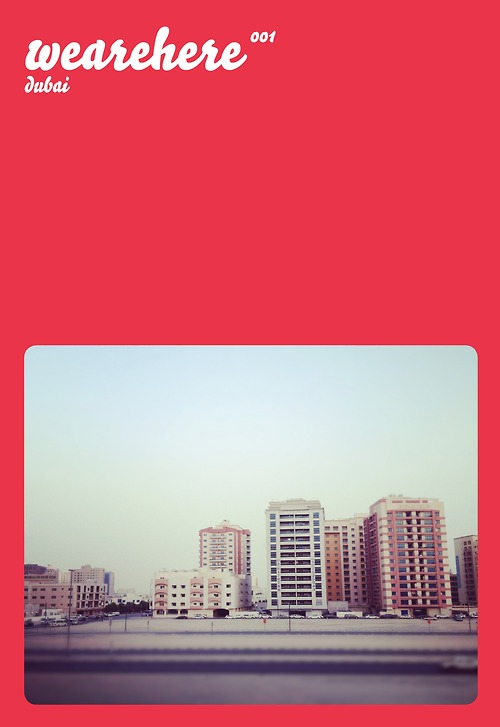
AED45 from Kinokuniya, WH Smith and other Dubai bookstores.
I like the look
and feel of this new magazine. I like the smell of quality ink and paper. I
like the concept of an extended postcard. I like the use of iphone or mobile
photography.
There are teething
issues. Spelling errors. Careless editing. Some questionable use of fonts.
Some iffy writing - the story of cabin crew life is both a poor
generalisation and factually inaccurate. There is repetition of content from
the same publisher such as The Dubai 50. Then there are pieces like The
Dubai Creek and Third Culture Kids which I thoroughly enjoyed.
Where to next:
maybe Kathmandu or Rangoon.
It is different.
It offers an insider's view. It is a tribute to a city from its residents
rather than the usual fly in, write a story and then fly home of most other
travel magazines.
A more detailed
review is shown below from:
gymclassmagazine.com
"If Instagram was to make a customer magazine, it would kinda look like We
Are Here. The new lo-fi travel magazine promises an insider take on cities
and the people who live in them. Free from PR spin, and with all photography
in the magazine taken on iPhones by its contributors, editor Conor Purcell
describes We Are Here as “a long-form postcard” covering the “stories,
people and places that make a city unique.”
Issue one focuses on Dubai.
Up front… if I were to compile a list of ten cities I have no interest in
visiting, Dubai would be right up there. So, can We Are Here warm even me to
Dubai? It’s a seriously tough ask.
Design: First impressions, We Are Here looks and feels like Apartamento…
matt stock, larger than normal body copy, about the same dimensions. I
haven’t spoken with Conor about the magazine, but I’m confident Apartamento
was an inspiration. The philosophy behind We Are Here’s content feels
similar to that of Apartamento, too… honest, real people/real lives.
I like it.
But, I’m gonna be a typography nark for a mo.
Peeps familiar with Gym Class Magazine (the magazine, not just this here
blog) will know I like to play around with body copy… to set body copy in
fonts that others might not consider.
The body copy in Gym Class Magazine No.08 was set in Helvetica Neue 57
Condensed (tracked to 50) in justified columns the depth of an A3 sheet;
while body copy in the new issue (an app, so to be viewed on screen) is 20pt
Platform Light (also tracked out to 50).
My point is this: I like a bit of body copy nonsense. I’m well up for it.
But I question the body copy choice in We Are here. I’m not sure it works
when white out (the serifs are too fine for the thirsty matt stock). In my
opinion, it needs to be tracked less tightly; and (at times) some extra
breathing room in the leading would help my weary eyes.
I love the lo-fi photography concept of We Are Here. Seriously, love it. And
it works really well with the content and the magazine’s ethos. So much so,
I would love to have seen more: more portraits and more
personal/behind-the-curtain insightful stuff.
Words: Dubai comes across as a lonely place… a transient population,
polarised communities, surrounded by wide expanses of nothing. Kinda like an
up-and-coming Vegas.
Here’s an excerpt from an article about Dubai Airport’s Terminal 2:
“The contractors who work in the security industry–greatly enlarged since
2001–all look alike: big, short hair, switched on, desert boots, black or
olive locked backpacks.
The contractors who work in the service industry look fat, dull eyes; they
could be flipping burgers in Wisconsin… the money is better, the monotony
the same.”
My favourite article in the issue is the tongue-in-cheek How To Write About
Dubai, including this editorial design advice:
“The cover of your book must include a picture of a man wearing national
dress. It does not matter if the man is not actually Emirati, but he must
look Emirati. He should either be smiling benignly or shaking hands with a
western man dressed in a suit. Other items that may be included are a
falcon, a skyscraper or a palm tree.”
More please: I can confirm We Are Here hasn’t made me want to travel to
Dubai. But I don’t think enticing me to visit the city it features is the
point of this magazine. After all, this is not a PR-driven publication. And
phew for that.
Conor is a seasoned traveller, Irish born but living in Dubai, and a
self-confessed magazine lover. He’s a co-founder of Wndr Media and the
editor of Open Skies (the Emirates inflight magazine): so he’s well
positioned to put together a magazine like We Are Here and focus the first
issue on a city like Dubai.
I sense Conor really likes Dubai, and wants readers to really like it too…
or at least to understand more about it, to look beyond the cliché. Nothing
wrong with that.
The first issue of We Are Here has me eager for another. I’m especially
excited to see how the magazine develops, and to see where it travels to
next: with an objective eye, but also with a team of trusty iPhone-enabled
insightful locals."
Just like a Vacation - Blue Rodeo in Barcelona and Majorca
14 November
2012
It is Wednesday 14 November and I
am sitting for seven hours at Barcelona Airport wondering what am I doing
here?
There is a general strike and
plenty of protestors in the terminal - all of whom seem to have a whistle to
blow.
Blue Rodeo meanwhile are stranded
for an extra day in Majorca as there flight to Bilbao for the San Sebastian
concert was cancelled.
I managed to change my flight to
the 7am from Palma which meant a 5am departure from Puerto de Alcudia - when
they say "low season" in Majorca they really mean depressingly quiet,
not-a-soul- in-sight season. I drove 20kms this morning before I saw another
car. There was also a huge thunderstorm this morning - it was rain down on
me and we never got as far as after the rain. The lightening was
spectacular.
Concerts - anyone who has seen my
previous notes here will know I try and travel to some of the more
interesting venues - Santa Barbara, Bedford, London and a little farm in
Suffolk.....this year it was Barcelona and Lloseta (Majorca).
Barcelona is a great city;
stunning to walk around; great to eat in and a late night party town. Blue
Rodeo were playing in the heart of the old city centre at the Sidecar
Factory Club - a basement in the corner of the Plaza Reial.
The club has a capacity of about
300 people. There is just one long narrow room, standing only, a long bar
and a small stage area. Like an old wine cellar.
And I mean small. Blue Rodeo were
close to standing on top of eachother.
The show was good - think of a
smaller version of The Borderline in London - much smaller.
The crowd - less than 200. I was
asked about male/female ratios - it was about 60% male. A few
Euro-Canadians; one had traveled from Germany. Another appeared to be a
friend of Russian oligarchs. But mainly an enthusiastic local crowd.
I might be a bit old fashioned
about this but all these mobile phones filming the show are a bit
distracting. It is hard to applaud, dance, hold onto your partner when you
are taking a home video or pictures. And the lighting is going to be poor at
best. And maybe you are concentrating more on the video than on the music
and that is a shame because more than anything these guys are great
musicians.
The set list:
Cynthia
Now and Forever
To Love Somebody
Arizona Dust
What Am I doing here?
One light left in heaven
Heart Like Mine
Photograph
5 Days in May
Dark Angel
Candice
Hasnt hit me yet
You're Everywhere
Somebody touched me
Encores:
Is It You? (Messrs Cuddy and Keelor only)
Til I am Myself Again
Lost Together
Overall the sound was a bit muted maybe in
deference to Greg and recognising the confined space. It was muted enough
that it was too easy to hear chattering voices echoing in the room.
If I sound a little less enthusiastic about
Barcelona it is because the Lloseta venue was that much better. Barcelona
was a good show; which finished about midnight when the streets are still
busy.
While Blue Rodeo went onto Vitoria (a big
success I heard) and Gijon I explored Barcelona and flew to Palma, Majorca;
the flight is about 30 minutes.
Palma is a decent sized city. But Lloseta is a
village just to the west of the centre of the island equidistant between
Palma in the south and Puerto de Alcudia in the north. But this village is
home to a newly built theatre where they can retract all the stalls seating
and create a great concert venue,
This is a long way from the island's tourist
spots.
Another 10pm start - the Spanish like their
late nights - which probably accounts for why so little opens until
afternoon.
Greg did not play in Lloseta; the group had
not been able to bring all their noise abatement (sorry I have no idea of
the technical term) equipment with them on the airplane.
With Greg saving his ears it made for a very
different concert. More like the UK a couple of years ago with Colin Cripps
as a more grizelled version of Luke Doucet.
The crowd was only about 100. Mainly local
with a few happy Irish who recommended Hogans Bar - close to the Hard Rock
Cafe in Palma - if you are ever visiting the island.
Male - female ratio was about 70/30 this time.
Spanish crowds love the sound of the harmonica!
I liked this venue. A big stage. With plenty
of space for everyone and Bob, Mike (two stand out shows from him) and Glenn
all on raised platforms. And terrific acoustics. I don't think I have heard
Jim ever sound that crystal clear in a concert.
So we got a very different show from Barcelona
which made for a great concert. It was such a success that their cds sold
out after the show.
Set list:
Now and Forever
Candice
Rain Down on Me
Just one night
Photograph
Bad Timing
Rise Up (new song)
Arizona Dust
5 Days in May
It Could Happen to You
After the Rain (a blues heavy version)
Head over Heels
One Light left in Heaven (I have never heard this sung so well)
Trust Yourself
Encores:
Til I Am Myself Again
Lost Together
This felt like a much more relaxed show than
Barcelona - there was room for Jim and Colin (even Bazil) to move and the
opportunity to make some noise!
Loved it.
That's about it - if anyone was there please
add to amend or question any of my notes. It's just another 5 hours til my
flight back to Dubai!
UAE's new
internet law leaves too much to interpretation
13 November
2012
Beware - the UAE
has a new internet law. It is drafted about as widely as possible. Which
means it will all come down to the interpretation of the law by the police
and courts. What it does mean is that it could be very easy to cause
unintentional offence and be summonsed under this law.
If taken literally
the new law comes close to banning the internet.
Remember that
internet access in the wealthy Gulf state is already heavily censored by the
UAE’s telecommunications regulator, with material deemed pornographic or
anti-Islamic routinely blocked.
The New Law is
Federal Legal Decree No 5, described as "the most detailed piece of
legislation" ever promulgated in the Gulf on the subject of "cyber crimes".
Ali al-Jarman, a partner in the Dubai law firm Prestige Advocates, enthuses
about it in The National. "This new law has managed to encompass everything
needed to safeguard against the possible violations that can take place in
this rapidly evolving technology," he is quoted as saying. He is not a
friend of the internet.
Gulf News describes the new law point by point; the reality is that the use
of the internet for anything the authorities happen to dislike or disapprove
of can land you in jail.
For example, it is an imprisonable offence to "call for the engagement in or
the promotion of sins" or to "call for demonstrations, marches and similar
activities without a licence being obtained in advance".
Offenders can also be detained for unlimited periods in "a rehabilitation
centre or a treatment facility".
Online political dissent is expressly forbidden. The law forbids the use of
"information technology" to "deride or to damage the reputation or the
stature of the state or any of its institutions, its President, the Vice
President, any of the Rulers of the emirates, their Crown Princes, the
Deputy Rulers, the national flag, the national anthem, the emblem of the
state or any of its symbols," along with anything that might damage "social
peace".
This includes cartoons that pose "threats" to the "highest interests" of the
state.
The Gulf News
provides the English text of the new law and it is far, far reaching.
It is also a crime to provide, via information technology, "inaccurate or
incorrect information" that might harm the "reputation and stature" of the
state.
The law also duplicates other provisions already made in law. The new UAE
law legislates against using the internet for unauthorised trade in
firearms, human trafficking, terrorism, invasion of privacy etc. But
existing laws ought to cover trade in firearms, human trafficking, terrorism
and the like, regardless of whether the internet is involved or not.
There is some
common sense as well: articles of the new decree provide legal protection of
privacy of all information published online, including all data,
information, credit card numbers, bank account numbers and details as well
as all online and electronic payment methods.
But there are some far reaching provisions: the law criminalizes acts by any
one to insult others or to accuse others of acts which would lead to
punishment or contempt by a third party, online or through any other
information technology means. Beware of what you post on facebook or
twitter.
Worryingly - and
this is too far reaching the law imposes punishment for anyone for using an
electronic network or any information technology means for the unwarranted
violation of the privacy of others by eavesdropping, intercepting, recording
or disclosing conversations, communications, audio and video material;
taking photographs of others, creating electronic photos of others,
disclosing, copying or saving them; publishing news, electronic photographs
or photographs or scenes, comments, data and information even if they are
authentic.
Beware also of any charitable activities as the law "stipulates punishments
for any person for creating or running an electronic site to raise, online
or through any information technology means, that may call for the raising
of donations without authorization from the competent authorities."
Skype and other VOIP user are also threatened as the law "further stipulates
penalties of imprisonment on any person using electronic sites or any
information technology means to engage in the unauthorized use of, or
provide unauthorized facilities to others to use, communication services or
audio and video channels."
The new decree also imposes penalties of imprisonment to any person
providing any organisations, bodies, institutions or entities, online or
through any information technology means with misleading, inaccurate or
incorrect information which would damage the interests of the state or
damage its reputation and stature. This could be seen as a further control
on the UAE's media.
Do be careful and sensible.
Emirates half
year profit growth
12 November
2012
Emirates Airline
posted a net profit of Dhs1.7 billion ($464 million) for the first half of
the 2012-13 fiscal year, up 104 per cent from Dhs836 million ($228 million)
at the 30 September 2011 half year.
The airline’s revenue, including other operating income, of Dhs35.4 billion
($9.7 billion) was higher by 17 per cent compared with Dhs30.2 billion ($8.2
billion) recorded last year, which reflected a strong passenger yield based
on constant high fuel prices, the airline said in a statement.
But the trend is
worth noting: Emirates Airline half year profits - 2012: AED1.7
billion, 2011: AED836 million, 2010: AED3.4 billion, 2009: 752million. While
the media is excited about Emirates profit being up 104% in 2012it is still
only 50% of the 2010 half year: encouragingly there is a better net profit
margin 4.8% (2011: 2.7%).
“Emirates remained focused on its growth and global expansion despite
ongoing fluctuating exchange rates and ever lingering high fuel prices which
accounted for 39 per cent of our expenditures, down two percentage points
from last year,” said HH Sheikh Ahmed bin Saeed Al Maktoum, chairman and
CEO, Emirates Airline and Group.
Emirates says its fleet expanded to 183 planes in the first half of the year
— a rise of nearly 16 percent.
The world’s largest order book of A380s, Emirates has launched five new
destinations since 1 April 2012 including Ho Chi Minh City, Barcelona,
Lisbon, Erbil and Washington DC.
Additional new routes to be added during the second half of the fiscal year
include Adelaide, which launched 1 November and the upcoming routes of Lyon,
Phuket, Warsaw and Algiers.
In the first half of the airline’s financial year 2012-13, capacity measured
in Available Seat Kilometres grew by 17.3 per cent and passenger traffic
carried measured in Revenue Passenger Kilometres was up 17.8 per cent.
Emirates has carried 18.7 million passengers since 1 April 2012, up 15.4 per
cent for the same period last year. The volume of cargo uplifted was up by
more than 16 per cent, a significant growth against the market trend.
Emirates Group as a whole posted revenue of Dhs38.2 billion ($10.4 billion)
an increase of 16 per cent over the last year’s performance, which the
company said was weak owing to a rising fuel bill of $6.6 billion.
The Group’s cash position on 30 September 2012 was Dhs 15.2 billion ($4.1
billion), compared to Dhs17.6 billion ($4.8 billion) as of March end 2012.
The Dhs2.4 billion difference in the cash balance is primarily resulting
from a Dhs2.0 billion Sukuk bond repayment in June 2012.
Dnata’s revenue including other operating income is Dhs3.9 billion ($1.1
billion), nine per cent higher compared to Dhs3.6 billion ($ 968 million)
last year.
The Emirates Group said it had increased its overall staff count by more
than eight per cent in over the six month period to almost 68,000 employees.
The Emirates Group net profit was AED 2.1 billion (US $575 million)
representing a year on year increase of 68%.
The group’s revenue and other operating income rose to AED 38.2 billion (US
$10.4 billion), an increase of 16% year on year.
Emirates Airline accounted for the bulk of the group’s net profit (US $464
million on revenue of US $9.7 billion). Dnata contributed net profit of US
$111 million.
During the period covered by the results, the airline took delivery of 13
new wide-body aircraft, including two A380s, ten Boeing 777s and one
freighter
Spanish (no) fly
9 November 2012
The Spanish
economy continue to hurt - and BA's investment in Iberia is feeling the
impact.
British Airways
owner IAG has said that it will axe almost a quarter of Iberia's workforce
and cut capacity to save the loss-making Spanish flag carrier.
Iberia is Europe's leading carrier to Latin America, but it has been
battling against increased competition from low-cost airlines and high-speed
trains, labour disputes and Spain's deep economic crisis. It is bleeding
cash as revenues fail to cover its high operating costs.
IAG, which was formed by the 2011 merger of BA and Iberia, said it hopes the
restructuring plan will improve profits by at least 600 million euros ($764
million) in the next three years.
In addition to the Iberia job cuts, IAG said that it would cut capacity in
the airline's network by 15 percent in 2013, focusing on profitable routes
and downsizing its fleet by 25 aircraft.
The company said that it would reduce Iberia's 21,000-strong workforce by
4,500, discontinue non-profitable parts of its maintenance business and all
of its handling operation outside Madrid unless it could improve profit
margins.
Iberia is almost
invisible at Barcelona which is the domestic and regional hub for Vueling
which IAG partly owns.
Spanish unions had been expecting as many as 7,000 layoffs after Iberia's
creation of low-cost carrier Iberia Express in March to compete with budget
rivals such as Ryanair and easyJet on short and medium-haul routes.
This has resulted in uncertainty over IAG's ability to continue to grow
Iberia Express and may have prompted IAG's decision on Thursday to launch a
bid to buy the rest of low-cost airline Vueling.
IAG bid 7 euros a
share for the 54 percent of Vueling it doesn’t yet own, 28 percent above the
Nov. 7 close. Investors including Farringdon Capital Management SA, the
second-largest, apparently expect 9 or 10 euros, a 66 percent premium.
Vueling also had 407 million euros ($517 million) in cash as of Sept. 30,
and could opt to block the deal by paying a dividend that would make it less
attractive. The Barcelona-based carrier, which has lured passengers with
cheap flights as Spain is gripped by a sovereign-debt crisis, regards IAG’s
interest as “positive,” it said yesterday while stopping short of
recommending the offer.
IAG’s bid needs approval by investors holding at least 90 percent of
Vueling’s voting rights.
It presumably
would also require EU anti-monoply approval.
IAG Chief Executive Officer Willie Walsh said there are no plans for a
merger with Vueling, which would operate independently.
Vueling by the way
is a fairly unpleasant way to travel. Cramped, dirty A320s. 180 seats.
Compare that to JetBlue's in the USA with 154 seats on the same aircraft.
For one hour domestic flights Vueling is adequate for anything longer or a
full flight and it must be quite unpleasant.
And now:
Thai Regional Airlines and City Airways
8 November 2012
I really have
little faith in any of these Thai start-up airlines - they all seem more
about ego and all have failed with different degrees of awfulness.
But here we go
again:
Thai Regional Airlines has announced plans to lease four A320-200s to launch
high frequency domestic operations from Bangkok Suvarnabhumi on December 12.
Their website is here.
The airline to offer nine daily round-trips to Chiang Mai International (CNX)
and eight daily round-trips to Phuket International (HKT) initially with
plans to operate daily international services to Hong Kong Chep Lap Kok
International (HKG) and Seoul Incheon International (ICN) early next year
with a fifth A320-200.
To date the airline has only operated a single Piper PA-31 predominantly on
charter flights and is now using the aircraft for five weekly services from
Suvarnabhumi to Hua Hin (HHQ) with plans to launch a daily service from Hua
Hin to Koh Samui (USM) in November.
City Airways (website
here) has launched initial scheduled charter operations with its single
B737-400 HS-GTA (MSN 24688) on October st with its first flight being
operated between Bangkok Don Mueang International (DMK) and Hong Kong Chep
Lap Kok International (HKG). It plans to operate scheduled charters from
Phuket International (HKT) to Chengdu Shuangliu International (CTU), Hong
Kong Chep Lap Kok International (HKG), Nanning Wuxu International (NNG) and
via Chiang Mai International (CNX) to Ningbo Lishe International (NGB).
One obvious
question - since the Thai authorities effectively pushed Thai Air Asia to
move to Don Muang how is it that Thai Regional is allowed to take slots at
Suvarnabhumi. The Thai Regional schedule to Phuket and Chiang Mai
effectively replaces the old TAA schedule.
U cannot be
serious
8 November 2012
And as the
worst example of airline hype U Airlines takes the lead spot. U Airlines
currently has a single twenty year old A320.
U Airlines was
originally planned as Crystal Thai Airlines. This is not the same as R
Airlines which was originally started as Sunny Airlines. Funny how names
changed when plans change or the money runs out.
But the Bangkok
Post reports that the carrier plans to have a fleet of up to 19 jets
including an A380 double-decker superjumbo that will serve more than 20
domestic and international destinations as far afield as Istanbul.
An A380 - sourced
from where and paid for how?
The plan was
unveiled by founder and president Jiradej Worapiankul. In an interview Mr
Jiradej, who describes himself as a businessman with interests in several
business including cable TV, expressed determination to proceed with the
plan, which would allow U Airlines to cash in on growing air travel.
"I've been
considering an airline for a long time now, and I'm convinced it is a viable
proposition based on the country's open skies policy and growing global
demand for air travel," he said.
Mr Jiradej said
the advent of the Asean Economic Community in 2015 will also open up new
airline opportunities.
U Airlines quietly
took to the skies in September with the inauguration of charter flights from
Bangkok to Yancheng, China, on its sole A320-200 narrow-body jet, followed
by Incheon, South Korea, last month.
Its second
A320-200, also pre-owned and leased, is undergoing a "C" check, whereby the
entire aircraft is inspected at Garuda's aircraft maintenance centre in
Jakarta.
The second
aircraft will start operating sometime this month, enabling the airline to
start its move from charter service alone to scheduled flight frequencies.
U Airlines' plan
calls for 18 jets comprising A320s, A330s and B767-300s plus an A380, all of
them leased by next year.
The airline plans
to offer scheduled domestic service from Bangkok to Chiang Mai and Phuket
next month before spreading its coverage to Hat Yai, Krabi, Narathiwat and
Roi Et.
Its plans include
10 Asian countries _ South Korea (Inchon, Muan, Pusan and Daegu), Japan
(Hiroshima), India (Chennai and Gaya), Mongolia, China (Nanjing, Chongqing,
Shanghai, Ningbo, Chengdu and Yencheng). Indonesia (Jakarta), Malaysia
(Kuala Lumpur), Cambodia, the UAE (Dubai) and Turkey (Istanbul).
The airline did
not provide timetables for the launch of these services.
Mr Jiradej said
the airline, capitalised at 500 million baht, is funded largely from his own
resources.
Executives of the
airline said the "U" in the name stands for the word "you", and the bright
orange colour was chosen to project a modern and vibrant image.
Obama's
acceptance speech in full
8 November 2012
America made
history when it elected its first black President four years ago. It made
history yesterday when President Obama was re-elected for a second term.
Americans made something of a nonsense of pollsters who said the race was
too close to call. Even this modest web site assumed Obama would comfortably
exceed 300 votes in the electoral college.
Obama then
delivered the best speech of his campaign after he had won. Here it is. It
was delivered with power and emotion to an adoring crowd and it is very
good.
"Thank you. Thank
you. Thank you so much.
Tonight, more than 200 years after a former colony won the right to
determine its own destiny, the task of perfecting our union moves forward.
It moves forward because of you. It moves forward because you reaffirmed the
spirit that has triumphed over war and depression, the spirit that has
lifted this country from the depths of despair to the great heights of hope,
the belief that while each of us will pursue our own individual dreams, we
are an American family and we rise or fall together as one nation and as one
people.
Tonight, in this election, you, the American people, reminded us that while
our road has been hard, while our journey has been long, we have picked
ourselves up, we have fought our way back, and we know in our hearts that
for the United States of America the best is yet to come.
I want to thank every American who participated in this election ... whether
you voted for the very first time or waited in line for a very long time.
By the way, we have to fix that. Whether you pounded the pavement or picked
up the phone...
... whether you held an Obama sign or a Romney sign, you made your voice
heard and you made a difference.
I just spoke with Governor Romney and I congratulated him and Paul Ryan on a
hard-fought campaign.
We may have battled fiercely, but it's only because we love this country
deeply and we care so strongly about its future.
From George to Lenore to their son Mitt, the Romney family has chosen to
give back to America through public service and that is the legacy that we
honor and applaud tonight.
In the weeks ahead, I also look forward to sitting down with Governor Romney
to talk about where we can work together to move this country forward.
I want to thank my friend and partner of the last four years, America's
happy warrior, the best vice president anybody could ever hope for, Joe
Biden.
And I wouldn't be the man I am today without the woman who agreed to marry
me 20 years ago.
Let me say this publicly: Michelle, I have never loved you more. I have
never been prouder to watch the rest of America fall in love with you, too,
as our nation's first lady.
Sasha and Malia, before our very eyes you're going up to become two strong,
smart beautiful young women, just like your mom.
And I'm so proud of you guys. But I will say that for now one dog's probably
enough.
To the best campaign team and volunteers in the history of politics...
The best. The best ever. Some of you were new this time around, and some of
you have been at my side since the very beginning.
But all of you are family. No matter what you do or where you go from here,
you will carry the memory of the history we made together and you will have
the life-long appreciation of a grateful president. Thank you for believing
all the way, through every hill, through every valley.
You lifted me up the whole way and I will always be grateful for everything
that you've done and all the incredible work that you put in.
I know that political campaigns can sometimes seem small, even silly. And
that provides plenty of fodder for the cynics that tell us that politics is
nothing more than a contest of egos or the domain of special interests. But
if you ever get the chance to talk to folks who turned out at our rallies
and crowded along a rope line in a high school gym, or saw folks working
late in a campaign office in some tiny county far away from home, you'll
discover something else.
You'll hear the determination in the voice of a young field organizer who's
working his way through college and wants to make sure every child has that
same opportunity.
You'll hear the pride in the voice of a volunteer who's going door to door
because her brother was finally hired when the local auto plant added
another shift.
You'll hear the deep patriotism in the voice of a military spouse whose
working the phones late at night to make sure that no one who fights for
this country ever has to fight for a job or a roof over their head when they
come home.
That's why we do this. That's what politics can be.
That's why elections matter. It's not small, it's big. It's important.
Democracy in a nation of 300 million can be noisy and messy and complicated.
We have our own opinions. Each of us has deeply held beliefs. And when we go
through tough times, when we make big decisions as a country, it necessarily
stirs passions, stirs up controversy.
That won't change after tonight, and it shouldn't. These arguments we have
are a mark of our liberty. We can never forget that as we speak people in
distant nations are risking their lives right now just for a chance to argue
about the issues that matter, the chance to cast their ballots like we did
today.
But despite all our differences, most of us share certain hopes for
America's future. We want our kids to grow up in a country where they have
access to the best schools and the best teachers.
A country that lives up to its legacy as the global leader in technology and
discovery and innovation, with all the good jobs and new businesses that
follow.
We want our children to live in an America that isn't burdened by debt, that
isn't weakened by inequality, that isn't threatened by the destructive power
of a warming planet.
We want to pass on a country that's safe and respected and admired around
the world, a nation that is defended by the strongest military on earth and
the best troops this -- this world has ever known.
But also a country that moves with confidence beyond this time of war, to
shape a peace that is built on the promise of freedom and dignity for every
human being. We believe in a generous America, in a compassionate America,
in a tolerant America, open to the dreams of an immigrant's daughter who
studies in our schools and pledges to our flag.
To the young boy on the south side of Chicago who sees a life beyond the
nearest street corner.
To the furniture worker's child in North Carolina who wants to become a
doctor or a scientist, an engineer or an entrepreneur, a diplomat or even a
president -- that's the future we hope for. That's the vision we share.
That's where we need to go -- forward.
That's where we need to go.
Now, we will disagree, sometimes fiercely, about how to get there. As it has
for more than two centuries, progress will come in fits and starts. It's not
always a straight line. It's not always a smooth path.
By itself, the recognition that we have common hopes and dreams won't end
all the gridlock or solve all our problems or substitute for the painstaking
work of building consensus and making the difficult compromises needed to
move this country forward. But that common bond is where we must begin.
Our economy is recovering. A decade of war is ending. A long campaign is now
over.
And whether I earned your vote or not, I have listened to you, I have
learned from you, and you've made me a better president. And with your
stories and your struggles, I return to the White House more determined and
more inspired than ever about the work there is to do and the future that
lies ahead.
Tonight you voted for action, not politics as usual.
You elected us to focus on your jobs, not ours. And in the coming weeks and
months, I am looking forward to reaching out and working with leaders of
both parties to meet the challenges we can only solve together. Reducing our
deficit. Reforming our tax code. Fixing our immigration system. Freeing
ourselves from foreign oil. We've got more work to do.
But that doesn't mean your work is done. The role of citizen in our
democracy does not end with your vote. America's never been about what can
be done for us. It's about what can be done by us together through the hard
and frustrating, but necessary work of self- government. That's the
principle we were founded on.
This country has more wealth than any nation, but that's not what makes us
rich. We have the most powerful military in history, but that's not what
makes us strong. Our university, our culture are all the envy of the world,
but that's not what keeps the world coming to our shores.
What makes America exceptional are the bonds that hold together the most
diverse nation on earth.
The belief that our destiny is shared; that this country only works when we
accept certain obligations to one another and to future generations. The
freedom which so many Americans have fought for and died for come with
responsibilities as well as rights.
And among those are love and charity and duty and patriotism. That's what
makes America great.
I am hopeful tonight because I've seen the spirit at work in America. I've
seen it in the family business whose owners would rather cut their own pay
than lay off their neighbors, and in the workers who would rather cut back
their hours than see a friend lose a job.
I've seen it in the soldiers who reenlist after losing a limb and in those
SEALs who charged up the stairs into darkness and danger because they knew
there was a buddy behind them watching their back.
I've seen it on the shores of New Jersey and New York, where leaders from
every party and level of government have swept aside their differences to
help a community rebuild from the wreckage of a terrible storm.
And I saw just the other day, in Mentor, Ohio, where a father told the story
of his 8-year-old daughter, whose long battle with leukemia nearly cost
their family everything had it not been for health care reform passing just
a few months before the insurance company was about to stop paying for her
care.
I had an opportunity to not just talk to the father, but meet this
incredible daughter of his. And when he spoke to the crowd listening to that
father's story, every parent in that room had tears in their eyes, because
we knew that little girl could be our own.
And I know that every American wants her future to be just as bright. That's
who we are. That's the country I'm so proud to lead as your president.
And tonight, despite all the hardship we've been through, despite all the
frustrations of Washington, I've never been more hopeful about our future.
I have never been more hopeful about America. And I ask you to sustain that
hope. I'm not talking about blind optimism, the kind of hope that just
ignores the enormity of the tasks ahead or the roadblocks that stand in our
path. I'm not talking about the wishful idealism that allows us to just sit
on the sidelines or shirk from a fight.
I have always believed that hope is that stubborn thing inside us that
insists, despite all the evidence to the contrary, that something better
awaits us so long as we have the courage to keep reaching, to keep working,
to keep fighting.
America, I believe we can build on the progress we've made and continue to
fight for new jobs and new opportunity and new security for the middle
class. I believe we can keep the promise of our founders, the idea that if
you're willing to work hard, it doesn't matter who you are or where you come
from or what you look like or where you love. It doesn't matter whether
you're black or white or Hispanic or Asian or Native American or young or
old or rich or poor, able, disabled, gay or straight, you can make it here
in America if you're willing to try.
I believe we can seize this future together because we are not as divided as
our politics suggests. We're not as cynical as the pundits believe. We are
greater than the sum of our individual ambitions, and we remain more than a
collection of red states and blue states. We are and forever will be the
United States of America.
And together with your help and God's grace we will continue our journey
forward and remind the world just why it is that we live in the greatest
nation on Earth.
Thank you, America. God bless you. God bless these United States."
Election thoughts
6 November 2012
No one will change
the US election system. But lets face it - it sucks.
Billions of
dollars spent. And yet half the eligible voters in the country will not
vote. People have to be dragged out to vote. And the polling stations have
queues that can be hours long.
We have seen lots
of energy from Obama in the last few days of the election. His speech
writers do a great job. He has a natural and engaging delivery. But the
teleprompter is working. Without the teleprompter for instance in a debate
he is more forced and less engaging.
There is talk of
three hour queues at US polling stations. The news networks are saying this
is voter enthusiasm. No one should have to wait three hours to vote. That is
simply incompetence. But why in this era of technology cant we vote online
or even on our mobiles.
The polls have
this election as very close. I do wonder whether they are just talking a
good news story. It may be that Obama ends up winning fairly convincingly.
That said, at the
heart of American pollsters' electoral map lies an awkward little secret.
Presidential elections are increasingly decided by an ever-smaller group of
swing voters within an ever-smaller number of swing states. Nobody really
knows exactly who or where these people are, and that makes for severe
unpredictability. But Republicans are claiming independent voters (neither
Republican nor Democrat registered) are breaking 2-1 for Romney in toss-up
states and that early voting turnout shows the Republican base is more
energised.
I don't buy that.
Do not be surprised if Obama ends up with over 300 of the electoral college
votes. Thirty more than he needs.
But the risk is
that if there is a close finish then the lawyers will take over. Comparisons
are already being made with the 2000 presidential election that saw George
Bush installed as president after numerous recounts, legal challenges, and
myriad balloting irregularities gave rise to claims of widespread fraud and
rigging.
Today's election
is supposed to be better organised. But Americans are a sceptical lot. If
the vote is as close as predicted, and the result is not immediately clear,
claims that sinister forces are at work will not be long in coming.
So Obama will win.
But sadly it feels like a hollow win. He has not delivered on his promises.
Maybe he could not. But then don't promise what you cannot deliver. It hurts
your credibility. Romney might indeed have been good for business. But
for women, for the elderly, for the disenfrachised, for the unemployed, for
the Middle East, then Romney supported by a Republican House of
Representatives would be bad news.
It may be as
simple as this: VA + FL: if Obama wins either, he's in. PA + OH: if
Obama wins both, he's in. IA, CO, NH: if Obama wins all, he's in.
Alliance wars
down under
5 November 2012
- Sydney Morning Herald
Qantas has accused Virgin Australia of making a ‘‘thinly veiled attempt’’ to
convince the competition regulator to reject its proposed alliance with
Middle Eastern airline Emirates.
In a strongly worded rebuttal of Virgin’s claims, Qantas said its rival was
trying to ‘‘minimise Qantas International’s competitive position’’ so that
what it termed the ‘‘formidable Virgin/Singapore Airlines/Etihad/Air New
Zealand alliance’’ would not have to respond as vigorously.
Virgin has claimed in submissions to the competition regulator that a
Qantas-Emirates alliance will make it harder for competitors to challenge
the dominance of Australia’s largest airline on key routes.
But in its latest submission, Qantas has accused Virgin of a ‘‘gross
exaggeration’’ in claiming that it already had a significant fare premium
over Emirates and its other rivals.
Qantas told the regulator that the proposed alliance would not result in the
two airlines having ‘‘the ability to increase fares’’. It argued that its
average fares were ‘‘not materially different’’ than those charged by other
full-service airlines and emphasised that ‘‘we are selling a commodity
product’’.
‘‘The amount of capacity on the relevant routes means pricing needs to be
set to attract the marginal passenger,’’ Qantas said in its submission.
The Australian Competition and Consumer Commission is looking closely at the
impact an alliance between Qantas and Emirates will have on fares.
Qantas has also taken aim at Singapore Airlines’ claims that it should look
at alternative ways to turnaround its international operations.
The Australian airline said it had unsuccessfully attempted over many years
to form an alliance with Singapore Airlines, Cathay Pacific or Malaysia
Airlines to improve its fortunes.
It has also rejected calls from Air New Zealand, which has a large stake in
Virgin, that the Australia-New Zealand route be considered on a stand-alone
basis from the rest of the proposed alliance with Emirates.
Virgin and Singapore Airlines want the proposed deal – should it be granted
anti-trust approval – to be granted for only half the 10 years sought by
Qantas and Emirates.
Under the proposal, Qantas and Emirates will co-operate on passenger and
freight operations on routes to Europe, North Africa, the Middle East, Asia
and New Zealand.
The ACCC has said it intends to make a draft ruling on the proposed
Qantas-Emirates alliance by Christmas, and make a final decision in March.
The alliance stands a better chance of winning approval since the federal
Transport Department gave its blessing and government ministers echoed calls
for the deal to be approved.
Qantas's response to its rivals' claims was lodged before Virgin launched
bids last week to take control of Tiger Australia and West Australian
airline Skywest. The Qantas submission was only made publicly available by
the ACCC on Monday.
Emirates has also lodged a submission echoing similar sentiments to its
proposed alliance partner Qantas.
In a submission, the Executive Council of Australian Jewry has said it wants
the United Arab Emirates government to issue a public guarantee that anyone
traveling via Dubai will not "suffer any adverse consequences whatsoever" if
they have an Israeli stamp in their passport.
The peak body wants the ACCC to make the guarantee from the UAE government a
condition of the regulator granting approval for the Qantas-Emirates
alliance.
Qantas has sought to allay the concerns by assuring the Jewish community
that Israeli passport holders can buy tickets for Emirates flights and
transit Dubai without requiring a visa.
The airline has also given assurances that anyone traveling on a non-Israeli
passport but with a stamp indicating they have visited Israel will be able
to enter Dubai.
HSBC, golf and hypocrisy
4 November 2012
At least I know
where my ridiculous bank fees go. HSBC uses them to pay huge sums as golf
prizes and yes, also in appearance money.
There was much
huffing and puffing at Mission Hills this week when Tiger Woods and Rory
McIlroy decided to miss the HSBC WGC Champions event. Let's start with the
principle that Woods and McIlroy are private contractors and can pick and
choose the events they attend each year.
Tiger Woods cited
fatigue as his reason for missing this week's WGC-HSBC Champions in
Shanghai, an event he decided to skip months ago to partake in corporate
commitments in Asia. I dont mind where he chooses to play, just wish he
could be honest about why.
McIlroy told CNN
he had played before and did not like the course. Sorry, Rory, the
tournament was moved from the Sheshan course in Shanghai to the
Olazabal course at Mission Hills, which incidentally appears to have been in
great condition.
Same problem. Just
say you are having a week with your girlfriend. No need to insult the choice
of golf course.
HSBC Champions
officials were unhappy; "On the one hand we have by far and away the
strongest field in Asia this year, 13 of the top 20 are here. But of course
we are disappointed the top two are not here," HSBC's Giles Morgan said.
"We are looking at a true world golf championship. As a sponsor we can
provide the prize money and all of the wonderful facilities for spectators,
customers, the media etc. But the one thing you need of course is the
players."
He has a point; after all both Woods and McIlroy did play in China this week
but in a one day event on Monday where they shared $3 million for an
exhibition match.
Both could've easily played this week in the WGC event, but here's the
thing: they are not under any obligation to tee it up at this point in the
season. Why? For one, they don't need the world rankings points. Secondly,
ever since the event went under the WGC umbrella in 2009, the words
"appearance fee" disappeared.
For some of the big names in golf the only thing that matters is appearance
money and world rankings points. The tournament may have the latter;
however, when you're coming off a one-day event where you made upwards of $1
million for playing 18 holes, you can see why the decision to skip was an
easy one.
Golf is heading
down the route of made for tv events driven by appearance money; the Turkish
Airlines World Golf Final was one such event with eight of the top players
in the world - including Rory McIlroy and Tiger Woods - competing for a
US$5.2m prize fund. The winner banked US$1.5m in addition to any appearance
money negotiated (for Woods around US$3m).
Such one-off events also promise to become more and more common. With the
world economy continuing to struggle, there are fewer sponsors willing to
come forward and the European Tour is now European in name only.
The first six weeks of the "2013" season - starting on December 6 - will be
in South Africa before the traditional Gulf swing. Events in Singapore,
India and China are now more common than mainland Europe where the collapse
of the Spanish economy has hit hard.
There is now only one regular tournament on English soil. The BMW at
Wentworth - and little prospect of any others.
Rory McIlroy and even Lee Westwood will play increasingly on the US PGA Tour
- and make wheelbarrow-filling sojourns to other parts of the world of
big-money tournaments such as the Turkish Airways World Golf Final.
The European Tour
allows appearance fees to be paid. The US PAG tour (and therefore the WGC)
does not. In theory. But appearance fees are the dirty little secret of the
PGA Tour, and a poorly kept one at that. They have existed pretty much since
Spalding paid Harry Vardon a hefty sum to tour the United Sates playing its
Vardon Flyer golf ball at the beginning of the last century in what was
likely the game's first endorsement deal.
The moral high ground taken by the PGA Tour is shaky at best. There are
plenty of ways to get around the ban on appearance fees.
Woods is a perfect example. He was won -- not played in, but won -- 29
tournaments sponsored by companies with which he had business relationships,
including Buick, American Express, AT&T and Accenture, as well as Deutsche
Bank, the European Tour stop in Dubai and the Arnold Palmer Invitational,
which is run by his former management company, IMG.
Tiger gets -- or in some of these cases, used to get -- $5 million to $8
million a year from those companies as an endorsement partner and then plays
in their tournament. Is that not an appearance fee?
And these kinds of business relationship have grown during the Tiger Woods
Era as non-golf companies -- financial services firms, insurance companies,
pharmaceuticals and other high-end multinationals -- have come to realize
the enormous value of professional golfers.
Think of what golfers bring to the table as business partners. There is a
reason why more golfers have endorsement deals than any other type of
athlete. Really, how many major league baseball players do you see walking
around wearing corporate logos?
Golf is as close to a risk-free investment as you can find in sports
marketing. First off, there are no strikes or lockouts in golf. If you pay,
there will be play. And there are no uniforms in golf so players become
walking billboards.
For the most part -- with the notable exception of the scandal that cost
Woods tens of millions and, to a lesser extent, John Daly -- there are no
bad headlines in golf. The image of the players is as close to squeaky clean
as you can get in sports.
Also, golfers can be used in corporate marketing in a way no other athletes
can. You can play golf with Luke Donald at a corporate outing or in a
pro-am, but you are not going to put on the pads and toss the old pigskin
around with Peyton Manning.
As this message has sunk in, the corporate world has responded. The Royal
Bank of Canada, for example, has a bunch of players under contract --
Donald, Jim Furyk, Matt Kuchar and Ernie Els among them -- and sponsors two
stops on the PGA Tour. Are those appearance fees?
And in addition to these direct financial relationships with players, there
are other ways to get around the appearance fee ban. It is not illegal for a
sponsor to offer a player $100,000 to do a 30-minute walk-through at a
cocktail party the Tuesday before the tournament. And gee, if he happens to
stay and play the event, well that's just a lucky coincidence.
Or what if a corporation makes a hefty donation to a player's foundation?
Might not the player then feel some sort of obligation to play in that
firm's PGA Tour event? Happens. Is that an appearance fee?
The European Tour
allows appearance money, which attracts top players but also cut the overall
purse of the event. The PGA Tour doesn’t allow appearance money (wink, wink,
nod, nod) but the overall purses of the events can be as much as twice as
big as European events.
Meanwhile guess
what? HSBC are paying hefty appearance fees to McIlroy and Woods to play in
Abu Dhabi in January.
Business Bay
canal extension to begin in 2013
3 November 2012 Gulf News
(The Gulf News omits to mention that this will be a traffic nightmare.
Additionally the Marriott Marguis is due to open this month. They will be
less than enthused at having a construction site outside their new hotel for
the next two years.)
The construction of the Business Bay Canal Extension Project which will
extend the canal from Shaikh Zayed Road up to the Arabian Gulf will begin in
the first quarter of next year, a senior official at the Roads and Transport
Authority (RTA) said.
Mattar Al Tayer, Chairman of the Board and Executive Director of the RTA,
recently visited the project site to bring forward the initial steps to the
realisation of the Canal extension project, which has been endorsed by His
Highness Shaikh Mohammad Bin Rashid Al Maktoum, Vice-President and Prime
Minister of the UAE and Ruler of Dubai.
RTA will award the Dh1.5 billion project contracts before the end of 2012 to
enable contractors to begin construction work as early as the first quarter
of 2013.
Al Tayer ordered the project to be prioritised due to the project’s
‘peculiar nature.’
The 2.8-metre canal will pass through populous areas including Shaikh Zayed
Road (before Safa Interchange), then through Safa Park, Al Wasl Road,
Jumeirah 2, and Jumeirah Road, before terminating at the Arabian Gulf.
Its width spans from 80 to 100 metres to allow the navigation of marine
transit means in the canal.
Bridges up to 8.5 metres high will be constructed over the canal on the key
roads intersecting it.
This comprises a six-lane bridge in each direction of Shaikh Zayed Road and
a two-lane bridge in each direction of Al Wasl Road and Jumeirah Road.
Marine transit stations will be constructed throughout the canal to ease
movement of the public, thereby promoting marine and tourist mass transit.
Al Tayer likewise instructed the work team to conduct a comprehensive study
on the traffic movement in the affected areas and to ensure that traffic
will flow smoothly as soon as the project begins next year.
RTA will carry out a number of improvements on the surrounding areas such as
Jumeirah and Al Safa neighbourhoods. Roads alongside the canal will be built
to assist the mobility between those districts.
Designed to be another key tourist landmark in Dubai, the canal will have
facilities for tourists and sports enthusiasts alike.
Tracks dedicated to practising light sports, such as jogging and cycling,
will be constructed along both sides of the Canal. Greens, benches, and
public relaxation areas and other facilities will not only add beauty to the
canal but also give a boost to tourist-oriented projects.
Projected to be completed by early 2015, the priority project is expected to
boost Dubai’s odds in its bid to become the host of the World Expo 2020.
US presidential election: Obama – four more years
4 November 2012
The Guardian Editorial
In Stephen King's remarkable time-travel novel 11.22.63, the central
character, Jake, journeys back from the America of 2011 to the America of
the early 1960s. While he is there, a woman challenges him to tell her one
good thing about the future. "I'll give you two for the price of one," Jake
eventually replies. "The cold war is over and the president is a black man."
The woman's jaw drops. "You're serious?" she stammers in disbelief. "Yes, I
am," Jake replies. The woman ponders this almost inconceivable news from the
future. Finally she asks, very haltingly: "Is he … doing a good job?" Jake
explains that opinions of the president vary but, "If you want mine, he's
doing as well as anyone could expect, given the complexities."
Mr King has surely got Barack Obama's first term about right. The record is
certainly not perfect, but he has done about as well as anyone could
reasonably expect, given that the economy has been in decline, the banks in
crisis, America at war and the Republican party out to destroy him. Leading
America through and out of such crises would be a formidable set of
challenges at the best of times, but they have been made infinitely more
difficult by the Republicans' single-minded commitment to eviscerating the
Obama presidency. At a time when the economic role of government has been
more important than at any time in a generation, the Republicans have been
set on blocking, subverting and dismantling just about every programme that
Mr Obama has promoted. In many cases they have succeeded. It is to Mr
Obama's credit that he has achieved what he has – most notably the historic
reform of healthcare and the economic stimulus package of 2009, their
genuine imperfections rightly overshadowed by the substance of what they
contained in spite of congressional resistance. And since the Republican
recapture of Congress in 2010, US politics has been dominated by people who
do not just despise Mr Obama, but by people who also despise government
itself.
The election of 2012 was never going to be a repeat of the election of 2008.
Four years ago, Americans had the opportunity to repudiate the Bush years –
so uniquely calamitous both at home and abroad – and to make a historic
choice by electing Mr Obama. Even four years ago, never mind when seen from
the Jim Crow era, the 2008 contest was a jaw-dropping, almost redemptive,
American moment. Expectations were incredibly high. Even in the best of
times, it would have been hard to fulfil them. Mr Obama has fallen short of
some important goals. Guantánamo Bay remains open. The Middle East peace
process has got nowhere. Progress on climate change, though not negligible,
has been slow. The Iraq war is over and torture has been ended, but the
conflict in Afghanistan continues, waged increasingly through drone attacks
that solve neither military nor political problems.
Four years later, the 2012 contest may lack the glamour of 2008. But it is
in every way at least as important. Partly, that is because of what a Mitt
Romney victory on Tuesday might mean – the destruction of welfare safety
nets, a free pass for the tax-avoiding rich, indifference to the
environment, the dismantling of healthcare, reactionary moves on women's and
gay rights, and the chance to stuff the supreme court even more solidly with
justices of the anti-government right. More than that, however, it is
because the re-election of Mr Obama would be an act of collective national
seriousness by Americans who believe in good government not no government
and who possess a concern for community that goes beyond material
self-interest. This is America's election, not ours, and some Americans
think the rest of us have no right to an opinion. But our part of the world
is clear that it prefers Mr Obama to have four more years in the White House
and on Tuesday we hope that Americans will use their votes to ensure that he
does.
Blue Rodeo and Friends in Toronto
4 November 2012 By Kerry Doole for
The
Music Express
Glenn Gould Studio, Toronto | October 29, 2012
With Hurricane Sandy raging outside, the state of Canadian roots music may
have been in peril for a moment. If, heaven forbid, the roof had caved in on
The Glenn Gould Studio, we’d have had to imagine that scene without Blue
Rodeo, Great Big Sea, Ron Sexsmith, The Sadies, Whitehorse, Justin Rutledge,
Skydiggers, Oh Susanna, and Cuff The Duke.
Yes, that’s the seriously star-studded lineup of guests who performed Blue
Rodeo classics in this superb celebration of the much-loved veterans.
Coinciding with the release of their huge box set retrospective, Blue Rodeo:
1987-1993 and on the 25th anniversary of the release of their groundbreaking
debut, Outskirts, Blue Rodeo invited this group of their musical (and
personal) pals to join in the fun.
A lucky group of media and industry types and contest winners filled the
intimate and acoustically excellent Glenn Gould Studio for this two hour
concert that confirmed the timeless strength of Blue Rodeo‘s best material.
The band actually backed up many of the guests, then took centrestage with a
handful of their classics to close out the show.
After an eloquent intro to the evening by longtime BR pal Molly Johnson,
Cuff The Duke kicked things off with an extended version of “Five Days In
May,” one not light years away from the original. Oh Susanna dazzled on “Bad
Timing,” assisted by the harmony vocals of Jim Cuddy and Greg Keelor,
followed by Devin Cuddy (Jim’s talented son) leading the group through a
rendition of “Rain Down On Me” that featured a proud dad on harmonies.
Justin Rutledge confirmed he’s the best country-folk crooner we have with
his take on “Falling Down Blue,” accompanied by sparkling guitar work from
BR drummer Glenn Milchem. You might have expected Ron Sexsmith to choose a
ballad, but he delivered a real show highlight by rocking out on “Love And
Understanding,” abetted by fine guitar playing from Cuddy and Colin Cripps.
Whitehorse slowed things down with a dramatic take on “My Dark Angel,” with
Luke Doucet channelling Keelor effectively.
The energy level rose rapidly when Great Big Sea took the stage, joining
forces with Blue Rodeo for a 10-man romp through “Rose Coloured Glasses.”
Next up were The Sadies, in this scribe’s view the best roots-rockers (along
with Blue Rodeo) we have. They delivered big-time on “Palace Of Gold,”
followed by an equally convincing version of “Hasn’t Hit Me Yet” led by Andy
Maize and Josh Finlayson (Skydiggers). Maize admitted his band had been
offered the song before Blue Rodeo recorded it, but couldn’t quite nail it.
They did just that here, though, aided by nice pedal steel from Bob Egan and
Jim Cuddy’s mandolin.
The hits just kept on coming, as Great Big Sea returned to assist Blue Rodeo
on “What Am I Doing Here,” and the headliners then scored on “Try” (Cuddy
can still hit the high notes) and “Til I Am Myself Again.” The night then
moved to a triumphant climax, with The Sadies joining in on a knockout
version of “Diamond Mine.” This scribe’s favourite BR song, it was given
real punch by two drummers (Milchem and Mike Belitsky) plus psychedelic
glory via the guitar work of Dallas and Travis Good. After pointing out that
all the night’s guests had opened shows for Blue Rodeo in the past, Greg
Keelor then thanked them all “for inspiring us.” On cue, the entire cast
then took the stage for a massed finale of “Lost Together,” another
transcendent moment.
It can validly be claimed that no Toronto band has had a bigger influence on
the local music community over the past quarter century than Blue Rodeo.
This night also confirmed no other group can match the peer respect (and
love) they now deservedly receive.
NB: A live recording of this show can be heard on CBC Radio 2 on Thursday
Nov. 8 at 7 p.m.
The EK freighter network
2 November 2012
Have you ever
wondered where EK's freighters fly to; the planes that pilots like to fly as
there is no self-loading freight or bitch-slapping cabin crew to worry
about.
Here ar the
changes for Emirates SkyCargo Winter 2012 Operations.
Emirates SkyCargo Winter 2012/13 is introducing several new services,
including all-Freighter service to Kolkata, Thiruvananthapuram and Hanoi.
Overall service as follows:
NEW Routes
Dubai – Kolkata – Dhaka – Dubai eff 05DEC12
*NEW 1 weekly service
*Overall service to Dhaka is 2 weekly
EK9830 DXB0700 – 1315CCU 77F 3
EK9831 CCU1515 – 1645DAC1845 – 2210DXB 77F 3
Dubai – Thiruvananthapuram – Hong Kong – Dubai eff 06DEC12 1 weekly service
EK9838 DXB1155 – 1725TRV1855 – 0325+1HKG 74Y 4
EK9883 HKG0625 – 1045DXB 74Y 5
Dubai – Taipei – Hanoi – Dubai eff 05DEC12
*NEW 2 weekly service to Hanoi
*Overall service to Taipei increases from 1 to 3 weekly, while service
operates with 777F, instead of Atlas Air 747-400F
EK9893 DXB2105 – 0915+1TPE 77F 6
EK9894 TPE1135 – 1305HAN1505 – 1920DXB 77F 7
EK9895 DXB1425 – 0235+1TPE 77F 3
EK9896 TPE0425 – 0555HAN0755 – 1210DXB 77F 4
Overall services in addition to the new flights above are:
1 weekly 74Y Dubai – Almaty – Hong Kong – Dubai
1 weekly 77F Dubai – Chennai vv
1 weekly 74F Dubai – Dhaka vv (2 weekly 77F and 1 weekly 74Y in Nov 2012)
3 weekly 77F Dubai – Erbil vv
7 weekly 77F Dubai – Hong Kong vv (Plus 3 weekly 74Y)
1 weekly 74Y Dubai – Kabul – Hong Kong – Dubai
1 weekly 74Y Dubai – Kozhikode – Hong Kong – Dubai
1 weekly 77F Dubai – Mumbai vv
1 weekly 77F Dubai – Osaka Kansai – Seoul Incheon – Dubai
3 weekly 77F Dubai – Shanghai Pu Dong vv
4 weekly 77F Dubai – Singapore – Sydney – Hong Kong – Dubai (Service
increases from 2 to 4 weekly)
1 weekly 77F Dubai – Taipei vv (74Y in Nov 2012)
1 weekly 77F Dubai – Tehran vv
3 weekly 74Y Dubai – Amsterdam – Gothenburg – Dubai
1 weekly 74Y Dubai – Cairo – Amsterdam – Dubai
1 weekly 74Y Dubai – Dusseldorf – Frankfurt – Dubai
1 weekly 77F Dubai – Eldoret – Entebbe – Dubai (05NOV12 – 03DEC12 only)
1 weekly 74Y Dubai – Eldoret – Nairobi – Amsterdam – Dubai (77F in Nov 2012)
1 weekly 77F Dubai – Harare – Johannesburg – Dubai
1 weekly 77F Dubai – Johannesburg vv
1 weekly 77F Dubai – Lagos – Accra – Frankfurt – Dubai
1 weekly 74Y Dubai – Lilongwe – Entebbe – Nairobi – Amsterdam – Dubai
1 weekly 77F Dubai – London Heathrow vv
1 weekly 77F Dubai – Lusaka – Johannesburg – Dubai
1 weekly 77F Dubai – Moscow Domodedovo – Frankfurt – Dubai
1 weekly 77F Dubai – Tripoli – Frankfurt – Dubai
1 weekly 74Y Dubai – Zaragoza vv
1 weekly 74Y Dubai – Zaragoza – Bahrain – Dubai
3 weekly 77F Dubai – Frankfurt – Dakar – Sao Paulo Viracopos vv
Operational routing is subject to change, pending on demand.
74Y 747-400 Freighter
77F 777 Freighter
So now you know:
Some pretty exotic routes. If only there were jump seats allowed ! And these
are just the scheduled freighters; you can add in a large amount of ad-hoc
work including the world's most comfortable horse transporters.
It all comes
down to this
2 November 2012
We are just four
days away from the 6 November election in the USA. The polls suggest a very
close finish. The US Presidential election is a strange beast. It is not who
wins the most votes; it is not who is the leader of the party who has the
most seats in parliament.
It is whoever has
the lead in electoral college delegates.
It is possible
that Mr. Romney has a national-level lead but that does not (thankfully)
make him the favourite to win. I still expect Obama to achieve a narrow win
in the race.
The winner-takes-all system assigns a state’s electoral votes to the top
vote-winner in each state. Consequently, the election effectively comes down
to the election outcome in a handful of “swing states” where polls indicate
that neither candidate is decisively ahead.
There are 538
electoral votes in total. So the next president needs to obtain 270 to take
office. According to aggregated polling from RealClearPolitics and the known
political leanings
of a large number of states, Mr. Obama can count on 201 electoral votes from
states that are certain or likely to vote for him. Mr. Romney starts from a
slightly lower base of 191 solid or
likely electoral votes.
Of the remaining
swing states, Mr. Obama holds sustained small polling leads in Michigan,
Pennsylvania, Wisconsin and Nevada, which would give him 253 electoral
votes. Mr Romney has similar advantages in Florida and Virginia (which in
2008 turned Democrat), which would credit him with 235 electoral votes.
Of the remaining
swing states, Colorado and Virginia seem to be straight toss-ups, and the
president holds extremely narrow polling leads in Iowa and New Hampshire.
The final swing state is the most crucial: Ohio, worth 18 electoral votes.
Winning this would probably be enough to take Mr Obama beyond 270 votes and
return him to office for a second term.
Mr. Romney, like
many Republican presidential candidates before him, can probably not afford
to lose Ohio because, for victory, he would then need to to win both tossup
states (Colorado and Virginia), take Iowa and New Hampshire by running down
Mr Obama’s polling lead, and take one other state that is already in Mr.
Obama’s column. Mr. Obama, by contrast, has a more
plausible route to victory without Ohio, for example with victories in Iowa
and Virginia.
With a win in Ohio, though, Mr. Romney’s route to victory is more
straightforward, probably with wins in two other states. Expect Mr Romney
and his team to be spending a lot of time in Ohio over the next few days.
Swing states : and
their Electoral college votes:
Florida
29
Pennsylvania 20
Ohio
18
Michigan
16
North Carolina 15
Virginia
13
Wisconsin
10
Colorado
9
Iowa
6
Nevada
6
New Hampshire 4
It all comes down
to this!
Europe's
leaders need to act fast to avert economic and social disaster
1 November 2012 The Guardian
Europe has a dark history when it comes to unemployment. Before the Wall
Street Crash of 1929 unemployment in Germany was around 5%. By 1930 it was
15%. By 1932 it was 30%. We all know what happened in 1933.
The weaker countries of the eurozone today have yet to reach those levels of
joblessness but the latest data shows they not all that far away. Spain and
Greece both have more than a quarter of the workforce kicking their heels,
with youth unemployment well above 50%. These are staggering and deeply
worrying figures. And they are going to get worse.
When the financial crisis erupted more than five years ago Europe prided
itself that the problem had originated in the deregulated American economy,
and took pride in contrasting its social market economy with the
devil-take-the-hindmost approach favoured on the other side of the Atlantic.
In reality, Europe's banks were loaded up with the derivatives that
collapsed in price when the bubble burst in the US real estate market.
Europe now has a network of zombie banks kept afloat only thanks to the
efforts of the European Central Bank and the network of individual national
banks. A sharp contraction in bank lending has led to weaker activity,
putting pressure on public finances and leading to higher debt levels.
America faced similar pressures but has responded in a quite different way.
The champions of laissez-faire have pulled every lever, tried experimental
policies when conventional approaches have struggled to gain traction, and
made it clear that they will continue intervening until unemployment comes
down to a more acceptable level. A big drive to reduce the US budget deficit
is due to kick in next year but few doubt that the Americans will step back
from the so-called fiscal cliff until recovery is well embedded.
Europe by contrast has played it by the book, with disastrous results. It
has fretted too much about an imaginary inflation threat. It has failed to
comprehend that the sovereign debt problem is the symptom of a banking
crisis. And most bone-headedly of all, it has insisted on sucking even more
demand out of the single-currency area through pro-cyclical austerity
programmes. The co-ordinated nature of these budget cuts has resulted in the
impact on growth and jobs being magnified. Bizarrely, while the allegedly
laissez-faire Americans have been acting like devotees of the social market,
the Europeans have been acting as if Keynes never lived.
So here's the position. Europe is now locked into a double-dip recession
that is affecting the core countries as well as the weak nations on the
periphery. Unemployment is on the rise in both Germany and France; eurozone
joblessness rose for a 17th month in September and the rate is now at 11.6%,
a monetary union record. Growth prospects are being strangled by a
combination of rising unemployment, rock-bottom consumer and business
confidence, and budget cuts. The giant sucking sound is of Europe
disappearing down its own self-imposed deflationary plughole.
Is there an alternative? Of course there is, although it means European
policymakers starting to act like the terrible Anglo-Saxons in Washington.
It means the ECB adopting a much more expansionary monetary policy. It means
delaying co-ordinated fiscal tightening. And it means using the European
Investment Bank as the vehicle for an infrastructure-led stimulus policy.
The question is whether Europe's policymakers have the flexibility and the
imagination to change course. If they haven't, the risk is of deepening
economic distress, the fostering of political extremism and the replacement
of the social market ideal with something far, far nastier.
All Arab states are not the same - the UAE does not deserve to be traduced
1 November 2012
The Independent
by Mishaal Gergawi
Mishaal Gergawi's argument is that the
"western media" (a rather sweeping generalisation) has not made any effort
to understand or investigate the underlying issues in the UAE and he
produces a bullet point summary of what he believes to be the west's
un-nuanced understanding. The article sounds rational and it is interesting
that the Independent has published it. First problem is that the author
talks about "the failure of investigative journalism." The UAE has no
investigative journalists. If the UAE is not transparent in its own
account how can it reasonably expect the western media to have a more
detailed understanding.
This is not about bling and brashness where
the western media is often pointedly critical of the UAE. It is about
freedom of expression and individual rights. I don't detect a biased western
media which Gergawi accuses of "ethical imperialism." They can only report
what they are allowed to know. Or is the issue that the western media should
be doing the job that the local media cannot.
Maybe this is the point of the article -
that the UAE needs to show more transparency and due process for the 64
Emirati detainees.
The worry is that the UAE, as with other
GCC nations is tightening media and social controls. Tom Gara, a journalist
based now in New York, previously in the UAE, tweeted with a link to this
article:
"Apparently because UAE is happy, wealthy and stable, its absurd show trials
are better than other absurd show trials."
Meanwhile in Bahrain the government has
banned all protest gatherings amid continuing violence - this may be
inevitable if there is no intent or commitment to implement any real reform.
By way of background this should be read as
well : Mission to the UAE calls
for access to jailed human rights lawyers from the Arabic Network for
Human Rights Information.
This is the Independent article:
It is tempting to regard the condition of all Arab states as one and the
priorities of all Arab people as identical.
Even when discussing the Gulf, some analysts would like to treat the member
states of the Gulf Co-operation Council (GCC) as uniform. But they are not.
Look at the United Arab Emirates. It is unique in the Arab world in the
sense that it was never meant to be, and its subsequent survival and
flourishing has been nothing short of a miracle. While other Arab nations
have been torn apart by succession crises and bloody feuds, often seeing
them become more regressive, Emiratis have been able to enjoy the fruits of
peace and relative progression.
The UAE has a history of virtually no terrorism or mass dissent. Yet that
quiet is now proving a curse as well as a blessing: Emiratis stand accused
of not responding to the Arab Spring in a way that other states have done
and would like, leading to its anointment as an oppressive regime. This is
ethical imperialism. The narrative widely accepted is that:
- 133 academics and intellectuals (Islamist and secular) publish a petition
calling for universal suffrage and the granting of legislative powers to the
Federal National Council;
- Five individuals (only one of them a signatory) are arrested, put in
solitary confinement, not allowed to meet their lawyers or families, and
charged with insulting the President and other members of the Royal Family
on an online forum;
- They are held without a charge for many months and are finally tried,
found guilty and acquitted by presidential pardon;
- Seven naturalised citizens (of which three were signatories) are stripped
of their citizenship;
- More than 60 Islamists are arrested, tortured, put in solitary
confinement, not allowed to meet their lawyers or families, and are charged
with plotting against the regime and seeking aid from foreign organisations.
But this level of reductionism so much ignores evidence, nuance and history
that it effectively paints a false image. First, the illogical assumption
that solitary confinement and torture were used. Second, the failure of
investigative journalism to try to understand what happened before, during
and after those events leaves very little room for nuance. Third, the
failure to investigate the history behind current circumstances. Reducing it
to an “Arab Spring-inspired moderate Islamists versus a regressive state
scenario” is too convenient.
What isn’t also mentioned is how this supposedly moderate group controlled
the education sector and hijacked the nation’s collective psyche and its
youth, in favour of regression and Islamic fundamentalism.
No one cares to explore how this is the culmination of an 18-year attempt to
peacefully reintegrate members of this Islamist group into state and society
– a group that continued to covertly operate as a political force after it
was no longer licensed to undertake charitable activities. No one emphasises
that this group has admitted on numerous occasions that it has continued to
pay allegiance to a leader of a foreign movement.
None of this is relevant because the narrative is set. These are Davids, the
state Goliath; if the former were supported enough they would be crowned
kings.
In the light of the urgency and sensitivity of the case, I encourage the
federal public prosecutor to multiply his efforts and submit his case to
court as soon as possible and issue statements more often – rumours and
false tales are rife. Yet I also understand the time and effort required to
bring such a prosecution – especially one so many potential defendants.
Like any other state in the world, the UAE has areas for improvement:
education, healthcare, housing, infrastructure and political participation
to name just a few. However, I take solace in the UAE’s commitment to reform
itself and its track record in making improvements until now. It should also
be said that the respectability the UAE commands has never been derived from
the praise of foreign diplomats or states – or any external parties for that
matter – but rather its own, very well demonstrated, commitment to global
peace, regional stability, cultural tolerance, women’s rights, economic
development and sustainability.
There should be evolution, not immediate, wholesale revolution. And be it,
political, economic or social, this evolution is already under way. As with
the “Dubai bashing” articles three years ago, the negative coverage and
hostility will also pass. The UAE will learn, adapt and change. The question
is whether its progress will be reported objectively or from the standpoint
of predetermined favouritism.
Mishaal Gergawi, is a commentator on UAE and regional issues
Emirates and "engagement"
1 November 2012
Emirates approach
to social media is best described as cautious. So far it has avoided using
social media to respond to its existing or future customers.
Though that does
not stop its social media team from tooting their own trumpet.
Here is one of the
team - @arun4 : "Great to see #Emirates on @mashable as airline with highest
social media engagement in the world" - Arun links to this
Mashable article - "Top 10 Airlines With Highest Social Media Engagement
This Week"
John Saydam (@JohnSaydam)
who is head of Social Media at Emirates sent out this note earlier in the
week - "#Emirates topped this week's chart for #airline brands with the
highest #socialmedia engagement. http://mashable.com/2012/10/28/airlines-social-media/
… #avgeeks"
Both messages were
widely retweeted.
Trouble is that
both messages are being send from personal twitter accounts as Emirates has
not yet activated it's official twitter account.
So how can you be
the most engaged airline in social media when you do not have a twitter
account. Emirates social media does not respond to its customers. At the
moment on both facebook and google plus it is little more than an advertiser
- with near daily updates to keep brand awareness.
The airline has
many followers on facebook – and so it should – it has more international
customers (EK has no domestic flights) than most if not all other airlines.
Skytrax has a policy where it will not award 5 star airline status to any
airline with 10across economy seating on a 777. So Qatar Airways is 5 star.
Emirates Airline is 4 star. How about something similar for measuring social
media engagement. Without an active twitter account and at least a base
number of twitter interactions then you cannot be in the top 5 airlines for
social media engagement?
Social media must mean the ability to reach out to and get response from a
company (as a consumer) or an audience (as a company). For instance, if I go
onto Twitter and post a question to a specific company (@qatarairways, for
example), I hope to receive a response. That is engagement. Instant, human
and from a guaranteed source.
Engagement gives
both sides of the conversation a voice. When you have a voice, you share a
sense of ownership in the result (whether that's a sale, a piece of content,
or some social result). The opposite of engagement is propaganda. And
arguably that is where Emirate is positioned at the moment.
Social media as a
buzzword (buzzwords) may come and go, but engagement is not new it just has
new technologies to support it. Engagement will last forever, and is just as
important in the "real world" as it is online.
Meanwhile this is
Forrester.com's attempt (April 2011) to define what engagement means in
the context of social media:
"Revisiting The Meaning Of "Engagement"
Posted by Sean Corcoran on April 12, 2011
In 2007, Forrester called "Engagement" marketing's new key metric. We
defined it as "the level of involvement, interaction, intimacy, and
influence an individual has with a brand over time." Since then the term has
taken on a life of its own (a Google search for "marketing engagement"
returns more than 47 million entries) and has come dangerously close to
becoming an industry platitude bandied about with little to no meaning. How
did this happen? Well, due to overwhelming clutter and the need to connect
with customers in a world in which people created 500 billion online
word-of-mouth impressions through social media, marketers needed a new term
to describe the interaction they were having with customers and "engagement"
fit the bill. Yet the term is now mostly used to describe the first half of
our definition: "involvement and interaction." But any good marketer knows
just getting a customer to be involved or to interact with an application or
campaign is typically not enough to drive results — even basic awareness. In
fact, there are two types of failed marketing campaigns on the Internet. The
first is the ghost town of shiny objects that are littered across the
Internet (see Second Life just to start). One marketer aptly described these
as "the ones where we had great expectations and heard nothing but
crickets." The second type is even more common but not always deemed a
failure. These are the ones in which the marketer, and more often the
agency, spin the program with a variety of metrics like clicks, visits, time
spent, downloads, etc. — yet are never able to tie them back to real
business results.
All of this leads to why the second half of Forrester's original definition
of engagement, the "intimacy and influence," is crucial because it
represents the impact of getting a customer's attention. "Intimacy"
represents the qualitative data like brand awareness, brand favorability,
and sentiment (when proven at least directionally accurate). And "influence"
represents their propensity to share it through word of mouth (e.g., share
rate, Net Promoter Score). Of course, the other aspect of impact would be
actual conversions, when measurable.
So how do you get back on track with engagement? Simply by ensuring that you
define it as a metric that not only captures interaction and involvement but
also intimacy and influence. You can get really lost in emerging
technologies by creating all forms of interaction and involvement — so make
sure that you always tether your objectives to whatever program you develop.
If it's about sales, then build engagement that will get people to interact
but also buy and advocate. If it's about brand, then build an application
that captures both the interaction and involvement metrics as well as the
intimacy metrics. And as you do so, make sure your team and agency partners
focus on those metrics that tie back to the predetermined objectives. It's
simple advice, but unfortunately too often ignored in today's fast-paced
world."
Downtown Dubai
from space!
31 October 2012
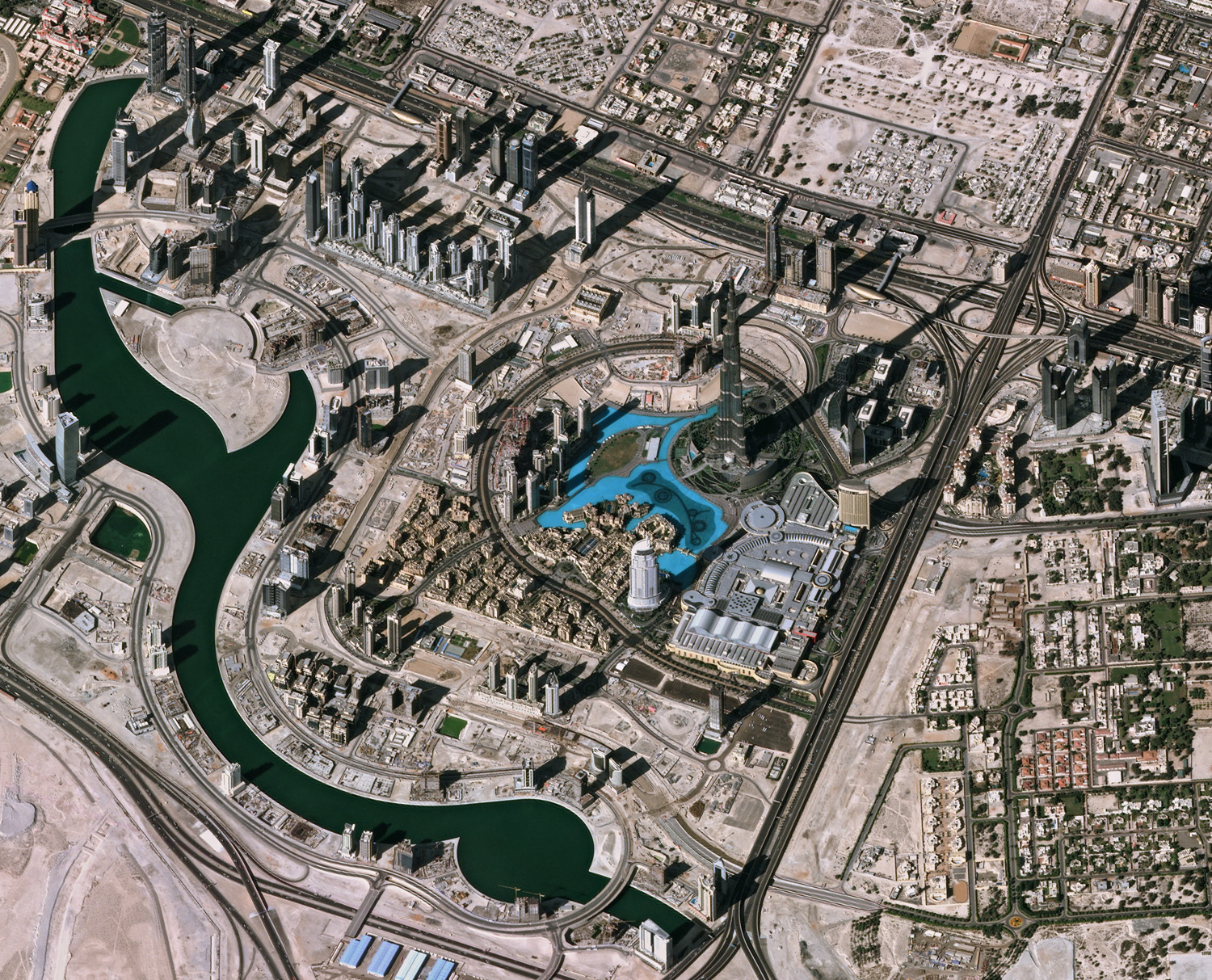
This image from
the Pleiades satellite shows part of Dubai in the United Arab Emirates. The
image was acquired by France’s Pleiades satellite on 4 January; there have
already been many changes to the road network shown in this picture.
The light blue area near the centre of the image is the man-made Burj
Khalifa Lake. Next to the lake sits the Burj Khalifa skyscraper. Its long
shadow is cast to the north (to the right in this image).
In the lake you can see the curves and circles of the Dubai Fountain. The
choreographed system shoots water 73 m into the air while accompanied by
music. The building, lake and fountain are part of a development called
Downtown Dubai. Covering an area of 2 sq km, the mixed-use complex is
estimated to cost US$20 billion.
Another notable structure of Downtown Dubai is the Dubai Mall, which appears
as a vast grey structure in this image. It is the world’s largest shopping
mall, and is also houses an aquarium and ice rink. The large, dark area is
where the saltwater Dubai Creek is being extended as part of the
construction of the Business Bay development. The area is expected to have
over 200 buildings for commercial and residential use.
|
| |
|