Welcome to rascott.com
This is a
personal site that reflects my interests in news,
current affairs, aviation and travel.
email me: robert@rascott.com
Now In Dubai:
Scott
Consulting
Photo Albums
My photographs have been moved off this site and are now stored on Picasa. They
were simply taking up too much space on my web host.
Please use
this link to see my list of photo albums.
Some
Useful links:
Information:
World Time
Clock
Exchange Rates
Journalism:
ForeignPolicy
Nationsonline.org
Project Syndicate
Amnesty International
Reporters w/o borders
The Guardian
BBC World News
CNN Asia
Bangkok Post
Daylife.com - news
Gulf News
Arabian Business
World News
WSJ - Asia
SCMP
Good causes:
Sister
Joan - Bangkok
Regional Info:
BKK Magazine
HK Magazine
In
Singapore Magazine
TimeOut Dubai
Back in the UK:
Newton Ferrers
And for fun:
Lin Ping live panda tv
EarthCam
History
BBC Archive
National Media
Museum
The British Library
Imperial War Museum
There are many other links on my AOB blog page.
|
|
The 2004 News Archive |
|||||||||||||||||||||||||||||||||||||||||||||||||||||||||||||||||||||||||||||||||||||||||||||||||||||||||||||||||||||||||||||||||||||||||||||||||||||||||||||||||||||||||||||||||
|
December 2004 Why was there no warning?; How much is a life worth?; Killer Tsunami hits Asia; Bertuzzi's plea bargain; predictable and wrong; Christmas Past; A very Faye Christmas; Its raining cranes...but there is no peace; Cutting crew takes on reality tv; Sex and the Singapore City; Air Asia takes flak from the Bangkok Post; Alfred Hitchcock would approve November 2004 China is hot; Zimbabwe farce; A mickey mouse Disney; China's military ambitions; The rise of China; For China economics comes first; Crane mail in Thailand; The coming war over Taiwan; Thaksin now likely to attend APEC - does he read this!; Hong Kong rolls over but it is not enough; Overdosed on Arafat; One year on Thai PM snubs APEC; In the deep rough at Muang Kaew; How offensive can you get?; Supermarket trolley drivers terrorise Bangkok; Pathetic; the world's self appointed greatest democracy held hostage; fox news and nbc follow rascott.com; rascott.com calls a Bush win; America's most wanted back on video; More from Thailand's wierdest town; Vote Kerry - not a great choice; but the only one available October 2004 Fears for Thailand's south; Arsenal pay the penalty; Ethiopia - twenty years on; Beijing Notes; Underfed or underpaid; Air Farce One; China's World Cup woes; Afghan democracy - a success story; End the barbaric bullfight; The brutal murder of Ken Bigley; Outsourcing myself; The US are electing the wrong candidates. September 2004 A new war is needed; '2046' - four reasons to love this film; The West Wing's unlikely fan club; The first Virgin in space; Impotent Blair is at a loss; In any God's name this cannot be justified; Farewell Brian Clough; Weak Kofi; Beijing won the Democrats nil; The problem for Hong Kong's democrats; Your Bangkok subway guide; England should not tour Zimbabwe; Thailand's airport greed; Thai had a dream; Saying sorry for a bad whiff; Bigger, better, brighter, brasher, bolder Beijing; Malaysia gets it right August 2004 Kiss and Tell: Over 330,000 misguided votes; Is this Howard's end?; A new version of the Nigerian scam; Singapore's political and economic expediency; Hit for six: Bangkok Governor election campaign; The questionable legacy of Deng; Was it Peng or was in Deng?; Making Vietnam an election issue; Bangkok's shut down; Missing the opportunity for change - Singapore's media; Dirty politics or dirty laundry; Early nights in Bangkok; This season's footie forecast; Searching for the Olympic spirit; Searching for inspiration; Split Democrats open way for Pavena; Bitter rivals to contest the Asian cup fina; Bangkok's unsung taxi drivers July 2004 The President that America really wants;The land of the rising son; Bangkok's scary choices for mayor; Sweet FA....;The world's most unlikely jogger; Why Butler is a warning shot; Weapons of mass deception; the case against Tony Blair; No sense from Arroyo; Sense from the US Senate; A confused agenda at the International Aids Conference; Time Asia reports on Asia's budget airline; s LCC ticket pricing; Naughty NokAir shows its Spirit; The 2004 US Election; Hong Kong's political birth; Bangkok's new subway June 2004 Canada's chastened Liberals; Canada's election; the safe choice; Publishing Sensation; England's shoot-out curse; Football maths; Vancouver: Midsummer night's dream; Canada's election; a crisis of leadership; England's nightmare - England 1 France 2; Reagan: The consequences of inaction; She said; they said; European Championship predictions; PLA stamps its authority on Hong Kong; Tiananmen's message; Why democracy matters; India's election - a fractured verdict?; Pattaya Today revisited - soap opera at its best May 2004 Amnesty International - Why Human Rights Matter; Time for seeding the FA Cup; Khun mai kuey doen lenn khon dioew; Casualties of War; truth and decency; Lies about crimes; George Bush never looked into Nick's eyes; Fixing Bangkok airport; Mirror Editor sacked; Misleading people and endangering lives; India's election shock; Our immoral world; Singapore's Happy Loos !; How others see Thailand; The China squeeze; Rumsfeld must go - he would not be missed; Final farewells for Frasier and Friends; The enduring Thai gem scam; Barbarians masquerading as liberators From 7 April 2004 Beijing's hard line on Hong Kong Britain's sorry isolation; Would you embrace this man?; Bangkok Fire leaves thousands homeless; Losing our edge; the New York Times on US competitiveness; Let freedom ring; three commentaries on the expansion of the European Union on May 1, 2004; India's vibrant democracy; Do not apply for this vacancy; The Wrong War (Op-ed from the New York Times); Over rated, soaking, Songkran; Bonk it like Beckham; The growing divide between the USA and Canada; Budget carriers boost regional tourism From 20 March 2004 One country - do as we say; Bangkok Motor Show 2004 - Picture Gallery; What next after explosives theft in Thailand; The message from Taiwan's strange election; The new elite - Anthony Sampson on the British Establishment; Silence of the witnesses; Election fever sweeps Asia (oops not in China); Hong Kong patriotism; Unlawful killing; Bloomberg profile of Thai Prime Minister Thaksin; Philip Bobbitt on the Iraq war From 1 March 2004 Time for a rethink after Madrid; Bertuzzi update; The Madrid bombings; When sport is not sporting and the failure of the sports authorities; A global threat needs a global response; Why what others think about us matters; Hong Kong's Lantau Cable Car From 21 February 2004: Naked News in Hong Kong; Africa Calling - The Guardian; gbp 10 million boost for Reuters CEO; Why friends fall out; Worrying trends in Bangkok's Media; ; Was I wrong about Iraq - The Guardian From 1 February 2004: Patriotic Games - Hong Kong; Another plea to free the Guantanamo 600; Economic Conflicts of Interest; Intimate Interns; Chicken Flew - Nok Air; What do Colin Powell and Justin Timberlake have in Common?; America's best friend may be her worst nightmare; Let the People Decide; Pattaya Today !; Why journalists should report the news and not be the news; Ryanair Subsidies QandA From 20 January 2004: The BBC gets what it deserved; Calling foul on fowl flu denial; Happy Chinese New Year; Singapore's alarming executions; Privatisation of Space Exploration From 25 December 2003: Singapore expected to legalise oral sex ! Take a number - onboard loo queues; The IHT on Prime Minister Thaksin; Air marshals; a modern day necessity; Raise a finger to finger printing; A new year's plea; Terror should not make us illiberal; Why did so many have to die in Bam (a must read); Time Lapse; Do not feel sorry for Rio Ferdinand; Huge Grant does Bangkok; A Nation mourns; corgi mauled in royal dogfight.
|
DECEMBER 2004 Why was there no warning? 29 December 2004 This is not a time for recrimination and finger pointing. It is a time for doing as much as possible to rescue, aid, comfort, and support those in need. But questions are rightly being asked about why the death toll needed to be so high. The following opinion piece from today's Nation newspaper in Bangkok should serve as a wake up call to many. The article needs no further comment.
How much is a life worth? 28 December 2004 With the death toll now close to 60,000 the Australian Foreign Secretary has said that Australia will lead a Tsunami warning system for the Indian ocean. The Australians are already party to a warning system for the Pacific. But guess what, the Pacific nations are among the wealthiest nations in the world; Japan, Canada, the USA are all a part of the Pacific warning system. But the Indian Ocean is surrounded by the nations of Africa, South Asia and South East Asia. The technology existed to warn people to get to high ground. And it requires huge investment to implement, educate, monitor and operate such a warning system; which in itself may only be used once a generation. This is one investment that should have come earlier; and while the Australian initiative may be for the long term good it looks like a belated assessment that the wealthy nations of the region should have done something earlier. Death toll reaches 23,000 27 December 2004 CNN's coverage of the Tsunami was awful yesterday with Andrew Brown in Hong Kong being roped in to provide local commentary despite the fact that Hong Kong is 1,500 miles away from the Thai and Malaysia crisis points and further form India and Sri Lanka. Today the coverage is improved although Larry King needs to learn how to pronounce Phuket. Sadly the international media has largely fixed on Thailand as Phuket's dead includes a large number of foreigners. And guess what, there are phone lines and English speaking people in Phuket so they can be summoned to talk with Larry King. Thailand's dead is now estimated at 1,000. The number of dead in the coastal communities of South Asia is far far greater. I mentioned Phuket Laguna yesterday; apparently the resort complex has been wiped out. A friend who flies for Air Asia said that Phuket airport was reopened at about 5pm yesterday and that airlines were running extra flights; she had been called for two extra flights finally getting back to Bangkok at 5am. I am too far away; and have no internet connection here to be able to provide effective updates. Killer tsunami waves hit Thailand and South Asia 26 December 2004 I woke this morning to messages from Thailand and India telling me of the massive disaster to hit South East and South Asia last night. The massive earthquake in Sumatra at around 8am drove tidal waves across the Indian Ocean. The first tidal wave hit Phuket just over two hours after the earthquake. My first shock is that there appears to have been no warning. There seems to be no effective coastguard. CBC Newsworld has decent coverage of the disaster. The US networks including the domestic CNN service are predictably ignorant. The west coast beaches on Phuket will have been the most exposed. The main beach area of Patong, together with Kara and Karon beaches all have beachside roads and beachfront hotel blocks. Phuket airport, which is currently closed, is next to the island's northern beaches. Big resort complexes like the Phuket Laguna are on the waterfront. Their are reports of people in their hotels as waves of water swept into their rooms. Others on the beaches saw the waves approaching and ran..... One friend in Bangkok still cannot contact one of her holidaying friends. She has been able to contact others after hours of trying. Telephone networks are predictably overloaded. As I write this it is approaching 2am in Thailand; rescue work has slowed down overnight. Tomorrow the extent of the damage will be clearer. Meanwhile Sri Lanka appears to have been hit hardest; some of the low lying Maldive islands may have been literally washed away. Putting sport beyond the law 24 December 2004
Christmas Past 18 December 2004 I woke up this morning thinking of Christmas Time when I was a kid. There was always a real tree; we went to church on Christmas morning; we ate too much turkey; there were Christmas crackers, silly hats and bad jokes. I was (still am !) the eldest of three kids; we used to torture our parents by putting on some sort of play or carol service after lunch; even the Queen's speech must have sounded good by comparison. Indeed I still know most of the words of all the traditional Christmas carols; and the childish rewritten versions; "Good King Wencelas went out in his mini minor; took a double bend too fast and landed up in China!" My primary school would put on a nativity play; there would be carol concerts. The concerts at my senior school were almost sell out events; the choir would rehearse the whole winter term. It was a holiday; it was a time for family and friends; it even snowed occasionally. As a teenager my parents were in Nigeria; the kids would haul out of the English winter to spend 3 weeks in a constant round of days at the pool or beach and partying. My favourite Christmas card read; "Christmas need not always be white; black is beautiful." Hear, hear. What has happened to the season of peace and goodwill to all men (and women!). Type "Christmas+Warning+2004" onto google and you get : Results 1 - 10 of about 3,560,000 for christmas+warning+2004 Their is a terror alert issued to Australians who may be traveling at Christmas. It wont stop them from traveling; if something does happen the government can say "told you so !" There are warnings about alcohol, sex, infected turkeys, computer viruses, people are advised to avoid balloons due to latex allergies and be wary of injury from Christmas trees. Office workers are advised not to photocopy bums or breasts (risk of broken glass) at the Christmas Party. Close circuit TVs have been set up in some Santa grottos to ensure that employed Santa's do not molest children as they make their annual outrageous gift demands! Councillors in Mottingham, South London, demanded £5m worth of insurance cover before putting Christmas lights up, while in Bury St Edmunds an illuminated Christmas tree was banned in case its low-voltage bulbs electrocuted passers-by. Many schools no not hold a nativity play, many have no carol service. Instead they will have a winter concert. A colleague in Canada asked my address the other day so that he could send me a "holiday card"!!! Christmas has been hijacked by the politically correct and by the lawyers. The UK's Independent newspaper created this wonderful image of Santa: Picture dear old Santa at home; "The wind caresses the arctic wastes, sneaks under the wood-cabin door and up Santa's robes. He feels every day of his age today. In the mirror his beard looks greyer. The rheumy eyes have lost their sparkle. For the first time ever, he contemplates his deliveries as a duty rather than a delight. The thought of fighting his way through the reindeer-rights protesters and past his little helpers waving placards about their "Scrooge-like" boss dampens his spirits like a layer of sleet. It is hardly his fault the office party was cancelled. Since that incident between two elves on the photocopier, his public liability cover has gone through the roof. No more joggling children on your knee, his lawyer says: too big an insurance risk. And lay off the mince pies and sherry, adds his doctor. Is it just an old man's nostalgia, he wonders, or were Christmases past simpler? When did his presents start to be wrapped with red tape, the sleigh need a licence?" Pulling on his crash helmet, the law forbids him simply wearing a cap' he boldly sets out on his deliveries. Me; I am going to enjoy the holiday; the tree is up at home; the lights have not fused yet; I will wear a Santa hat on the golf course tomorrow; the caddies always like that ! And I will be on the ski slopes of Whistler on Christmas Day. Enjoy your holidays wherever you are and whatever your faith. Christmas is a time to hope for peace and goodwill for all people, everywhere. A very Faye Christmas! 10 December 2004
It is the beginning of the festive season; even in Thailand there are trees, decorations and choruses of "Frosty the Snowman". Meanwhile in Hong Kong and Taiwan, as part of the preparation for the festive season, my favourite Asian diva, Faye Wong, has graced the covers of Hong Kong and Taiwan's Elle magazine. Christmas Glamour indeed ! Its raining cranes....but there is no peace 8 December 2004 If you had the misfortune to read the Bangkok Post last Monday you might think that all 90 million paper cranes had fallen into the lap of a fifteen year old girl from Narathiwat called Mae-eya Bula. On page 1 of the Bangkok Post she vows to be sisters with 22 year old Kanittha Srinarak from Udon Thani whose name and mobile number were on a crane found by Ms. Bula. But on page 2, in a different article, the same reporter tells of a Mae-eya Bula, 15, a Narathiwat resident, who collected a paper carne with the message "I want to kill all militants. Meanwhile as Ms. Bula was collecting cranes, Arsor Abdul Sorni, the mother of Mauseng Sorni who was shot to death in the Tak Bai protest sat at home. Sorni's body is reported as having a gunshot wound in his back and many bruises. In compensation she had received 100,000 from the government and another 6,000 baht from provincial authorities. A total of US$2,600. The crane drop, in windy conditions, needed 300 missions in total. It is certainly a unique approach to appeasement. But it has probably done more to unite the crane-makers than the crane-receivers. The gesture enthralled the Thai public and galvanized them into a crane making frenzy. But it appears to have done little to give the Muslim south serious political recognition or to redress the Muslim community's long-standing grievances. Cutting crew takes on reality tv! 8 December 2004 On page 4 of today's Bangkok Post Business Section is a quarter page advertisement under the rather lengthy headline: "BNH Hospital will host the world's first Live Sex Reassignment Surgery ("SRS") performed by Thailand's world-class team of surgeons" The advert continues to say that the expertise of Thai surgeons will be on display to the world. The event will be held on 9th and 10th of December. The advertisement does not say who the lucky victim (patient?) is or how the surgery will be shown either in the hospital,or to the global audience of whackos who want to see a boy transformed into a girl. This is taking reality tv to new extremes. While the surgery is in progress there will be supporting music played from Cutting Crew, perhaps including that old SRS favourite, "the first cut is the deepest". Sex and the Singapore City 8 December 2004 A survey last Sunday in Singapore's Times newspaper revealed (and this is no surprise) that children and sex are low in the priorities of Singapore's married couples. Which only goes to show that sex and fertility cannot be bought by the government. The Singapore authorities have reacted to all time low birth rates by offering significant housing grants, cash payments, baby-care subsidies, tax rebates for working mothers and longer maternity leave all to encourage an increase in birth rates. There are other priorities in Singapore where the national slogan appears to be "I shop, therefore I am." But Singaporeans remain focused on career, credit cards, condos, cars and club memberships. Singaporean men appear to be having plenty of sex - in China, Thailand and Indonesia; they are just not having it in Singapore; maybe because they are too tired from their overseas trips or because there is too much pressure at home to conform and perform. The eight low cost airline flights a day between SIN and BKK have been a bonus for short term travelers to Bangkok and also for Thai girls looking for short term employment in Singapore! The Singapore government's strategy is simply wrong; people do not use government tax rebates as foreplay. "Dear, isn't it a good time to have sex now as we get a bigger grant." What the government needs to do is create an atmosphere that is conducive to sex! That means that sex is something people want to do rather than something that the government obliges them to do. Singapore has made only small progress in this direction. You can now see censored editions of Sex and the City; you can read a Singapore version (very tame) of Cosmopolitan. More, much more is needed; liberalise attitudes towards sex; encourage people to enjoy sex at home and just maybe the culture will change. Among urgent changes needed in Singapore are: Open up cable tv networks to allow adult channels. Let a couple get into the mood watching some well filmed porn. That must be more of a stimulant than Channel 5 and the local evening news. License adult shops; let Singaporeans buy adult toys, clothing and accessories; let them liven up their love lives with a little experimentation. Build new "love hotels" in central and suburban areas. It is hard to make out as a young couple in Singapore in a small condo with the inlaws making dinner outside; the sister playing computer games and the other relatives clacking mah jong tiles. Singaporean couples needs somewhere to go to for fun; themed rooms; clean, nice music, helpful tv channels, and no social stigma attached. Liberalise web censorship. The best censor is your own judgment and taste. Stop national service. Two or more years of boot camp does little for male creativity or heterosexuality! A few thoughts; anyone care to comment !? Air Asia takes flak from the Bangkok Post 2 December 2004 The following is a report in today's travel section of the Bangkok Post; followed by my letter to the editor and travel section (Horizons) editor of the newspaper. It would be equally scurrilous, but quite plausible, that the story and its prominent coverage was a plant from one of the major airlines: from the Bangkok Post; Horizons: 2 December 2004 Air Asia flight has passengers waiting five hours Low-cost airlines deliver on fares but they are sadly lacking when it comes to punctuality "Flight delays are frustrating. Most
full-service airlines now cite punctuality to prevent customers from
switching their loyalty. We're not sure how well it works but after years
of travelling with full-service airline, I've never encountered a flight
delay that was unbearable. In most cases airlines inform passengers of
flight delays well in advance. My letter to the Newspaper:
Sir/Madam,
It
is poor journalism and poor judgment to use the pages of the Horizons
section of today's Bangkok Post (2 Dec) to air a personal grumble about
a 5 hour delay on an Air Asia flight to Ubon Ratchathani.
Flights get delayed on any airline,
full service or LCC. Ask the Cathay passengers on CX751 yesterday who
turned back to BKK after a piece of the airplane fell off. Air Asia's
punctuality is probably as good as any major carrier operating out of
BKK; their web site gives the following statistic:
Latest Punctuality for the week ending 28 November 2004 89% of all flights arrived on time 96% of all flights arrived within one hour
You gave prominence to this story
through the headline and tag. You allege that LCCs are "sadly lacking
when it comes to punctuality". What are your grounds for this
allegation? What research have you done. Look at Easyjet: from their
website?
ON TIME
In
the interests of balance reporting did you ask Air Asia to comment on
your story. Of course you didn't. Your article damages them and the new
LCC industry.
I do not work for AA; I am
not in any way involved with AA. But I do believe in fair and balanced
reporting. Your article is petty and vindictive.
You were unlucky. Live with
it.
Yours faithfully,
Robert Scott
Bangkok
cc:
Editor Bangkok Post
Horizons Editor,
Bangkok Post
Air Asia
Alfred Hitchcock would approve 1 December 2004 In a scene reminiscent of "The Birds" in Hitchcock's 1963 movie the south of Thailand is about to be dumped on by 80 million origami birds. Actually the precise number is 80,964,055 origami birds as of last night according to Mr. Yuranant Phamornmontree, the newly-elected Deputy Government Spokesman. How can he be that accurate? The paper birds will be air-dropped on the southern border provinces on 5 December--His Majesty the King's birthday. In the past week everywhere you look there have been people folding paper cranes. Offices and apartment buildings have collection boxes. Our office has instructions for crane folding on the notice board - in Japanese! The completed birds are now being collected together at Bangkok’s military airfield, and on 3 December Prime Minister Thaksin Shinawatra will preside over the take-off of 35 military planes, which will take the birds to Surat Thani Province and Hat Yai in Songkhla Province. On 5 December, the planes will make for the southern border provinces of Yala, Pattani and Narathiwat, where they will begin dropping the birds from 09.00hrs, completing their mission at 16.00hrs. Some of these paper birds are huge - with a little extra weight they might drop quickly - the best advise to anyone is to stay indoors until the origami bombing has ceased. People have rallied behind the idea. Whether it makes any difference remains to be seen.
NOVEMBER 2004 China is hot 30 November 2004 Continuing the China them for this month this is a Canadian report on Chinese efforts to secure the natural resources that it needs to support her rapid economic growth. I will put all the China articles into a separate section on this web site. The story of China's economic growth and potential dominance of world trade will be one of the stories of this decade. By 2010 China will be a juggernaut; the issues will be whether she is under control or not; and if she is a friend or a foe not just of Asian nations but globally. China frantic for energy suppliesBeijing looking to Canada and beyond for sources of oil, gas, electricity and coal By GEOFFREY YORK - Globe and Mail - Monday, November 29, 2004 BEIJING - At first glance, the events are unconnected. A possible Chinese takeover of a leading Canadian oil company. A secret submarine in Japanese waters. A border deal in Siberia. Trade pacts with obscure African nations. Diplomatic efforts to protect rogue states in the Middle East. These seemingly random incidents around the world, however, are united by one crucial phenomenon: China's growing obsession with its energy security. Fearful of its mounting vulnerability to any threat to its oil and gas imports, Beijing has become frantically active in its quest for new energy supplies. The latest example -- its effort to acquire Husky Energy Inc. of Calgary -- is just the most recent of a long series of initiatives to gain fresh energy sources for its booming economy. China's oil imports leaped by 40 per cent in the first half of this year. It recently surpassed Japan to become the world's second-biggest oil importer. Its own oil production, once large enough to supply its needs, has fallen into steady decline. By the year 2020, China expects to depend on imported oil for 60 per cent of its oil supply, up from 36 per cent today, leaving it increasingly vulnerable to an oil embargo or an unexpected cutoff of supply. Beijing sees the risk of an energy shortage as one of the biggest potential threats to its national security and social stability. It has become fixated with the goal of diversifying its sources of oil, gas, electricity and coal. The Chinese government has reportedly drafted a plan to build a 90-day strategic reserve of crude oil -- much bigger than its previous plan for a 30-day stockpile. It is already building 52 massive tanks near the East China Sea, south of Shanghai, to stockpile a month's worth of oil. Each tank would hold more than 25 million gallons. But this might not be enough. China's economy -- with its emphasis on voracious energy-gobbling industries such as steel, cement, and manufacturing -- is increasingly dependent on heavy energy consumption. For every dollar of GDP, it consumes three times as much energy as the global average, and almost five times as much as the U.S. average. By 2020, China is projected to have 130 million private cars -- five times as many as today -- and its cars are already consuming far more gasoline per car than the average car in the United States or Japan. As a result, China is aggressively negotiating trade and investment deals with almost any country that boasts a supply of oil or natural gas, regardless of the cost. It is already co-operating with 27 countries on oil exploration. In Africa alone, it has reached agreement to buy oil from Cameroon, Nigeria, Gabon and Angola. In Latin America, it has signed a trade deal with Brazil to finance a drilling and pipeline program that would provide oil and gas to China, even though the Brazilian deal is estimated to be three times more expensive than simply buying supplies on the open market. To secure Russian oil, Beijing gave favourable terms to Moscow to settle a long-standing border dispute on a Siberian river. Russia reciprocated last week by promising to deliver as much as 420 million barrels of oil by train to China annually by 2010, up from the present level of 140 million barrels. China and Japan have been jousting for the right to receive an oil pipeline from Russia, although the latest indications suggest that Japan might win the battle. China's obsession with energy security has put it on a collision course with the United States, which disapproves of Beijing's eagerness to cut deals with "pariah states" such as Iran and Sudan. Last month, China signed a $70-billion deal to help develop an Iranian oil field and purchase natural gas from Iran. Within a few days, Beijing signalled that it would oppose any effort to seek UN sanctions against Iran over its nuclear program. In a similar move, China has supported Sudan against allegations of human rights abuses. China has invested hundreds of millions of dollars in developing oil fields and pipelines in Sudan, its biggest single African energy supplier. And in another far-reaching consequence of China's energy appetite, China and Japan are jostling for control of the vast natural-gas deposits below the East China Sea. Both countries have laid claim to much of the sea, and China has begun the construction of drilling platforms to tap the gas deposits in disputed waters, provoking sharp protests from Tokyo. When a Chinese nuclear submarine was discovered in Japanese waters this month, a three-day chase by Japanese warships ensued. The incident was widely believed to be linked to China's challenge of the Japanese gas deposit claims. In this global context, the possible takeover of Husky Energy fits neatly into Beijing's energy strategy. China is interested in importing up to one million barrels of oil a day from Alberta's oil sands projects, including those on the drawing board at Husky. Beijing is also seeking Husky's expertise in offshore oil drilling, primarily because of Chinese drilling plans in the East China Sea. Zimbabwe farce 26 November 2004 England should not be playing cricket in Zimbabwe - I have said it so often it hardly bares repeating. But this week has been a farce. Refusing to make a stand against tyranny, torture, oppression and starvation, England's cricketers, led by the shameful ECB have at last found a worthy cause. This week they made a stand because the Zimbabwean government were not giving press accreditation to certain cricket journalists. At last a worthy cause, and a reason to delay travel to Zimbabwe; denying those chaps from the Telegraph and the Times their press accreditation. A Mickey Mouse Disney 24 November 2004 Disney has set the opening date as 12 September 2005. They have also crowed that Disney Hong Kong will be cheaper than any other Disney site in the world. And so it will - on weekdays. Go on a weekend and you can add 20% to the price. Remember that this is the soft opening price only. Initially only some of the rides will be operational. Also remember that the Hong Kong park is only 1% (yes - one per cent!) the size of DIsneyworld in Florida. It really is not worth bleating here how Hong Kong was taken to the cleaners by Disney Corp. It is not worth repeating here just how much the clean up of Penny's Bay on Lantau has cost the Hong Kong people. This was not a good contract for Hong Kong. But it will bring visitors and it will stimulate spending. My little guy (seven years old) is already talking about it. Ocean Park will hurt after DIsney opens. Indeed Ocean Park may well become a prime real estate site. And there is a multiplier effect. We cannot just look at the revenues and costs related to DIsney directly. Visitors will come and they will spend, not just at Disney. I just hope the 7 year old is not too disappointed. Its going to be a rather mickey mouse Disney. China's military ambitions 23 November 2004 The dispatch of a Chinese nuclear submarine into Japanese waters raised the political temperature in East Asia and has set many people thinking where China's military ambitions may start and end. Clearly they can win hearts and minds through economic strength; relations with Zimbabwe, see below, are testament to that. But China's vast consumption of natural resources from oil to gas to water to steel to potash may mean that China has to obtain access to resources deep in the heart of other nations. China can but those resources and he held ransom to foreigners controlling the supply and pricing. Or China can acquire those resources, preferably through business and economic acquisition. But there are other means. China's borders include N Korea, Vietnam, Laos, Myanmar, Bhutan, India, Nepal, and the 'Stans (Pakistan, Tajikistan, Kyrgyzstan and Kazakstan. The latter have significant undeveloped resources. One provocative article, published today in the Washington Times, follows. The global balance of power is changing. It is a new reality, a new industrial revolution. While the 20th century witnessed the rise of America. The 21st century will witness the rise and dominance of China. Be prepared. And if you choose, embrace the new reality. Being a part of this change may just give people the opportunity to ensure that the checks and balances are in place to safeguard lives and freedoms. 23 November 2004
China's bold
displays The scariest ride I ever had was not at an amusement park. It was the ride I took two weeks ago through Shanghai, China, from Hongqiao International Airport to the Bund area along the Huangpu riverfront. It was just after dark, and this mammoth city was lit up in an awe-inspiring display the likes of which I had not seen even in Beijing. Shanghai has a skyline that puts New York or Chicago to shame, but it also has a larger population than New York and Chicago combined. Mile after mile of new high-rise office buildings, many boosting the names of the world's major corporations, make a stunning proclamation of wealth and power. Unlike the boxy concrete and steel designs I had seen in Tokyo, the Shanghai skyline looks like a "city of the future" as envisioned by science-fiction artists. With these grandiose designs, China is sending a clear message to the world that it is playing for real. That is something to stir nightmares. American security concerns have focused on terrorism and the Middle East. This is understandable, as Muslim terrorists plot more American deaths. Yet, terrorism is the weapon of the weak. It cannot change the global balance of power. And Islamic fundamentalism is a backward-looking doctrine of social and economic stagnation. The rise of China challenges the global balance, and is already transforming how the world works. Endowing an empire of 1.3 billion people with modern industry, technology and capital gives the strong Beijing central government immense resources with which to support its ambitions. China is driven by impassioned nationalism and the limitless energy of capitalism, a combination that will rock the world. Military threats always loom largest in the public mind, and China is creating such a danger. My visits to Beijing and Shanghai were preludes to the real reason for my trip, which was to attend the fifth Aviation and Aerospace Exhibition in Zhuhai. This event is held every two years. It has two purposes: to showcase China's advancements and attract U.S. and other Western companies who want to sell technology and systems to Beijing. China's space program was highlighted, from the capsule astronaut Yang Liwei used to orbit the Earth in 2003 to animated videos of Chinese plans to land on the moon and exploit its resources. Most of the displays, however, were devoted to Chinese fighters, remotely piloted (unmanned) military aircraft, helicopter gunships and missiles of all types. The displays clearly showed there is no segregation of civilian and military aviation activities. The Chinese aerospace industry is run by the state. Its largest agency is Aviation Industries of China I (AVIC I). Its displays featured, side by side, a variety of civilian airliners and its numerous military projects for fighters, bombers, military transports and reconnaissance aircraft. Its sister organization, AVIC II, which was split off in 1999 to create competition and improve management, concentrates more on business jets, helicopters and missiles. One display featured a row of cruise and air-to-air missiles under a large poster of a corporate jet, again showing the guiding Chinese principle of "Jun-min jiehe" — combine the military and the civil. This principle was very evident in the two halls devoted to American and Western firms trying to sell high-tech products to China. These firms are only supposed to be civilian development firms. But that line cannot be drawn, and it is doubtful those marketing their wares in this booming market care. Italian Deputy Minister of Defense Salvator Cicu was on hand for the signing of a co-production agreement between Agusta Westland and AVIC II for a new helicopter design. Italy, along with France and Germany, have pressed the European Union to lift its arms embargo on China. But the embargo has long been undermined by sale of dual-use equipment and technology to Beijing. Helicopters are a prime example. Why else would a defense official celebrate a putatively civilian project? Two identical remotely piloted helicopters were displayed — one configured for crop dusting, the other for military reconnaissance. It takes little imagination to see how the crop duster might be used with chemical or biological weapons. American companies have been just as guilty as European firms in helping China improve its capabilities. Boeing had a large mural at its booth touting not only how many airliners it had sold to China but also how much production work it had outsourced to Chinese industry, how many Chinese engineers and technical workers it had trained, and how much it was investing in Chinese research facilities. U.S. officials have lobbied against any
lifting of the EU weapons embargo on China. Yet, how can the Europeans take
American arguments seriously when the Bush administration (and the Clinton
administration before it) have not only turned a blind eye to the role of U.S.
firms in advancing Beijing's development, but have encouraged it under the
rubric of "commercial engagement?" Which is worse: Europeans selling weapons to
China, or Americans teaching the Chinese how to build their own weapons? 23 November 2004 It is rather depressing to witness the cosy relationship that has developed between China and the despotic regime in Zimbabwe. Indeed it may well be that it is only access to Chinese money that preserves the Mugabe government. Neither country has a proud record on human rights and clearly this is of little concern to all consuming China. The latest trade news between the two countries sees Air Zimbabwe announcing twice weekly flights to Beijing supporting Chinese investment in that country which tops US$600 million. Chinese advisors trained Zimbabwe's nationalist troops in the liberation struggle of the 1970s. After independence in 1980 China retained an economic interest extending its support as other nations stopped providing aid. Confronted by 700% inflation, 70% unemployment, food shortages, Aids epidemics and world isolation Zimbabwe has increasingly looked to China for support. There are estimated to be 9,000 Chinese working in Zimbabwe on power, infrastructure and telecoms projects. Zimbabwe also acquire military equipment from China. In return China gets access to Zimbabwe's mineral wealth, including platinum, gold and diamonds. This is just a part of China's acquisition of Africa; China-Africa trade is expected to exceed US$20 billion in 2004. Henry Olonga used to play cricket for Zimbabwe. Yes, he is black. He is also in exile after wearing a black armband in a cricket match as a symbol of the death of democracy. In an interview in London yesterday he said of his homeland "There are human rights abuses, the lack of an impartial judiciary, the collapse of the health system in the face of the HIV Aids epidemic, the collapse of law and order, the targeting of political opponents." As China acquires what it needs to sustain domestic growth economics takes priority over right and wrong. Crane mail in Thailand 23 November 2004 The Thai Prime Minister's latest gesture to appease the troubled south is a massive littering exercise involving plane loads of origami peace bombs. Thaksin Shinawatra has urged all 63 million Thais to make at least one paper bird in the next fortnight so they can be dropped on the three restive provinces on December 5 as a sign of goodwill to mark King Bhumibol Adulyadej's birthday. Electronic road signs in Bangkok encourage people to get folding and local television stations show troops and civil servants busily creating huge flocks of doves, cranes and pigeons. A quick straw poll of my colleagues in Chateau Potash suggests that the idea has wide support and is a way of offering moral support to their southern compatriots. One colleague has made ten, another seven. There are even instructions (in Japanese !!!) on how to fold a paper crane on the office notice board. Then there are collection points in offices and apartment buildings. And a massive loading exercise to get the cranes to the planes! And the biggest exercise of all - clearing up the littered fields afterwards! For the record community leaders in the affected region, which is predominantly Muslim while the rest of Thailand is overwhelmingly Buddhist, believe the stunt will achieve little. They say it is just a gimmick ahead of a general election due by February. "The key obstacle to solving problems in the south is that the majority of Thais look at Muslims as second-class citizens," one leader was quoted as saying. The coming war over Taiwan 19 November 2004 It is hard to see where an acceptable compromise can be found in relations between Taiwan and China. The vitriolic war of words continues and the stakes get higher with the passage of time. It is a simple matter of Chinese nationalism; of Chinese pride, and of a deep seated sense of what right. Taiwan will never be allowed to exist as a separate nation; the best that she can hope for is a certain amount of self determination along the lines of a Hong Kong or Macau. But Taiwan's independent, free-thinking, self-determining and democratic world will not be allowed to continue. The mainland communists and the remnants of the KMT form unlikely bed fellows but they share the goal of a united China. It is a mess. President Chen in Taiwan is pushing for a referendum and a new constitution by 2008 that would embrace the principles of an independent Taiwanese nation. China will never let this happen. Do not rule out a Chinese invasion. This depressing scenario was outlined over lunch a few days ago and is a worryingly plausible scenario. Consider the following: 1) China needs air superiority over Taiwan; it is close. 2) Air superiority would allow a massive sea borne invasion (Germany's plan for Britain in 1940). China has the troops and the landing craft. 3) The gamble is that the US would not intervene. It is a fair gamble. The US has two basic problems. Defense spending cuts and Iraq. Both mean that the US has limited force to fight another war in a far off land that frankly most of her people have little interest in. 4) The world's economic dependence on China is such that normal relations would be quickly re-established. Sad; but it is the reality. An invasion of Taiwan would be considered a domestic issue allowing, as soon as it is safe to do so, normal trade and investment to quickly continue, probably led by the perfidious French. 5) China's nuclear submarine did not suddenly get lost in Japanese waters last week. GPS solves that. The consensus is that the sub had a mission to test Japanese and US response times and reaction to an incursion into their territorial waters. 6) The UN will not intervene. A censure or two. Easily managed. 7) The threat of losing or of a major boycott of the 2008 Olympics is far less important that the recovery of Taiwan. It would be a short and sharp campaign. This would probably lead to Taiwan suing for a peace that allows them to maintain some part of their livelihood and economy. It is hard to see what the alternative might be. China wants a solution before too many years pass by. The longer Taiwan remains independent the more the people grow accustomed to that independence. It will never happen. Thaksin likely to attend APEC 18 November 2004 Reversing his earlier decision, and probably causing great uncertainty to his hosts, Thai Prime Minster Thaksin has said that he will now attend the APEC meeting this weekend in Santiago. He must have been reading my earlier column urging him to attend. However, his new jet will remain grounded. The specially configured Airbus A319, which the Thai press has dubbed Air Force One, can carry only 36 people - far less than the size of the delegation - and would require multiple refuelling stops to get halfway around the world. Officials say Thaksin will instead make his trip in a Thai Airways MD-11, which raises the question: why have a prime ministerial jet in the first place? Hong Kong rolls over but it is not enough 17 November 2004 Here was my 16 October story about China's world cup woes. Only one team qualifies from this group for the second qualifying round of the World Cup. And it is not China; despite beating Hong Kong by a laughable 7-0 China is left with the same goal difference as Kuwait and has scored one goal less after Kuwait's 6-1 win over hapless Malaysia. China's world cup woes 16 October 2004 It would be a bad day if China fails to qualify for the 2006 World Cup finals in Germany. But they may be about to fall at the first hurdle. On November 17 China play Hong Kong and Kuwait play Malaysia. China and Kuwait both have 12 points; Kuwait has a better goal difference, by two. Malaysia have been beaten in every match that they have played. Only the winning team in this group moves into the next round. There are already calls from China for Hong Kong to throw the match for the good of the motherland. Chinese interest in the world cup is critical to the growth of the sport in China and of course is a wonderful marketing money-spinner. What is clear is that middle eastern football continues to advance and is leaving Asia behind. China's great sporting dreams lie in footballing tatters in Guangzhou. One more injury time goal would have been enough. There have been serious scandals in the Chinese football league. And China now has 4 years to clean up and reform its football programme and rebuild for the next qualifying campaign. Hong Kong were woeful. It was like watching a very poor training game. They were just not quite woeful enough. Overdosed on Arafat November 13, 2004 Every time that I have switched on CNN over the last week I have been confronted by Yasser Arafat. In Ramallah. Being sent by helicopter and French government plane to his hospital in France. Being visited in hospital by a self serving French President, and eventually being buried in crazy scenes. Who was this; was this some great world leader who had brought peace to our times. Was the a man who had somehow changed and bettered our world. Was this the leader of a great and prosperous nation. Was this a Mao or a Gandhi? No, it was the man who created modern day terrorism. Let's face it; this guy was hardly a saint. Yet all the fawning coverage of CNN and some other media might mislead you into thinking that Arafat was a great statesman of the world. He was a leader without a state. Arafat was first and foremost a terrorist. He was also the long time symbol of the Palestinians' hope for an independent state. It is fair to say that the stalemate between Israel and Palestine fuels Muslim anger and gives credence to terrorist groups such as al-Qaeda. But peace in the Middle East requires dialogue and trust; and Israel could never trust Arafat. Meanwhile other than giving the Palestinian people a sense of national identity it is hard to actually see what in reality he did for his people other than encouraging them to blame Israel for all that was wrong. It is easy to have a common enemy. Arafat continued to promote the strongest anti-Jewish sentiment since Hitler's Germany. Arafat did little to start the reforms that successful statehood require; competent governance, public welfare and infrastructure projects; tackling corruption and condemning state sponsored terrorism. He took funds away from the Palestinian people; he hid funds in Swiss bank accounts; and maybe in France. Those funds will be the subject of a long future fight for access and ownership. What CNN in all their eulogising seem to have forgotten is that Arafat ordered the death of thousands of men, women and children. Why did he die; the French hospital and authorities have said nothing. Poisoning must be a possibility. The best thing that can be said for Arafat's passing is that there may now be a greater chance of a reasoned and peacefully negotiated settlement in the Middle East led by people who respect life rather than destroy it. One year on the Thai PM snubs APEC November 12, 2004 One year ago Bangkok was brought to a grinding halt by the annual gathering of Asia Pacific leaders known as APEC. One year ago Thai PM Thaksin Shinawatra made a huge play of his role as a leader of ASEAN and as the central figure and host for the 2003 meeting. This year the Thai PM has decided that events in the south are sufficiently important for him to stay as home and send a deputy in his place. This is a poor decision and is particularly ungrateful after the huge show of support given by APEC leaders to Thailand last year. Meanwhile President GW Bush is fighting a huge war in Iraq - but he will still be attending. Chinese President Hu Jintao will be there despite unrest in Henan province. He will be looking to seal deals for future energy resources. It would been a good opportunity for the Thai PM to discuss the southern troubles with Muslim leaders from the region including the Malaysian PM and the new Indonesian President. Thailand could also have pushed a number of free trade discussions with Japan, New Zealand, Peru and the USA. The meeting is in Chile; yes it is a long way to go. And it is true that Thai Air Force One will need to re-fuel a few times to get there. But Thaksin would devalue the meeting by not being there and is snubbing the same leaders who gave him such a strong endorsement last year. This will not be forgotten. The meeting is on November 20/21. I hasty reconsideration would be welcome. In the deep rough at Muang Kaew November 9, 2004 Muang Kaew is one of the closest golf courses to Central Bangkok. It has been considerably rebuilt over the last three years, The course was redesigned; the greens rebuilt; new memberships sold, the clubhouse, restaurant and locker rooms all redesigned. Even the caddies were properly trained. All of this work was completed under the supervision of a company owned by two Canadian investors, Siam Golf Properties Co. Ltd. Siam Golf were apparently operating under a 10 year lease that appears to have had a renewal clasue built into it at the three year point. Siam Golf appear to have found out the hard way that contract discussions can take many different forms in Thailand. The owners of Muang Kaew for the last 10 years are a company called Sannan Golf. Before Siam Golf Properties were appointed to manage the course it was it quite poor condition and was suffering financially. Last month Siam Golf received letter saying that they were being evicted for breach if contract. The alleged breaches included failure to tend to the trees or to remove dead plants. From a personal view these allegations make little sense; the course condition improves all the time despite being heavily played. On the evening of 31 October police arrived at the course to evict Siam Golf. I have heard, but cannot yet confirm, that all of Siam Golf's property at the club such as pro shop stock was removed. The owners of Siam Golf were barred from entering the property. The next day Siam Golf arrived with their own security personnel and police. The two groups of police each representing a different side in this dispute then stood toe to toe; probably not offering eachother putting tips. Siam Golf withdrew their militia; they then filed a Baht 220 million breach of contract suit and also approached the Canadian Embassy for assistance. The Canadian Ambassador, who frankly should have more important things to do, then wrote to the Thai Ministry of Foreign Affairs, expressing concern that due legal process may not have been followed and that the actions of Sannan Golf may send "a very negative message to foreign investors." Siam Golf have been granted an audience with representatives of the Thai Prime Minister to try and seek a mediated solution. There has to be more to this story than is reported in the newspapers. Among obvious questions are who is now managing the club; what happens to existing memberships; and who has the funds from new memberships issued over the last few years. How offensive can you get? November 5 2004 The front page of yesterday's UK Daily Mirror was about as offensive as it is possible to be. Accusing 59 million people of being DUMB is arrogant, ill-considered and wholly inappropriate. The USA is blessed with many many millions of thoughtful, talented, entrepreneurial, and well-educated people who work honestly in the best interests of themselves, their family and their nation. Like it or not they are a first world country and a first world military power. They are also the world's largest donor of foreign aid and a major force in ensuring at least a degree of personal freedoms and the spread of democracy over the last 20 years. The USA is the first rate nation that so many in the world still look enviously towards for leadership and for opportunity. I have sent the following letter to the Daily Mirror: Sir/Madam, You are entitled to free speech. You are not entitled to be offensive for the sake of being offensive. I may not agree with the 59m people who voted for Mr. Bush. But I know many of my friends and colleagues voted for him. And they are not DUMB. They are some of the most thoughtful, international, generous and wise people I know. A better question is why the Democrats could not field a strong enough candidate, backed by a strong team with a clear message, to remove the incumbent. Your front page is that of the inarticulate bully. It is cheap, tawdry, and thoughtlessly offensive. A front page apology would be appropriate. Robert Scott Bangkok Supermarket trolley drivers terrorise Bangkok November 4 2004 You can tell a great deal about how people might behave behind
the wheel of a car when you watch them wheeling their shopping trolley around
the supermarket. The latter is a particularly alarming experience in Bangkok and a good reason why the best advise is to keep off the streets. My local supermarket is the TOPS market at the Silom Complex. It is a little older than some of the newer stores; the aisles are relatively narrow and the store is busy. The situation is not helped by a large number of promotional stalls that sit in the centre of the widest aisles encouraging shoppers to stop, park their trolley and have an extended social chat with new friends. The seafood girl dressed as a mermaid looked particularly in need of a new job. It is also a trolley driver's nightmare. On a recent visit the following arrestable offences were seen:
All of this could be avoided by an effective one way system; wider aisles; effective training programmes for new shoppers or on the spot fines for reckless endangerment with a shopping cart. You have been warned. Pathetic; the world's so called greatest democracy held hostage by Ohio November 3 2004 After a nine month campaign and a US$4 billion bill the USA and the world deserve better than to be held hostage by petty officials in a petty state. Ohio has 20 votes in the electoral college. The state's top election official has said that those provisional and absentee ballots would not be counted for 11 days, and he urged Americans to "take a deep breath and relax." What sort of nonsense is this? The USA demands clear leadership. Count the ballots now and let's move on. Kerry is beginning to look like as good a loser as Arsenal. Time to lose gracefully and move on. Fox News and NBC now follow rascott.com November 3, 2004 At 1.30pm EDT Fox and NBC have declared that Bush will win Ohio and will secure enough votes for another four year term. Other political news site such as Slate had declared in favour of the Democrats. Once more the US media has underestimated Bush and the organisational abilities of the Republicans. Once more the US media is totally out of touch with the US heartlands. In Washington DC 90% of the vote went to John Kerry. Washington is home to all the media, lobbyists and federal civil servants. No wonder GW Bush looks so ill at ease in Washington. No one likes him there. Bush is a man of Crawford, Texas. This is where he knows and understands the pulse of the people and their expectations of his leadership. I dont like him and I wish the Democrats had performed better. But Kerry was a poor candidate at a time when the US and the world deserved someone of stature and credibility. rascott.com predicts Bush win November 3 2004 It is 11.20pm in New York. With votes still being counted in key states of Florida, Wisconsin and Ohio rascott.com calls a Bush win in the US Presidential race and depressingly resigns itself to another 4 years of the Bush administration. Bush appears likely to win 278 of the electoral college votes; comfortable beating the 270 he needs for a majority. America's most wanted back on video November 1 2004 Bin Laden lives. I guess that is no surprise; sadly. Getting the Message
The Americans are naive if they really think that Bin Laden is not trying to influence Tuesday's US election. Bin Laden wants, in fact needs, a George Bush win. What use is their in waging a jihad if the enemy does not want to play? Al-Qaida needs a Bush win; Bush is reviled throughout the Muslim world. He is the enemy. So Bin Laden appears on video for the first time since 2001. Conveniently the weekend before the US election. The timing is hardly a coincidence. Scare the people. So what does Mr. Bin Laden do to fill his time each day. You have to assume that he works full time on his next attack on US or western interests. Planning, funding, approving, plotting. Al-Qaida is fighting a war not for money or lives; but for the hearts and minds of the people. It is fighting from a position of extremis. Their preferred fight is against the opposite extreme; al-Qaida needs the Muslim world to see Bush and his cohorts as being as extreme as they themselves are portrayed. Bin Laden is al-Qaida's Michael Moore - a man who knows how to manipulate with a video tape. Vote Kerry; it's not a great choice but it is the only choice November 1 2004 The Economist rather cruelly describes the US election as a choice between the Incompetent or the Incoherent. Maybe it is a choice between the incompetent and the incapable. George W Bush has to go. I just wish that his opponent was more decisive; less prone to compromise; less wordy and less opportunistic. This has been an election campaign fought between two deeply flawed men; neither of whom deserve to lead a great nation. Bush has never seemed up to the job. He simply does not have the grasp of facts and the broadness of thought to lead and to earn respect. To make progress individuals and nations have to admit to mistakes and to learn from them. Bush has never admitted to error over Iraq; even over Abu Ghraib. And mistakes made by this administration have cost America dearly, financially, in lives and in credibility. Kerry wins because change is necessary. He wins because he is not party to the Christian fundamentalists. He wins because his policy in issues such as abortion, gay marriages and stem cell research are more acceptable. But this election is not likely to be about domestic issues. It is about foreign policy and the safety of Americans. It is a long time since the USA last stood so isolated from the rest of the world. Kerry voted for the Iraq war; earlier this year he claimed to support it. He now describes it as a mistake. So be it. He is an opportunist who wants to be elected. Mr. Bush is incapable of change and he lacks the will, international support and credibility to succeed in repairing America's position in the world. He has no moral authority. He has called for accountability, He now needs to be held to account. Re-defeat Bush on Tuesday. More real life from Pattaya today November 1 2004 Pattaya remains Thailand's most bizarre town - a melting pot of weirdness! And Pattaya Today yes it is still every fortnight so should not be Pattaya Today) has all the best stories: here are a few headlines: British Visitor dies of stroke after coffee. I know it should not make me smile; at least he was not in Starbucks. Police Impersonator rapes woman. This ought to be a worrying story; But this is a Thai girl allegedly duped by a Thai impersonating the brown uniform of a police officer who took her to a remote area near a rail track and attacked her. She cannot remember what his uniform looked like or check his id. He then apparently returned her to rejoin her boyfriend in South Pattaya. But the boyfriend was not much use because he was "drunk from a lengthy binge." I smell a rat ! Crippled man falls off pier; friend left holding wheelchair. A French national was being pushed along Bali Hai pier by his Thai girlfriend. She was distracted. She looked around and the wheelchair was empty. The man, who had taken a drink or two" might have lent forward to obtain a better view. "He could not swim and proceeded to call out for salvation from a watery end." Ladyboy bandit chooses victim; don't be cuddled by strangers at night. "The gender bender (named Boy) offered to accompany Mr. Wright back to his hotel for a gay time; an offer which the farang courteously but firmly refused." As the foreigner tried to move away Boy threw both arms around him in a move faking undying affection for strangers. His wallet gone, Mr. Wright reported to the police. "Not surprisingly the thief in high heels had disappeared from view to count his ill gotten gains." Unlucky farang almost ends up in dump area. "He was unconscious, probably drugged as well as drunk and had no ID description of any kind. It was noted he had black hair but this could describe most men in Pattaya." OCTOBER 2004 Fears for Thailand's south 26 October 2004 The Thaksin government has continued to take the hardest possible line with alleged bandits, drug runners, separatists and militants in the predominantly Muslim southern Thailand. We should all be appalled that at least 80 people died an shocking death suffocated in army trucks taking 1,300 protesters to an internment camp, also known as military barracks. The lack of basic respect for human life is alarming. The first image that came to my mind was of the Germans hoarding the Jewish people onto cattle cart trains in the second world war. In Thailand's heat a long delay and a five hour road trip in overcrowded trucks must have been hell. The Thai Prime Minster's viewpoint was startling. Referring to the Muslim holy month of Ramadan, which is now under way, he said: "This is typical. It's about bodies made weak from fasting. Nobody hurt them." Surely that is then all the more reason for more humane treatment. After all these people had committed no offence; they had participated in a demonstration, no more, no less. Press and TV reporters were barred from the area and did not witness the loading of detainees into the trucks. Prisoners were earlier seen lying in rows on the ground, stripped of their shirts, with their hands tied behind their backs. These pictures are carried in Bangkok's media. The latest trouble started when a crowd estimated at up to 2,000 took to the streets in Narathiwat Province. Their demand was the release from police detention of six men arrested on suspicion of selling weapons to Muslim fighters. Most of Thailand's Muslims, who make up about 10 percent of its largely Buddhist population of 63 million, live in the southern region, which for years has felt neglected by the central government. The region was in earlier centuries the Pattani Sultanate, a center of Muslim culture. It was annexed by Thailand in 1902, but there have been only periodic efforts to integrate it into the cultural and economic mainstream of the country. Bangkok and the rest of Thailand feel very remote from this troubled area however anger and revenge add to the potential for further unrest. The threat to Thailand is that this anger will be brought to the nation's capital. The situation is southern Thailand requires extraordinary sensitivity else it will escalate. Arsenal pay the penalty at Manchester United 24 October 2004 I am not a great fan of either Manchester United or Arsenal. Arsenal have always been a team with a chip on their shoulder; that has changed over the last year but they can feel more than a little aggrieved over events at Old Trafford today. Mike Reilly, today's referee, has given Man U eight penalties in his last eight matches refereed at Old Trafford. Rooney dived; there was minimal if any contact as Campbell was withdrawing his leg. Poor decision. Van Nistelroy should not have been on the pitch after a truly shocking premeditated challenge on Ashley Cole in the first half. The linesman was feet away and saw nothing. I refuse to call these hopeless officials referee's assistants until they step up and behave like a true aide to the match official. The FA should have a look at the TV pictures of that tackle. Even Andy Gray winced in the commentary box. Rio Ferdinand's challenge on Lundberg looked like a red card; he was the last defender and he was beaten for pace. But no card or penalty. The sort of decision that can often go against the home team. So Arsenal are no longer invincible; beaten after a 49 match unbeaten run. And to be honest Arsenal offered very little and made few opportunities. Roy Carroll made perhaps one save. Rio Ferdinand looked a class defender (other than one bad mistake in the first half). What was really depressing was watching the crowd, who pay some gbp40 a ticket, hurling foul abuse at the Arsenal players. I guess it happens everywhere in England but it is ugly to watch. Ethiopia: Twenty Years on 24 October 2004 I am sitting alone at home watching Michael Buerk's epic documentary on BBC World. He returns to Ethiopia to see what has happened in the twenty years since his reports highlighted the devastating famine there. Reports that led to Band Aid, Live Aid and Sport Aid. I cannot help the tears in my eyes while I watch this. It is a strange day already. My family has gone home to London and Hong Kong. I am sad. And now I am angry; I feel helpless. Writing this down may help a little. In Ethiopia 6 million people a years are still kept alive by food relief. Ethiopia has plenty of water. Lake Tana is the source of the Blue Nile; which on its own keeps Egypt alive. Yet 9 out of 10 Ethiopians survive on the rains; but too much rain washes away the fertile lands. And too little rain is famine and drought. Food production in 2004 is one third what it was in 1984. Only one in eight Ethiopians lives in a town; the lowest number anywhere in the world. The marxist government keeps its people on the land. It does not want them to starve but appears committed to a simplistic marxist ideology that keeps people poor. Ethiopia is caught in a cycle of hopelessness and dependency. The rest of the world gets to give Ethiopia just enough and just in time. We are ashamed to let the people die; but we only do just enough to keep them just alive. It simply is not enough to save a life - we have to make the life we have saved worth living. Ethiopia gets the world's lowest development aid of any needy nation. Its government wastes appallingly - building new airport terminals for its capital and hotels to host the fat cat politicians and comfortable UN leaders. I don't know the answers; I only know how angry it makes me. Bush went to Africa on a five day jolly. He has not mentioned the continent since. He fights unnecessary wars in Iraq while the people of Africa starve. One answer at least is remove Bush. ****************************** Michael Buerk's report on his return to Ethiopia is on the Africa page. The BBC's Ethiopia country profile is here. Beijing notes 22 October 2004 There are many fine sights in Beijing and in so many ways it is now a first class city. But there are a number of things that are very hard to see in Beijing; largely due to officialdom Try finding a petrol station in the city. There are none. The law requires petrol stations to be outside the city. Motorcycle permits stopped being issued some six years ago. Motor cycles are rare; and Beijing has jumped straight from push bikes to the motor car. The one child policy means that you will see few if any pregnant women. While this rule is less rigorously enforced in the country it is still a requirement in the cities and families still want sons rather than daughters. The imbalance will be a significant social issue for China's next generation. Where are all the dogs? There are not even strays to be seen. Dog ownership in Beijing is accompanied by a significant tax. One advantage - the streets are cleaner. Sadly last years SARS out break has not stopped the Chinese art of expectoration. And at this time of year as winter and cold set in it become increasingly common. Spitting is still a fact of street life. Mainly practised by men it involves a decent inhale of phlegm and snot and then expelling the contents of your mouth towards the ground. Indeed it is so common that it is time to think about introducing a number of new Olympic sports before 2008. The High and Long Spits (The spittal equivalent of the High and Long Jumps); the Triple Spit or the Hop, Skip and Spit; my personal favourite - Synchronised Spitting; The Dressage Spit as part of a Three Day spit event; Target Spit - sort of like archery; and finally, Spitball (best not to think about that one). Mark Spitz did win a record number of gold medals in the pool. Now we have events that he would surely come out of retirement for. Seriously, this needs a significant public awareness and health campaign. Beijing will then be a first class city. Underfed or underpaid 19 October 2004
However they do a good room service business for those (most) of us who cannot be bothered to cook. The weekly specials are advertised in the elevator. Last week's specials are pictured here. This week they are advertising "Vegetarian in Hot Pot". Quite right to; boil the greenies in the pot !!!
China's world cup woes 16 October 2004 It would be a bad day if China fails to qualify for the 2006 World Cup finals in Germany. But they may be about to fall at the first hurdle. On November 17 China play Hong Kong and Kuwait play Malaysia. China and Kuwait both have 12 points; Kuwait has a better goal difference, by two. Malaysia have been beaten in every match that they have played. Only the winning team in this group moves into the next round. There are already calls from China for Hong Kong to throw the match for the good of the motherland. Chinese interest in the world cup is critical to the growth of the sport in China and of course is a wonderful marketing money-spinner. What is clear is that middle eastern football continues to advance and is leaving Asia behind. Air Farce One 16 October 2004 There has been much hue and cry about the Thai Prime Minister's new baby airbus; nicknamed the 'stealth jet' and 'air force one' the A319 was arrived in Thailand in August and made its first government flight this week to Phuket. Meanwhile Thai Airways was awarded airline of the year at the 15th TTG Travel Awards in Bangkok on Tuesday. I guess the government is as unconvinced by this award as I am. I really do not mind an elected government using a private plane for travel. The PM is expected to use his jet to fly to the APEC meeting in Chile; although that is an awfully long way to go on a baby airbus. What has made Air Force One such a long running secrecy is the lack of debate in government and the apparent secrecy in which the purchase was made. Afghan Democracy - a success story 14 October 2004 The media seem to have been able to find little at fault with the recent elections in Afghanistan. Indeed the only problem appears to have been that the election organisers need to find a more reliable source of indelible ink. The real story, little reported, is that the men and women of Afghanistan are proud voters. They enjoyed the privilege of choosing their own leader. The media gleefully predicted that the remnants of the Taliban and al-Qaida would disrupt the elections. That never happened. The election may not have been perfect, but international monitors pronounced it fair. So democracy has come to Afghanistan. Maybe the west has actually made real tangible progress. And just maybe that sets out a path for other countries in the middle east. Strangely - in all the presidential debates there has been much antagonism over Iraq. There has been little said and little praise for this huge and welcome leap forward in Afghanistan. End the barbaric bullfight October 14 2004 It was rather surreal. I was in bed in my hotel room in Beijing; it is 2.00am and on TVE they are showing bullfighting? The British have recently passed a law that bans fox hunting. The Spanish should do the same with bullfighting. The bullfight is part of Spain's history and I am sure that many people regard it as a spectacle. It is cruel and barbaric. The matador moves like an over-dressed ballerina. He slowly wears the bull down. The bull is stabbed in the back with dart like weapons. For some reason the bull continues to drive at the red cape waved before it. Not at the sequined slaughterer who is about to take its life. Are bulls really that dumb. The matador then stabs his sword into the neck of the bull. Death is not instant - do not believe apologists who tell you that it is. The bull is enraged. Two or three more matadors enter the ring to distract the fatally wounded beast. Some five minutes after the fatal wound is inflicted the bull falls to its knees. Rolls over and dies. And the crowd goes wild. The matador does a lap of honour. The bull is dragged out of the ring. This is wrong. The brutal murder of Ken Bigley October 9 2004 Ken Bigley was beheaded on Thursday by a militant gang led by the Jordanian terrorist Abu Musab al-Zarqawi, which had earlier murdered the two US men taken hostage along with Mr Bigley, Eugene Armstrong and Jack Hensley. Ken Bigely was a 62-year-old British man working as an engineer in Iraq while only weeks from retirement with his Thai wife in a village in her home country. Bigley was in Iraq because Bush and Blair invaded the country. Bigley was there as part of the multi-national team of contractors trying to rebuild the infrastructure. His is one of the many daily senseless, brutal deaths. But his more than any is cold calculated and barbaric. He has been held for 22 days; paraded in videos; a pawn for the extremists. For once I am with the UK's Sun newspaper. And this will be the popular sentiment in Britain. I know that more violence will lead to more violence. But I do believe that al-Zargawi is an extremist; that he does not enjoy popular support in Iraq; he is simply feared. And I do believe that eliminating him and those close to him is necessary if Iraq is to be stabilised and these horrific hostage murders brought to an end. Indeed it does surprise me that the US and British forces have not got to him yet. He and his followers can provide video to Arab TV stations; they can run their own web sites. They can hold hostages for weeks. Yet apparently we cannot find them. That only shows that quite simply the Iraqi troops are not strong or effective enough and that the Americans and British do not have enough troops on the ground to be effective. There is a reasonable and proper fear of collateral damage and the loss of innocent Iraqi life in any attack on al-Zarqawi. There is also the US and UK political fear that any attack on him will lead to significant troop losses and that would be politically damaging. But now, more than ever before, Blair has reason and public support for a full out assault on the worst of the terrorists. I am with the Sun (I never thought I would say that) - Nail the Bastards. Outsourcing myself October 7 2004 The evil empire, better know as the Company that I used to work for, has just announced the outsourcing of its financial markets reporting to Bangalore, that well known global financial hub ! Recognising the significant cost savings that might be available I feel my readers should be aware that I am planning to outsource the content production of rascott.com. My question is where should I outsource myself to? Maybe Pitcairn. No strangers to sensational reality stories from mutinies to pedophilia, my readers would be guaranteed a stream of News Corporation style excess. Maybe to the Pentagon. They have a proven ability to make up stories, distort facts and yet present then as incontrovertible truths. The sort of compelling content that this site needs. Maybe to John Howard or Tony Blair. One or both of them should be looking for new work in the near future. I would outsource it to the soon to be unemployed George Bush but my reader deserves words with more than one syllable. Maybe to the South China Morning Post; once upon a time a decent newspaper; now producing more tedious propaganda than China Daily. My reader would be in the enviable position of having absolutely no idea what is happening in the real world. Not very attractive alternatives; guess I had better carry on ! The US are electing the wrong candidates October 6, 2004 This morning's one-off Vice Presidential debate was a classic of its kind. It had been built up by the media as having unusual significance given the close polling of the two presidential candidates. The two VP nominees, Cheney and Edwards, both wealthy, articulate and white went at it from the start. This was real reality TV. Like a heavyweight prize fight. They behaved within the rules which sadly mean no interruptions, shouting or fisticuffs. But they were certainly both looking to score points. Dick Cheney is scary. But he deserves respect and he batted well for his side. He is quietly convincing. But he is weak on his actions as CEO of Haliburton and Edwards played to this vulnerability. Edwards is a professional prosecution lawyer. He looks and sounds like he was on 'LA Law". He and Susan Dey would have looked good together! My take at the end of 90 minutes was a high scoring draw. It was an articulate debate. They may stretch facts to their own arguments but their command of details and arguments was impressive. And frankly, both sounded more articulate and more credible than the two Presidential candidates that they are supporting. SEPTEMBER 2004 A new war is needed - a war on poverty 29 September 2004 One of the root causes underlying modern terrorism is simply the fact that so many people still live in abject poverty. They do not have, and they see, all to easily, those who do. Hunger drives people to extremes. The war on terrorism is dealing with a symptom and not a cause; it is a way of shoring up the self confident west. It is time for a real, concerted and global war on poverty. U2's Bono founded an organisation called DATA (debt, AIDS, trade, Africa). DATA calls on the governments of the world's wealthy nations — the United States, Europe, Canada and Japan — to put more resources towards Africa, and to adopt policy that helps rather than hinders Africa in achieving long-term prosperity. We also call on Africa's leaders to strengthen Democracy, Accountability and Transparency toward their own citizens- to make sure that support for African people goes where it's intended and makes a real difference. If you really need to understand how shocking poverty can be look at www.first8.org; these are pictures from a Dutch photographer which have been sent as a book to heads of state and other people of influence. The book has no answers; but it will pose many questions. 2046 - four reasons to love this film 29 September 2004 Wong Kar-wai's film "2046" will hopefully arrive in Bangkok soon. The film opens in Hong Kong today. Time magazine describes the film as "wonderful - a rich, glamorous and acutely human work with superb performances. How could he fail; his four actresses are the wonderful Gong Li and Maggie Cheung, the talented Zhang Ziyi and the ethereal Faye Wong.
Zhang Ziyi's official web site Faye Wong - on rascott.com
The West Wing's unlikely fan club 29 September 2004 My loyal reader knows that I am a great fan of the American TV series "The West Wing". An unlikely ally in the UK is former Tory party leader, Ian Duncan-Smith. In this excellent commentary, in the Guardian, he explains why he is a fan. Bartlet, CJ and me The West Wing depicts an idealistic White House where everyone tries to make the world a better place. Former Tory leader Iain Duncan Smith doesn't fall for the politics, but still loves the show Wednesday September 29, 2004 The Guardian A couple of years ago I was waiting in the West Wing of the White House to talk to President Bush about the post-9/11 world. The mission to overthrow Saddam Hussein was already on the administration's agenda. My head was full of thoughts about the meeting, but my assistant was looking distracted: an avid fan of television's The West Wing, she was comparing the real thing with the scenes from the programme. We were a few yards from the most powerful man on the planet but it was the world of Josiah Bartlet that was exciting her. Initially, most of my knowledge of The West Wing came second-hand from others, but in the past year I've had more time to enjoy it. In West Wing World everyone is glamorous. There's not a beer belly in sight. Even after a long night of speechwriting the shirts are barely crumpled; the stubble is rough but carefully ordered. Endless quantities of coffee are consumed but none is ever spilt on keyboards. The interns are as pretty as in Bill Clinton's dreams. Every speech is like the Gettysburg address. There is never a hair out of place - one of the few West Wing phenomena that I can match. Then there's perfectly manicured CJ Cregg, the president's press spokeswoman. Always elegant and calm, her effect on men of a certain age is electrifying.No need for an Alastair Campbell-like put-down for her (just imagine the scene: the press corps assembled, CJ stands at the podium, some hack makes an allegation, her retort: "Bollocks on stilts"!) No, no. Somehow you can't see it. Every politician would give his eye-teeth for some of that West Wing glamour in their team. Yet if I'd been visited by a political fairy godmother and offered one West Wing feature I know which one it would have been. Sam Seaborn's wordsmithery, Leo McGarry's crisis management skills and CJ's ability to charm the press pack would all have been tempting, but what I'd have taken from my political genie would have been The West Wing music score. When Bartlet has a difficult message for the American people his carefully scripted words are supported on a rising tide of rousing music: wonderful music that tugs at the heart strings. So powerful is the effect that frankly he could be reciting the telephone directory and you would be moved to tears. (Who knows, maybe that's what New Labour plan next.) Perhaps only in Hollywood could America be governed by someone so liberal. An American right-of-centre magazine ran a cover article that dubbed the Emmy-winning series The Left Wing. Series one was first beamed into America's living rooms in 1999, when Clinton was still president, and many of the characters were allegedly based on the Clinton White House. Rob Lowe's Sam Seaborn was said to be modelled on George Stephanopoulos; Allison Janney's CJ on Dee Dee Myers; and Stockard Channing's first lady on Hillary Clinton. The show's brilliant creator, Aaron Sorkin, is an active supporter and fundraiser for the Democrats. From the earliest episodes of series one, Bartlet was nominating the "most liberal judge in the country" to the supreme court and supporting reparations for the ancestors of enslaved black Americans. But the chances of Americans voting for his liberal policies are about as high as CJ becoming my press officer. Martin Sheen, who plays Bartlet, has clauses written into his contract that permit him to undertake political campaigning. This didn't prevent the series' ratings suffering when he campaigned against the Iraq war and was allegedly asked by Warner Bros to ease off. Equally, when he showed up at a rally for Howard Dean in Iowa, the then pro-war John Kerry bested the Vermont governor by 20%. One of The West Wing's weaknesses is a tendency to caricature: the only Brit to appear in it, Lord Marbury, is an upper-class, whisky-drinking, womanising, bow-tie-wearing eccentric; strangely, the only obese guy is the Republican Speaker of the House with the awkward name of Glenallen Walken; and surprise, surprise, the stupidest, meanest person we meet is Bartlet's Republican challenger - Governor Robert Ritchie. He is conservative, folksy and favours a tough approach to crime. Behind the scenes he's very unpleasant. "All Republicans Are Mean Like This" doesn't actually flash across the screen, but the viewer gets the idea. And yet, I enjoy the programme very much. I don't watch it for political re-education. Its agitprop has certainly failed on me. I enjoy The West Wing because of its intelligence, its pace, its interwoven plotlines; for its superb camerawork, magnificent sets, perfect casting and terrific humour. The last series may have lost some of the edge of the earlier ones, in the same way Friends and Frasier lost theirs by series 143. But like so much of American television, the writing is sharp and funny. From Sheen to Lowe the acting is Hollywood-class. The panoply of issues the series covers - war, kidnapping, abortion, gun control, poverty, women's rights, drug abuse, hate crimes - is as wide and fresh as the embrace of modern politics. But there's something deeper than all of these qualities. My guess is the real secret of The West Wing's success is the idealistic image it portrays of public life. From President Bartlet down, the West Wingers are always trying to do the right thing. Unlike the politicians impersonated by Rory Bremner or invented in Michael Dobbs' House of Cards, Josh, Toby, Sam, Charlie et al are good people. They really believe things can get better. They want to make a difference and in each episode they do. After being pounded by a cynical media in real life, with every politician cast as a pantomime villain, the public find in The West Wing a refreshing dose of optimism: compare the sunlit optimism of the West Wingers with the grey despondency of the EastEnders. The West Wing is almost Capra-esque in its optimism. When Sam exits the series he's replaced by Will Bailey. Will is an incurable idealist - perhaps named after the George Bailey of Frank Capra's It's A Wonderful Life. Progress has historically been an idea monopolised by liberals and has made drama - and its raw need for challenging of the status quo - a liberal medium. But I wonder if the times are a-changing. The left is now the defender of much of the status quo. It has built the one-size-fits-all welfare state of its dreams and enacted its criminal-is-the-victim-too beliefs into law. In America conservatives are the new idealists. Unhappy with the left's failed approaches to crime, welfare and international development, it is Giuliani in New York and Schwarzenegger in California who are the agents of change. Ironically, in The West Wing the most prominent African-American is the president's personal aide, Charlie. It takes a real-life Republican administration to appoint America's first black national security adviser and secretary of state. So, Bartlet is now in his second term and that means the end of his presidency is approaching and, probably, the end of the road for the programme. It would be interesting to see a Republican occupy TV's West Wing, but would Sorkin accept the contract? That possibility would be too optimistic even for The West Wing, I fear. The first Virgin in space 28 September 2004 Richard Branson has revealed plan for "Virgin Galactic" to launch flights into space by 2007. On each flight there will be up to five passengers, paying approximately US$200,000 each for a three hour flight up to altitudes of more than 100 kilometres. Branson is investing up to US$100,000 and will build up to five of the re-usable spaceships. The project is being developed with designer Paul Rutan and Micosoft co-founder Paul Allen, the two men who created SpaceShip One which in June this year became the first private manned spaceship. The future exploration of space requires private and corporate sponsorship; it is not the role of the long suffering tax payer. So Branson is taking the lead and given his past adventures he will likely succeed. Now where do I find US$200,000; sign me up - I want to be a space virgin ! Impotent Blair is at a loss 24 September 2004 The fate of Kenneth Bigley is still not known. But the fate of Tony Blair looks certain should Bigley be executed. Bigley and other foreigners are in Iraq trying to rebuild a nation devastated by an unnecessary war. And this could be the end for Bair. The voters have had enough. Bigley's captors have used the Briton to show just how impotent the coalition governments are. The terrorists have shown great awareness of the power of pictures and the internet. They made Bigley plead directly to Blair. Blair cannot do anything. And he knows he will get no help from the Bush Administration. When the USA said categorically that it could not consider releasing two high profile incarcerated Iraqi women it became clear to all (who doubted it) that it is the USA that makes the decisions; and we are all hostage to the USA. The Iraq crisis seemed remote in Britain until a very ordinary Briton became the focal point of the drama. From the Guardian 24 September 2004 "Small wonder that Iraqis feel humiliated and impotent. They are trapped between different sets of foreigners. On one side they face the barbarity of outside Islamists, who use Iraq as the latest and most convenient terrain for jihad against America. On the other, they see the stubbornness of Bush and the arrogance of Blair, who refuse to admit that their adventure was wrong, has become a disaster, and needs to be ended. Every Iraqi is a hostage now." Jonathan Steele In any God's name this cannot be justified 22 September 2004 In Iraq yesterday kidnappers released on the Internet a video of their latest execution of U.S. civil engineer Eugene Armstrong. They appear to have executed Jack Hensley today. Yesterday in Georgia, USA, Patty Hensley, the wife of captured Jack Hensley, had pleaded with his captors to open lines of communication and spare his life. "I understand their political agenda, but what I need them to understand is the man who I have been with for 23 years, who is the father of our 13-year-old daughter, who does not understand this situation, why someone would want to hurt her father," Patty Hensley said in an interview with CNN. "I would plead with them to please realize this man does not deserve this fate." And in London Craig Bigley appealed to British Prime Minister Tony Blair to meet the captors' demands. "I ask Tony Blair personally to consider the amount of bloodshed already suffered. Please meet the demands and release my father — two women for two men. ... Only you can save him now. You have children and you will understand how I feel at this time." The beheadings are terrifying. There is nothing in my world or any reasonable world that can justify this shocking brutality. And there is nothing in this world that can explain the pain of the captives and their families. To claim that this is done in the name of any God is insane. At the heart of any faith is a basic respect for human life and individual dignity. Giving in to the kidnappers is not the solution. Pulling out of Iraq is. The US and UK troops quite clearly were there under false pretenses and quite clearly should not stay there. They are not welcome there. Why stay where you are not welcome? It is the only realistic option. The troop presence in Iraq is too small to fight the war and neither the US or the UK will commit to sending more troops. It is a safe bet that whoever is elected in the USA would pull US troops out of Iraq in the new year after Iraq's national elections (which will be held whatever the circumstances). The only difference is that with only six weeks to go to the US election GW Bush will not commit to withdrawing until after the election. Getting out now will not end the costly reconstruction. And civil war is probable resulting in rule by the Shiite Muslim majority seeking revenge after long oppression by the Sunni-controlled Baathist Party. The Kurds would remain in their current semiautonomous state. The neo conservative dream of democracy in Iraq and the ARab world is almost dead. It has taken too many lives to achieve so little. A draft report on the search for weapons of mass destruction in Iraq has been leaked to the New York Times and is expected to conclude that Saddam's government had an intent to produce nuclear, chemical and biological weapons. But the report, written by Charles Duelfer, the head of the Iraq Survey Group, apparently finds no evidence that Iraq had begun any large-scale program for weapons production by the time of the U.S. invasion last year. The draft report is now circulating within the US government. The Bush administration and the British government stated categorically that Iraq's weapons of mass destruction were the reason for going to war. The report will also conclude that Iraq only had small research and development programs for chemical and biological weapons. Much like most other countries on the planet. What we are faced with is a monumental cock-up by the intelligence services on both sides of the Atlantic. Intellignece services who appear to have been manipulated to serve political aims and which lacked the balls, knowledge and influence to stop a war which should never have started. Worse still if defies belief people in the US and the UK do not see a need to hold the decision makers accountable. And the joy of a democracy is that we the people can hold our leaders accountable.The events of this week, the horrific executions of people that are trying to help rebuild Iraq and the definitive report on Saddam's lack of WMD take away any credibility from Bush, Blair and Howard. All are facing elections between now and next spring. None have admitted error. All were wrong Bush and Howard need to be voted out of office in their November and October elections. Blair needs to be removed as Labour Party leader in the UK and the voters can then make a decision next spring between the Tories and a newly led Labour Party. A message needs to go out loud and clear that we need leaders who admit and correct their mistakes. If they dont do it we will do it for them ********************* Chris Patten spoke recently on the EU's policy towards Iraq and on the divisions between the US and Europe. His speech can be found here. As always he is one of the most thoughtful and sensible of public servants. Farewell Brian Clough 21 September 2004 Brian Clough, the best English football manager never to manage England died yesterday; too young, at the age of 69. Always outspoken, often controversial, intimidating and dictatorial he understood the game, the players and the fans better than most. He was a man of his times, his own boss and no respecter of inflated egos; modern day teams run as big business would not have suited him. It was Clough who made Trevor Francis Britain's first £1million footballer in February 1979 Maybe the best tribute is simply to remember his two European cups won with Nottingham Forest in 1979 and 1980 and some of his best one liners. "At last England have appointed a manager who speaks English better than the players." On the appointment of Sven Goran Eriksson as England manager. "I want no epitaphs of profound history and all that type of thing. I contributed - I would hope they would say that, and I would hope somebody liked me," On how he would like to be remembered. "I like my women to be feminine, not sliding into tackles and covered in mud." On women's football. ''That Seaman is a handsome young man but he spends too much time looking in his mirror, rather than at the ball. You can't keep goal with hair like that." On England goalkeeper David Seaman. Weak Kofi 17 September 2004 The United Nations secretary general, Kofi Annan, declared explicitly for the first time yesterday that the US-led war on Iraq was illegal. In an interview with the BBC Mr Annan said that the invasion was not sanctioned by the UN security council or in accordance with the UN's founding charter. He then added unequivocally: "I have indicated it was not in conformity with the UN charter. From our point of view and from the charter point of view it was illegal." Inevitably this puts Annan and the UN into confrontation with the governments of the USA, Britain and Australia. If Mr. Annan had greater credibility he would be worth listening to. But he is so focused upon consensus that he is impotent and so is the UN. The UN ends up looking pathetic; sitting by while genocide continues from Rwanda to the Sudan. The existence of the UN Security Council is used by some countries as an excuse for inaction. One simple fact, countries do not want to do what is necessary to prevent large-scale loss of life in messy, complex Africa. Crises such as Darfur require urgent action, but the UN Security Council is incapable of acting urgently. Governments will throw the problem into the labyrinth of UN deliberations; so that they can appear to be good international citizens, while the Security Council with its built-in vetoes from Russia, China and the USA and its built-in opposition from rotating members such as Pakistan and Algeria, prevents any serious action against sovereign nations. The UN's international forum is broken, particularly when it comes to the Middle East and Africa. It is no surprise then that countries will take action on their own. Mr. Annan could do so much more by making the UN work in the way that it should, rather than berating countries for not playing by his feeble rules. Beijing won, the democrats nil 13 September 2004 Well done Beijing; the hearts and minds of Hong Kong are Chinese, and Hong Kong's future is tied to China. It has cost; and it has required some spectacular incentives; from the Chinese space man to the Buddha's finger. But the task is finished and the battle is won. The Democrats did not do as well as they hoped, and no where near as well as others wished, in Hong Kong's Legco election. The Democrats will call foul at bungling officials and their half sized ballot boxes. But they miss the point. In the end the Democrats looked self serving and as scandal tainted as the other parties. They offered nothing new. And since the mainland Chinese hate the democrats why vote for them? For Hong Kong to remain prosperous the people need harmonious relations with Beijing. The people voted for stability; they voted for the path of least resistance. And frankly, why not? Bangkok Subway Guide Update 13 September 2004 From a reliable source: Kamphang Phet is the most interesting station on the route. Once getting out, you'll face one of the most famous markets, Or-Tor-Kor, where you can find everything from delicious ready-made foods and Thai deserts to fresh vegies and fruits, etc. Note that it's bit pricey but worth the quality. A marvelous noodle place is also there (get off the station, face the market, turn right and go straight). The other side of the street is the Chatuchak Sunday Market. A more convenient access than Mor Chit station. The problem for Hong Kong's democrats 12 September 2004 The problem for Hong Kong's democrats is that the greater the vote the democrats receive the less Beijing will move in a direction that supports change. The stakes in Mainland China are simply too high. Hong Kong votes today. The only city or region governed from Beijing that has any sort of democracy. There are 3.2 million registered voters. But in the end the turnout may only be 50%. After all there is shopping to do and money to be made. And voting is a distraction. The Economist summed this all up neatly in this commentary.
Beware Beijing’s
backlash The reason is that the political climate in Hong Kong has changed out of all recognition since the last election four years ago. Under the Basic Law, the constitution drafted in the run-up to the colony’s 1997 handover to China, Hong Kong was to move towards full democracy, while its current political rights were preserved—an arrangement summarised by the slogan “one country, two systems”. In practice, the population cared little about politics as long as everyone continued to get richer. But following a long economic slump, the local government (instructed by Beijing) last year made a clumsy and ultimately unsuccessful attempt to force through an anti-subversion bill, known as Article 23, which would have given it the power to search without a warrant. That sparked a groundswell of democratic feeling culminating in huge demonstrations in July 2003 and again this year. Hong Kong people have woken up to the fact that their rights, far from being augmented, are in danger of eroding—and this new-found political consciousness appears to be outlasting the current economic recovery. China’s response has been club-footed. On the one hand, Beijing has taken a softly softly approach. In the wake of last year’s protests, it offered economic support, including lifting restrictions on mainland tourists visiting Hong Kong, while distancing itself from its own appointee in the territory, the unpopular chief executive, Tung Chee-hwa. In the run-up to these elections, China has also allowed some of Hong Kong’s pro-democracy legislators to visit the mainland. And this week it tried to stir up patriotic fervour by having its Olympic gold medallists parade through the territory. If the excited teenagers watching were anything to go by, this particular ploy is working: many said they felt proud to be part of China. Still, the mainland authorities have little overall progress to show for their generosity, and they have thus increasingly resorted to hardline tactics and direct intervention in the elections—which is starting to worry international observers as well as locals. In April, Beijing—without warning—ruled out the possibility of direct elections of all of Legco and the chief executive until at least 2012. Pro-government newspapers have recently justified China’s interference in Hong Kong politics by quoting the late Chinese leader, Deng Xiaoping, as saying: “Intervention is sometimes necessary. It depends on whether the intervention serves the interest of Hong Kong.” There has also been a rash of conveniently timed political scandals involving pro-democracy legislators who, along with journalists and non-governmental organisations, claim they have been threatened in a variety of ways. There are reports that some voters are being pressured by triad gangsters working for Beijing to photograph their ballot slips as proof of how they voted, or risk harm to their family or the loss of their job. New York-based Human Rights Watch published a 42-page report on Thursday, concluding that the past year has been the worst climate for civil and political rights in Hong Kong since the 1997 handover. The report accuses
Beijing of manipulating the election to favour pro-China candidates. It
highlights the detention without trial (for six months of “re-education”) of a
Democratic party candidate, Alex Ho, for allegedly hiring a prostitute in
southern China. Explicit photographs of a scantily clad Mr Ho were released by
mainland police and widely published this week, raising cries about dirty
campaigning. Emily Lau, an outspoken democrat who upset China by visiting the
renegade island of Taiwan last year, has received death threats, had excrement
smeared on her office door and her house broken into. Three outspoken
broadcasters have resigned after receiving threats. Despite all these shenanigans, there is no guarantee of a huge turnout on Sunday in support of the pro-democracy parties. The University of Hong Kong’s Public Opinion Programme predicts a turnout of only 49-53%—no higher than the 1998 record (which was largely achieved because the government handed out sets of souvenir cards to voters). In any case, the pro-democracy groups are very unlikely to get a majority of Legco seats due to the skewed electoral system. Only half of the 60 seats are elected in the way most people in the West would recognise: via (proportional representation) voting in geographical constituencies. The other 30 are chosen via so-called functional constituencies, where limited groups of voters—mostly with business interests and so pro-government—have the right to select MPs. For example, the territory’s professions, such as teachers, accountants and doctors, each get to elect one legislator. And even among normal voters, there are many who see an increasing need to stay on Beijing’s good side, given the territory’s increasing integration with the mainland. But even if the Democrats and their allies fall short of a majority, most polls predict that they will win 26 or 27 seats (a gain of some five) and possibly a majority of the total votes cast—which is why the Chinese authorities are so worried this time. Their reaction to such a result would most likely be a continuation of their good cop, bad cop tactics—they are too smart to risk outright repression. While they may try to win over hearts and minds by replacing Mr Tung, they will be doubly determined to reintroduce the shelved anti-subversion bill at an opportune time. More importantly, success for the pro-democracy camp would reaffirm the view in Beijing that further political concessions would cause Hong Kong to slip away on a path to independence, just as Taiwan has. And that is something the current regime in China can never allow, because it could, Mao forbid, spill over into calls for freedom on the mainland itself. Your Bangkok subway guide 12 September 2004 Bangkok's clean, efficient and Singapore like subway system only has one line at present but it can take you to some of the city's more interesting sites. Start at HUA LAMPHONG. One exit goes directly into Bangkok's main railway station. You are also a few minutes ride from Chinatown. SAM YAN the next stop gets you to Chulalongkorn University and to the Wat Hua Lamponh temple. Onto SILOM which is a short walk to the Saladaeng BTS station. Plenty to eat around here on Silom, Saladaeng and Convent. Also close to Patpong but why would you want to go there? At LUMPINI you can jump out and watch the boxing; go to the splendid park, or jump on a motorcycle taxi down Wireless Road to the embassies and All Seasons Place. There is also access from the station to the night market at Suan Lum Night Bazaar. At Klong Toey there is little to mention beyond a late night market. So go onto the Queen Sirikit National Convention Centre. The next stop SUKHUMVIT gives access to the BTS at Asok. Soi Cowboy is close by. The Westin and Sheraton are nearby. Heading north now the next stop is PETCHABURI. I really do not know what is here. Though the Amari Atrium is not far away and Petchaburi has a variety of soapy to get a good bath and massage. The RAMA IX stop lets you exit to the Fortune Hotel and to the IT Mall and the Tesco/Lotus store. The THAI CULTURAL CENTRE is in fact thirty minutes walk away from the centre. Nearby are Jusco, Home Pro, Carrefour and Robinson. The subway has been nicknamed the soapy express and the next couple of stops explain why. The HUAI KWANG stop is next to the Emerald Hotel and to an assortment of massage houses and Chinese seafood restaurants. SUTTHISAN is the stop for the one stop service center for visas and work permits. Plenty of male oriented entertainment here as well. RATCHADA is close to the Chaophya Park Hotel. There are Korean BBQ restaurants here. LAT PHRAO and PRAHON YOTHIN are residential areas and also offer park and ride access to the subway. Then MORCHIT's exit one takes you into the park at Chatuchak; it is a short walk to the weekend market. There is also nearby BTS access. This station gets very busy at the weekend. Two more stops at KAMPHAENG PHET and BANG SUE. Wait till the rainy season stops and then go our and explore.... England should not tour Zimbabwe 12 September 2004 Putting commercial interests ahead of simple decency England have agreed to a November cricket tour of Zimbabwe. This is wrong. Players appear to be under unreasonable pressure to comply with this tour; their professional livelihoods and careers are at stake. The players are being sent a document from a human rights organisation which refers to arrest, torture and rape in custody and can be viewed at www.zwnews.com in the Exclusives section at the bottom of the home page. There is little to add. The players are being told that they can refuse to tour in their conscience so decides but the pressure to tour is huge. They have, again , been let down by a weak English Cricket Board and a conflicted ICC. Thailand's airport greed 7 September 2004 One of the most worrying aspects of living and working in Thailand is seeing how unregulated short term greed drives away the country's longer term growth prospects. Increases in landing fees at Bangkok are a great example of short term profiteering. It cost airlines 75 per cent less overall to fly to Singapore than to Bangkok, IATA (the International AIrline Transport Association) said. Landing a Boeing 737 in Bangkok currently costs US$549, compared with US$313 in Singapore. After the Bangkok airport's Oct 1 hike, it will be US$603. From Oct 1, the government intends to raise by 20 per cent the fee that international airlines must pay every time one of their planes lands at Bangkok. Another 15 per cent hike is planned for next year, in what the IATA fears is to prepare the industry for another fee increase when Suvarnabhumi opens for business. Meanwhile the Association has publicly said what many people in Bangkok have long known, that Bangkok's delayed US$3.7 billion (S$6.3 billion) new airport has little chance of opening in September next year as scheduled. IATA said the opening of the Suvarnabhumi airport, designed to handle up to 45 million passengers a year, was likely to be delayed for 12 to 18 months. The association also claims that 13 airlines had stopped flights out of Bangkok during the past four years because of costs it said were significantly higher than those of key airport competitors in Kuala Lumpur and Singapore. Because of the high costs of doing business in Bangkok, British Airways has moved its hub operations to Singapore. Italy's Alitalia also suspended operations, as did South African Airways. Thai had a dream 7 September 2004 In another bold bid to distract the nation form more pressing
issues The Ministry of Information and Communications Technology (ICT) announced
at the weekend that it was launching round-table discussions aimed at developing
the nation's space operations, with the eventual aim of sending Thailand's first
astronaut up into space within the next ten years. Do I hear the ghost of JFK? This sounds like another fine way to create a lifetime of paper work for civil servants without having a commitment to deliver anything. A true space oddity! Saying sorry for a bad whiff
7 September 2004 One commentator describer Singapore as a "family-run, experimental sheep-breeding laboratory." I could not possibly make the same commentary. It is curious to note that from Hong Kong to Thailand there are many leaders who would like nothing more than to emulate the Singapore experience! Malaysia gets it right 4 September 2004 It took a while; too long; and it should never have happened; but on Thursday last week the Anwar Ibrahim, once the liberal star of Malaysian politics, was released from jail when the the appeal court over turned his bizarre sodomy conviction citing significant deficiencies in the prosecution evidence. His release comes as a surprise, albeit a welcome one. The Malaysian courts have long been viewed as puppets of their political masters. The Anwar trial embarrassed many Malaysians, and scared away much investment. But it was widely assumed that he would be left to wither in jail. What does it mean for the future of Malaysian politics? That is unclear. Ibrahim cannot re-enter parliament until 2008, five years after the end of his first jail term on corruption charges. For the moment Anwar needs medical treatment. After that we should not expect him to sit passively on the sidelines. He will be a voice and potentially a leader for future political reform. Bigger, better, brighter, brasher, bolder, Beijing 6 September 2004 I never really doubted that this century will be the Chinese century. But a week in Beijing confirmed that the country is moving very very fast to a position where it will dominate all aspects of our lives. It is the world's major resource consumer; it is the world's largest exporter; it is the world's fastest growing economy; it is the world's next sporting superpower; It already dominates manufacturing from technology to clothing. But instead of following, China will soon be leading. To date China has produced to instructions. Now China has started to invent, design and build to its own wishes. It used to be that Shanghai was the fashionable place to go in China. But Beijing has been catching up quickly over the last two years. It is not just the wide streets, smart highways, remarkable new office complexes, bright new malls and hotels. It is new bars, clubs and restaurants. It is the fact that Beijing is the political epicentre of China; it is the new craze for golf; it is the increasing world awareness of its people as they start to travel overseas in ever greater numbers; it is the focussed approach to business; it is a city that seems to be almost buried in cash; it is a new centre for sports and music events; it is the new and controversial opera house; it is a people that increasingly debate controversy and news; it is a people that are learning English to help them succeed internationally; it is a cosmopolitan city that draws people from across China and increasingly from around the world; it is a city that will revel in the 2008 Olympics. When I was last in Beijng two years ago the city was just opening the fourth ring road; now there are five. The new highways have gleaming new office towers alongside with power boardrooms and action minded leadership. The bars are now as fashionable as anywhere in the world; Cloud 9 and Bar Blu are two of the current favourites; great jazz in the former and a wonderful room top deck at the latter. Pick up a copy of "that's beijing" the city's comprehensive English language listings magazine. Find some friends and go and explore. AUGUST 2004 Kiss and tell 31 August 2004 Imagine, and it is quite frightening to do so, a debating panel that includes Monica Lewinsky, the cigar afficiando, Rebecca Loos, football fan, and Max Clifford, money grabbing parasite. They were together on stage in a debate on kiss and tell reporting hosted by the Edinburgh Television Festival. Ms Lewinski was paid gbp 400,000 by Channel 4 for an exclusive interview; she famously used to give Bill Clinton blow-jobs in the Oval (oral) office. Ms Loos, who remember is only alleged to have had sex with Mr. David Beckham, was apparently paid gbp 800,000 for her story. Mr. Clifford who gets a large percentage for arranging kiss and tell stories for his clients, asked Ms Lewinsky "Did the money help you get off your knees and move on?" Ms Lewinsky handbag designer. Ms Loos is still drumming up publicity and hoping to become a television personality. Over 330,000 misguided votes 31 August 2004 One of the biggest questions to emerge from the Bangkok governor election was how could 330,000 people vote for Chuwit. The man has basically got rich through immorality and he survived by bribing authorities. He entered politics because his interests were threatened. He is alleged to have masterminded the illegal and wilful demolition of the Sukhumvit Soi 10. When he was charged he countered with revelations about bribes paid to senior policemen to protect his massage parlours. His clash with the police seems to have given him some form of heroic badge; he is open about his past; he is an effective self publicist. But these are hardly redeeming features. He is another tycoon turned politician in order to protect his own interests. Is he truly reformed? Is he really going to bring a new credibility to Thai politics. He says he will fight the General Election with his new First Thai Nation party next spring. That may be a truer test of his intent. In the meantime he has announced that the Sukhumvit Soi 10 site will be developed as a community centre, library and public park rather than the hotel that was originally proposed. Seeing will be believing. Is this Howard's end? 30 Augustl 2004 The Australian prime minister, John Howard, yesterday called a general election for October 9. At the heart of the campaign will be Australia's support of the US led war in Iraq, an issue that has already brought down the Spanish Prime Minister, Jose Maria Aznar and which may yet bring down Mr. Bush and Mr. Blair. Mr. Howard's main advantage may be the opposition leader. Mr. Latham is a bruiser. It may be that the Australian electorate like him as a check to Howard's Tories but may think he is unelectable as a leader. On the other hand Australia has already had three terms of John Howard; a fourth may be one too many. It is likely to be a bruising battle; Mr. Latham will enjoy it that way. Sadly it is also likely to be a negative campaign with accusations of lies and deceit. Most Australians are probably more forward looking and would rather the campaign focused on education, healthcare, security, interest rates and taxes. The polls have the Labour party leading. But they also led four years ago at the start of the campaign. The good news is that it only last six weeks. The US could learn a lot from the Australian electoral system. A new version of the Nigerian scam 27 August 2004 This is a new spin on the Nigerian scam letters that regularly get circulated to companies and individuals offering large rewards for use of your notepaper, logo and bank accounts. The following arrived in my email today from chinedubb@netscape.net. The spelling and the capital lettering are his. Do not reply to such letters; however sympathetic you may feel (not) or however greedy you may be (for greedy read 'really really stupid'). DEAR FRIEND AS YOU READ THIS, DON'T FEEL SORRY FOR ME, BECAUSE I BELIEVE EVERYONE WILL DIE SOMEDAY. I AM A MERCHANT IN DUBAI,IN THE U.A.E. I HAVE BEEN DIAGNOSED WITH ESOPHAGEAL CANCER WHICH WAS DISCOVERED VERY LATE,DUE TO MY LAXITY INCARING FOR MY HEALTH. IT HAS DEFILED ALL FORMS OF MEDICINE,AND RIGHT NOW I HAVE ONLY ABOUT A FEW MONTHS TO LIVE,ACCORDING TO MEDICAL EXPERTS. I HAVE NEVER PARTICULARLY LIVE MY LIFE SO WELL,AS I NEVER REALLY CARED FOR ANYONE NOT EVEN MYSELF BUT MY BUSINESS. THOUGH I AM VERY RICH,BUT WAS NEVER GENEROUS,I WAS ALWAYS HOSTILE TO PEOPLE AND I ONLY FOCUS ON MY BUSINESS AS THAT WAS THE ONLY THING I CARED FOR. BUT NOW I REGRET ALL THIS AS I NOW KNOW THAT THERE IS MORE TO LIFE THAN JUST WANTING TO HAVE OR MAKE ALL THE MONEY IN THE WORLD. I BELIEVE WHEN GOD GIVES ME A SECOND CHANCE TO COME TO THIS WORLD I WOULD LIVE MY LIFE IN A DIFFRENT WAY FROM HOW I HAVE LIVED BEFORE. NOW THAT GOD HAS CALLED ME THROUGH THIS WAY I HAVE WILLED AND GIVEN MOST OF MY PROPERTIES AND ASSETS TO MY IMMEDIATE AND EXTENDED FAMILY AND AS WELL AS FEW CLOSE FRIENDS. I WANT GOD TO BE MERCIFUL TO ME AND ACCEPT MY SOUL AND SO,I HAVE DECIDED TO GIVE ALMS TO CHARITY ORGANISATIONS, AS I WANT THIS TO BE ONE OF THE LAST GOOD DEEDS I DID ON EARTH. SO FAR, I HAVE DISTRIBUTED MONEY TO SOME CHARITY ORGANISATIONS IN THE U.A.E ALGERIA AND MALAYSIA. NOW THAT MY HEALTH HAS DETERIORATED SO BADLY,I CANNOT DO THIS MYSELF ANYMORE. I ONCED ASKED MY FAMILY MEMBERS TO CLOSE ONE OF MY ACCOUNTS AND DISTRIBUTE THE FUNDS WHICH I HAVE THERE TO CHARITY ORGANISATION IN BULGARIA AND PAKISTAN, THEY REFUSED AND KEPT THE MONEY TO THEMSELVES. HENCE, I DO NOT TRUST THEM ANYMORE, AS THEY SEEM NOT TO BE CONTENDED WITH WHAT I HAVE LEFT FOR THEM THE LAST OF THE FUNDS WHICH NO ONE KNOWS OF IS THE HUGE CASH DEPOSIT OF THIRTY FIVE MILLION DOLLERS ($35,000,000,00) IN EUROPE WITH A CARGO SHIPPING/SECURITY FIRM. I WANT TO KNOW IF YOU CAN BE OF GOOD HELP TO DISPATCH THIS FUNDS TO CHARITY ORGANISATIONS. I HAVE SET ASIDE 10%FOR YOU FOR YOUR TIME AND PATIENCE. MAY GOD BE WITH YOU AS YOU HAVE DECIDED TO TAKE A BOLD STEP TO HEAL THE WORLD WITH ME OR EVEN IN MY DEMISE... BEST REGARDS, Singapore's political and economic expediency 26 August 2004 In 1965 the Chinese separatists in the city of Singapore led by Lee Kuan Yew were allowed to secede from Malaysia without issue. Singapore had previously been a part of the sultanate of Johore. It was now an independent sovereign state. Meanwhile for fifty years (1895-1945) Taiwan was under Japanese rule; a rule which, in fairness, gave Taiwan an infrastructure and education levels that leap-frogged the economic clout of a small island over its mainland neighbour. It also explains in part the lack of connection with the mainland and Taiwan's stronger relations with Japan. There are many Taiwanese that believe in independence just as many Singaporeans did in 1965. Yet last weekend in his National Day address the Singaporean Prime Minister (Lee Hsien Loong) said that Singapore would not recognise a claim for Taiwanese independence. His comments won immediate endorsement from Chinese
authorities. "We have noticed that Lee Hsien Loong has reaffirmed Singapore's
adherence to the one-China policy and its resolute opposition to 'Taiwan
Independence,'" said Kong Quan, spokesman of the Chinese Foreign Ministry here
Wednesday. Lee had visited Taiwan in July; a visit he described as
private but which earned a very frosty reprimand from China. In response he said
that "I regret that my visit to Taiwan has caused this severe reaction from
China, which affected relations." Without appreciating the irony while his son was busy putting
political and economic expediency before human rights his father and Singapore's
elder statesman was arguing that Hong Kong's days as a leading centre for
international commerce are numbered. Six and out 26 August 2004 Candidate number six has been hit for six by Bangkok's feeble minded Election Commission. Leena Jungjunya would not have won the governor election. She would have received a few votes form family and friends. But she has been disqualifed by the Election Commission for breaching Article 57 of the Electoral Law. Article 57 forbids candidates from soliciting votes by providing entertainment. What happened: Ms Jungjunya turned up at Siam Square riding on a truck with members of a dance troupe; girls; transvestites; a normal Bangkok crowd ! They did a little dance routine and sand along to her campaign song. The EC have determined that this was a form of favour given to the public in the hopes of getting their votes. Now surely to be a favour such a performance would have to have economic value; a concert or a public movie; something that you would otherwise pay to attend. No one would pay to watch Ms Jungjunya and her troupe. Fabulously in her defence she argued that the girls were not dancing; that is was the truck that was wobbling from side to side. In a campaign with more than its share of dubious characters Ms Jungjunya was harmless fun. The EC may have wnated to prove that they did have some influence but they picked the weakest and easiest target. They will not dare to challenge the big candidates and their respective backers. Pathetic. The questionable legacy of Deng 26 August 2004 China celebrates this week the 100th anniversary of the birth of Deng Xiaoping who died 7 years ago. He is widely exalted in China for embracing modernisation and prosperity but judgment should be tempered. After Mao's death in 1976 Deng survived a power struggle with Mao's widow and the Gang of Four to become paramount leader in 1978. He was a moderniser. He said that "too get rich is glorious." With this theme however comes greed, corruption and the abuse of power. No honest evaluation of his place in history can ignore his role in the Tiananmen Square massacres. But he was also the first Chinese supreme leader to visit the United States. He also visited Japan twice restoring relations that were embittered after the second world war. He set out the blueprints for the return of Hong Kong to the mainland and is the author of the "one country, two systems" formula that governs relations between Hong Kong and the mainland. The trouble with Deng's economic miracle is that he has created two China's: the money-worshiping China, and the other, left-behind China, with widespread rural poverty. Meanwhile China' leaders remain antagonistic to the slightest democratic movement and wary of the influence of Hong Kong. In the late 1980s and early 1990s communism was collapsing around the world. It was saved in China by the army, a propaganda campaign and the rapid forgiveness of western nations who wanted a part of China's economic miracle and access to that massive market. It was Deng who revised the nation's assessment of Mao to be
70% good and 30% bad. In time there may be a similar re-assessment of Deng's
leadership. Was it Peng or was it Deng? 22 August 2004 The man long dubbed as the Butcher of Beijing for his role in the Tiananmen Square massacre is trying to move the blame to a dead leader. For fifteen years it has been assumed that it was Li Peng, then the Chinese Premier, who declared martial law and ordered in the tanks to clear the square in Jine 1989. Now he says he was simply carrying out the wishes of paramount leader Deng Xiaoping. Peng made his comments in the unlikely named Chinese magazine "Seeking Truth" where he talked of the serious political disturbances that took place that year. It was the leaked Tiananmen Papers that revealed that Li formally moved at a meeting on 2 June 1989 that the square be cleared. It is the 100th anniversary of the birth of Deng who died in 1987. I am not holding my breath but how wonderful if would be if China is sufficiently confident about its place in the word that it could now investigate and admit the truth of that night and make restitution to the families who continue to grieve. Making Vietnam an election issue 21 August 2004 The US election campaign is turning nasty and we can expect some good old fashioned mud slinging over the next 3 months. The Democrats are very upset about a series of TV ads sponsored by the Republicans that question Kerry's Vietnam war record. Indeed Kerry has had to produce a series of quickly produced advertisements to counter what are clearly damaging claims. But is is Kerry and his advisors that have made his war experience the centre piece of his campaign for the White House. Kerry's speeches, TV ads, interview, the entire Democratic convention were all focused on Vietnam. After all he did win 5 medals. But then, and his campaign does not mention this, Kerry became a war protester leading Vietnam Veterans Against the War. Kerry wants to be seen as a strong president in a time of war. His Senate record is much more of a pacifist. But if Kerry makes his war record the central theme of his campaign then he has to expect it to come under scrutiny. Try this recent exchange: Vice President Dick Cheney zinged Kerry recently for advocating a "more sensitive war on terror." At a rally in Flint, Michigan, Kerry's running mate, John Edwards, accused Cheney of distorting Kerry's words. Then he added this: "He's talking about a man who still carries shrapnel in his body. He's talking about a man who spilled his blood for the United States of America." Democratic senator Tom Harkin went further, calling Cheney a "coward" for not having joined the military or served in Vietnam. Kennedy never sold himself based on his war record or the shrapnel in his body. He never needed to. Worse still Vietnam was over 30 years ago. Kerry is selling himself as a hard man based on something that happened a generation ago. The Democrats complain that Kerry was there and that Bush used family influence to avoid the Vietnam conflict. But Bush has been the Commander in Chief for almost four years now. The voters can judge him based upon his actual performance not based on historical anecdotes. Bush fails on a judgment of his last four years. What happened 30 years ago is frankly not relevant. John Kerry has asked the US Federal Election Commission to stop the critical advertisements. The Democratic Campaign announced on Friday that it had filed a legal complaint against Swift Boat Veterans for Truth (SBVT) for "violating the law with inaccurate ads that are illegally coordinated with the Bush-Cheney presidential campaign". It asked the Federal Election Commission to warn the SBVT and the Bush campaign against "further violations" and oblige them to "repay their illegal contributions" as well as imposing a maximum fine. The Bush campaign denies any connection to SBVT; but secretly must be enjoying the fight. Bush has refused to condemn the advertisements. And to be honest why should he. Kerry made his 30 year ago war record the cornerstone of his campaign. Now he needs to have the confidence to stand by that record not to hide behind legal suits. That's the trouble with having a high flying lawyer as his running mate. Bangkok's shut down 20 August 2004 As part of a continuing effort to make Bangkok less and less fun the government is enforcing new closing hours for department stores, malls and supermarkets. I hope someone is doing the mathematics that reflect the fuel tax savings offset by a slowing down in the economy and a reduction in inbound travel and spending. The legislation looks overly hasty and the consequences ill-considered. Department stores (eg Central) and malls will close at 8pm. Superstores (eg Tesco/Lotus and Carrefour) will close at 10pm. Your local 7-11 can stay open late, for the moment as this is under review. Petrol stations will close at midnight. And the city will plunge into darkness at 10pm as the outdoor billboards are turned off. It is however the lifestyle of many Bangkok residents to relax at a mall or store after college or after work. Many malls have food halls that are regular and busy meeting places. The upmarket food hall at Central Chitlom is one very popular place for evening dinner for shoppers and non shoppers alike. What will happen? People will be laid off; incomes will be reduced due to shorter working hours; traffic will deteriorate as people have no reason to stay in the malls/stores and will go home earlier. The Finance Minister, Somkid, is also proposing new taxes on big fuel users as well as new sin taxes for all "unnecessary" goods such as cigarettes, liquor and massage parlours. He said (and you have to love this) "people who cannot bathe themselves must pay heavier taxes". Why stop there; why tax the smokers and drinkers and massage guests. How about coffee taxes; golf course taxes; movie taxes; restaurant taxes. The government is after all not proposing to tax cigarettes because smoking them will kill you but because they are a soft target. There has also been a suggestion that TV networks should also close down earlier in the evening. We are moving ever closer to a national bedtime! Missing the opportunity for change 18 August 2004 The opportunity for significant change does not come often; changes in control or in leadership are often the best opportunity for new government, management of leaders to make their mark; to start to shape events and behaviour in a particular direction. A change of political leadership in Singapore was an opportunity to loosen the restrictive ties on local media and reporters. But as the following article reports it looks, sadly, like business as normal. Singapore may be trying to become the pink capital of Asia; a cultural center and even a late night party town, but the city is driven by big business. And big business flourishes where there is transparency, creativity and entrepreneurism. That is supported by a modern, talented and fearless media. Sadly Singapore's media is more China Daily than Washington Post. Singapore must drop 'out-of-bounds' censorship Asia Online - The Melbourne Age What is Singapore? A country or a child-care centre? That is a question Singapore's new Prime Minister, Lee Hsien Loong, might do well to reflect on. Singaporeans are sophisticated, well travelled and rich - yet the rules governing their media belong to another era. When it comes to local media, Singaporeans are fed a diet of mush and only the occasional solid. Why? Singapore is no longer threatened by communism. The battle was won long ago and it's time to loosen up. Media freedom today is a business issue. Media that doesn't simply report but also scrutinises promotes better corporate governance in government and business. The threat of media exposure is a powerful one. But not in Singapore. Defamation laws and anti-racial vilification laws can deal with libel and racial vilification in the media, but Singapore maintains a system whereby practically every media outlet ultimately is controlled by the Government, is licensed annually and is subject to unwritten and vague "out-of-bounds" (OB) markers - topics that the Government doesn't like canvassed in the media. And in the event these OB topics are discussed in the media, the Government promises retribution. Last year, I fell foul of these mysterious markers. Information Minister Lee Boon Yang said in a speech that I had "crossed the line" and sought to intervene in Singapore's domestic politics. I'd written a column on media regulation in Singapore, published in the local, Government-linked Today newspaper. Dr Lee's definition of what constitutes politics seems unique. Not that he's defined it, of course. Earlier this year, another of my columns was published in the Today newspaper. It was about the high salaries awarded to Singapore Government ministers. I wrote that I felt those high salaries were justified. The piece received the relevant OKs from the information ministry and was published. This made clear something else about Singapore's OB markers. You only actually cross one if what you say differs from the Government line. From that, I deduced that it's not me that's political, it's the OB markers. In the absence of written guidelines, I suspect that Dr Lee really wanted me, to put it crudely, to kek sai. In Hokkien this means to "hold shit", that is to hold in a bowel movement, a local euphemism for self-censorship. OB markers that are not spelt out demand that people think within a certain mindset and their nefarious nature means that people err on the side of caution. OB markers contribute to the problem of the lack of creativity and entrepreneurship in Singapore, the very problem that the Government always complains about. Look at the case of AirAsia, Asia's first budget airline and the most significant development in East Asian aviation in decades. Where did AirAsia originate? Not in Singapore with its excellent, Government-built aviation facilities, but in Malaysia. And so on this, as in many matters now, Singapore is dancing to a Malaysian tune. OB markers encourage people to think only inside the box, to avoid being courageous and daring - the very attributes that we associate with Lee Kuan Yew, particularly in the early years. Singapore needs more people with the courage and the daring of a young Lee Kuan Yew, not just in politics, but in business and in all aspects of life. But what has happened to those attributes? There is far too much cowering in Singapore, particularly by its journalists. But the greatest threat posed by the Government's OB markers is to the rule of law. Singapore has become as rich as it is because it has a strong rule of law. The rule of law requires that laws be written down, that they are precise and that they are gazetted. But the Singapore Government's OB markers are nebulous. They are not written down. They are not transparent. And they are applied in a discretionary manner. They are absolutely contrary to the rule of law. They offer a sample of the sort of legal chaos that reigns in China and Indonesia. The views of foreigners particularly are targeted by the Singapore Government for censorship. But surely foreigners have a right to comment on Singapore, in Singapore. They have a right to be part of the national debate. Why? Because foreigners have invested billions of dollars in Singapore. Those billions might not buy the right to vote, but they buy the right to express an opinion. Taking foreigners' money but not allowing them a voice betrays a lack of self-confidence on the part of the Government. Uncodified OB markers threaten Singapore's reputation as a place that observes the rule of law. And they threaten its prosperity. The Singapore Government's needless, exquisite sensitivity on this makes the world laugh at Singapore. That is a great shame because in so many other areas the Singapore Government has done so well. At the very least, if the Singapore Government must have OB markers, it should clearly spell out what they are and enshrine them in law. Better still, it should get rid of them. In a global world built on information and knowledge, countries, and particularly little countries, that demand that thinkers kek sai, will end up with a sai economy. If Prime Minister Lee Hsien Loong wants to demonstrate that "generational change" really is under way in Singaporean politics as he claims he does, then one of his first acts ought to be to drag Singaporean media law into the 21st century. But so far, the signs are not good. On Tuesday he reaffirmed the existence of the Information Ministry, when it should be abolished. And the incumbent was reappointed as Information Minister. Dirty politics or dirty laundry 18 August 2004 Hong Kong's Legislative Assembly elections are on September 12th and the Democrats are expected to enjoy strong support much to the alarm of the mainland authorities. However, in a massively patriotic gesture the Dongguan authorities have taken it in themselves to reduce the Democratic threat in Hong Kong by arresting candidate Alex Ho in his hotel room last Thursday for allegedly hiring a prostitute. He was reportedly held without access to a lawyer or his family until he signed a confession. He was also told that if he signed a confession he would be released on Monday. If he did not then he would be prosecuted for rape. He signed; but was not released and was sentenced to six months of labour re-education without trial. Ho is a sales manager for a clothing company; he made regular business trips to Dongguan. Dongguan is about 40 miles north west of Hong Kong. Ho's wife was allowed to meet with her husband at the prison facility on Monday and Tuesday of this week. His wife told his colleagues in the Democratic Party that police stormed into his room, forced him into the bathroom and beat him up. She added that when he came out of the bathroom, there was a woman standing in the bedroom and officers were filming the incident. The BBC reports that local police reject this accusation. If he remains in prison on September 12th his name will be removed from the ballot paper under Hong Kong's election laws. In China, anyone convicted of hiring a prostitute can be jailed for up to two years, but reports say a fine is a more usual penalty. The truth is out there somewhere; it is not uncommon for Hong Kong men to have second wives and mistresses in China. The world's oldest profession is a massive industry in China despite occasional crack downs by the authorities. Ho could have been fined and sent quietly back to Hong Kong to face a potentially wrathful spouse. Instead, whatever the truth of the circumstances, this looks like either a heavy handed honey-trap of one of Hong Kong's higher profile democratic candidates or at least a deliberately harsh punishment. Early nights in Bangkok 17 August 2004 Bangkok's fun city is into a period of 1am closing for all bars and nightclubs. And raids on these clubs continue; last week Bangkok police raided a night club called Q bar at 12.15am to perform urine tests and check passports. As always the police were accompanied by a large TV and media contingent; presumably tipped off in advance. According to local press reports more than 50 plainclothes and uniformed policemen, under orders of Deputy
Interior minister Pracha Maleenont, closed the American owned bar on Sukhumvit
soi 11 for the remainder of the night, stopped customers from leaving and
administered urine tests to 373 people. The
raid was over by 3am. Of the 373 people tested, 104
did not have passports with them as required in Thailand, and were taken to a
police station where they were fined and released.
A few thoughts: If you want to stay out late, drink, party, dance and generally have a good hassle free time then head for Singapore. Bangkok' bar and club industry is hurting; significant increases in license fees; early closing; police raids and the dampening effects of the rainy season all take their toll. The police are quite entitled to carry out drug raids. But, and I can tell you this from personal experience, standing in a queue for a couple of hours with a few hundred people waiting for your turn to fill the plastic container is not an ideal way to spend the evening. Meanwhile TV cameras and press photographers are happily snapping your picture. Bar washrooms are not known for their size or comfort You will be watched over while you piss to ensure that their is no tampering with samples. Taking a piss while being watched by the law is no fun. You really need rubber gloves and wellington boots. Then you have to present you sample to the doctor to test. And however innocent you are there is always the smallest fear that the tylenol that you took earlier will lead to a positive test. Q Bar is one of Bangkok's more upscale nightclubs. Bed Supperclub is another that has been raided in the past. So the raids are not restricted to the more notorious parts of town such as Nana Plaza. Taking ID with you at night time is probably mandatory now. At a minimum a copy of your passport and the page with your Thailand visa/entry stamp. You have been warned and you know what to expect. If the lights come up and the exits are closed expect to be there for a couple of hours; chat to your friends; relax; piss in the container; go home and write about it later !! This season's footie forecast 14 August 2004 Well, dear reader, it is mid August, 30C, beach holiday season and of course time for the new football year to start. And that means it is time to make predictions: Premiership Champions: Arsenal. Now that Vierra is staying they look very strong. They may get distracted by Europe but they have genuine depth and talent in their squad. Second: Chelsea. - Not experienced enough to win anything yet. The new manager will make fewer changes than Ranieri and the team will get some big results. But as always with Chelsea that will throw away some silly points against the unglamorous teams of the division. Third: Manchester United - too many injuries. Ronaldo is talented but too hot headed. Alan Smith was a good buy. No one else is there; the battle will again be for fourth place. Maybe Middlesborough or Newcastle. But no one else has the quality or depth for a top three finish. Oops - no mention of Liverpool. Baros has lots of confidence after the European championships but the loss of Michael Owen makes Liverpool look even less like Liverpool. Will Gerrard stay? I doubt it. Relegated: Crystal Palace, Portsmouth and West Brom. I think Norwich will be OK. Managerial Changes: Bobby Robson will retire, I said this last year as well. Souness will be replaced at Blackburn. Terry Venables will turn up somewhere. A few extras: Arsenal want European success. Expect that to be a real focus for Wenger and at least a semi final. By season end John Dykes on Star TV will admit that Gerry Armstrong is both ex Tottenham AND Watford!! Mourinho's self aggrandisement will get irritating. But the press conferences at Chelsea will be fun for a while at least. West Ham should bounce back to the Premiership. Watford may be good for a play off spot this year...oops we lost at home to Burnley - I take that back. Another long season !! Enjoy the game. Searching for the Olympic spirit 10 August 2004 Growing up I remember the mounting excitement as the Olympics came around every four years. I could recite where the games were held and I watched them with all the enthusiasm of a David Coleman commentary; who can forget "Juantorema opens wide his legs and shows his class?" The joys of live broadcasting! This year though I have been struggling to summon up any interest. Maybe because the TV coverage in Bangkok will be in Thai and hard for me to watch; maybe because the Games seem dominated by doping scandals and security fears; maybe because the Olympics have lost so much of their magic. The Olympics used to be the pinnacle of amateur sporting achievement. Now we have millionaire basketball and tennis places and professional athletes all competing. Now so many existing records are in doubt due to allegations of drug use. The 17 day long Games are a massive commercial event that was irrevocably tarnished by the crass commercialism of the Atlanta Games. But maybe the Greeks are about to salvage the reputation of the Games. This small and historic nation failed to be awarded the Games in 1996 and 2000. Eight years ago Athens had no facilities and antiquated infrastructure, The Games have rejuvenated the city and the nation. People said they would be ready in time. It is a huge, huge project. 11,000 athletes, 5,500 officials and hangers on, the world's media, massed ranks of tourists all descending on the city. There will be many questions over the cost - is this coming together of nations really worth the cost. The security cost in this post 9/11 world is five times the cost of Sydney 2000. But then if the Games are not held then the bad guys are starting to win the war. The basic concepts of the Olympic spirit and of competition remain values that should be dear in a free world. In Greece they have a word - kefi, it is pronounced "keh-fee." It means an irrepressible joy, a transcendental ebullience, an utterly profound sense of satisfaction in the moment: kefi is that state of heart, if not of mind, that moves one to smash plates in sheer happiness. It is a spirit of mind and soul understood only by the Greeks and which has been exported by the Greek diaspora all over the new world. The Greeks are building on a promise to restore ancestral purpose to an event damaged by drugs, corruption and overarching commercialism while taking for themselves a colossal last leap into the Western modernity that has been a national struggle for the better part of a decade. Athens has a brand new Neratziotissa Station, with a brand new Siemens bullet train that links the brand new Athens airport with the brand new OAKA Olympic Complex. Residents cannot believe that so much has been built so quickly. The city has been transformed. And a proud people are ready to share their pride and joy with the world. For two weeks maybe this special Greek spirit can uplift us all. Searching for inspiration 6 August 2004 It is rare that I am lost for words but I am genuinely short on inspiration right now and am struggling to find worthwhile subjects to write about or even to get interested in. I have given up writing about Iraq. The place is simply a mess; it is too depressing; the allied forces should never have been there; now they are there we should be getting them home as quickly and safely as possible. I have given up writing about deceitful politicians. Blair will survive because he is the best leader that the Labour party has; but he has lost an irreparable amount of domestic and international respect and he will not recover from that. His is a tarnished leadership and that means that he cannot lead elsewhere; which makes the Sudan refugee crisis all the more depressing because a stronger Blair would have taken action. I have given up on England's football management. We all know what FA stands for and their executives certainly lived up to the title. What a shambles. And now the alarm bells will be truly ringing as Ms. Alam will tell all to the Sunday tabloids. It is all too depressing. I have given up getting exercised over the links between business and politics in Thailand; over the lack of transparency and over action that ignores human rights and the Thai Constitution. Thailand is the way it is because the people elected a populist Prime Minister. It is up to the people to make change happen when and if they believe it is necessary. I have given up writing about Tung Che-hwa and the pro democracy movement in Hong Kong. One country and two systems did not even survive for ten years post handover. The English football season starts tomorrow and I cant even get excited about that. There is nothing personal to write about in my blog - I worked; I went home and I slept do not exactly make for exciting reading ! The airline industry in Asia is relatively quiet; expect to see new routes from Bangkok later in the year. I could write about my 81 at Muang Kaew last week; but that's only worth telling you about if I can start to do it consistently. So forgive me for writing so little at the moment; and forgive me for writing so little that is interesting ! Split democrats open way for Pavena 4 August 2004 The entry of former Bangkok governor Bhichit Rattakul into this year's August 29 election for Bangkok governor will hurt Democrat Party candidate Apirak Kosayodhin's chances. As a former three-time Democrat MP and son of former Democrat Party leader Bhichai, Bhichit appears to share Apirak's support base. Informed sources speculate that Bhichit could cost Aprirak 30% of his vote. Apirak was previously seen as one of the two front runners in the campaign alongside "independent" Pavena Hongsakul. The governing Thai Rak Thai party have given their support to Pavena who is also likely to pick up most of the female vote. Chalerm Yoobamrung and massage-parlour tycoon Chuwit Kamolvisit are also likely to get good support but both have questionable backgrounds and voters may decide not to trust them. Bitter rivals to contest the Asian cup final 4 August 2004 It will be a night for strong nerves and huge security in Beijing on August 7 when Japan and China face off in the final of the 2004 Asian Football Cup. Throughout the tournament Japan have been relentlessly booed in China, while Japanese fans have been the target of abuse and pelted with plastic bottles. There is lingering resentment among many in China over Japan's military invasion and brutal occupation of parts of the country from 1937 to 1945. The Chinese crowd behaviour has been intimidating and sometimes ugly and bodes ill for the 2008 Olympics. On the other hand the Japanese team and supporters are victim to their nation's politicians and to a glaring inability to say sorry. The tournament has been spoiled by amateur theatricals. There is nothing worse that watching a player fall like a tree and roll around in feigned agony simply to get another player sent off. Both Bahraini and Chinese teams were guilty of that in the semi finals with Japan and Iran both reduced to 10 men. Let's hope for better in the final. It is a game that will need a strong referee and great discipline from both sides. Bangkok's unsung Taxi drivers 1 August 2004 Bangkok's taxi drivers have historically been given a bad rap for not putting on meters and for driving scruffy old taxis. But the truth is now rather different. Taxis are metered by law. One or two will want to try and set a fare; but this is rare. There are fleets of new locally made Toyotas. Now the newer cars are almost all in town. The old jalopies are at the airport. Not the ideal first site when you arrive in the city. The taxis are invariably clean; the drivers are mostly courteous and generally are fairly aware of how to get around town; not always easy. JULY 2004 The President America really wants July 28 2004 The President that America, and quite probably the rest of the world, wants was the closing night speaker on the first night of the Democratic Convention. Bill Clinton. If it was Clinton versus GW Bush in November Clinton would be a shoe-in. There are many many reasons why you should not vote for GW Bush and his cronies. Are there enough reasons to vote for John Kerry. As Clinton took to the stage on Monday one writers commented "The place goes nuts as Bill strides forward. You have to see him standing where lesser mortals have stood—in this case at the podium 100 feet from me—to appreciate what an imposing figure he cuts. The frost that has covered his hair since he left office accentuates the effect. In the arena, far more so than on the TV screen, he looks so majestic you almost can't believe the trashy, pointless, inconsequential way in which he disgraced his office." To his credit Clinton sold Kerry. His recurring theme was that Kerry always answered his nation's call from Vietnam to his presidential campaign by declaring "send me." Kerry got all the support that he needed from Clinton in a speech that was as always upbeat, intelligent and charismatic. The Clintons, Gore and Carter were all set up for the opening day of the convention. Then they all go home. And on Thursday John Kerry will take to the stage for the most important speech of his career. So far the Convention has portrayed Kerry as loyal, honest, environmentally friendly and patriotic. He served in Vietnam. But thats a generation ago. Time to move on. And he picked John Edwards as his running mate. Is that enough to make him President? Jimmy Carter said that if Bush wins reelection, "the manipulation of truth will define America's role in the world," and he said that "in the world at large we cannot lead if our leaders mislead." Carter even made what to my ear sounds like a reference to the Abu Ghraib scandal, saying that "we cannot be true to ourselves if we mistreat others." We don't want Bush; I and many others are left wishing that we could have Bill back again !
The land of the rising son.... July 26 2004 There is a place in Singapore where they appoint the rising son...and Lee Hsien Loong becomes Prime Minister on 12 August 2004; only Singapore's third PM; the first was his father; and the second was widely seen as a stop gap until the son rose. Strangely HL Lee (also known as BG Lee) says that he is ready to implement significant economic and social reforms. But that is unlikely; like his father he is measured and conservative. And for investors, foreign companies and for many Singaporeans, one of the city state's attractions is its stability. There is some concern that Lee may actually be too much like his father; he is not known for his charm. The new leader certainly cements the family's authority over Singapore. Mr Lee senior, now 80 years old, still sits in the cabinet (as senior minister, rather than prime minister), and supervises the Government Investment Corporation (GIC), which manages Singapore's foreign reserves. Meanwhile, Mr Lee junior's wife, Ho Ching, runs Temasek, the government holding company that owns stakes in Singapore's biggest firms, while his brother, Lee Hsien Yang, runs Singapore Telecommunications, the biggest local firm of all. Admirers of Singapore will say that the concentration of power stems simply from its members' remarkable talent, not their connections. Lee has never had any rivals. The ruling People's Action Party (PAP) controls all but two seats in parliament and selected him unanimously as prime minister, as did the party's executive committee and the cabinet. So what is changing in Singapore? How dramatic are the changes? There has been a relaxation of restrictions on busking and bungee jumping. Not exactly revolutionary. But why change anything. Singapore changed from third world to first in a generation. The economy is still going strong: in the second quarter, it posted growth of almost 12%, albeit compared with a low base during the same period last year, when the region was hit by an outbreak of the SARS respiratory disease. Business as normal. Steady as she goes. And Bangkok's scary choices for mayor.... July 26, 2004 On August 29th some 4 million voters can go to the polls to elect Bangkok's new mayor. 28 candidates have already submitted applications for the position. Among the favorites are a sex tycoon and women's rights activist. Recent polls have shown that Mr Chuwit Kamolvisit, known as Bangkok's massage parlour king, and Ms Pavena Hongsakul, a former member of Parliament who gained prominence for fighting abuse of women and children, are current favourites. Mr Chuwit's is well known for his vocal attacks on police corruption - he claims they extracted small fortunes in bribes from his entertainment empire - and disillusionment over mainstream politics. There are also allegations about his involvement in the demolition of the complex at Sukhumvit Soi 8 and 10 last year. Encouragingly for Chuwit one voter said to the press 'I don't care if Chuwit's a bad man. 'It is not like politics isn't full of bad people already.' Another candidate is maverick politician Chalerm Yoobamrung, a former policeman once charged with, but not indicted on, gambling charges. More recently he strongly defending his youngest son who was acquitted in the killing of a policeman in a nightclub brawl. Mr Apirak Kosayodhin, is running for the opposition Democrat Party, which traditionally scores well in city elections. He drew No 1 on the ballot form. Prime Minister Thaksin Shinawatra's ruling party,Thai Rak Thai, is determined to secure the mayor's seat and appears to have thrown its weight behind Ms Pavena, who, confusingly, insists she is running as an independent. To add a little more colour to the race, Ms Leena Jungawat, a perennial contestant who jabs fun at her rivals, appeared with her usual entourage of transvestites in fancy dress and a band of musicians. If victorious, she promises that citizens will no longer have to queue at city offices, but civil servants will instead go to their homes to serve them. Expect a mud-slinging campaign; expect many promises; and expect that many votes can be bought ! Sweet FA... July 25, 2004 I wish to publicly make it known that I have at no time had any relationship in any form with any member of England's football management. On current evidence I may be one of few people that can make this claim. We know that David Beckham looks on Sven Eriksson as a father figure. But he is clearly more than a chip off the old block ! The latest news from the FA is that England coach Sven-Goran Eriksson did indeed have an affair with a Football Association (FA) secretary. Sven, the Swedish Casanova; the iceman appears an unlikely babe magnet although his gbp5 million a year contract must have some appeal. His latest conquest, a secretary at the FA (which apparently used to mean Football Association), Faria Alam, also scored with Mark Palios, the FA Chief Executive. Its no longer Bonk it like Beckham - its Bonk it like the whole of the Football Association ! Mr. Eriksson has embarrassed his employers and it may well be time that after disappointing World and European Championships that he moved on. However a recently signed contract extension (to 2008) would be expensive to terminate. The world's most unlikely jogger July 19 2004 My baby brother's allergy to all forms of vertical exercise is nigh on legendary. It is remarkable what a few months in hospital can do to a person.... Tim (yes, he does have a name !) was very sick for some eight months; laid up in hospital; in and out of surgery and close to not making it. Too close. He is the sunny one of the family; not much has ever phased him; not even eight months in hospital. It was not a set back so much as a rejuvenating experience. He tells him wife and family that it was a good job that he was ill because it has made them all happier, closer and not take each other for granted! Now he is back at work; fit; strong; and mad enough that he has started running for charity. His first run will be for the Sue Ryder Foundation over 10 kilometres; but this is just a small step compared to running a marathon next year. You can follow his fund raising efforts here : www.justgiving.com/redshoes We are a funny old family; scattered over the planet we do not see eachother often. Tim and his family went through more agonies in eight months than most of us want to in our lives. And he is still smiling; maybe less so after a 10k run !!! I am happy to watch from a distance and an armchair. Good luck and well done! Sue Ryder Care In the UK Sue Ryder Care provides hospice care and neurological care. Its hospices and care centres offer a range of services including long-term and respite residential care, day care centres and home care. It cares for patients and residents with a wide range of illnesses including cancer, multiple sclerosis and Huntington's disease.
Why Butler is a warning
shot
Butler's report raises for some the question of whether, with proper process and properly caveated intelligence, the government would have been able to muster a majority in the House of Commons to support the war and of whether government law officers could have judged it legal. Without those two pillars, it is argued, we could not have gone to war. However, whatever its role in selling the threat of Saddam to the country, the dossier was not the basis for the invasion of Iraq. Saddam's breach of United Nations resolutions, agreed unanimously by the international community and made clear by Hans Blix and Kofi Annan, was the reason for the Attorney General's opinion that the war was legal. That judgment is still valid. Parliament, we believe, would still have backed the war. What Butler did reveal was that the Prime Minister led the country into that conflict using intelligence that was pushed to the limit of what it would bear. Worryingly, large parts of that intelligence have now been proved wrong. He and his government have shown what some might call a 'lawyer's attitude' to truth, constructing arguments that are technically true but actually misleading. Equally damaging, the report has revealed shortcomings in the process of government. Embedded safeguards in the constitution such as cabinet government, collective responsibility, proper audit trails and minuted meetings and respect for the independence and impartiality of official advice have been set aside or seriously degraded. Calls for Mr Blair to pay for these perceived shortcomings with his job have so far been limited, though many have pointed out that both the chairman and director general of the BBC resigned over failings of governance. Of more enduring concern is that the Prime Minister has lost the trust of a significant proportion of the electorate, reflected in significant anti-Labour swings in last week's by-elections. Yet, politically, Mr Blair seems secure, emboldened to argue in the House of Commons that while he takes full responsibility for what has happened he cannot in his heart say that removing Saddam Hussein was wrong. We continue to support him in his belief that the world is better without a savage dictator who, Butler reminds us, was still engaged in the 'pursuit of prohibited weapon programmes'. We hope, too, that the Prime Minister will be proved right in his belief that the Iraqi war will secure stability in the region. Although the situation is still serious, much of Iraqi life is improving thanks to the efforts of the new interim authority. Peace in Iraq will be the ultimate justification for the conflict. Need for change Mr Blair's security results partly from the weakness of the opposition. The Conservatives could open up damaging offensives against the government, despite their endorsement of the war, if they could command more support in the country. Yet they are being thwarted. For all the controversy over Iraq, the government is in impressive command of the domestic agenda, as last Monday's masterly comprehensive spending review underlined. Public services are improving, in some cases sharply. Unemployment and inflation are low; interest rates may be rising but from a very low base. Britain is enjoying a period of unparalleled prosperity and there is a recognition, however grudging, that this is the consequence of a radically reformed Labour Party. Mr Blair is the author of that change and can do a lot wrong before either party or country would want to see the back of him. For all the fall in Labour's recent vote, the indications are that there will be a third-term Labour government. The Butler report has exposed serious failings in the way the Blair government arrives at and executes decisions and Mr Blair shows no sign of recognising or conceding this. It is clear that his preferred style of running his government - limiting opportunity for dissent in informal, unminuted meetings from which unhelpful voices are excluded - raises fundamental issues. The cabinet meets to discuss decisions which in essence have already been taken. It is a recipe for government by cabal in which the key element is the Prime Minister's instincts and prejudices rather than considered collective judgment. There needs to be change. If the style of government has been informal and dominated by the Prime Minister, that is in part because the cabinet and senior civil servants have allowed this to happen. If the cabinet found itself retrospectively rubber-stamping decisions for which it did not have adequate preparation, then it should have said so. If intelligence was being misused, then it was for the chairman of the Joint Intelligence Committee, John Scarlett, to say so. The JIC must reassert its independence. If Mr Blair's changes to the operations of Downing Street entrenched his advisers and sidelined the formal system of accountability and official advice, then it was for Andrew Turnbull, head of the Home Civil Service, to object. The faults outlined in the Butler report are theirs as well as the Prime Minister's. All need urgently to address these criticisms. The Blair government has been a good government. It would be a tragedy if it were to fall on questions of style over substance. Yes, the Butler report is disturbing reading. It does not exonerate either Blair or those around him. But neither does it make the case for the Prime Minister's resignation. Number 10 has been sent a warning shot. It should heed it. Weapons of mass deception; the case against Tony Blair 17 July 2004 Labour MP Geraldine Smith details the case against Tony Blair in the article below following the issue of Lord Butler's report on the intelligence, or lack of it, that led Britain to support the war in Iraq. She is right; and she was not the only one that was misled. Read some of my comments on Iraq from last year. What Ms. Smith fails to do is give us any credible alternative to Blair as a leader and a moderate and electable voice for the labour party. I just cannot see Gordon Brown as a man of the people.
No sense from Arroyo 16 July 2004 South East Asian nations are always cautious when it comes to open criticism of each other. Which makes "The Nation's" strong editorial condemning the Philippine pull out of Iraq even more damning. And The Nation is correct. Newly re-elected Gloria Arroyo has lost far more than she has gained in giving in so readily to terrorist demands from Iraq. Worse still she has jeopardised the safety of many many migrant workers in that country and across the Middle East. Manila enjoyed huge US financial and military support; it has its own significant internal terror problems. And now it has said that it will give in to their demands to save one person at the risk on many. Withdrawal sends the wrong signal The Nation; Bangkok, 15 July 2004 In what is being referred to in diplomatic circles as the “Southeast Asian approach” to solving a dilemma, the Philippines announced yesterday that it had started pulling its 51-man contingent out of Iraq after insurgents threatened to kill Angelo de la Cruz, a Filipino truck driver they had taken hostage. There is nothing peculiarly regional about Manila’s surrender. It is simply bad policy and poor leadership. Not only has President Gloria Arroyo hurt her country’s international standing by caving in to the threats, she has also put millions of Filipinos, Thais and other foreigners working in the Middle East at risk from terrorists who now know it may well be worth their while to try to grab more hostages to achieve their political ends. Standing firm in the face of demands from hostage-takers – especially abductors as vile and ruthless as those operating in Iraq – is never easy it. De la Cruz’s case had attracted huge sympathy in the Philippines, where the country’s foreign workers are lionised for the money they send home. De la Cruz, like an estimated 3,000 of his countrymen, was in Iraq trying to earn money for his family of eight. Arroyo’s government said it hoped its actions “would touch the heart” of de la Cruz’s kidnappers. Manila of all places should know better. The country has been beset by its own kidnapping problems for almost two decades. In the cities, criminal gangs have made preying on ethnic Chinese businessmen a lucrative industry while in the jungles militant Muslim groups such as Abu Sayyaf have funded their insurgency by seizing missionaries, foreigners and Christian villagers. And Manila’s inconsistent approach of sometimes negotiating, sometimes paying ransoms and sometimes using force has only ever encouraged more kidnappings. Much to the Philippines’ ignominy, it is the first country to yield to abductors’ demands in Iraq. The governments of Bulgaria, Japan, South Korea, Pakistan, Turkey and the US all refused to negotiate and with each video-taped killing the revulsion and condemnation of the militants’ grisly tactics only further eroded their claims to be acting with a legitimate political goal. The fact that the kidnappers – a group calling itself the Islamic Army in Iraq – had seized a Filipino only underscored their desperation. The “humanitarian contribution” Manila made to the multinational force was small – barely four dozen troops – and the men were due to be withdrawn in a month anyway. Forcing the Filipinos out 30 days early achieves nothing in strategic sense. In cynical domestic political terms, it makes no sense either. Arroyo was re-elected to a second six-year term last month. She had nothing to fear by making the tough decision. In terms of saving lives, one must question why such top-level attention isn’t paid to the country’s ferry services or the state of its roads, which kill far more Filipinos every year. Manila’s decision has made the world a more dangerous place. Sense from the US Senate 15 July 2004 The US Senate had the good sense to throw out a proposed Constitutional Amendment supported by President GW Bush that would have banned same sex marriages in the US. The US Constitution has only been amended 17 times in history; almost always to extend not to restrict individual freedoms. Good sense prevailed here. The Republicans will make this issue a part of their re-election campaign. They will argue that the "American family" is under threat. Sorry but with divorce rates at the levels they are at the American family is already under threat; and anything that allows people who love each other to enjoy the rights and opportunities of marriage should be good news for society. A confused agenda at the International Aids Conference 15 July 2004 This week Bangkok has played host to the XVth International Aids Conference. With its infamous sex industry Bangkok is an appropriate city to host a conference that has the support of the UN and many of the world's global leaders. The fundamental need for such a conference is to arrive at an agreed agenda that will have a significant impact on preventing AIDS. As simple as that. This conference was of such import that it drew Nelson Mandela to Bangkok for what may well be his last major public conference; he drew attention to the need to address tuberculosis and its link to HIV sufferers. But the meeting appears to have been hijacked by voices that are "anti-US whatever the issue." The debate is less over what needs to be done to prevent AIDS; but about the role of the US in fighting this killer epidemic. The US has hardly helped the debate with a newly launched programme supporting sexual abstinence as a pillar of its policy. This is a bit rich from a country that has the world's largest pornography industry, that brought you the "Joy of Sex" and that has television shows that reflect an open attitude to sexuality throughout society. Abstinence is not the answer; that just leaves people ill prepared when they do discover sex. The answers lie in education, condom use, needle exchange programs, shared medical knowledge, and the provision of affordable drugs through internationally supported programs. Time Asia reports on LCCs in Asia 14 July 2004 Time magazine reports this week on the rise, opportunity and issues for low cost airlines in Asia. There are some interesting comments in the article, which is also something of a tribute to poster-bit Tony Frenandes, the CEO of Air Asia. Air Asia expects to fly 4 million passengers this year, twice as many as in 2003. Air Asia's 18 planes are expected to increase by another 80 planes over the next five years. That must have Boeing and Airbus camped outside his office. In Indonesia only 1% of the population has been on an airplane; 6% of Malaysians. As incomes rise; air fares fall and routes become more accessible to low cost start ups in Asia air travel will continue to increase by over 5% a year up to 8% in China. All that said and done, Fernandes does not expect budget airlines to create the same upheaval for the big carriers in Asia as they have in the USA and Europe. The LCCs only have 2% of the existing capacity in the region. There is also a much tighter web of regulation that protects the big carriers. There are also fewer secondary airports. Above all else the big Asian carriers, Thai, Cathay and Singapore Airlines for example, all have costs much lower than comparable US and European carriers so the gap between the big guys and the LCCs in Asia is not so wide. Therefore the big carriers can sell some tickets at prices that compete well with the LCCs. The biggest threat to LCCs in Asia may not be existing big airlines but new start up LCCs. Tiger and Jetstar Asia are due to start up this year from Singapore and NokAir is about to debut in Thailand. LCC Ticket Pricing 14 July 2004 There was an article in Thailand's "The Nation" newspaper last week comparing domestic airfares offered by NokAir, Air Asia and One-Two-Go. The article stated that Air Asia had nine levels of fare for each flight; NokAir has five, and that both airlines will sell only a few tickets at the lowest price and will sell those to people who book early for their off-peak and weekday flights. So The Nation rationalised that the fairest pricing was offered by One-Two-Go who price every ticket at the same price irrespective of whether you book the same day or three months in advance. The Nation's misplace egalitarianism really misses the point of the budget airlines. They are not looking at filling their planes with last minute travelers. If you need to fly today or tomorrow then you have to expect to pay a premium for that flexibility. Even the big carriers practice yield management and charge a premium for the flexibility of last minute travel. Naughty NokAir shows its Spirit 12 July 2004 NokAir, the airline whose recruitment advertisements sort to hire "living" flight attendants really deserves the bird for this one. NokAir's business class is called Nok Plus. The website link to Nok Plus is here: http://www.nokair.com/welcome.aspx?pg=spiritplus But why does it refer to Spirit Plus? Spirit is a Detroit based LCC with business class seats called Spirit Plus. The link to Spirit Plus is here: http://www.spiritair.com/welcome.aspx?pg=spiritplus Don't they look rather similar; identical in fact. I hope they run their airline a little more professionally than their web site! The 2004 US Election 9 July 2004 Why does it go on so long and why are the candidates so average? On December 1 2002 Senator John Kerry of Massachusetts announced that he would seek the Democratic nomination for president. The election itself is not until November 2004. In Canada they recently finished an election that ran for six weeks from start to finish. In other countries the leader of the opposition is known and visible. Not in the US. One of the weaknesses of the US style of government is that there is no one who you can turn to who is the official leader and voice of the opposition. In Australia, Canada, Britain, Thailand the opposition has a voice; often a potent voice. In the US the opposition voice is usually the senate member who most wants to get his or her face onto TV. It is only in the election campaign that there is a real voice for an alternative government. We now have an opposition in the US that has a real and potent voice. A combination of Kerry and Edwards looks potent and covers the North and South of the US and both privileged and blue collar America. This is not where the Bush White House thought they would be four months from election day. They were confident that a sitting war president would sail to re-election voted in by a still nervous America. But: it may be that the US is changing; while most Americans probably are not that concerned with the fabricated evidence that took them to war in Iraq, they are hugely distressed at daily killings of American soldiers and the threat to civilians in Iraq. It is unlikely that anyone in the US feels any safer now that on 12 September 2002, despite the Iraq war and the questionable efforts of the Dept of Homeland Security. Bush's government said they would make the country safer by taking on Iraq, but it is not. And therein lies a huge opportunity for the Kerry/Edwards ticket. Over the next four months this site will track what I hope is the unlamented demise of the Bush administration. One strong advocate for change is Michael Moore; the Guardian review of his biting documentary is here. Hong Kong's political birth July 2, 2004 Last year the people of Hong Kong were driven to the streets by a collapsed economy, ill considered security legislation (aricle 23), the mismanagement of the SARS outbreak and frustration with Beijing appointed leaders of Hong Kong who had forgotten that they were there for the people of Hong Kong. So what to expect one year later. The economy has improved; Beijing after threats earlier in the year has recently turned warm and fuzzy inviting previously banned Hong Kong democrats to meet in Beijing and a better prepared government has been promoting alternative entertainment to keep the demonstrators off the streets. And then there is the weather. An unpleasantly humid day with a temperature over 100F. And the smog at its worst over the city. Surely no one would want a long hot sweaty crowded march on such a day. They would all stay in air conditioned comfort and do what Hong Kong people do best - eat and shop. Maybe yesterday Hong Kong found its real political voice. The police say 200,000 people marched. Apple Daily and Bloomberg have reported 530,000. Lets split the difference and say 315,000. That is a phenomenal number. The BBC quotes from a few of the particpants: I am out here visiting a friend who lives in Hong Kong, and I can say that I
have never seen a more peaceful, well organised and impressive display of people
power. Not only were the people sweltering in oppressive heat and humidity, they
were also surrounded by literally hundreds, if not thousands of police officers.
I found the march to be very powerful. Whether or not it makes a difference
remains to be seen. Does the international community have the power or the
inclination to stand up to mainland China for the rights of the people of Hong
Kong? It has been a great day. The march have taught me the value of democracy and
liberty. I am proud of being one of the participants. It is a meaningful and
touching activity. The determination of the Hong Kong people have once again
been shown. I hope that our demands will be fulfilled. I wish our little steps
will change the history.
I'm so touched by my fellow citizens. We all showed the good discipline and
our pursuit for a full democracy in Hong Kong. I was glad to see all walks of
life, elderly and youngster, in the procession. I'm sure our dream will come
true soon! Blissfully, ignoring reality, Zhang Qiyue, the spokeswoman for China's Foreign Ministry, said at a news conference in Beijing that Hong Kong was already democratic. "The residents of Hong Kong enjoy real and unprecedented democracy, which can be witnessed by the international community," she said. The government-controlled news media in China largely ignored the protest on Thursday, and it was not clear how quickly word of it would spread on the mainland. China had drastically reduced the number of mainland tour groups allowed to visit Hong Kong in the last week. But the internet is a great friend to those who want to find truth. Chris Patten, the last British governor of Hong Kong, is always thoughtful when discussing Hong Kong affairs. He did have a genuine love for the city and its people. Speaking in Jakarta yesterday he urged China to give Hong Kong's citizens more say in running their own affairs. "Hong Kong is a sophisticated, well-educated society, and I think that it would be sensible for the leadership in Beijing to recognise that," he told a press conference. There was, Mr Patten said, a debate "raging in China about the extent to which politics is going to have to change to accommodate what's happening socially and economically." "My own view is that if they trusted the people in Hong Kong it would make the results more rather than less successful." ************************* Great pictures; news extracts and commentary on the march from the blog
EastSouthWestNorth; just
follow the link. Bangkok's new subway July 1, 2004 http://www.mrta.co.th/eng/index.htm (Link to the Mass Rapid Transit Authority English language web site) To be a world class city you need to have a subway system! And on Saturday
July 3rd Bangkok's first subway line will open for public use. This is the new
underground line; and should not be confused with the overground BTS.
The subway line will be opened by His Majesty the King who with the Royal Family will go to Hua Lamphong at 5:30 PM and ride the subway all the way from Hua Lamphong to Bangsue. The line runs for 21 kms with 18 stations. From Hua Lamphong terminus it runs along Rama IV before turning North up Ratchadaphisek and Asoke before turning back to the West and Chatuchak market. There are three links to the BTS; at Silom/Saladaeng; at Sukhumvit/Asoke and at Chatuchak/Mo Chit. But the services are run by separate companies so you have to exit one station to access the other and as yet there will be no common fares or stored value cards. The single line will then be open for public use. The first year target is 250,000 passengers a day. Until August 12, 2004 the fare will be a flat rate of 10 baht. After then the fares are fixed between 12-31 baht with half price for children under 12 and old people over 65. Revenue from July 3 to August 12 will be donated to His Majesty and Her Majesty for Royal Projects. Anything that relieves the traffic gridlock and makes it easier to get around the city should be welcomed. In the same way that the BTS has spurred property prices expect the Metro to do the same; perhaps especially along Ratchadaphisek, north of Rama IX. JUNE 2004 Canada's chastened Liberals June 29, 2004 Back on June 16th your favourite web site wrote: "How will this end up; my guess is that many undecided voters are Liberal; they have given Martin's party a good telling off but are not ready to vote them out of office. The Liberals will likely be the largest party in the Parliament. But leading a minority government; assume that the Bloc Quebecois takes 65 (of Quebec's 75 seats); that the NDP takes maybe 23 seats; the Liberals 130 and the Conservatives 90. It will make for an uneasy Parliament; and maybe another early election in say 2006." So what happened:
I have this great urge to say - told you so !!! The Canadian media really did build up the Conservatives to be more of a threat than they actually were. At heart the people of voter rich Ontario, in particular, are not going to embrace the Conservatives and their pro-Bush leanings. The Globe and Mail reports that: "In a stunning turnaround, Paul Martin's Liberals have been handed a substantial minority government in an outcome few had predicted going into tonight's election. The surprising result was largely decided in seat-rich Ontario, where most voters rejected advances by the Conservatives to gain their support". It is good to be one of the few !! This is a good result for Canada; it is a wake up call for Paul Martin; lets hope he has heard the message. Canada's Election - the safe choice The Globe and Mail - 23 June 2004 Commentators have wrongly characterized the 2004 general election as dirty, derogatory and demeaning. In fact, it has been one of the most illuminating of recent times. The campaign has reaped a bumper crop of choice for voters. Those Quebeckers steeped in parochialism can opt for their now-permanent party of protest, the Bloc Quebecois. Romantics can throw their lot in with dreamy Jack Layton's New Democrats or, for a change of pace, the blissful future promised by the Greens. Then there are the two entities with a chance of forming a government: the reformed Conservatives under Stephen Harper and the perennial default choice of Canadian politics, the Liberals, now with Paul Martin at the helm. For 11 years, the Liberals have governed Canada, and, by and large, they've governed it well. Simply ask yourself a variant of Ronald Reagan's famous question: Are you and your country better off today than you were a decade ago? The answer must be a resounding yes. A previous generation of governments, Liberal and Tory both, had so abysmally managed our economy that Canada was keeping company with the likes of Belgium and Italy when the Chrétien Liberals came to power in 1993. Today, the Canadian economy is the envy of the industrialized world, providing the foundation for social investment. Did this turnaround occur on the backs of the provinces and other recipients of federal funds? Obviously. Was it justified by the circumstances? Just as obvious. Nor was finally wrestling the deficit to the ground Mr. Martin's only achievement. Working with the provinces, he also put the Canada Pension Plan on a sound footing. And then, just five years after his shock fiscal therapy, he authored the largest tax cut in Canadian history. Yet, in other important ways, Mr. Martin and the government he served came up decidedly short. They repeatedly failed to produce a serious effort at health-care reform, preferring to purchase temporary provincial peace rather than tackle the real problems plaguing the system. They lacked the will to confront the running sore of aboriginal policies that never seem to lift aboriginal peoples out of misery. Nor could the party of Lester Pearson muster the intellectual power to put in place a modern foreign policy. Finally, like most governments long in the tooth, the Liberals grew sloppy, even cavalier, with power and money. And so we were introduced to the concept of friendly dictators, democratic deficits and, ultimately, the sponsorship scandal. The Liberals took ownership of the crisis of public ethics that had propelled them to power in the first place. That said, the point of the current electoral exercise is not so much to judge the kind of government the Liberals have provided as it is to evaluate the kind they would provide with another mandate. To put it succinctly, Paul Martin, or whoever is inhabiting his body, has proved a monumental disappointment since becoming Prime Minister six months ago. His pronouncements have displayed all the consistency of Pablum. Intent on winning every vote in the country, he lived in fear of offending someone, somewhere, somehow. On Iraq and Kyoto, he was incomprehensible. On same-sex marriage, he swung both ways. On missile defence co-operation, first he was openly for it, then secretly for it. He had two Supreme Court openings, but boxed himself into a process corner. He made enemies of the meritorious (witness Stéphane Dion) and promoted the mediocre (come on down, Jean Lapierre). The only difference between his political manipulations and those of his "friendly dictator" predecessor was that the latter didn't leave bloodied fingerprints at the crime scene. On health care, we have heard much rhetoric. But Mr. Martin's ideas for shortening waiting lists remain fanciful. As a general rule, he has beseeched voters to count on his reputation for solutions rather than proposing any. But does he deserve to be thrown out? The country's justified but disproportionate anger over the sponsorship scandal is insufficient cause by itself to impose capital punishment on Mr. Martin's Liberals. The McGuinty budget in Ontario is infuriating but not germane. The answer to the question of who can best govern Canada requires a close examination not just of the devil you know but of the alternative. Which brings us to Mr. Harper and the Conservatives. The greatest argument in their favour is the time-for-change imperative. All institutions require periodic cleansing to remove sclerotic thinking and allow for renewal. On issues such as health care, Mr. Harper is better positioned to bring new approaches to old problems. Over the past year, the young Conservative Leader has proved more adept than generally presumed at building bridges, as demonstrated by his role in merging the Alliance and Tories, and finally creating a viable alternative for Canadians. But merged entities take time to gel. And the Conservatives have not had ample time. As we have seen throughout the campaign, the new party speaks with many contradictory voices, a cacophony of confusion that needs to be sorted out. What of Stephen Harper himself, the man who would be prime minister? We may know Paul Martin all too well, but we hardly know his challenger at all. Some of what we know demands greater explanation, most notably the sentiments contained in the infamous Alberta firewall letter. It was incumbent upon Mr. Harper to provide a greater comfort level rather than respond to challengers with quiet contempt or truculence. Mr. Harper is an exceedingly intelligent man. But his position on same-sex marriage, for instance, is either dumb or, more probably, disingenuous. However one feels about specific issues, the courts play a legitimate role in Canadian society. After all, it was politicians, not judges, who conceived, wrote and adopted the Charter of Rights and Freedoms. Mr. Harper's assertion that the judiciary would respect a free vote of the House of Commons, presumably a vote to restrict marriage to a man and a woman, flies in the face of this assigned role. Indeed, Mr. Harper was not such a stout defender of parliamentary supremacy when elected officials voted to restrict third-party advertising during election campaigns. In that instance, he rightly sought Charter relief from Parliament's oppression of free-speech rights. So what are his principles here? And why won't he tell us whether he would use the notwithstanding clause, a legitimate constitutional tool, on same-sex marriage? One is left to conclude that the Conservative Leader prefers the 1867 version of our Constitution, with its explicit division of powers between the provinces and Ottawa, to the 1982 version granting rights to individuals and groups and conferring power upon courts to adjudicate these. For Mr. Harper, checks and balances would come in a different form. He intends to gradually move to an elected Senate without the inconvenience of constitutional negotiation. And, as a proponent of smaller central government, he favours devolving power to the provinces. It is at this juncture that the right-of-centre Mr. Harper finds common cause with the left-of-centre Bloc Québécois. We worry that Mr. Harper would both weaken the capacity of Ottawa to govern in the name of Canada and that his party's possible alignment with the Bloc in a minority Parliament would give succour to the separatist movement. Finally, and oddly, Mr. Harper, a graduate of the fiscally dry Reform Party, has put forward a platform that sails too close to the deficit wind for our comfort. A high quality of life can be built only on the foundation of a strong economy, and a strong economy requires governments to provide a stable fiscal environment. The Conservative platform is inadequately prudent in this regard. And so we find ourselves in the same conundrum as millions of voters. On the one hand, the Liberals are worn and tired and their leader has not lived up to his billing. But he's performed well in previous incarnations. On the other hand, Stephen Harper, a product of Central Canadian caution and Alberta's can-do frontier mentality, represents genuine change. Yet there are troubling signs that he has not yet matured into a truly national leader. As with medicine, the most important principle of Canadian politics should be to do no harm. That means don't risk our fiscal health and don't gamble with our national unity. We wish Mr. Martin had afforded himself the opportunity of an 18-month tryout before going to the polls. Now the voters have the opportunity to impose a probationary period themselves. Whichever party prevails Monday, a minority looks the most likely outcome. We believe Mr. Martin represents the less risky proposition and deserves a second chance to prove himself. We further believe the Conservatives could use more time to pull their new party together and make their positions and predispositions clearer. Therefore, we urge a Liberal vote Monday -- not because they've earned the right to re-election but because, at the very least, we can count on them to do little harm and, at best, the near-death experience might help the old Paul Martin find himself and lead Canada more confidently into the future.
Publishing Sensation June 25, 2004 This has been a great week in the publishing industry; We have seen Bill Clinton's "My Life" - not so much a show stopper as a door stopper; but better than that a new publication from David Beckham - Penalty Taking for Dummies. Yes, the same David Beckham that sprayed the ball over the bar against Turkey and blamed the sods (the ground gave way under all that ego !) and then did exactly the same thing against Portugal. And dont forget the missed penalty against the French ! Relive those great moments as step by slippery step Becks takes you through his great penalty moments and how to make sure that you know it is not his fault as he balloons another one over the bar. A sure fire best seller! England's shoot out curse June 25, 2004 It was all too predictable. England seem cursed never to win a penalty shoot-out. Lisbon 2004 will be remembered, like St-Etienne 1998, Wembley 1996 and Turin 1990. And I have seen them all. The English will search for a scape-goat. But it really was their own extreme negativity that cost them the game. A 9-1 formation for the last 30 minutes; the substitution of Gerrard and Scholes. England got what they deserved. Campbell's 90th minute goal would have been disallowed by 90% of referees; although Ricardo, the drama queen of the night, made little effort to get to the ball. The Sun newspaper lead sits sports coverage with the woeful headine; You Swiss Banker. And helpfully the Sun says that "you can tell bungling ref Meier just what you think of his decision - on his own website. Go to www.ursmeier.ch/referee/ and click on the feedback section. Under “vorname” enter your first name, under “nachname” enter your surname. Then fill in your email address — and let rip. Far be it for me to discourage anyone ! EEC - embarrassing euro calls June 24 2004 Only one of my four semi final tips is still in the tournament and the quarter finals have not even started, No wonder I do not place bets ! Bye bye Germany, you will not be missed. Spain managed to under-perform even earlier than usual and the Italians are busy blaming everyone except themselves. Football maths June 23, 2004 Today's AFP preview of the England versus Portugal quarter final contains the following wonderful football maths from England's Michael Owen. "Half of me is overjoyed that we're through to the quarter-finals but five per cent of me is disappointed I haven't scored as well," Owen admitted. Vancouver: summer's night dream June 19, 2004
The longest day of the year is this weekend; this picture was taken at about 9.30pm at night as the sun set over English Bay in Vancouver.
Canada's election; a crisis of leadership June 16 2004 The trouble with Canada's 28 July federal election is that none of the leaders are either liked or indeed respected. People will grunt that Paul Martin (Liberal) was an ok finance minister; but as a leader he is not well considered. No one (especially outside Canada) can name the leader of her majesty's loyal opposition; Stephen Harper of the Conservative Party and the NDP are full of bluster but represent little. The resurgence of the Bloc Quebecois is bringing back many of the old separatist fears. Canadians at heart have always seemed to me to be liberal in outlook and to have progressive social views. They are fiscally responsible; they think budgets should be balanced; they are wary of the USA and believe that Bush was wrong to invade Iraq. Yet they appear to be seriously considering a vote for Harper's Conservatives despite the fact that he believes none of these things. There are 308 seats in Canada's parliament; 106 of them are in Ontario. All but three of Ontario's seats were held by the Liberal Party after the 2000 election. Across Ontario polls now suggest that the Liberals may win 55-60 seats. The party leaders will all spend a great deal of time in Ontario over the next 12 days of polling. The Liberals are clearly worried. The over the top TV commercials portray Canada as a USA puppet; a nation with no protection of minority rights, where a woman has no right to choose, that would have gone to war with Iraq; and that would sacrifice Medicare. Their ads may just be a bit too strident. But many voters are not sure who is the real Stephen Harper. What is clear is that an unusually large number of voters are still undecided. The TV debates will have done little to help them decide. The moderator was far to generous in allowing all delegates to talk at once; Martin talked mainly to the camera and not to the other leaders; Jack Layton yapped away as though he had been told to talk non stop throughout and Harper just looked a little out of his league. How will this end up; my guess is that many undecided voters are Liberal; they have given Martin's party a good telling off but are not ready to vote them out of office. The Liberals will likely be the largest party in the Parliament. But leading a minority government; assume that the Bloc Quebecois takes 65 (of Quebec's 75 seats); that the NDP takes maybe 23 seats; the Liberals 130 and the Conservatives 90. It will make for an uneasy Parliament; and maybe another early election in say 2006. England's nightmare - France 2 England 1 June 13 2004 With a one nil lead after 90 minutes despite a missed penalty by Beckham England contrived to concede two injury time goals from a Zidane free kick and a Zidane penalty. The free kick, clumsily conceded by Heskey saw Zidane put the ball into the side pf the goal James' should have had covered; but he did not trust his wall and was left flat footed. Then a crazy backpass attempt left James to bring down Henri and the rest was inevitable. And Beckham's penalty miss was in the end decisive. It was well hit but at a comfortable height for Barthez. At 2-0 France would have been buried. To be honest it was one of Beckham's few contributions to the game. He was poor as was Owen. King and Campbell were faultless in defence. They deserved better. And in term of chances and possession the French probably deserved it; they just did not need to be handed the game on a silver platter. England having done so much that was right may be inconsolable. That may be the end of England's tournament. Reagan: The consequences of inaction June 11 2004 It is a little bizarre watching the near deification of Ronald Reagan. Maybe it says a lot about the lack of faith in the current leadership. Maybe people look back nostalgically to a time when they felt better than they do now. But Reagan's conservatism had many faults. The Iran Contra-gate scandal is a big one. Less discussed but maybe of greater import was Reagan's almost total inaction on AIDS. In 1981 only 199 cases of AIDS had been reported in the USA. By the time he left office in 1989 more than 46,000 Americans had died. There was a fear and hysteria about AIDS. And the Reagan administration did not want to hear the issues or to offer sympathy or help to a perceived "gay" disease. Reagan made no mention of the disease until a speech in 1987. And even then it was a weak message that said little about how the disease was transmitted and offered nothing in terms of federal funding for research. The tone set by Reagan's administration; the lack of action as AIDS became a national and global issue may have cots hundreds of thousands of US lives and maybe millions globally. She said; they said June 9 2004 I always get frustrated when people act or behave in a way that seems simply irrational; or when they simply do not seem to understand reason. Anson Chan is widely admired in Hong Kong and yes, she is also widely admired in the West as well. She is a Chinese; but she understands better than most values of diplomacy and good governance. She understands better than most that people will respond more willingly to a carrot than to a stick. Time magazine's June 14, 2004 edition has a long and decently balanced (well. I think so; many in China will disagree) article title Hong Kong's defiance. I suspect that this might have been the lead story had Ronnie Reagan not died. Beijing's response (see below) is exactly the heavy handed brow beating that Ms. Chan is alarmed by. Failing to take a deep breath China Daily lashed out at Ms. Chan saying that "the way she attempted to seize power was identical to that of the "Gang of Four." The ironies in Beijing's response are all too obvious. The threats are hardly subtle. Most people in Hong Kong will dismiss all of this as a feather duster fight and will get on with the important business of making money. But the two articles reflect the very polarization that worries Ms. Chan. Let us all hope that calmer, wiser and more conciliatory voices can be heard from Beijing. Trust Us Hong Kong wants good governance, not independence
Hong Kong will soon be celebrating the seventh anniversary of its establishment as a highly autonomous Special Administrative Region of China under the concept of "one country, two systems." Is there much to celebrate? For the greater part of the past seven years, China's central government has largely left Hong Kong to govern itself. If we have not done a very good job of it, the blame cannot be laid at Beijing's door. Indeed, until recently, the standing and popularity of mainland leaders in the local community had steadily risen. But since the unexpectedly large turnout of demonstrators for democracy last July 1, Beijing's stance toward Hong Kong appears to have hardened. The central government has moved swiftly to lay down the law as far as the elections of the territory's Chief Executive and members of the Legislative Council are concerned. While Beijing has a constitutional right to do so, the manner in which the central government has handled this whole issue, coupled with its public rhetoric and posturing reminiscent of the Cultural Revolution, have left most Hong Kong people puzzled, hurt and frustrated. I do not doubt that Beijing wants what is best for Hong Kong.
In its eyes, stability is key. But the tactics being employed are likely to have
the opposite effect. Hong Kong society is now polarized to an extent not seen in
recent history. There is growing intolerance of different viewpoints. The recent
departure of three popular Hong Kong talk-show hosts in quick succession has
raised fears about freedom of expression. In this game of shadow boxing, it is
increasingly difficult to pinpoint who are the instigators and who are the
innocent bystanders or victims. There's a wide gap in mind-set and values, which
only genuine communication and trust can bridge. And bridge it we must if we are
to secure our future, with our rights and freedoms intact. Despite the political gloom, let us not forget that Hong Kong remains a city that works. Our streets are safe; our transport is efficient and runs on time; there is the rule of law, free flow of information, and a level playing field where business can be conducted without hassle. Our people are a sophisticated and pragmatic lot with a good deal of common sense. We wish to continue to make a contribution toward the modernization and prosperity of our country. We have no wish to push for independence nor to destabilize the mainland. We ask our leaders in Beijing to put a little more trust in us. That trust will not be misplaced. Anson Chan was Chief Secretary in Hong Kong's last British administration and in its first post-handover government
Anson Chan is distorting the truth to
vilify Beijing
Chan's attack on and vilification of the central government are in violation of the facts as well as her own conscience. She is not qualified to represent Hong Kong people whom she was trying to mislead. On the one hand, Chan admitted in her article that the central authorities were empowered by the Constitution to concern themselves with the methods to select the chief executive and legislators in Hong Kong. At the same time, however, she lashed out at the central government for discharging its right and duty, which had actually been executed in a fair, reasonable and legal way. Her rebuke did not hold water. Timely interpretation Hong Kong society has witnessed major disputes surrounding the election methods for the chief executive and legislators in 2007 and beyond, which have brought about unnecessary conflicts and polarization in the community. After consulting and absorbing opinions from a broad spectrum of society, the Standing Committee of the National People's Congress (NPCSC) made a timely and authoritative interpretation of the Basic Law and ruling on the SAR's constitutional development. These moves are conducive to the stable development of the territory's political system along the path of the Basic Law. The progress may not satisfy the differing demands of Hong Kong people on the pace of democratization, but it tallies with mainstream opinion that values prosperity and stability and stresses the significance of developing a democratic system in a gradual and orderly manner. The NPCSC interpretation and decision have clarified a host of uncertainties over the issue of constitutional development. They have gone a long way in underpinning the executive-led regime, enabling the SAR to foster social consensus and to hammer out, through rational discussions, a political reform proposal that accords with the actual situation in the community. Chan's total disregard of facts when she tried to discredit Beijing has once again proven that she is only trying to gain fame for herself with her self-proclaimed title of "Hong Kong's conscience". She is not worthy of this reputation and it is now necessary to remove this pretence of hers. As a matter of fact, Chan recently expressed disappointment over the NPCSC decision, claiming that it would undermine Hongkongers' confidence in "One Country, Two Systems" and a high degree of autonomy. Chief Secretary Donald Tsang, who was visiting Zhanjiang at that time, immediately countered that ever since reunification in 1997, Hong Kong people had been enjoying "One Country, Two Systems" and a high degree of autonomy, and the degree had never been crippled. Business leader Gordon Wu also pointed out that Chan's accusation was totally wrong, and that she was harping on the same old tune in her recent Time magazine article. In an interview with Newsweek not long before Hong Kong's return to the motherland, Chan claimed to be "Hong Kong's conscience". The magazine put her on the cover, describing her as Hong Kong's "Iron Lady" in a banner headline and calling her a "fighter". The deeds of this so-called "Hong Kong conscience", who disregards facts and violates conscience, are like the classic story of Hua Pi in "Strange Tales from a Lonely Studio" - full of evil tricks. Attacks against Beijing Just before she retired, Chan told reporters, "I have served for more than 38 years in the Civil Service and seven years in the position of chief secretary...I have to leave sooner or later. All feasts must ultimately break up. Therefore I will never make any comments (on the government) from the sideline after I retire." However, not only did she "make comments from the sideline", she has even smeared and attacked the central government without paying due respect to the facts. Such behaviour contravened not only the tradition of the Hong Kong government, but also her own words. Such flip-flops have manifested that her words are not trustworthy. Before 1997, the British-Hong Kong government exerted tight control over senior officials. The majority of retired British officials had to return to their homeland, while those left behind were not allowed to comment on politics. After her retirement, however, Chan has been making increasingly frequent attacks on the SAR and central governments, prejudicing seriously the tradition under which retired civil servants do not intervene in politics. Aside from pocketing a one-off provident fund of HK$10 million, this retired member of the government's upper echelon continues to receive a monthly pension payment of tens of thousands of dollars. Taxpayers, therefore, have the right to ask Chan to speak from her conscience and on a fairer basis. If she receives the pension payment on the one hand and acts against taxpayers' interests on the other, is she going against her own conscience? This is a question Chan should ask herself. Chan has accused the central government of dividing the local community to an unprecedented degree and continuously undermining society's tolerance toward different opinions. The fact is, the very party that has been doing that is Chan herself. As the "pet" of the British, Chan was a key figure in the post-reunification ruling team deployed by Chris Patten, who tried to leave behind British influence within the SAR government. Chan was involved in all the various wrangles, conflicts and dissensions since reunification, directly or indirectly. In 2000, Robert Chung, director of the Public Opinion Programme of the University of Hong Kong, divulged in two newspapers that the chief executive had put pressure on him through a third party with a view to influencing opinion polls on his popularity. During the early stage of the episode, Chan called upon Chung to reveal the identity of the man behind the scene. When Andrew Lo Cheung-on was exposed, Chan asserted inside the government that Lu should be dismissed. At that time, an official who was Chan's confidant, frequently passed on to high managements of newspapers information that was unfavourable to Tung, pouring oil on the flames in the first wave of an anti-Tung campaign. The identity of the invisible hand could not be more obvious. Meanwhile, Chan's friends in the political arena circulated the rumour that she might run for the office of the second-term chief executive. This rumour might have had some truth in it. Later, the political celebrity Allen Lee stressed, on the eve of the election for the second-term chief executive, that Chan stood a chance to become the new chief executive. The result of his remarks was another wave of anti-Tung sentiment. Facts have shown without ambiguity that this "Hong Kong conscience" is vehemently ambitious, ready to whip up a campaign to topple Tung out of her craven desire for power. The way she attacked and smeared the central government in its handling of the SARS outbreak was similar to what was practised in the "cultural revolution". The way she attempted to seize power was identical to that of the "Gang of Four". Resistance to co-operation When she chaired the high-level Guangdong-Hong Kong joint conference, she adopted an attitude of resistance instead of co-operation, about which the public and the business sector had complained all along. While the Guangdong government often prepared proposals for bilateral co-operation, the Hong Kong side had nothing similar to offer. The two parties met only once annually, and the situation dragged on for a few years. On July 1, 2002, Chan wrote an article in The Financial Times, saying that Hong Kong should not expect Beijing to be its saviour, and that Hong Kong must not become more Chinese in order to receive economic benefits. She was attempting to obstruct the intensification of Guangdong-Hong Kong economic co-operation. Ronnie Chan, another business leader, once criticized Chan as being one of the persons who knew the least about the motherland, talking only about "Two Systems" and neglecting "One Country". Her attitude had led to the waste of three to four years in collaboration across the border. It was not until four to five years after reunification that the voice of co-operative development became louder. Had this initiative been taken earlier, many of the plans would have materialized by now. When she was chairman of the Basic Law Promotion Steering Committee, Chan was again criticized by the public for stressing "Two Systems" and disregarding "One Country". The legislation for Article 23 that began in 2002 was actually proposed soon after reunification. It was Chan who had reservations over the legislation. She engaged in heated debates with Tung over the matter and no consensus was reached, thereby leading to procrastination in the legislation. The "pro-democracy" camp subsequently made use of the economic recession to stage the July 1 demonstration that led to the shelving of the bill. Chan has no tolerance for different opinions. At meetings of the NPC and the Chinese People's Political Consultative Conference in 1998, I criticized Radio Television Hong Kong, the government-run broadcaster, for over-stressing its editorial independence and specializing in lambasting and opposing the SAR and central governments and the chief executive. I also pointed out that one of its programmes - "Headline News" - was cynical. Being unable to tolerate dissenting opinions, Chan openly criticized my comments as "inappropriate". She said my words would make society believe that somebody was trying to invite the central government to intervene in the SAR's affairs. Chan has taken society's magnanimity as acquiescence for retired senior officials to break the tradition of not commenting on government policies. She is coming forward more frequently to attack and smear the SAR and central governments. That her excessive behaviour has sparked a strong backlash from the community is a matter of course. I am hereby giving Chan a piece of advice: your pretence cannot cover up your evil tricks. The self-styled "Conscience of Hong Kong" should be ashamed of herself. The author is a former standing member of the Chinese People's Political Consultative Conference. The article was published in Wen Wei Po yesterday. HK Edition 06/09/2004 page2) European Championship predictions June 9 2004 The European Football Championships kick off in Portugal on Friday. Expect the usual bouts of insane thuggery off the pitch and plenty of skull duggery on the pitch. The urge to make predictions is too strong; so here are the quarter final line ups: Spain vs England; Italy vs Czech Republic; France vs Portugal and Germany vs Sweden. The semi finals will be: Spain vs Italy and France vs Germany. (sorry England!) And France will beat Spain in the final; not because the French are the better team; just because the Spanish never quite do what they should (just like the Armada!). The final is on Sunday 4th July. PLA stamps its authority on Hong Kong
June 8 2004 With sensitive timing, immediately after the Tiananmen commemorations, the Hong Kong government has stooped to a new low in its groveling to Beijing. The PLA, those same people who massacred 3,000 people in Tiananmen Square fifteen years ago, are now being celebrated in a new issue of postage stamps from Hong Kong Post. The website eulogises an army that has won "the hearts of Hong Kong people." Just a gentle reminder of who is in charge before the 1 July 2004 handover holiday and the pro-change and pro-democracy march that will take place that day. From the Hong Kong Post website: "The People's Liberation Army Forces, Hong Kong" Special Stamps
|
|||||||||||||||||||||||||||||||||||||||||||||||||||||||||||||||||||||||||||||||||||||||||||||||||||||||||||||||||||||||||||||||||||||||||||||||||||||||||||||||||||||||||||||||||





 My
apartment building has a restaurant on the second floor. Not many people seem to
know this as it is almost always empty. The bright lights and an ambience
reminiscent of a hospital lobby do not help.
My
apartment building has a restaurant on the second floor. Not many people seem to
know this as it is almost always empty. The bright lights and an ambience
reminiscent of a hospital lobby do not help. 

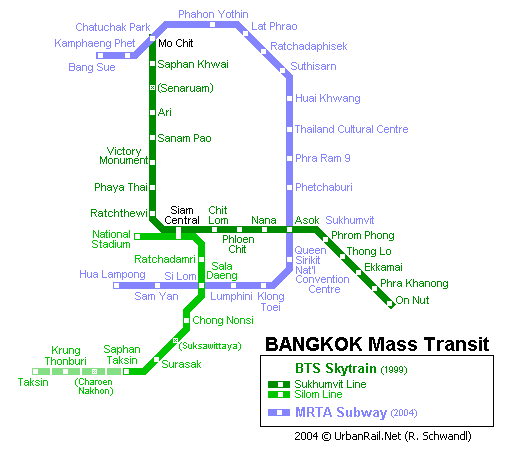
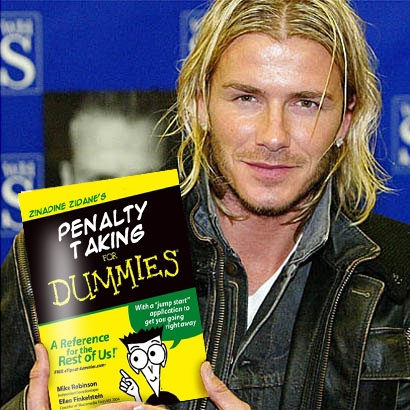
|
Remembering Tiananmen Square:
15 years later, China faces its
greatest challenge Fifteen years ago a million people gathered in Tiananmen Square on behalf of freedom. They gathered, despite government threats, to assert that every individual is worthy of respect; that people matter more than governments. The government of China thought otherwise. They sent in troops, and brutally dispersed the crowd. But, as always, it will be individual liberty that triumphs. Sometimes people argue that we are wrong to apply our Canadian view of human rights to very different cultures, such as the ancient civilization of China. The government of China has, in the past, been particularly fond of this argument, which leaves them free to define human rights as they see fit. They have claimed to be guided by "Asian values." And what are those values? Courage in the defence of freedom, as well as respect for the humanity of all. They are values shared by the greater part of mankind. The demands being made by those assembled in Tiananmen Square were moderate in the extreme. Though, tragically, a number had to die for them, and many more suffer for them, none should apologize for them. The Constitution of the People's Republic of China (PRC) guarantees to citizens the very rights on behalf of which they were demonstrating: freedom of speech, freedom of the press, freedom of assembly, as well as the right to public demonstration. The desire for these rights burns still more strongly today in China than it did fifteen years ago. The government of China is keenly aware of this. Change is on the way. Only two months ago the 2,900 member state legislature of the PRC committed itself anew to the proposition that "The state respects and preserves human rights." Slowly, much too slowly, it is being forced by changes at home and abroad to show that these words are meant. Fifteen years after Tiananmen Square every person held in jail because they participated in that great event, or merely attempted to keep its memory alive, should be free. Instead many remain in prison, and their supporters continue to be threatened with imprisonment. But an end to these injustices will only be a beginning. If China wishes, as it surely does, to be seen as a "state that respects and preserves human rights", the government in Beijing must initiate a full and impartial inquiry into the events of 1989, making a break with the past. Why should the PRC want to make such a break? The reason is clear. China is approaching another watershed in its history. By the twentieth anniversary of Tiananmen Square, in 2009, it could be too late for orderly change. A regime riven with contradictions is subject to collapse. The ruling party in China still calls itself the CCP; the Chinese Communist Party. But it rules a country that is capitalist. Private wealth is now greater than the wealth commanded by the state. The state, moreover, remains a dictatorship, while claiming increasingly to be a democracy. If it fails to make good on that claim through more than empty slogans, it will lose the ability to govern. In a country with 2,000 daily newspapers, 900 television stations and 80 million users of the Internet (increasing daily), public opinion can no longer be ignored. Corruption, arbitrary arrest, ready resort to the death penalty, labour camps, environmental cover-ups, secrecy over SARS ... all these things are becoming known to China's people. You cannot, ultimately, govern a country without the co-operation of the governed. The almighty U.S. has found that, for all its wealth, power, and moral force, it cannot govern little Iraq. It is not enough for governments to intend good. They need the assent of the governed in order to do it. The fundamental reason is that there must be room for changing perceptions of what is good. There must, therefore, be consultation. Without public participation a government lacks legitimacy, and without legitimacy it lacks power. The state cannot command 1.2 billion citizens; it can only persuade them. But for this, there must be dialogue. It was in order to make that point that so many gathered, on behalf of democracy, in Tiananmen Square, just 15 years ago. On the night of June 3-4, 1989, the tanks of the (grotesquely named) People's Liberation Army charged among them, killing hundreds. There never was a more important time to remember these victims than today when China is faced by its greatest test; either to return to the stultifying times of oppression, or show the world that it is a modern state "that respects and preserves human rights," as it has so recently and solemnly declared itself to be. John Polanyi is a professor and Nobel Laureate at the University of Toronto. This article is based on his opening address to the Toronto Association for Democracy in China Forum on Human Rights and Democracy in China held recently in Toronto. |
Jasper Becker was fired by the South China Morning Post for writing a little too truthfully about China. He is now China correspondent for the UK's Independent Newspaper. His commentary on the 15th anniversary of the Tiananmen massacre can be found at:
http://news.independent.co.uk/world/asia/story.jsp?story=527995
Why democracy matters
June 2 2004.
This week Iraq is now within less than a month of having a new Iraqi government, this week a new Indian government starts work, this week where we pay homage to those who fought to free Europe from tyranny on the D-Day beaches and this week where we remember the Chinese students who died in Tiananmen Square fifteen years ago.
Nooraine Fazal provides below a very thoughtful and optimistic inside view of the Congress Party's shock political win.
A simple letter in Newsweek summons up simple truths that we should not lose site of:
"We are not tyrannical imperialists but people who thoughtfully commit our men to defend freedom. Dissent is not traitorous but a valuable part of that freedom. It is our obligation as part of a free and democratic society to express our doubts about the decisions of our leaders and to deeply examine the purpose of committing young men and women to war.
India Votes - a fractured verdict?
Nooraine Fazal provides an insider's account of democracy at work in India.
June 2, 2004.
Vajpayee resigns
Prime Minister Atal Bihari Vajpayee (headed a ruling coalition of 20+ parties called the NDA) on 13th May 2004 in a televised address to the nation. “Elections to the 14th Lok Sabha (Indian Parliament) are over. The voters have given their verdict. I accept the verdict"….”it is always with the will of the people that governments have been formed--and changed (in India). "This power of democracy is a matter of pride for our country, something which we must always cherish, preserve and further strengthen."
AMEN!! I said to Vajpayee’s words!!
On a personal note….
I had returned home to India after twelve years of “self exile”. The main reasons I had returned were I believed parts of India were “shining” thanks largely to the economic reforms unleashed by the Congress in 1991 (subsequent governments built on them); in the face of national bankruptcy. Yes, I guess you could call me one of the fortunate “urban elite” for whom India could be a land of tremendous opportunity. And yet, my optimism was tempered with fear.
I believed that India was at the cross roads and needed to choose the type of India it wanted to be (I returned because I wanted to participate in that decision) – the India I want - a secular developed liberal democracy; confident of its standing globally or one which I thought it was developing into thanks to the BJP’s (leading partner of the NDA – the ruling coalition over the past six year) divisive politics - an inward looking Hindu Nationalist country; where economic reforms benefit primarily the middle class & the rich.
I sat there glued to the TV (with mixed feelings best described as 1/3 disbelief, 1/3 jubilant and 1/3 worried) as the results poured in across the country. Yes the seemingly impossible was happening - the NDA coalition which called the election early because it was confident of a victory had lost. I don’t believe even the President of the Congress party – Sonia Gandhi, really thought this was possible until well after the last vote was cast!
As it sunk in, Robert asked me: “How it happened? What is the message & how does it impact the neighbors & the US”? As someone who watched & sometimes contributed (by way of constructive? feedback) the development of rascott.com from its infancy into an excellent personal web site; I decided to take up the opportunity. This is a first for me – an attempt to write something beyond a sales proposal!! So here goes with part one …
So what happened? What’s the message?
At a macro level …..
1) The numbers indicate a fractured verdict with no clear winner – the “winning” coalition - congress (INC) and its allies received 34.60%; the losers & the main opposition BJP and its allies 35.25% and others (primarily the Left / Communists, Independents and regional parties from the most populous state in India – UP) 27.69%.
2) The % of vote share for the two national parties the ruling BJP and the main opposition Congress has fallen by 1.5% since the 1999 national election (this despite claims by the foreign media about “Gandhi’s congress sweeping India”!!) The gainers were regional parties and the Communists (best performance since independence; be in two border states of West Bengal & Kerela). Interestingly of the votes the BJP lost; only .1% of that vote was gained by the Congress
For a graphical representation on the final tally refer to http://specials.rediff.com/election/poll04results.htm
For % of vote share (and an alphabet soup for anyone without a Phd in Indian politics!) for various political parties http://www.rediff.com/election/ls04detail.htm#cong
Why this result? The message from the Indian electorate!
1) It indicates that basic local issues (the necessities of roti, kapda, makan – Hindustani for bread, clothes & house & sadak, pani – roads, water) take precedence over national ones such as peace with Pakistan & China; prospect of peace in Kashmir; the “feel good factor” – the 5-8%+ GDP growth rate and India thrashing Pakistan at cricket!! )
2) The Indian voter voted against perceived misgovernance across the length & breadth of the country – the so called “anti incumbency” factor! This was demonstrated in almost every state; including two states my home state of Karnataka and neighboring state of Andhra Pradesh which were known to be models of good governance in urban India. Exceptions to this were four (of 28) which held state level elections recently (BJP won three of four and therefore called a national election eight months ahead of time) where the honeymoon continued; the “Bimaru” (economically backward) state of Bihar were muscle power and the alliances struck by the ruling RJD ruled supreme and West Bengal were the communists are deeply rooted in the system. This has been the case time and again in the hope that the Indian political parties will learn – alas their memory is short! Perhaps this time……?!
3) The Indian voter voted for more reforms, not less! Although the rhetoric of the communists would have you believe otherwise – even in the state of West Bengal were the Commies are the ruling party; they have embraced both privatization and foreign investment; including prohibiting labour strikes in the “strategic” IT sector (New Labour take note)!
4) Largely rejected the divisive politics of the BJP. The two major events which have made the headlines internationally include the destruction of a mosque in Ayodya (they believe it was the birthplace of Lord Ram), the state of UP in 1991 and the Gujarat riots in 2002 which saw the BJP government actively getting involved in ethnically cleansing 1000s of Muslims. To add insult to injury none of the accused have been booked by the Gujarat High court, (the Supreme Court is fighting this one) as yet.
At a lower but equally significant level people who saw each other as Indians first, rather than Hindu or Muslim or any of the other many religions practiced in India; people who celebrated each others festivals with equal gusto are now increasingly defining themselves as Hindu or Muslim or….first; Indian second. Debates about why a Muslim man is allowed four wives and not a Hindu; are increasingly common. (Most men I know think one wife is plenty; but hey what do I know?!) India does not have a common civil law … but that’s a topic for another day!
BJP lost a good chunk of their parliamentary seats in the state of Gujarat; despite winning the state elections after the riots. The star or should I say the villain of the show – Modi, the chief minister of Gujarat (who in my view should be tried in an international court of law ) is fighting to retain his chair, post the national elections.
That said the BJP held on to most of their other voter base in the Hindi Heartland
(by way of personal background ……I like to consider myself as a “citizen of the world”….I am born to a Muslim family whose ancestors are from Gujarat, Rajasthan and a region which is now a part of Pakistan)
5) the Muslim vote (dare I say “vote bank”!)… related to point 4. The BJP particularly Vajpayee realized this perhaps a bit late in the day. Majority of the time the Muslim vote determines who the winner is. You start with a negative 14% if the Muslims do not want you in office. Well guess they didn’t want the BJP!!
6) Sonia Gandhi’s foreigner issue – well, not really an election issue. This despite the BJP’s attempts to turn this election into a presidential one; pitting the Indian born statesman (er yes the same one who admitted to have commenced the recent peace process in Kashmir on a personal whim!! That said I do believe that he is the one person who could have brought peace to the sub continent) – Vajpayee against the Italian born widow of Rajiv Gandhi (former PM of India); a political novice in comparison. “The poet vs the news reader”!! The pluralities of Indian politics defeated that strategy.
Reasons for this (a) she didn’t project herself as the prime ministerial candidate for the congress (b) Indians believe that once a woman marries into a household she becomes a part of that household including adopting the nationality (c) to a lesser extent; but a factor all the same – not everyone is aware of her foreign origin (d) most people, even those opposed to the concept of a dynasty ruling India or a person of foreign origin have developed a (grudging in some cases!) respect for her hard work & determination in the face of adversity; including the assassination of her husband and mother in law.
Note - There is some (muted) debate whether a person of foreign origin is allowed to hold elected office in India. On the face of it there appears to be nothing in the Indian constitution which prohibits it; however there apparently is a clause about reciprocity of rights which may prevent ……
7) The “Amma” factor – i.e. Indira Gandhi (The former prime minister. The Iron Lady of the sub continent! Sonia Gandhi’s mother in law) who at one stage was synonymous with the Congress hand (party symbol). The Congress starts any election with minimum 10% vote in their kitty.
Although the foreign media attributed the Congress victory to the entry of Priyanka & Rahul Gandhi (Indira Gandhi’s grand children) into active politics; I don’t believe there is enough data to back this up; given that they restricted their campaign to a few constituencies in state of UP. The Congress’s tally in fact went down marginally in UP in comparison to the previous elections
8) Alliance management – despite the BJP’s self proclaimed success in managing a coalition; they lost a key ally in DMK in the state of Tamil Nadu months before the election. Guess how many seats the Congress, DMK and their allies won in Tamil Nadu? You got it - 39 out of 39!! This state alone could have swung the election in favour of the BJP!! Btw Congress had accused the DMK of being involved in / being sympathetic towards the LTTE; a terrorist outfit believed to be behind Rajiv Gandhi’s assignation! As they say “politics is the art of the impossible”!
9) India “Shining” or not – the BJP’s arrogant campaign highlighted to the have-nots just how deep the divide is. Telling 300 million people who live below the poverty line that they are shining is not a brilliant idea!! Contrast this with the Congress’s “ Congress ka haath aam admi ka saath”; i.e. “Congress’s hand is with the common man”.
Ultimately India is still a country were the poor outnumber the rich; the rural population the urban. The BJP could not see beyond the urban elite. Perhaps the glare of India shining blinded them temporarily!! Mind you a good proportion of the urban population in the major metros of Delhi, Mumbai / Bombay, Calcutta, Chennai / Madras and to a lesser extent my home city Bangalore voted for Congress and its allies.
In conclusion I don’t believe it was a fractured verdict! I believe the message from the Indian electorate is loud & clear - that we need more reform; not less – both economic AND POLITICAL. We can’t have one without the other; if we are to ensure that the benefits of “development” are to spread across the socio-economic sections of India. Failing which the Indian electorate; particularly the rural and economically disadvantaged population will continue to vote out governments across the political and ideological spectrum, for their misgovernance and corruption.
Nooraine Fazal, June 2004
Pattaya Today revisited
June 2 2004,
A visit to the wonderfully written Pattaya Today newspaper is always a good reminder that life is full of more drama than any soap opera will ever be !
It is called Pattaya Today but is only published every two weeks; Pattaya Fortnightly would be more honest. But it is 20 baht well spent.
Some gems from the current edition:
British and Hong Kong passport holder David Viner, 57, who lives in a 400 baht guest house in Jomtien, has not paid his rent to Mrs. Sommai Dohnayburi, but claims that he was one of the first 400 owners of a Thailand Elite card. (More on the Elite cards when I want to have a real vent !).
A twenty year old khatoey who tried to engage a Bahraini tourist in "horizontal leisure pursuits but apparently without success. What happened next is difficult to know for sure." The tourist alleges his wallet was taken. The khatoey says that the tourist became abusive and that he/she tried to tell him that his denial could be more courteous "when declining a perfectly reasonable offer of entertainment" The wallet was not found.
A German resident who has not got the knack for home decoration. Joern Knaak, 55, had to be hospitalized after injuring himself with a circular saw. His Thai wife said that he went berserk in their flat.
A monk that was arrested for improper behaviour. "Very drunk and unable to stand up." I guess he will try to kick that habit !
Closure of the Holding Club after tourist police went to check for vulgar shows that might be in progress. Among equipment seized were darts and a small dart board and bananas, "although their role on stage has not been made plain".
A 46 year old German man who walks around Soi 8 completely naked; apparently for hours on end He is presumably looking to see which pool chair he left his towel on !
MAY 2004
Amnesty International
May 26, 2004
Earlier today Amnesty International released its 2004 report , and it makes for depressing reading. I make no apologies for re-printing the Secretary-General's message.
AI argues that human rights and international humanitarian law are under the greatest pressure for more than 50 years.
From long-running conflicts in countries such as Chechnya and Sudan to the Madrid train bombings, it said global insecurity was combining with increasing human rights violations by powerful governments to create a world of "mistrust, fear and division".
It condemns attacks by al-Qaida and others as "sometimes amounting to war crimes and crimes against humanity" but says principles of international law that could prevent such attacks were being undermined and marginalised by powerful countries such as the US.
"Governments are losing their moral compass, sacrificing the global values of human rights in a blind pursuit of security. This failure of leadership is a dangerous concession to armed groups," said Irene Khan, the secretary general of Amnesty International.
"The global security agenda promoted by the US administration is bankrupt of vision and bereft of principle. Violating human rights at home, turning a blind eye to abuses abroad and using pre-emptive military force where and when it chooses has damaged justice and freedom, and made the world a more dangerous place."
A message from Irene Khan, Amnesty International's
Secretary General
On 19 August 2003 the UN High Commissioner for Human Rights, Sergio Vieira de
Mello, was killed in a bomb attack on the UN building in Baghdad, almost 10
years after the Office of the High Commissioner was established to uphold and
promote human rights.
As one of the most prominent international human rights defenders lay dying in
the rubble, the world had good cause to ponder how the legitimacy and
credibility of the UN could have been eroded to such a fatal degree. Bypassed in
the Iraq war and marginalized in its aftermath, discredited by its perceived
vulnerability to pressure from powerful states, the UN seemed virtually
paralysed in its efforts to hold states to account for their adherence to
international law and their performance on human rights.
It was easy at that moment to wonder whether the events of 2003 had also dealt a
mortal blow to the vision of global justice and universal human rights that
first inspired the creation of global institutions such as the UN. If human
rights are used as a cloak by governments to put on or cast away according to
political expediency, can the international community of states be trusted to
bring about that vision? And what can the international community of citizens do
to rescue human rights from the rubble?
The answer came the same week that the UN office was bombed, when a group of
women in Mexico won the first step towards achieving justice for their murdered
daughters. Marginalized and poor, they had fought for 10 years to get that far
but, finally, they compelled Mexican President Vicente Fox and the federal
authorities to intervene. I was with the mothers of Ciudad Juárez when the news
of this breakthrough came through. I will never forget the joy on the faces of
the women and their gratitude to the thousands of people around the world whose
efforts had helped bring about change. A worldwide web of international
solidarity had globalized their struggle. Looking at them, I saw how much can be
achieved for human rights through the dynamic virtual space of global civil
society.
The challenges facing the global movement for human rights today are stark. As
activists, we must confront the threat posed by callous, cruel and criminal acts
of armed groups and individuals. We must resist the backlash against human
rights created by the single-minded pursuit of a global security doctrine that
has deeply divided the world. We must campaign to redress the failure of
governments and the international community to deliver on social and economic
justice.
The Baghdad tragedy was a clear reminder (though by no means the only one) of
the global threat posed by those who are ready to use any means to further their
political objectives. We condemn their acts unequivocally. They are guilty of
abuse of human rights and violation of international humanitarian law, sometimes
amounting to crimes against humanity and war crimes. They must be brought to
trial but – and here we part company with some governments – in accordance with
standards of international law. Human rights are for the best of us and the
worst of us, for the guilty as well as the innocent. Denial of fair trial is an
abuse of rights and risks converting perpetrators into martyrs. This is why we
call for Saddam Hussein to be tried in accordance with international standards.
This is why we oppose military commissions for the detainees at the US naval
base in Guantánamo Bay, Cuba, that fail to meet international standards.
There is no path to sustainable security except through respect for human
rights. The global security agenda promulgated by the US Administration is
bankrupt of vision and bereft of principle. Sacrificing human rights in the name
of security at home, turning a blind eye to abuses abroad, and using pre-emptive
military force where and when it chooses have neither increased security nor
ensured liberty.
Look at the growing insurgency in Iraq, the increasing anarchy in Afghanistan,
the unending spiral of violence in the Middle East, the spate of suicide
bombings in crowded cities around the world. Think of the continued repression
of the Uighurs in China and the Islamists in Egypt. Imagine the scale and scope
of the impunity that has marked gross violations of human rights and
humanitarian law in the "forgotten" conflicts in Chechnya, Colombia, the
Democratic Republic of the Congo and Nepal – forgotten, that is, by all except
those who daily suffer their worst effects.
Double speak brings disrepute to human rights but, sadly, it is a common
phenomenon. The USA and its allies purported to fight the war in Iraq to protect
human rights – but openly eroded human rights to win the "war on terror". The
war in Iraq was launched ostensibly to reduce the threat of weapons of mass
destruction, yet the world is awash with small arms and conventional weapons
that kill more than half a million people a year. To make matters worse, in the
name of combating the so-called "war on terror", many countries have relaxed
controls on exports to governments that are known to have appalling human rights
records, among them Colombia, Indonesia, Israel and Pakistan. The uncontrolled
trade in arms puts us all at greater risk in peace and war.
Iraq and the "war on terror" have obscured the greatest human rights challenge
of our times. According to some sources, developing countries spend about US$22
billion a year on weapons and, for $10 billion dollars a year, they would
achieve universal primary education. These statistics hide a huge scandal: the
failed promise to attack extreme poverty and address gross economic and social
injustice.
According to some analysts, there is a real risk that the targets of UN
Millennium Development Goals – such as the reduction of child and maternal
mortality, getting all children to primary school, halving the number of people
with no access to clean water – will not be achieved because international
attention and resources have been diverted to the "war on terror".
The poor and the marginalized are most commonly denied justice and would benefit
most from the fair application of the rule of law and human rights. Yet despite
the increasing discourse on the indivisibility of human rights, in reality
economic, social and cultural rights are neglected, reducing human rights to a
theoretical construct for the vast majority of the world's population. It is no
mere coincidence that, in the Iraq war, the protection of oil wells appears to
have been given greater priority than the protection of hospitals.
Nor is it surprising that big business can do what it wants and get away with
it, or choose not to do what it ought to do by claiming that it has no clear
legal responsibility or accountability for human rights. The UN Human Rights
Norms for Business, approved in 2003, are an important step towards corporate
accountability but, sadly, have come under concerted attack by companies and
governments.
Against this backdrop of abuse and impunity, hypocrisy and double standards,
what can we do to make human rights matter?
We can show that human rights offer a powerful and compelling vision of a better
and fairer world, and form the basis of a concrete plan of how to get there.
They bring hope to women like Amina Lawal in Nigeria whose death sentence was
set aside as a result of the massive support her case generated. They provide a
tool to human rights defenders like Valdenia Paulino to fight her battles
against police brutality in the favelas of São Paulo in Brazil. They give
voice to the powerless: the prisoner of conscience, the prisoner of violence,
the prisoner of poverty.
In times of uncertainty the world needs not only to fight against global
threats, but to fight for global justice. Human rights are a banner to
mobilize people globally in the cause of justice and truth. Thanks to the work
of thousands of activists in Latin America, the tide is turning against impunity
in that region. Despite the crusade by the USA to undermine international
justice and ensure global immunity from prosecution for its citizens, the
International Criminal Court appointed its prosecutor and began its work in
earnest. Slowly, the courts in the USA and the United Kingdom have begun to
scrutinize government attempts to restrict human rights in their "war on
terror".
Human rights promise the certainty of equality and equity to millions of women
around the world. Recent legislative changes in the status of women in Morocco
will open a new chapter in gender equity in the region. Recognizing the power of
human rights to universalize the struggle of women, members of Amnesty
International are joining hands with women's rights activists and many others to
campaign globally to stop violence against women. We call on leaders,
organizations and individuals to make a public pledge to change themselves and
to abolish laws, systems and attitudes that allow violence against women to
flourish.
Human rights are about changing the world for the better. Using the powerful
message of human rights, Amnesty International has launched a joint campaign
with Oxfam and the International Action Network on Small Arms (IANSA) to achieve
global control of small arms. To those who say this will not work, we point to
the coalitions that led to the banning of landmines and the creation of the
International Criminal Court. Combining public pressure and government support,
we are determined to bring about change.
We celebrate these and other gains in this report, but we have not allowed them
to obscure the very real challenges that persist. We live in a dangerous and
divided world where the relevance of human rights is daily put to the test, the
legitimacy of activists is questioned, and the "accountability gap" of
governments, international institutions, armed groups and corporate actors is
growing. It is precisely in such a world that we need a bigger humanity that
will say, "This has to stop. Things must change".
There is no stronger international community than global civil society. Through
its members and allies in the human rights movement, Amnesty International is
committed to reviving and revitalizing the vision of human rights as a powerful
tool for concrete change. Through the voices and visions of millions of men and
women, we will carry the message of human rights forward.
Time for seeding the FA Cup
May 23 2004
The FA Cup, a showpiece of English football; carried on TV around the world. ANd yesterday it was utterly predictable, and other than the glorious Ronaldo, it was utterly dull.
The gulf between the top premiership and the nationwide league sides is now huge. Millwall were in the final by luck of the draw. They had avoided playing a premiership team until the final.
This is such a showpiece event that it should be between the best teams. The solution is simple. Seed the third round when the premiership and first division teams enter the tournament. Seed based on league positions from the previous year.
There will still be upsets (just look what happens in major tennis tournaments) but we would be guaranteed a final between teams that will do justice to the occasion.
The reason that the FA Cup does not have the stature that it once did was all too obvious yesterday. It was a 90 minute yawn....and frankly Millwall should not have been there.
Khun mai kuey doen lenn khon dioew
May 22 2004
I need help translating you will never walk alone into Thai!!
I have tried to avoid commenting on the proposed investment vy the Prime Minister of Thailand or Shin Corp of the Thai tax payer in venerable Liverpool Football Club.
Business is business. Thaksin first wanted to buy a stake in Fulham, now Liverpool; and if he doesn't get a stake in Liverpool then he will look elsewhere. Memo to the Prime Minister - Watford always need the cash.
There is a lot of skepticism in Liverpool and in Thailand about this deal. But for once I am a contrarian. It is potentially brilliant.
The intent is to acquire a 30 per cent stake in Liverpool football club, using Bt4.6bn (£63m) raised through a national lottery. Each lottery ticket will cost Baht 1,000. At least 8 million tickets will need to be sold to cover the investment and prizes and costs.
|
|
For Thailand's billionaire premier, and perhaps for the country. the benefits of the Liverpool deal would not be counted in dollars or sense.
In part it is about national pride. Cast your mind back to the devastating 1997 financial crisis. For four years Thailand bowed to the demands of the International Monetary Fund and its $14.7bn workout plan. Foreigners were making cheap investments into businesses once controlled by Thai families. Many humiliated Thais, especially self-made tycoons, likened these events to a colonial takeover.
In 2001, Mr Thaksin, a telecommunications mogul, shrewdly exploited the national loss of face, promising to save the country from total subjugation and salvage its honour. Since then, he and his Thai Rak Thai ("Thais love Thais") government have focused on boosting the economy and the national sense of well being. While at a political level still being close to the west Thaksin has been eager to promote a more nationalistic Thailand.
Now, the economy is strong after growing 6.7 per cent last year. Mr. Thaksin happily expelled the IMF from Thailand last August after pre-paying remaining debt from the 1997 bailout. He then appeared on national television, urging Thais to celebrate what he called "independence day".
A pushy foreigner is buying someone else's national asset; and this time it is Thailand investing in a trophy of the developed world. No longer bossed about by foreigners, Thailand becomes the boss.
Liverpool fans have also taken badly to the prospect of Thai ownership. Local newspapers have worried about Thailand's human rights record; quite what that has to do with keeping Michael Owen at Liverpool is a mystery.
This investment is a part of Thailand's new national pride. British football is big, very big, in Thailand. Liverpool are on TV weekly across Asia.
The details will take much sorting through; but with goodwill on both sides there may only be winners.
Casualties of war; truth and decency
May 21, 2004
I keep saying to myself that it is time to stop writing around events in Iraq. But what is happening in Iraq is so awful that it cannot be ignored.
A friend sent me by email the video of Nick Berg's execution. I did not open it and deleted the email immediately. Are we all becoming that desanitised that we can pass such horror around like some sort of viral chain mail. Have we lost respect for innocent life; have we lost all respect for a mourning family who must have dreadful nightmares at what happened to their son.
There is a message from Michael Berg (Nick Berg's father) below. It is an extract from his message of support for the Stop The War Coalition's demonstration, End the Torture - Bring the Troops Home Now, which will be held at 11am tomorrow at the Embankment in London. If anyone is in London you should attend this protest and you should honour the loss of this and so many other innocent lives.
Mr. Bush and Mr. Blair; I simply no longer believe anything that you or your representatives in Iraq say. You killed innocent lives in Mukaradeeb; but you will not admit it. The wedding singer, his musician brother, the young children whose bodies have been photographed and filmed by the international new agencies are not foreign fighters.
Let's look at the treatment of journalists from my old company, Reuters. In signed affadavits three journalists detail their torture and humiliation by US troops. After Reuters protested the treatment of their staff it took two months for a letter written on 5 March from the top US general in Iraq, Ricardo Sanchez, to reach Reuters.
The general denied any abuse saying that there was no evidence that the three, who were reporting on a helicopter crash, had been mistreated. He had, he said, carried out a thorough and objective investigation.
One small omission; at no stage did the investigators question the three Reuters staff.
Abuse of detainees has been systemic and approved at the highest level. It is even being given the most frightening of new terminology. Sleep deprivation is now known by the US military as "sleep management". Humiliation and mistreatment appears to have been the rule rather than the exception. And if that is happening in Iraq I fear to think about some of the abuses that have occurred in Guantanamo over the last two years.
The first casualty of war may not be the truth. It may be the fundamental decency of man. In Iraq we have sunk to the lowest common denominator of saying that at least we are better than the bad guys. We are not holding ourselves to the highest standards; just to the least base. It is not good enough.
Lies about crimes
Leader
Friday May 21, 2004
The Guardian
Two acts of carnage, one in Iraq and one in Gaza, competed for the world's
horrified attention yesterday: more than 40 people were killed by American fire
in a village close to the Syrian border in western Iraq, and at least eight
Palestinians had died as a result of Israeli gunfire during a peaceful
demonstration at Rafah. There is no need here to be reminded that violent and
indiscriminate death is not confined to one side.
When Iraqis are blown apart in Baghdad by a car bomb, or Israelis in Haifa by a suicide bomber, these are instantly and correctly labelled as terrorist attacks. However when American helicopters or Israeli tanks cause death to innocent civilians on a similar scale, there is always an alternative version on offer. The Pentagon's explanation of the attack on the village of Mukaradeeb is that the people killed were not taking part in a wedding party or firing their guns in the air in celebration, as the survivors have insisted. They were occupying a "foreign fighter safe house" and had fired on the coalition forces first. The Israeli army's explanation for the deaths in Gaza is that its fire had been directed against an "abandoned structure" as a warning, and that this may have led to casualties when a tank shell went through a hole in the wall created by a previous shell.
Of course, no one has the monopoly of truth, yet on the facts so far reported in these two cases, as on too many recent occasions, the "official" version is simply not credible. The US military admits that it probably killed 40 people at Mukaradeeb but says that none of them were civilians. So did the "foreign fighters" include the young girl, one of several children whose bodies were shown being buried on television? Or the Iraqi wedding singer and his musician brother, whose funeral in Baghdad was reported yesterday by Reuters? In Rafah, it is not believable that casualties on such a large scale - including some 50 injured as well as the dead - were caused by "warning shots" directed towards an unoccupied area (and since when are tanks used to fire such shots anyhow?). As it happens, we carried yesterday evidence of another earlier evasion - or lie - in Rafah: our correspondent was shown the bodies of four dead children, all with bullet wounds, whom the Israeli army claimed had been killed on Tuesday not by its snipers but by Palestinian bombs.
There may be some argument whether these tragedies merely display a reckless disregard for civilian casualties (perhaps some "foreign fighters" were thought to be in the neighbourhood of the wedding party) or a deliberate design to intimidate unarmed opposition, as often seems more likely when civilians are killed by the Israeli forces. What both incidents share is the view that the war on terror justifies extreme behaviour - a view long urged by Ariel Sharon that has now been endorsed by George Bush. Wednesday's slaughter came one day after Mr Bush had drawn a direct parallel, in a speech to the pro-Israeli AIPAC lobby, between the two countries' "struggles against terrorism", while failing to repeat early criticism of the Rafah onslaught by secretary of state Colin Powell. After the shelling, the White House was again more reluctant than the state department to condemn Israel.
When the US military spokesman claims that its force took "obligatory action" and Israel says it was acting in Rafah "in self-defence", words lose all credibility. Another set of images of dead civilians and grieving relatives is transmitted across the Middle East, and the casual viewer is not even sure whether they are coming from Baghdad or Gaza. On grounds of expediency alone, Mr Bush should ask what is gained by this - or rather how much is lost. And if the president is not asking, then Tony Blair should be telling him - and telling the rest of us that he is doing so.
|
George Bush never looked
into Nick's eyes People ask me why I focus on putting the blame for my son's tragic and atrocious end on the Bush administration. They ask: "Don't you blame the five men who killed him?" I have answered that I blame them no more or less than the Bush administration, but I am wrong: I am sure, knowing my son, that somewhere during their association with him these men became aware of what an extraordinary man my son was. I take comfort that when they did the awful thing they did, they weren't quite as in to it as they might have been. I am sure that they came to admire him. I am sure that the one who wielded the knife felt Nick's breath on his hand and knew that he had a real human being there. I am sure that the others looked into my son's eyes and got at least a glimmer of what the rest of the world sees. And I am sure that these murderers, for just a brief moment, did not like what they were doing. George Bush never looked into my son's eyes. George Bush doesn't know my son, and he is the worse for it. George Bush, though a father himself, cannot feel my pain, or that of my family, or of the world that grieves for Nick, because he is a policymaker, and he doesn't have to bear the consequences of his acts. George Bush can see neither the heart of Nick nor that of the American people, let alone that of the Iraqi people his policies are killing daily. Donald Rumsfeld said that he took responsibility for the sexual abuse of Iraqi prisoners. How could he take that responsibility when there was no consequence? Nick took the consequences. Even more than those murderers who took my son's life, I can't stand those who sit and make policies to end lives and break the lives of the still living. Nick was not in the military, but he had the discipline and dedication of a soldier. Nick Berg was in Iraq to help the people without any expectation of personal gain. He was only one man, but through his death he has become many. The truly unselfish spirit of giving your all to do what you know in your own heart is right even when you know it may be dangerous; this spirit has spread among the people who knew Nick, and that group has spread and is spreading all over the world. So what were we to do when we in America were attacked on September 11, that infamous day? I say we should have done then what we never did before: stop speaking to the people we labelled our enemies and start listening to them. Stop giving preconditions to our peaceful coexistence on this small planet, and start honouring and respecting every human's need to live free and autonomously, to truly respect the sovereignty of every state. To stop making up rules by which others must live and then separate rules for ourselves. George Bush's ineffective leadership is a weapon of mass destruction, and it has allowed a chain reaction of events that led to the unlawful detention of my son which immersed him in a world of escalated violence. Were it not for Nick's detention, I would have had him in my arms again. That detention held him in Iraq not only until the atrocities that led to the siege of Fallujah, but also the revelation of the atrocities committed in the jails in Iraq, in retaliation for which my son's wonderful life was put to an end. My son's work still goes on. Where there was one peacemaker before, I now see and have heard from thousands of peacemakers. Nick was a man who acted on his beliefs. We, the people of this world, now need to act on our beliefs. We need to let the evildoers on both sides of the Atlantic know that we are fed up with war. We are fed up with the killing and bombing and maiming of innocent people. We are fed up with the lies. Yes, we are fed up with the suicide bombers, and with the failure of the Israelis and Palestinians to find a way to stop killing each other. We are fed up with negotiations and peace conferences that are entered into on both sides with preset conditions that preclude the outcome of peace. We want world peace now. Many have offered to pray for Nick and my family. I appreciate their thoughts, but I ask them to include in their prayers a prayer for peace. And I ask them to do more than pray. I ask them to demand peace now. · Michael Berg is the father of Nick Berg, the US contractor beheaded on video in Iraq this month by a group believed to be linked to al-Qaida. This is an extract from his message of support for the Stop The War Coalition's demonstration, End the Torture - Bring the Troops Home Now, which will be held at 11am tomorrow at the Embankment in London |
Fixing Bangkok airport
May 17, 2004
Bangkok airport really is a miserable place; it works in that passengers get processed on and off airplanes with reasonable efficiency; but that is about it !
But it is hardly a warm welcome to the land of smiles.
Arriving last night the lady at immigration had clearly been trained in cold war Russia.
Then after immigration and customs you are confronted by the limousine vultures. There is only one way out of the terminal and that is through this throng of touts. Why they cannot be restricted behind desks where they can be approached only if the service is needed is a mystery.
They tug at you, follow you, ask where you are going. They say they are taxis; they are not. The queue for the public taxi service is outside the building. The are not allowed to tout inside. The limo services are about double the cost of the public taxis. If you want to go by the expressway do check whether the toll is or is not included in the limo fare.
The only catch with the public taxis is that all the new taxis are in the city. The oldest crocks are all at the airport. I have no idea why this is given that there are so many new taxis in the city.
Mirror editor sacked
May 15 2004
If he had resigned he could have gone with greater dignity. Instead Piers Morgan was escorted off the Mirror premises as the newspaper was forced to apologise for being hoaxed.
The Iraq war gets another casualty. The head of the BBC had to resign over the Hutton affair. Now the editor of a major UK tabloid. There are some interesting lessons for good news reporting.
Misleading people and endangering lives
May 14 2004
The UK government has now stated what many people suspected; that the front page pictures carried by the influential tabloid - Daily Mirror were in fact staged fakes taken outside Iraq.
The Mirror is digging its heels in and defiantly challenging the government to produce its evidence. But the pictures show no faces; and the source of the pictures is unknown.
The investigation of the abuse of Iraqi prisoners by British forces continues. There was clearly a problem. Although it appears to have been dealt with quickly and s not as widespread as the US abuses.
But if the pictures are fake then there are some hard questions that need to be answered by the newspaper's editor, Piers Morgan. How was he misled? What checks did he perform before publication? What money changed hands? Why - if there was any shadow of doubt in his mind - was the paper's presentation of the pictures so unequivocal? What was the urgency?
If the pictures are fakes then good ethical journalism and simple fairness requires that the Mirror acknowledges that fact loudly and clearly.
People are being murdered because of pictures of alleged abuses. It is no defence to say that the pictures were an accurate representation of events which the Mirror still believes actually took place. They were portrayed as genuine. They were almost certainly not. Simple principle here Mr. Morgan. If you get something wrong be a grown up and say I was wrong, I am sorry. In this case you might even save a few of the lives that your incompetence has endangered.
India's election shock
May 13, 2004
2004 may become a defining year for the vitality of democracy.
Against all predictions the BJP today has conceded defeat to Sonia Gandhi's Congress Party. Ms Gandhi, is set to become the new Prime Mininister. She has pushed for a secular India in contrast to the BJP's Hindu nationalist message, is the widow of the former prime minister Rajiv Ghandi who was killed in a 1991 suicide bombing.
The BJP were generally expected to ease to victory based on their "Shining India" campaign, which showed off a surging economy, relative peace with Pakistan, a successful cricket team and even good monsoon rain.
Now 57, Ms.
Gandhi became an Indian citizen in 1983. Born in Italy she went to India as a 21
year old bride. She married into a dynasty that had dominated Indian politics
since independence from British colonial rule in 1947. Jawaharlal Nehru, India’s
first prime minister, headed the country from independence until his 1964 death.
He was followed by his daughter, Indira Gandhi; she was killed by her own
bodyguards in 1984. Her son Rajiv, an airline pilot and Sonia’s husband, was
reluctantly forced to take the political spotlight.
Rajiv won the following election with an unprecedented majority, but his
attempts to open India’s stagnant economy and shrink its bloated bureaucracy
cost him a lot of his popularity. He lost power in 1989, and was killed two
years later while campaigning.
Ms Gandhi officially took charge of the Congress Party in 1998 and was elected
to parliament in the last elections in 1999.
Under her leadership, the party turned in its worst performance since
Independence in the 1999 general elections. Congress also performed
indifferently in last year’s state elections.
However, the Gandhi name is still revered in India and Congress is looking to
Mrs Gandhi to translate that feeling into votes. And traveling widely throughout
the country in this campaign she appears to have done exactly that.
Congress will not have a clear majority in Parliament. But then nor did the BJP. The Congress led coalition is likely to have to depend on the support of leftist parties, who registered their best performance yet.
The new government is likely to continue the reforms crucial for Asia's third-largest economy. But the message that they will have heard is that the benefits must percolate down to the poor.
The rural poor have sent a loud message that the new economic wealth of India cannot be restricted to the urban upper classes. The people have spoken. Isn't democracy wonderful?
Our Immoral World
May 13, 2004
Find me a religious text anywhere that says that you can saw a man's head off in the name of God. The chilling video and pictures of the execution of an American civilian have given the American hard-liners exactly the message that they need to support their war.
It is almost like a game of which side can outrage the other more in order that they can continue this barbaric war.
Below are two very different views of world, from the Guardian in the UK and from the Republican Boston Herald newspaper.
All I know is that listening to President Bush saying that those who murdered Mr Berg would be hunted down and brought to trial was profoundly depressing. An eye for an eye, however it is done, will not win the war. The war is for the hearts and minds of the people. No one is winning right now.
|
Taking rights seriously
It has been an energetic supporter of the new international criminal court, in the teeth of opposition both from across the Atlantic and from our own armed forces. Yesterday, as we discuss in greater detail below, it proposed a further step which would give human rights a higher profile in domestic anti-discrimination law. The record is not all one way. Anti-terrorism legislation, explicitly derogating from the 1998 act, has removed essential protections in some of the cases where they are particularly important. Nevertheless, given the generally positive profile of human rights in the government's approach, the British handling of such issues in Iraq has been at best lacklustre and at worst inadequate. It is not merely that so few alarm bells were set ringing among either ministers or officials when the Red Cross first produced its report on abuse of prisoners in Iraq earlier this year. It is at least as unsatisfactory that ministers do not seem to have been able - or perhaps do not seem to have been motivated - to insist that pledges of lawful conduct given before the war were properly enforced. If the nerve of outrage about human rights was as strongly developed in this government as its nerve of fear about offending the tabloids, then ministers would be in a stronger moral and political position than they are. It appears to be true, as Tony Blair told the Commons yesterday, that abuse by British troops was neither widespread nor typical. It also appears that abuse, once highlighted, has been addressed and ended. Nevertheless, at least three instances of abuse were reported by the Red Cross, one of which - the ill-treat ment, including hooding, of prisoners in Umm Qasr in the immediate aftermath of the invasion - was described as "systematic". That technique, which the Red Cross raised as early as April 2003, was not entirely ended until September. Such issues ought to have been passed up the food chain to ministers, especially when the Red Cross was involved. But ministers ought also to have had a tighter grip on the conduct of British troops from the start of the conflict. That any military commander could have permitted systematic hooding of prisoners, even for a few days, given that the United Kingdom promised to end the practice forever in the 1970s, speaks of inadequate control by ministers and their senior officials. If occupation soldiers from all nations in Iraq are to avoid the appalling fate of the executed American captive Nick Berg, then a more scrupulous and vigorous approach to the enforcement of human rights would not merely be right but also a form of protection for occupied and occupier alike. This is, however, an exceptionally difficult challenge for the US, in particular, to fulfil. Partly this is because, as members of Congress were due to be shown last night, the scale of its own abuses shows so little sign of diminishing. Partly it is because the US is simply the central protagonist in the whole drama. None of this is in any way to diminish the inhuman treatment meted out to Mr Berg. But the US does not bring a solution to the spiralling crisis in Iraq a single step nearer by even threatening, much less carrying out, revenge attacks for the killing of Mr Berg. The US desperately needs a strategy which returns respect for human rights to the centre of its purposes in Iraq. Yet a nation that refuses to
embrace international human rights laws and institutions - and which has an
active policy of placing its captives so far outside the ambit of the law -
is not in a strong position to do what so clearly needs to be done.
|
Prouder than ever to be American
By
Boston Herald editorial staff The moral authority of the United States has never been stronger or more worthy of respect. This is a nation of Nick Bergs, Thomas Hamills, and Norman Darlings - the last an Army Pfc. buried in a Massachusetts military cemetery on Monday. It is a nation where a Boston cab driver, himself a Russian immigrant, proudly displays his daughter's photo in an Army uniform on the dashboard, smiling at the irony that once upon a time he was a Russian soldier and now his daughter is an American one. It's a nation where that daughter puts herself in harm's way to protect the freedom of the press which allows Boston Globe editors to run bogus photographs of American soldiers raping Iraqi women. This is a nation who counts Jim Sereigo-Wareing among its citizens, a Methuen man who has spent $6,000 out of his own pocket to hang American flags from highway overpasses. And it's a country of neighborhoods where homeowners for and against the Iraq war display candles as silent prayers for soldiers' safe return home. It's a country where most see teaching right from wrong as a fundamental parental duty, and worshiping God as an act of love, not hate. Nick Berg is not a hero. Nor is he a martyr. He is a murder victim, like the 3000 people who were killed on Sept. 11 were murder victims. Like Daniel Pearl and the young people dancing in a discoteque in Bali, or the commuters traveling by train to Madrid. Berg went to Iraq because he wanted to help an oppressed people rise up. He lived a fundamentally moral American ideal. His bereaved parents blame US officials, in part, for the slaying. Who can begrudge them their anger when their son is coming home in pieces. But they are, nonetheless, wrong. Those responsible stood in hoods behind the bound 26-year-old and held his head aloft in bloody triumph. Those deserving blame are the masters of their cause, hiding in caves and rogue states around the world. Their cause is power. Power over people and power over ideas. Hate, fear and oppression are just the tools wielded to gain it. The Almighty just the excuse. President Bush rightly calls Islamic terrorists ``evildoers.'' And they tarnish a just and loving religion by committing evil in God's name. It was an abuse of power that led to the humiliation of Iraqi prisoners at Abu Ghraib. But the actions of a few don't reflect the dedication of the many. This nation is using its power for good. To rebuild infrastructure, restore order, open schools and hospitals, create a government of, by and for the people. And just as some American MPs used their power to abuse, some American leaders (of both the opinion and political variety), are now using their power to mislead. Boston City Councilor Chuck Turner ought to be condemned for displaying those fraudulent rape photos. Boston Globe columnist Derrick Jackson ought to be ashamed to link treatment of Iraqi prisoners of war to racism against blacks in this country. The New York Times, which has hawked story after story on the prison abuse scandal, saw fit yesterday to run a single column on the upper right front page about Berg's murder, while prominently featuring accusations of abuse by a former Afghan prisoner. We can only hope that most in the Arab world reacted with disgust, with horror and with sadness when they saw Berg murdered so brutally, just as Americans are to the photos of degraded Iraqi prisoners. We can only hope the agendas of Turner, the New York Times, the Boston Globe and others are seen for what they are. Yesterday, a German official implored the United States ``to regain its moral authority for the good of the Western world.'' The truth is we have never lost it. |
Singapore's Happy Loos !
May 12, 2004
The Associate Press carried the following report today. As a public service to my reader I have to share this with you. And as a further public service this is the link to the World Toilet Organization.
Did you know that the 2004 World Toilet Summit will be held in Beijing where apparently you will be able to meet the movers and shakers of the industry !!! Must be all that "All Bran" served at the breakfast meetings!
Surely there must also be a World Toilet Graffiti Organization !
Anyway back to the AP article: hopefully the map will be fully absorbent just in case their is a papers shortage in you favoured loo !
"When finicky tourists in Singapore hear nature's call, they'll know where to go.
The city-state is publishing maps pinpointing its 500 cleanest public toilets in its drive to wipe dirty lavatories off the face of the island, an official said Thursday.
The toilet maps will indicate the cleanest and best-equipped restrooms for the benefit of tourists and shoppers, said Jack Sim, a founding member of the Singapore-based World Toilet Organization and president of the Restroom Association of Singapore.
Singapore started rating public lavatories in its "Happy Toilet" campaign last June — using a five-star system similar to that used to grade hotels. A "Happy Toilet" is one that's rated three-stars or more.
The maps will be available free at the international airport and information counters by August, and shopping malls whose restrooms don't yet qualify will be encouraged to upgrade so that they can be included, Sims said.
"If retail operators could use this as a competitive tool, it would help raise the standards of toilets in the country," Sim said. "Shopping centers with well-facilitated loos will win the trust of the shoppers."
The tightly controlled island nation of 4 million people is well-known for its behavior improvement campaigns targeting gum chewing, spitting and people who don't flush toilets."
How others see Thailand
11 May 2004
I had always assumed that Britain's "The Guardian" newspaper was a bit more fair minded than most. Much of their writing is intelligent and thought provoking. But occasionally stereotyping and cheap commentary appears in their columns as well.
In a report on Thai Prime Minister Thaksin's proposed purchase of 30% of Liverpool FC the Guardian wrote:
|
Kop Thai
The way the 55-year-old tycoon-turned-politician tells it, the acquisition of a global brand as powerful as Liverpool, albeit one that has been through a lean spell, represents the crowning glory of his country's unprecedented makeover. |
It is the opening line that is so unnecessary. Is that really what educated outsiders think of Thailand? If it is then the Proposed purchase of Liverpool FC and the marketing and branding opportunities that come with it may make the investment a public relations master stroke.
But really the Guardian can and should do better. One of the reasons that such a poor image of Thailand continues is that it is too easy to take cheap shots rather than consider Thailand for all its complexities.
I sent the following to the Guardian reader's editor. I will be interested to see his response, if any.
Dear Sir/Madam,
For a newspaper whose very principles lie in balanced, considered and open minded reporting it was sad to read the opening line of John Aglionby's report Kop Thai.
"Think Thailand and what comes to mind? Paid-for sex? Plentiful drugs?" he wrote.
Such depressing, narrow minded, stereotyping is worthy of "the News of the World". I expect better from "the Guardian". And everyone that lives, works and tries to make a decent living in Thailand deserves a little more respect and a little less cheap sensationalism.
Yours faithfully,
The China squeeze
9 May 2004
If it was not enough to have a large part of the Chinese Navy sailing through Victoria harbour the mainland authorities are stepping up pressure on Hong Kong's freedom of speech.
The state-run Xinhua news agency quoted a top official with China's liaison office in Hong Kong as saying local legislators would be acting unconstitutionally if they consider motions that express "discontent with" or "condemn" China's ruling on democratic reform.
It was the first such warning since the territory reverted to Chinese sovereignty in 1997.
In a sadly unhelpful addition to the debate, Cheng Siwei, vice chairman of the Standing Committee of the National People's Congress, was quoted in one of Hong Kong's Chinese newspaper's, Ming Pao, as branding the Legislature's democracy advocates as "bananas" - yellow-skinned Chinese with Western beliefs. "These people, who bad-mouth China and Hong Kong, are sinners of the Chinese nation," he said. "They are just like bananas, yellow outside but white inside."
The navy visit at the start of May included two guided-missile destroyers, four guided-missile frigates and two submarines. It was the first such show of military strength since the territory's transfer to China by Britain in 1997. Since the handover the Chinese military has been very low key in Hong Kong. The People's Liberation Army said that the visit was to honour the navy's 55th anniversary. But there was no such visit for the 50th anniversary in 1999. It can be no coincidence that the show of force came as people favouring popular elections in Hong Kong find themselves under growing pressure.
Hong Kong's best-known radio talk show host, Albert Cheng, a longtime supporter of greater democracy and a critic of the local government, flew to Europe last Sunday for a holiday "lasting the rest of year".
He left behind a tape recording, broadcast on Monday, in which he complained of growing threats of violence against himself and his family and what he said was an increasingly "suffocating" political atmosphere.
There will be significant protests in Hong Kong on July 1, marking the 7th anniversary of the handover and the first since last years mass demonstrations.
Anyone who cares for freedom of speech, expression and the right to choose who you are governed by and how should be there. I will find out more details and publish them nearer the time.
Rumsfeld must go; he would not be missed
7 May 2004
One defining US characteristic is that responsibility lies with the boss; Rumsfeld is the Secretary of Defence; he withheld terrible damaging information from his President and from the US Senate. The decent thing to do is to resign; if he des not resign he must be told to go.
The Economist says this far better than I can. I am beginning to suffer Iraq fatique; as I fear is my long suffering reader. But the story is too important to be ignored. And what happens in Iraq could define the Middle East and Arab/Western relations for the next generation.
This is a link to the full story of the abuse of Iraqi prisoners as carried in the New Yorker magazine.
Resign, Rumsfeld
May 6th 2004
From The Economist print edition
Responsibility for errors and indiscipline needs to be taken at the top
YOU are fighting against international terrorists in a battle that
both they and you describe as being one about values. You fight a war against
Saddam Hussein at your initiative, not his, and you say that it is a war about
law, democracy, freedom and honesty. A big metaphorical banner hangs above both
wars proclaiming that your aim is to bring freedom, human rights and democracy
to the Arab world. All of that sets admirably high standards for the conduct of
your forces as well as of your government itself. Now, however, some of your own
armed forces are shown to have fallen well below those standards. What do you
do?
One answer is exactly what George Bush has done in response to revelations of torture and humiliating treatment of Iraqi prisoners at the Abu Ghraib jail: to make it clear, in public, that you find such action abhorrent and unacceptable, and that the perpetrators of it will be punished. That has also been the approach of the British government in response to the publication of photographs that may well be fakes but that could nevertheless indicate that genuine abuses have taken place. Yet such statements are not enough, especially in the American case. The scandal is widening, with more allegations coming to light. Moreover, the abuse of these prisoners is not the only damaging error that has been made and it forms part of a culture of extra-legal behaviour that has been set at the highest level. Responsibility for what has occurred needs to be taken—and to be seen to be taken—at the highest level too. It is plain what that means. The secretary of defence, Donald Rumsfeld, should resign. And if he won't resign, Mr Bush should fire him.
That recommendation will elicit several different responses. One, from critics of the war, will be to point out that the highest level is in fact held by Mr Bush, and that it is the president who should go. The answer is that the electorate has a chance to dismiss Mr Bush in November, while Mr Rumsfeld is an unelected official who, if he is loyal to Mr Bush, ought to want to take the bullet in order to protect his boss. Another response, though, will be to say that the expulsion of Mr Rumsfeld would be disproportionate: wars always bring some abuses, for the soldiers who take part in them have been trained to kill, and the important question is whether the abuses are properly punished when they occur. A third response would be a cynical one: perhaps he should go, it may be said, but he won't. It's an election year. Get real.
The cynics may be proved right; they usually are. But these are exceptional circumstances. The pictures of abuse, especially the one on our cover of the hooded man wired as if for electrocution, stand an awful chance of becoming iconic images that could haunt America for years to come, just as the famous photograph of a naked girl running during a napalm attack did during the Vietnam war. One way of dealing with that risk is by countering it with your own iconic act: ejecting the man at the head of the Pentagon, the man most identified with America's use of military power during the past three years. He is also, however, the man most identified with the wider culture to which these abuses may be connected.
That approach was epitomised by the setting up of a prison camp at Guantánamo Bay in Cuba in 2001. The decision to detain combatants caught in Afghanistan for an indefinite period, with no access to lawyers and no legal redress, was understandable as a short-term response to the threat of terrorism and to ignorance about who might actually be terrorists, but it was nevertheless both wrong and disastrous for America's reputation. It was wrong because it violated the very values and rule of law for which America was supposedly fighting, and soon produced evidence of double standards: some American citizens captured in Afghanistan were allowed to stand trial in American courts in the normal way, but such rights were denied to mere foreigners, every single one of whom was labelled as a dangerous terrorist by Mr Rumsfeld, regardless of any evidence. It has been disastrous for America's reputation because of that hypocrisy but also because it has become a symbol of a “we'll decide” arrogance.
The Geneva conventions that have governed the treatment of prisoners of war for decades were waved aside. And the argument used to justify America's rejection of the new International Criminal Court—that its soldiers would be vulnerable to unreasonable persecution, with necessary military actions defined as crimes—looked ever more hollow. Thanks to Guantánamo, critics could argue that America really does need the check of the ICC, and that its claim that abuses would readily be dealt with in domestic courts was also hollow.
The domestic courts are now gradually taking on the issues raised by Guantánamo, with a ruling awaited from the Supreme Court. And the promise by Mr Bush and Mr Rumsfeld this week that abuses in Iraq will be punished is no doubt sincere. It may be that the shoulder-shrugging pragmatists are right when they say that abuses are an inevitable consequence of war; and it may be that they would have happened regardless of Guantánamo. But the culture that it represented, with all prisoners considered guilty until proven innocent, with dubious interrogation methods widely considered to be condoned, could well have had an influence on the attitudes and behaviour of lower ranks. To stem such an influence right now, and to offer an indubitable demonstration to all Iraqis of the importance America places on eliminating such abuse, Mr Rumsfeld must take responsibility.
Some may worry that a change of defence secretary now would further endanger the effort in Iraq. The opposite is the case, for although Mr Rumsfeld is rightly credited with a successful steering of the conventional war a little over a year ago, he and his team have also been responsible for many of the blunders since then: appalling post-war planning, inadequate troop numbers, excessive deBaathification, and more. For that reason, if he were to go it would be unwise to replace him simply with one of his own team, such as Paul Wolfowitz.
As the recently retired British envoy to Iraq, Sir Jeremy Greenstock, writes in this issue, nothing is easy in an Iraq mired in violence and with fractured and volatile political groupings. But the political course now set, of handing more authority to a new, UN-picked interim government after June 30th in preparation for elections next January, is the right one. All efforts must be made to prevent that course from being disrupted or blocked by violence, by sectarian divisions or by Iraqi mistrust of the whole process.
This week, things seemed to be improving as an Iraqi-led force began to police Fallujah, the rebellious Sunni town to which the Americans had laid siege, and as the main Shia rebel, Muqtada al-Sadr, was becoming more isolated by his fellow Shias. Mr Bush's television broadcasts condemning the abuses at Abu Ghraib and promising punishment probably helped cool the atmosphere, though he ought also to have offered a straightforward apology. Better still if he and Mr Rumsfeld were now to demonstrate one of the true American values: that senior people take responsibility.
Final farewells for Frasier and Friends
6 May 2004
After 11 years and 10 years respectively Frasier and Friends have their TV finales this month. I do not know either show that well. I moved to Hong Kong in 1994 and even if the shows are shown on Star they are usually a season or two out of date.
Friends has its finale tonight, after 236 episodes and 10 years. The trouble is that in ten years the characters seem as shallow as when the debuted. And I have absolutely no interest in Ross and Rachel whose on and off romance was about a stimulating as watching paint dry.
Friends irritated more than entertained. It was an advertisers and TV network manager's dream. The show started with six not well known young actors sitting in a coffee shop chatting . The show targeted at the young and upwardly mobile that was aired on a Thursday to get the disposal spend on the weekend. Friends final episode will be watched by over 100 million Americans at 9.00pm EST tonight. It has been America's top-rated comedy for six years in a row. It is in syndication worldwide and it will live long in re-runs. Advertising for the show tonight will cost US$2 million for a thirty second slot.
Frasier ends next week. Frasier was caustic and clever and well written. A spin off from Cheers the show centered on the life and work of Dr. Frasier Crane as a radio psychologist in Seattle. It was a warm, well paced and very observant show often using farce as the basis of an episode.
It will be interesting to see how both shows age as they have endless seasons of re-runs. MASH is still very watchable; but it may be easier to show in re-run because it has a historical setting in the Korean War.
The enduring Thai gem scam
4 May 2004
The Thai gem scam is alive and well. You have been warned. You can read all about it on the web or in tour books. But still people fall for it.
My friend is an overseas educated Chinese lady. A smart girl. She had read the guidebooks. I had warned her the night before. But walking the sights unaccompanied, guide book in hand makes her the ideal target.
Yes she believed the well spoken government official who told her that the Grand Palace was closed for some royal function. And yes off she went to another temple and onto a jewellery store. The good news is that she is not into jewellery and did not buy anything.
You have been warned. This scam has been going for some 25 years. It survives due to the greed of the visitor and the complicity of the authorities.
These are professional, organised criminals. They do not work alone. They pass you from one member of the gang to the next; whether professional in appearance or driving a tuk-tuk. Often they also employ people who speak your language and who may have lived in your country. They are looking to form a bond with you and to steal from you.
Here are examples of how the scam works:
http://www.into-asia.com/bangkok/gemscam/experiences.php
And these are the guidelines that you need to consider: go if you are curious; just don't take out you wallet or purse!
Thailand does, in theory, offer bargains on gems and jewelry, it's just that buying them is such a risky proposition that it is not recommended unless you really know what you are doing. If you are planning to purchase, the comments below should help to ensure you are not ripped off when buying:
-
When reading about the gem scam, it's easy to assume only gullible people get taken in by it. But it is done in such a sophisticated way, with so many seeming coincidences, that a lot of people fall for it even having read all the warnings beforehand. Be aware that the con men are not above dressing in official-looking uniform and even as monks to try and get your money.
-
It's easy to get a fake ID in Thailand. If someone recommending you buy gems from a particular shop tries to show proof that they are from the Tourism Authority of Thailand or some government department, the ID is bound to be fake.
-
It is not really in the Thai culture for a lone person to approach a stranger or strangers and start a conversation. If 'normal' Thais do just want to talk to tourists, it is almost always done in a group. Therefore if you are approached by a lone individual, particularly one who speaks English well, be very wary. It's also worthwhile looking at what the person talking to you was doing beforehand, as very few people without ulterior motives linger alone outside tourist attractions just hoping for a friendly chat. This is basically common sense as few people would talk to strangers on street corners in their home country, but they let their guard down with the relaxed atmosphere in Thailand.
-
The Thai government and/or the Tourism Authority of Thailand (TAT) does not own, sponsor, promote, endorse or authorize any gems stores in particular and anyone who tries to tell you otherwise is lying.
-
It is impossible, even for a qualified gemologist, to tell the difference between genuine gems and a clever cut-glass fake without the proper equipment. If you buy without getting the gems tested independently, you are buying solely on the word of the shop.
-
Real gem shops very rarely offer sales, and 'one day only' or 'export special' deals are definitely a scam.
-
If you are buying gems, you're well advised to simply buy for personal use the ones you like the look of. If you're not already a gem expert, buying with the intention of reselling for a profit back home is a recipe for disaster.
-
Never agree to mail gems out of the country, however much the shop may try and persuade you. If you have been scammed, you may be able to return the gems and get some of your money back. If they have already left the country however, you have no chance.
-
It's worth buying only from members of the Thai Jewel Fest Club, which is a non-profit orginization set up by the TAT, the Thai Gem and Jewelry Traders Association, the police and the government. Members have to abide by a code of practice, which includes the provision of at least 80% refunds up to 45 days after purchase. The members are all reputable vendors and though it is impossible to guarantee there won't be any problems, it is much, much less likely than at a random shop a stranger takes you to.
The Tourism Authority of Thailand has more information and a list of members of the Jewel Fest club. A branch of TAT will also be able to give you more information.
Barbarians masquerading as liberators
1 May 2004
When Tony Blair stood side by side with the USA and took Britain into the Iraq war he surely did so because he believed that it was the right thing to do; because he believed that Saddam was a genuine threat and because he believed that he could free the Iraqi people from tyranny.
The troops were sent in a liberators.
Now those liberators are seen as no more that an unwanted army of occupation.
And western values of respect and decency and the rule of law have been wiped out by one single image of an Iraqi prisoner held by US forces in Abu Ghraib prison, forced to stand on a block with electrical wires attached to his body, clothed in a Ku Klux Klan-style hood. There are other pictures of US troops being abused and humiliated.
All the fears of the people of Iraq and of the Muslim world have been confirmed in those images. We have no moral high ground on which to stand. We have lost any justification for staying in Iraq and we have no possible support that can vindicate our actions.
Many of us accepted Tony Blair at his word; those of us who believed that Saddam should go and be replaced by good democratic government for the people by the people. We even thought that having the Brits alongside the Americans might act as a moderating force.
Well we were wrong.
The beating and humiliation of prisoners is not just from the US side. There is now evidence of UK brutality as well.
War is ugly. But in an age of instant media there is no escaping the real facts. The US have been demanding that the Arab media, in particular the al-Jazeera network show a more balanced coverage. It may well be that their coverage was the real story.
The people of Iraq want the troops to leave. We should do exactly that. We have no goodwill left in Iraq. We have overstayed our welcome and we have abused the very people that we sought to liberate.
It is simply pathetic to say that the allied abuses are not as bad as the abuse under Saddam's regime. We are not seeking here to see who is at the lowest possible rung on the ladder. We are held to a far higher standard of behaviour and we failed. America preaches human rights to the world. I only hope that they understand the sad irony and the lasting damage now done.
It is time to leave.
APRIL 2004
Beijing's hard line on Hong Kong
April 29, 2003
I have tried to bite my tongue and write no more on the depressing dictats being handed down from Beijing. It must make the people of Hong Kong feel like recalcitrant children being scolded by the nanny. We know what's best for you sonny, and believe me, democracy is not what you want.
And then there is dear old Tung Chee-hwa; if he was not so unpopular; if he could hire capable people around him instead of pro Beijing sycophants; and frankly, if he was not so useless there would probably be less demand for change.
Beijing cannot fight the march of democracy. All across Europe, Russia, India, Indonesia, Malaysia, Sri Lanka, Japan, Taiwan, the Philippines, South Korea, South Africa, the United States and on and on the voting goes as hundreds of millions march to polls. It will happen in Hong Kong. The Basic Law contains promises that ultimately the Chief Executive and all members of Legco will be returned by universal suffrage elections; i.e. by all adults having the right to vote irrespective of sex, race, occupation, literacy etc. Hong Kong's people want that right sooner, not later.
There have been some entertaining news reports this week: China Daily reported that: "Universal suffrage is no panacea for Hong Kong's problems. And radical changes to the political system will trigger a negative impact on the SAR, a central government official said yesterday". In a separate report this bastion of balanced journalism reported that: "Major political parties and the business community in Hong Kong voiced their support yesterday for the decision by the Standing Committee of the National People's Congress (NPCSC) that rules out universal suffrage in 2007 and 2008".
Better still was this offering from minor league property developer Ronnie Chan who was reported on Dow Jones as follows: "Leading property tycoon Wednesday defended China's decision to delay indefinitely broader democracy for Hong Kong, blaming the city's recent political turmoil on what he called "aggressive" pro-democracy groups bent on confronting the central government in Beijing". Chan, who has a US passport (granted by one of the world's great democracies Ronnie!!) said that "Hong Kong people don't feel they are truly a part of China, raising the possibility that direct elections could spark a political crisis by returning a leader who is unacceptable to the Beijing authorities". I fear Ronnie will not even see the irony. He is too busy lining his pockets.
Hong Kong suffers from having leaders, in politics and business, who tell Beijing what they think Beijing wants to hear or that continue to protect their own vested power and interests. And the Chinese people still suffer from having a media that tells them only what the government wants them to hear!
As the communists in Beijing prop up their dead ideology by embracing capitalism they are counting on the people preferring stability and growing prosperity over individual rights and freedoms. The two are not exclusive they are complementary.
Beijing is also hoping that by sending such a strong message at this time more and more people in Hong Kong will just assume that it is futile to keep banging their heads against Beijing's great wall. In Hong Kong the pro-democracy campaigners think differently and will argue that this is all the more reason to protest and all the more reason to make their vote count at the limited Legco elections later in the year.
Michael DeGolyer is an associate professor of the government and international studies department at Hong Kong Baptist University. In the Hong Kong Standard he summarised why the democratic processes work and why they are embraced: "The key reason," he says, "rests in the discovery that competition, transparency, and market forces are conducive to growing prosperity. What works in economics and corporate governance works in politics and social governance. Conversely, economic monopoly and corruption grow in the same soil as political monopoly and corruption. Lack of open, accountable government guarantees impoverishment and oppression. It also assures recurrent instability. Democracy has spread so widely because it solves many of the problems raised by economic development and global competition. Corruption in democracies leads rapidly to reform whereas dictatorships and oligopolies suppress reforms until the governing system explodes or collapses".
"By attempting to resist the rising tide of democratisation, the Standing Committee dooms us to drown under a tide of uncompetitiveness, corruption and instability."
Amen to that.
In the meantime, as Chinese Foreign Minister Li Zhaoxing rather forcefully has reminded us all: "Are you clear on that? Hong Kong is China's Hong Kong."
Britain's sorry isolation
April 26,2004
What a mess; Referendums are not he way to govern a country. The British elected a pro European and pro Euro Labour government by an overwhelming majority. The people don't govern the country and indeed should not be trusted to do so. The nation is far more versed in the Beckham sex life and Eastenders than it will ever be in the pros and cons of European participation.
As the Observer leader points out yesterday no one question cannot capture the complexity of the European constitution. And frankly the Constitution is a big word for what is no more than an integration of the existing EU treaty structure.
It is up to the pro Europeans now to argue the benefits. The euro-sceptic media will produce endless stories of waste and bureacracy. The benefits of European Union membership have to be told. The EU has been portrayed only as a threat.
Britain's European Commissioner, Chris Patten, (one of my favourite people) has said that in the event of a "no" vote Britain would have to pull out of the EU.
The danger of Britain sitting between an EU from which it is excluded and a unilateralist United States where it is welcome only on American terms has not been spelt out. We have never detailed the benefits of building an integrated, democratic Europe. The referendum offers us that chance and we should seize it with enthusiasm. He is right. After almost 30 years of EU membership Britain has to decide whether it wants to make a success of Europe or not.
And if not in Europe then where is Britain. Britain's allegiance to the unilateralist United States is only accepted in terms that are defined by the Americans, not the British.
This is the chance to sell the benefits of building an integrated, democratic Europe. The alternative is a weak and isolated nation that is living in the past and not the future.
|
Let the great debate begin
After the dismal debacle last year of the abolition of the office of Lord Chancellor and establishing an independent Supreme Court of Appeal with zero preparation, we would have hoped New Labour insiders would have learned a lesson. Too often they appear to act as if centralised, limitless power has gone to their heads. But we are where we are. There are important arguments against referendums; one question cannot capture the complexity of the constitution. However it is phrased it will lend itself to manipulation by a demotic media. None the less, an educated, articulate electorate demands more and more to participate in key decisions, and constitutional change ranks among them. It is a moot point whether the degree of change proposed by the EU Constitutional Treaty, which is essentially about integrating the existing EU treaty structure, justifies a referendum; the Government's argument that it did not was a strong one. But a weakened government with depleting political capital was in no position to resist the demand. Now, the opportunity must be seized. Both sides must put their case in a way that enables the public to decide the future interests of the nation. Europe, too, needs to argue the case for the constitution. To date, scare stories and distorted facts have gone unchallenged; the advantages of British European Union membership have been unsung. The EU has been portrayed only as a threat. The danger of Britain sitting between an EU from which it is excluded and a unilateralist United States where it is welcome only on American terms has not been spelt out. We have never detailed the benefits of building an integrated, democratic Europe. The referendum offers us that chance and we should seize it with enthusiasm.
|
Would you embrace this man?
23 April 2004

The official version:
North Korean leader Kim Jong-il hugs former Chinese president Jiang Zemin(L) during a meeting in Beijing, as seen in this video released April 21, 2004. Kim Jong-il told China's leaders he would be patient, flexible and engaged in six-party talks on his nuclear programs, saying what they hoped to hear in an unannounced three-day visit ending on Wednesday. (CCTV/Reuters)
Others:
KIM "Come up and see my warhead"
JIANG: "No tongue, no tongue!"
|
Bangkok Blaze Leaves Thousands Homeless
BANGKOK (Reuters) - A fire that raged for three hours on Friday through a Bangkok slum near the Australian and German embassies destroyed thousands of people's homes, officials said. The blaze, which sent a pall of thick, black smoke towering into the sky, broke out in a densely populated area packed with wooden homes. "When I saw the flames, I just ran. I've got nothing left," said one distraught resident fleeing the flames. A five-story block of flats next to the slum was also destroyed. "We need to find shelter for 2,000 to 3,000 people left homeless tonight after we have put out the fire," Prasarn Bamrungpan, chief of Bangkok's Sathorn District, told Reuters. Desperate residents could be seen spraying homes with water from garden hoses to stop the fire from spreading, or emptying the contents of their homes in a bid to save a few possessions. Officials said there had been no reports of casualties and no clues to the cause of the blaze. |
||

Losing Our Edge?
April 22, 2004
By THOMAS L. FRIEDMAN
New York Times
I was just out in Silicon Valley, checking in with high-tech entrepreneurs about
the state of their business. I wouldn't say they were universally gloomy, but I
did detect something I hadn't detected before: a real undertow of concern that
America is losing its competitive edge vis-à-vis China, India, Japan and other
Asian tigers, and that the Bush team is deaf, dumb and blind to this situation.
Several executives explained to me that they were opening new plants in Asia -
not because of cheaper labor. Labor is a small component now in an automated
high-tech manufacturing plant. It is because governments in these countries are
so eager for employment and the transfer of technology to their young
populations that they are offering huge tax holidays for U.S. manufacturers who
will set up shop. Because most of these countries also offer some form of
national health insurance, U.S. companies shed that huge open liability as well.
Other executives complained bitterly that the Department of Homeland Security is
making it so hard for legitimate foreigners to get visas to study or work in
America that many have given up the age-old dream of coming here. Instead, they
are studying in England and other Western European nations, and even China. This
is leading to a twofold disaster.
First, one of America's greatest assets - its ability to skim the cream off the
first-round intellectual draft choices from around the world and bring them to
our shores to innovate - will be diminished, and that in turn will shrink our
talent pool. And second, we could lose a whole generation of foreigners who
would normally come here to study, and then would take American ideas and
American relationships back home. In a decade we will feel that loss in
America's standing around the world.
Still others pointed out that the percentage of Americans graduating with
bachelor's degrees in science and engineering is less than half of the
comparable percentage in China and Japan, and that U.S. government investments
are flagging in basic research in physics, chemistry and
engineering. Anyone who thinks that all the Indian and Chinese techies are doing
is answering call-center phones or solving tech problems for Dell customers is
sadly mistaken. U.S. firms are moving serious research and development to India
and China.
The bottom line: we are actually in the middle of two struggles right now. One
is against the Islamist terrorists in Iraq and elsewhere, and the other is a
competitiveness-and-innovation struggle against India, China, Japan and their
neighbors. And while we are all fixated on the former (I've been no exception),
we are completely ignoring the latter. We have got to get our focus back in
balance, not to mention our budget. We can't wage war on income taxes and
terrorism and a war for innovation at the same time.
Craig Barrett, the C.E.O. of Intel, noted that Intel sponsors an international
science competition every year.This year it attracted some 50,000 American high
school kids. "I was in China 10 days ago," Mr. Barrett said, "and I asked them
how many kids in China participated in the local science fairs that feed into
the national fair [and ultimately the Intel finals]. They told me six million
kids."
For now, the U.S. still excels at teaching science and engineering at the
graduate level, and also in university research. But as the Chinese get more
feeder stock coming up through their high schools and colleges, "they will get
to the same level as us after a decade," Mr. Barrett said.
"We are not graduating the volume, we do not have a lock on the infrastructure,
we do not have a lock on the new ideas, and we are either flat-lining, or in
real dollars cutting back, our investments in physical science."
And what is the Bush strategy? Let's go to Mars. Hello? Right now we should have
a Manhattan Project to develop a hydrogen-based energy economy - it's within
reach and would serve our economy, our environment and our foreign policy by
diminishing our dependence on foreign oil. Instead, the
Bush team says let's go to Mars. Where is Congress? Out to lunch - or, worse,
obsessed with trying to keep Susie Smith's job at the local pillow factory that
is moving to the Caribbean - without thinking about a national competitiveness
strategy. And where is Wall Street? So many of the plutocrats there know that
the Bush fiscal policy is a long-term disaster. They know it - but they won't
say a word because they are too greedy or too gutless.
The only crisis the U.S. thinks it's in today is the war on terrorism, Mr.
Barrett said. "It's not."
Let freedom ring
April 21,2004
On May 1, 2004 ten countries will join the enlarged European Community.
60 years ago Europe was still at war. Latvia, Estonia and Lithuania were part of the Soviet Union. Poland, Hungary, Slovakia and the Czech Republic were Soviet satellites.
Now Europe is united, not by war or empire but by economic goals and shared democratic visions.
The right wing press in England ahs been making an issue of European migrants heading to England and sapping the welfare state. But as the mayor of Vilnius, Lithuania's capital said "'Lithuanians like to be patriots. A lot of the American-Lithuanians are coming back. Their future will be here.'
The new Europe will have an over-riding European constitution; this is primarily needed as a set of rules that make the expanded EU workable and that combine and rationalise many different documents that have been put in place over the short life of the EU.
Part of the momentum behind the constitution was the fear that 25 governments, each with a veto, would turn policy and decision-making into an impossible task without an extension of majority voting and a clear setting out of the EU's remit. The Guardian's lead editorial below sets out the logic behind the European constitution. Without it the EU will be a mess. There has been huge waste in the EU; no one doubts that. There have been significant sovereignty issues. But a Britain standing alone outside the EU is unthinkable. Embrace the opportunity; embrace new friends; embrace the Euro as a currency of choice. Isolation is nothing to be proud of.
May 1 will be a historic day. Those countries that used to be enslaved in the Eastern bloc deserve their opportunity. Let freedom ring indeed.
|
Back-foot battle
Mr Blair said many of the right things in his statement to parliament yesterday. Subject to the expected agreement in June on Britain's so-called "red lines" on such subjects as taxation, foreign policy, defence, social security, criminal justice and treaty change, the prospective EU constitution is a positive draft, which Mr Blair correctly said, it is in Britain's interests to sign. It will help the newly enlarged 25-nation European Union to work better, doing away with the rotating six-month presidency, confining the use of the veto to areas where it is truly necessary and blocking the graphically named bureaucratic process known as "competence creep". It checks the momentum of federalism, it increases the power of national parliaments, it puts the European Council - controlled by the member states - in the agenda-setting place previously occupied by the commission, and it generally draws the line in places which British governments and British public opinion have long advocated. In a less hysterical political culture than ours, the case would be listened to more carefully than it is. The Conservative party remains deaf to all this, as Michael Howard made clear yesterday. If his party was serious about Europe, it would see the constitution not as a threat but an opportunity. It would see, in particular, that EU enlargement will create many new possibilities for the anti-federalist approach that the Tories advocate. It would be more open to the new alliances and priorities that the 10 new entrants will bring to the table. As a new report by Heather Grabbe for the Centre for European Reform makes clear, these new members will redress some of the imbalances of the old: they will be Atlanticist on defence, hostile to the dominance of the Franco-German axis, supporters of deregulation, opponents of tax harmonisation and critics of the EU budget. The constitution, partly drafted to embrace their concerns, offers the forces of reform a rare opportunity. The Tories, fixated on the European threat and on point scoring, miss all this; Mr Howard opposes any EU constitution under any circumstances, a position which inescapably leads to the suspicion that the Tory party's real goal is to wreck an EU of which it wants no part anyway. Mr Blair made a good start to a long campaign yesterday. But he has a lot
to prove after many false dawns on Europe. He has marched the pro-European
forces up the hill and down again too often for them to rally
unquestioningly to his standard this time. Perhaps this really is the great
defining moment. But Mr Blair has issued his call to arms as a tactical ploy
rather than as a clarion call. It may indeed be stand-up-and-be-counted time
on Europe at last. Many Labour MPs, though, still prefer to sit on their
hands, while other potential allies may have lost heart. There is a huge job
to do. But is there the spirit and the drive to do it? That, not Mr Howard,
may prove to be Mr Blair's biggest problem in the end. |
In from the cold
On 1 May, a new Europe will join together - from Lisbon to Latvia. Ed Vulliamy reports on how the fall of the Wall swept across the continent
Ed Vulliamy
Sunday April 11, 2004
The Observer
This coming May Day, Europe will transform, irrevocably. The continent may not look very different that morning - 'the only change I will notice is that my cigarettes may cost more,' says the former Polish prime minister Tadeusz Mazowiecki. But, as Mazowiecki also insists, the most epic European moment since 1945 will have occurred overnight.
And maybe since even before that date; since the Treaty of Vienna in 1815, or of Versailles in 1919, which ended the Napoleonic and First World Wars. From 1 May, a united Europe will extend - for the first time bound by means of peace, not empire or warfare - from Lisbon to the borders of Ukraine, Belarus and Russia.
Ten more countries will have joined the European Union, seven of which lived (and in living memory) under the Third Reich and Stalinist Communism - now emerging, then, from some cruel kernel of the 20th century to embark on a new epoch in the 21st. Estonia, Latvia and Lithuania were part of the Soviet Union. Poland, Hungary, Slovakia and the Czech Republic were satellites under the Warsaw Pact. Slovenia had been part of socialist Yugoslavia. All had fallen under the Nazi jackboot of Germany, until the Reich was rolled back by the Red Army. (The other two are Malta and Cyprus, with former Communist Romania and Bulgaria set to join in 2007.)
The accession of erstwhile Communist countries is a fruition of the process that began in Poland with Solidarnosc in 1980, and in Berlin with the first chip hammered from the wall in November 1989. It is a case, says Polish novelist Nina Witoszek, 'of the unimaginable coming true', a change born at its core of what she calls 'a spirit of renaissance, of enlightenment in the true sense of the word'.
I remember chiselling at the wall in Berlin with my brother that weekend, during the longest and best party I will ever go to. A few weeks later, I was in Bucharest, where the unthinkable was happening: tanks strewn with flowers grinding over cobblestones as harbingers of liberation, not tyranny; the smell of charred masonry hanging heavy in the air, women cheering and kissing the soldiers. The 'velvet revolution' spread: Prague, Warsaw, Sofia, Bratislava and Budapest, people - suddenly without fear, suddenly empowered - taking to the streets and dictatorships tumbling, like a house of cards, across Eastern Europe. And the denouement to all this will come when the clock strikes midnight on the evening of 30 April.
But reading British papers or listening on the 'British Street', you would not think such an epic event was upon us. In contrast to the excitement in Eastern Europe, enlargement is classified as a 'European Union' story, at best. At worst, and more commonly, enlargement detonates not uplift but xenophobic fear and loathing.
Suddenly, our new partner citizens in the EU - those same people whose deliverance from Communism, wrought by their own bravery, we celebrated 14 years ago - have become potential 'benefit tourists' (Daily Mail), agents of 'social upheaval' (Financial Times), a 'menace' (the Mail again) to our social services, a horde of gypsies, or a 'flood tide' (Daily Express) of 'millions of immigrants' (the Mail again). Government talk is not of liberty or union, but of 'habitual residence requirements' and 'employment registration certificates'.
The legality of Britain's U-turn - the government will tighten the UK's habitual residence requirement, a discretionary test limiting workers' access to means-tested benefits, including housing benefit - is likely to be challenged in the European Court. But for once, Britain is not alone in its Europhobia: social democratic Sweden - usually empathetic towards immigrants and asylum seekers - has likewise scrambled to backtrack, introducing similar curbs; as have the Dutch, the Belgians, the Danes and finally - reluctantly and only because of Blair and Blunkett - the Irish. Germany, Austria and Italy have always said they would ban immigrants until 2011; France is likely to go the same way.
For no other country is accession to the European Union more cogent and poignant than for Poland, whose population of 38m is greater than that of all the other accession countries put together (35m).
But that is not the point. Nor is it only that the fact that the first wound in Communism's side was the Gdansk shipyard strike by Solidarnosc in 1980. Norman Davies - who, despite being British, is the nation's 'official' historian - calls Poland 'God's Playground', by way of recalling the armies which have heaved their bloody way to and fro across the birch-strewn plains: Swedish, Prussian, Imperial Russian, Austro-Hungarian, Soviet Russian, Nazi German, Soviet again... all these predator powers sought to crush Poland, and most in turn faced resistance from the Poles' defiant courage.
For an independent Poland to belong to the European community of nations is what Michal Czyz calls 'a miracle'. Czyz heads the special EU department at Poland's foreign ministry, and opens our interview with a routine political address. But one mention of the British snub to his citizens, and the man - the Pole - in him is unleashed from inside the politician. 'It comes as a sad surprise to us,' he begins, 'that, one by one, these countries which promised to be open have changed their position. We knew Germany and Austria had already decided on a full seven-year moratorium. But Britain and Sweden promised two years ago they would be open - now that promise is broken. Even Britain is insisting on special registration and restrictions. The perception of this in Poland is very negative and, I would say, to the detriment of the EU as a whole. We feel that we are being punished for being too optimistic - there was a conviction that we were strong enough, enthusiastic enough, that we met the many demands on us. That what your countries did in decades and centuries to become market economies, we had done in 10 years.'
Czyz's views are shared by his opponents in the opposition Civic Platform, whose secretary general is former mayor of Warsaw, Pawel Piskorski. 'It has all turned out much worse than expected,' he tells me. 'Our problem is that come May 1st, all the obligations and requirements - even the disadvantages of membership - will be visible to the people, while the advantages will be hidden, or deferred.'
Piskorski understands how economic downturn can produce fears in any society, either visibly expressed, as by fascist movements such as Jörg Haider's in Austria and Jean-Marie Le Pen's in France, 'or less visibly so, as in Britain'.
But Piskorski raises the issue of whether the tidal wave of emigrants from Eastern Europe will indeed leave. He cites areas of Poland where unemployment is as high as 30 per cent, and yet 'people still do not even come to Warsaw, where there is work. Remember,' he says, 'it is not easy for someone from a small farm, with no language and no education, to go to Britain and find a job. All signs are that you are more likely to have a migration of highly educated people leaving for Western Europe.'
Most of the workers will come from Poland, and if there is an enduring giant in Polish politics, it is not actually the bold Lech Walesa, but the man who became the country's first prime minister after Communism, Tadeusz Mazowiecki, now preparing to stand for election to the European parliament in Strasbourg. (He last hit the world headlines as the United Nations' Special Rapporteur to Bosnia, reporting and then resigning in disgust at the UN's failure to act in rescuing the country's Muslims, facing genocide.)
Mazowiecki is a tireless sage, describing himself as someone who 'has not yet got used to freedom, in a world where if you have not been deprived of it, you don't really know what freedom is'.
'It all depends on what we are being asked,' he says, pulling on his cigarette. 'Are we joining what you already are, or are we joining you in helping to plan what this great adventure - the new Europe - will be? There's a lesson here that neither we nor you have learnt: what does "Europe" mean? Does it mean that we are joining you, or that we are all coming together? Our history is one of a people with a sense of political responsibility. So we ask to be treated as people with something to say, not just little people to put in the corner.'
India's vibrant democracy
April 20 2004
660 million people are eligible to vote on one of five voting days over the next three weeks in the world's largest and most remarkable democracy, India.
With the economy growing at 8% this year and with a successful and winning cricket tour of long-time enemies, Pakistan, just completed, the BJP led ruling coalition is a shoe-in to win the election and may even win an outright majority. Prime Minister Atal Bihari Vajpayee will remain Prime Minster when the votes are finally tallied on 13 May.
The coalition has helped the moderate the more extreme Hindu nationalist elements of the BJP. The country may benefit from tactical voting that ensures that the BJP does not have outright control of Parliament.
The voting takes place over three weeks to allow about 400,000 troops to protect candidates, voters and poll workers from possible attack from the separatist groups who do not see the value of the democratic process.
The logistics are amazing; electronic voting will be used for the first time (there will be no chad in India) in each of the 199,975 polling stations across the country.
The opposition Congress Party is led, or more realistically not led, by Sonia Gandhi, widow or assassinated Rajiv Gandhi. This should be her swan song. India's democracy benefits from a strong and resilient opposition. Congress does not provide this but will hopefully not be so wiped out that they cannot rebuild under new forward looking leadership.
They will be voting in the impoverished eastern state of Orissa, where the average per capita income is around 700 rupees per month (less than £9).
Meanwhile in one of the richest and most sophisticated cities in the world the people of Hong Kong are being told by their Beijing mandarins that they cannot be trusted to vote for the leadership of their choice. What a sad, sad, irony.
Do not apply for this vacancy
April 19 2004
28 days ago the Israelis used a helicopter gun ship to assassinate the wheelchair bound Hamas leader Sahiek Ahmed Yassin.
At the weekend the Israelis used the same tactic to assassinate his successor Abdel-Aziz Tantissi.
This is not a vacancy that anyone wanting a long life should be applying for. But it is a vacancy that is creating a new core of martyrs and that will bring inevitable and bloody retribution.
And last week the Israeli Prime Minister was in Washington shaking hands with the US President over a proposed deal for the Middle East. This deal which has not been discussed with or accepted by the Palestinians would see Israel leave Gaza but retain key portions of the disputed West Bank. The US has to be tacitly supporting Sharon's murderous tactics.
Israel is clearly not looking for a negotiated solution; it is seeking to enforce its will by force and fear; and while the Americans continue to offer their support then Israel will ignore censure from the rest of the World.
The hundreds of thousands who took to the streets in Gaza city yesterday should remind us all that Palestinian retribution is only a matter of where and when. They have not been invited to talk. Their leaders are being picked off one by one. They will respond in the way they know best.
April 19, 2004
The Wrong War
|
|
Follow me, said the president. And, tragically, we did.
With his misbegotten war in Iraq, his failure to throw everything we had at
Al Qaeda and Osama bin Laden, and his fantasy of using military might as a magic
wand to "change the world,"
Each act is more heartbreaking than the last. Pfc. Keith Maupin, who was kidnapped near Baghdad on April 9, showed up on a videotape broadcast by Al Jazeera last Friday. He was in the custody of masked gunmen and, understandably, frightened.
"My name is Keith Matthew Maupin," he said, looking nervously into the camera. "I am a soldier from the First Division. I am married with a 10-month-old son."
Private Maupin is 20 years old and should never have been sent into the flaming horror of Iraq. Now we don't know how to get him out.
On the same day that Private Maupin was kidnapped, 20-year-old Specialist Michelle Witmer was killed when her Humvee was attacked in Baghdad. Ms. Witmer's two sisters, Charity and Rachel, were also serving in Iraq. All three women were members of the National Guard.
American troops are enduring the deadliest period since the start of the war. And while they continue to fight courageously and sometimes die, they are fighting and dying in the wrong war.
This is the height of absurdity.
One of the things I remember from my time in the service many years ago was the ubiquitous presence of large posters with the phrase, in big block letters: Know Your Enemy.
This is a bit of military wisdom that seems to have escaped President Bush.
The United States was attacked on Sept. 11, 2001, by Al Qaeda, not Iraq.
All Americans and most of the world would have united behind President Bush for an all-out war against Al Qaeda and Osama bin Laden. The relatives and friends of any troops who lost their lives in that effort would have known clearly and unmistakably what their loved ones had died for.
But Mr. Bush had other things on his mind. With Osama and the top leadership of Al Qaeda still at large, and with the U.S. still gripped by the trauma of Sept. 11, the president turned his attention to Iraq.
Less than two months after the Sept. 11 attacks, according to Bob Woodward's account in his new book, "Plan of Attack," President Bush ordered Defense Secretary Donald Rumsfeld to have plans drawn up for a war against Iraq. Mr. Bush insisted that this be done with the greatest of secrecy. The president did not even fully inform his national security adviser, Condoleezza Rice, or his secretary of state, Colin Powell, about his directive to Mr. Rumsfeld.
Thus began the peeling away of resources crucial to the nation's fight against its most fervent enemy, Al Qaeda.
Gen. Tommy Franks, who at the time was head of the United States Central Command and in charge of the Afghan war, was reported by Mr. Woodward to have uttered a string of obscenities when he was ordered to develop a plan for invading Iraq.
President Bush may truly believe, as he suggested at his press conference last week, that he is carrying out a mission that has been sanctioned by the divine. But he has in fact made the world less safe with his catastrophic decision to wage war in Iraq. At least 700 G.I.'s and thousands of innocent Iraqis, including many women and children, are dead. Untold numbers have been maimed and there is no end to the carnage in sight.
Meanwhile, instead of destroying the terrorists, our real enemies, we've energized them. The invasion and occupation of Iraq has become a rallying cry for Islamic militants. Qaeda-type terror is spreading, not receding. And Osama bin Laden is still at large.
Even as I write this, reporters from The Times and other news outlets are filing stories about marines dying in ambush and other acts of mayhem and anarchy across Iraq. This was not part of the plan. The administration and its apologists spread fantasies of a fresh dawn of freedom emerging in Iraq and spreading across the Arab world. Instead we are spilling the blood of innocents in a nightmare from which many thousands will never awaken.
Over rated soaking Songkran
April 15 2004
At the risk of upsetting a few of my friends from Thailand here are a few thoughts on the three day and seemingly endless Songkran.
Without family to visit, and without an excuse to leave Bangkok I have spent three days largely hibernating in my apartment to avoid goons hurling klong water.
This is the Thai new year and should be a time of celebration. The old traditions of gently pouring water over the hands of family members have been largely replaced by pick up trucks carrying a dozen goons hurling water from massive barrels over anyone or any vehicle nearby.
For one day this might be fun; for three days (maybe five this week) it is tiresome. It is not a friendly affair. Some of it is simply threatening and dangerous. Fine if you want to play. No fun at all if you are trying to go about your business without getting attacked. And yes, some people were working the last three days.
And it is not just water that is thrown; it is creams, powders, dirt and dyes that are mixed into the water. And when this is thrown at a moving car or a motorbike it can and does cause injury and death. Yet there is almost no police control and the road toll statistics are highly questionable.
There are many wonderful and gentle Thai traditions such as Loy Krathong. But Songkran has lost its sense of history. Forget sprinkling water on the hands of friends and family and wishing them a Happy New Year. You cannot go anywhere on foot. Silom last night (I was in a taxi) was one massive water fight.
Surely this needs to be regulated - you should have a choice whether you want to be in a water fight and drenched or not. Keep the fights in designated zones and let people decide if they want to go or not. Otherwise just keep it to the old gentle ways. And one day is enough!
We should all be able to enjoy Songkran in the way that we want to. It would be good to enjoy the city when it is so quiet with so many people away from the city. To go to the parks, malls and markets. But you cannot do this is peace, safely and staying dry.
I suspect the traditions are better respected in the provinces especially in the North. I also suspect that some of the more aggressive behaviour in Bangkok is from farangs who think this is an excuse to behave like football hooligans.
Lesson learned; I will not be in Bangkok for next year's Songkran.
Bonk it like Beckham
April 13 2004
There are times when I do not understand the British media. They desperately need the Beckhams to see newspapers; not a day passes without this garish family being pictured or written about in the news of gossip magazines. And do not doubt that the Beckhams need the media to maintain their profile and to support their promotional endorsements.
So why is the media digging up quite so much dirt on the Beckham love life. And how complicated can it get. The News of the World paid hundreds of thousands of pounds to Ms Rebecca Koos, one time pr assistant to Mr. Beckham until she was fired to be replaced by Victoria Beckham's PR company. Her revenge is vicious. Yet the Sun, with the same owner as the News of the World describes Ms. Koos as the "sleazy senorita" and is seeking an exclusive interview with the Beckhans.
On Thursday this week Ms. Koos will be giving a media inteview to guess who - Sky News (who owns Sky News - oh yes the same owner as the Sun and the NotW. It is estimated that she will make gbp500,000 from a couple of nights of alleged bedroom gymnastics and a few suggestive text messages with the England football captain.
A second girl has come forward giving the story as Asian connection. Malaysian born Sarah Marbeck has alleged that she met Beckham when Manchester United toured Singapore. She certainly gives a good description of the Shangri-La Hotel. She presumably is not baring all out of the goodness of her heart - I need to tell all to show the real David Beckham. There will be a substantial payment for her story.
Frankly who cares? Except that it says a lot about the British love of sleaze and scandal and the disgrace that is known as the British media.
To be honest the Beckhams created this hell for themselves when they decided to become the most famous couple in the world. As a more restrained British report said "They are not wicked people, nor are they deserving of the vile glee with which some have exposed their apparently disintegrating marriage but, guilty of vanity and greed, they sold their souls to a devil disguised as a tabloid editor and his cohort with the cash".
But these are two real people with two young boys; their choices have been made. If only they were willing to accept a long and happy marriage in return for no attention at all. The trouble is they would hat the anonymity.
If I were the Beckhams (scary thought) I would take my money and run. I would set up somewhere nice like Canada where no one knows me. David can run a football clinic and Victoria a creche and they will all live happily ever after. And the English football team will struggle even more in Europe (who will the media blame then) and the media will have to find someone else to persecute.
O Canada; Oy Vey United States
Four years ago Steven Pearlstein of the Washington Post wrote a long essay to end his tour as Canadian correspondent. His gloomy assessment of Canada's future as a self-governing, independent country contained this remarkable reflection on its past.
Over the years, Canadians might have coalesced around a shared sense of history but for the fact that they have so little of it they consider worth remembering. The country never fought a revolution or a civil war, pioneered no great social or political movement, produced no great world leader and committed no memorable atrocities – as one writer put it, Canada has no Lincolns, no Gettysburgs and no Gettysburg addresses.
To which Carleton University history professor Blair Nearby responded with customary Canadian restraint, "If history is wars and confrontation and winner-take-all decisions, then we don't have very much of that...But if you think that history can be a record of individuals arriving at decisions through consensus, negotiation or through the political system then we have a pretty long and commendable record."
Indeed they do.
The U.S. and Canada share a common border and much else. We are alike ethnically and economically. We eat the same foods. We watch the same movies. We speak the same language. But we think and act differently. And this difference has become more and more evident in recent months.
Both the United States and Canada uncoupled from Britain. We did so rapidly and violently. Canada did so gradually and peacefully. Canada did not achieve sovereignty until 1867. One might argue that in this case haste made waste. Our initial attempt at nation building proved catastrophic. In 1861-1865, more than 600,000 Americans lost their lives in the Civil War, a greater number of deaths than occurred in all the other wars we have fought put together.
Contrary to the conventional wisdom it appears that Canadians, not Americans are more willing to innovate and take risks, at least in public policy. Consider the different strategies our two countries have embraced to provide health care to our residents.
Americans and Canadians began debating the idea of universal health care in the 1930s. On this side of the border, President Roosevelt abandoned the idea. Thirty years later President Kennedy raised the idea again only to abandon it under pressure from critics like Ronald Reagan who called it "Marxist." Thirty years later President Clinton refused to allow national health insurance to become a part of his health care initiative. Reportedly, he and Hillary concluded it would amount to political suicide.
On the northern side of the border, Canadian provinces began creating pilot universal health care systems in the 1930s and 1940s. The insurance plans first covered hospitals and then doctors. In 1965, the entire country embraced a health care plan that was uniquely Canadian. Authority over the kinds of services provided was left in the hands of the provinces. Private hospitals and doctors, not the state, delivered the services. Patients could choose their doctor. The system was non-profit. A single insurance company paid the bills.
At the time Canada embraced national health insurance it was spending about the same percentage of its budget on health care as the U.S. Today it spends a third less. And while all Canadians are covered, in the U.S. some 45 million Americans lack health insurance.
National health insurance allows Canadians greater freedom and latitude to plan their lives. No one in Canada takes a job or remains in a job because of its health benefits. Canadians do not strike over lack of health coverage.
By not tying health insurance to the job, Canadian businesses have become more competitive. In the U.S., automakers spend about $1,200 per car on health insurance. In Canada, the cost is about $120 per car. In November 2002, officials from Ford, GM and DaimlerChrysler wrote Canadian policymakers urging them to maintain and strengthen their national health system. "The public health system significantly reduces total labor costs...compared to the cost of equivalent private health insurance services purchased by U.S.-based automakers."
Needless to say, the car companies did not send a similar letter to American policy makers.
Canadians make different decisions than we do about the importance of privacy and public access. In the U.S., life can be patented. Last year the Canadian Supreme Court ruled that in Canada it cannot. Life is not property north of the border.
Last month a Canadian federal judge ruled that the sharing of music via the Internet isn't theft and doesn't violate copyright laws. The same day the judge handed down that decision, the U.S. House judiciary committee approved the Piracy Deterrence and Education Act of 2004. The Act imposes fines of up to $250,000 and three years jail time for anyone sharing music.
In 1969, Canada liberalized its abortion law at the same time as a growing number of U.S. states were doing so. Initially the procedure required approval of a Canadian hospital's Therapeutic Abortion Committee. But when that process resulted in unequal access the Canadian Supreme Court threw out the entire law. Efforts to recriminalize abortion failed.
Which means Canada is the only democratic industrialized nation in the world with no laws restricting abortion. Meanwhile American legislatures and courts have made it increasingly difficult for poor and rural women to have access to this procedure. Interestingly Canada's abortion rate is much lower than that of the U.S. Its rates of abortion-related complications and maternal mortality are among the lowest in the world.
The debate about same-sex marriage is occurring in both Canada and the U.S. but the intensity and nature of the debate are very different. Just as Massachusetts recently declared gay marriage legal in that state so have the Canadian provinces of Ontario, British Columbia and Quebec. In Canada, there's no move to alter the Canadian constitution to prohibit gay marriage. Indeed, half of all Canadians back the Prime Minister's support of a federal law legalizing gay marriage. Revealingly, there does not appear to be a rush to the altar by Canada's same sex couples. They're sure they have time.
There's one more issue on which Canada and the U.S. take dramatically different positions: internationalism. After Canada refused to join the Anglo-American invasion of Iraq, radio talk show hosts maligned Canada in a tone almost as disrespectful and colorful as the one they used to criticize France.
Canadians responded that they were not afraid to fight. Indeed, they noted that unlike the U.S. Canada did not have to be attacked before it sent troops to defend democracy against Hitler and Mussolini.
It was not military action per se but unilateral action that Canada opposed. The U.S. sees coalitions as weakening its influence. This is why we rarely join international organizations unless we have veto or dominant power (e.g. World Bank, IMF, United Nations). Canada, on the other hand, doesn't seek a dominant hand. It believes that coalitions multiply capacity rather than weaken it.
Canada has been a leading advocate of the landmine conventions and International Criminal Court, neither of which the U.S. has joined. The names of the Canadian cities that hatched the plans to reduce ozone formation and greenhouse gas buildup are etched into the history of several of the key treaties themselves; the Montreal Protocol, the Toronto Atmospheric Accord.
Under President Clinton, the U.S. Senate passed a resolution 98-0 declaring our unwillingness to sign the Kyoto protocol. In one of his first acts in office, President Bush formally withdrew from the negotiating process itself. A little more than a year later Canada became the 100th country to ratify the Kyoto Protocol. Jean Chrétien, then Canada's Prime Minister, gave this advice to Environmental Minister David Anderson who was to present the documents to the United Nations. "You say to them, Canada is a good citizen of the world."
Canadians march to a different drummer. Which doesn't mean they march in lockstep. Debates can be as stormy north of the border as south. After Parliament's decision to ratify Kyoto, Alberta, the Texas of Canada, spearheaded national opposition. Gay marriage has come under attack by various religious groups. There is a determined effort in several provinces to privatize parts of the Canadian health care system.
Vigorous debate simply affirms that democracy is alive and well in our northern neighbor. We are a democracy too. But perhaps less thoughtful and deliberative than Canada's.
David Morris is vice president of the Institute for Local Self-Reliance.
BUDGET CARRIERS: Tourism due for major shift
Published on Apr 12, 2004 The Nation, Bangkok
Short-haul, impulse, weekend, regional trips to explode with air travel for masses
After years of one crisis after another, the advent of low-cost airlines has helped lift spirits in |the Asia-Pacific travel industry.
Also known as no-frills or low-fare airlines, their appearance and robust growth in a number of Pacific Asia Travel Association countries looks set to trigger a boom in intra-regional and domestic travel.
Effectively, low-cost airlines are bringing regional air transportation down to the same level as buses and trains, and slotting themselves into the vast price gap that existed between surface and air transport.
Their growth plans fit perfectly with small regional destinations' desire for more aviation access, as well as national objectives to promote greater regional economic |integration via free trade, upgraded infrastructure development and decongestion in the mainstream mega-cities.
The language now used to describe the impact of low-cost carriers on the aviation industry - such as "revolution" and "agent of change" - applies equally well to their potential impact on travel and tourism.
While some say it is |democratising travel by making air transport affordable for more people than ever before, others say it is making air travel no different from any other product - and soon to be available in supermarkets.
Pacific Asia Travel Association aviation analyst KC Sim said: "What is certain is that many people will be swayed to travel more frequently and more impulsively to destinations served by low-cost airlines. Long weekends will become gold mines on the calendar and the reasons for travel will become increasingly tied to the pursuit of individual whims and fancies. Niche segment stakeholders such as spas and golf course operators, dive site operators, shopping and culinary destinations or just simply rest-'n'-relax resorts, stand to gain".
This huge surge in aviation capacity has significant implications for |Asia-Pacific travel, especially when China and India are included in the equation.
More jobs will be created in aviation, ranging from cabin crew to engineering and maintenance. Over time, national tourism organisations and the private sector will be forced to take a fresh |look at how and where they spend |marketing dollars, leading to a potential shift away from Japan, Europe and North America towards intra-regional sources.
In Asia Pacific Aviation Outlook 2004, Centre for Asia-Pacific Aviation (Capa) managing director Peter Harbison said it could and should be the best year ever for aviation. The signs ahead are positive, he said.
Liberalisation of air services is accelerating rapidly and consumer sentiment is positive in most countries. Underlying economic conditions across the region are currently favourable in a way that has rarely occurred, with all countries synchronised in favourable growth patterns.
Harbison said that in these circumstances, provided airlines managed capacity effectively, growth should |flow straight to the bottom line. It |should also be good news for aircraft manufacturers, as profitability and demand coincide. Similarly, airports and the tourism industry should experience solid results.
In this climate, the investment prospects for a tide of airport |privatisation across the region are correspondingly strong.
Capa said 235 Asia-Pacific cities had populations exceeding 500,000 and 130 cities had more than |one million. A total of 339 regional airports are capable of accepting B737/A320 equipment, yet most of these are now ignored by international connections. Of the more than 256 million international visitor arrivals recorded by the Asia-Pacific region last year, more than 70 per cent originated from within the region.
Asia accounted for 30 per cent of all visitor arrivals in South Asia and a |dramatic 75 per cent and 71 per cent of all arrivals in Northeast Asia and Southeast Asia, respectively. Intra-Pacific travel accounted for 23 per cent of all arrivals.
Domestic travel is also significant. It is estimated that last year Chinese travellers made 870 million trips valued at US$42 billion (Bt1.54 trillion) within their own boundaries, while Thais are estimated to have made a total of 66 million domestic trips.
By 2010, it is estimated that there
will be at least 680 million Asians with discretionary income, at least some of
which will be spent on travel.
MARCH 2004
One country - do as we say
April 6 2004
One country two systems died today. The Chinese government's Standing Committee of the National People's Congress passed binding "interpretations" of two annexes to the Basic Law, the post 1997 constitution of Hong Kong.
The interpretations will give Beijing the sole right to determine when changes may be made that would give the people of Hong Kong a bigger say in electing the Chief Executive and the law makers of the city.
This ruling follows months of media barrage from the Chinese government attacking Hong Kong's democratic party and activists, calling them unpatriotic.
The real impact is that the people of Hong Kong will have no say on how they are ruled. So much for Hong Kong's "high degree of autonomy" in the government of the city.
It should be noted that this interpretation was not requested by Hong Kong. Indeed Chief Executive Tung Chee-hwa was simply informed that this would happen.
In simple terms it is now a fact that the Basic Law can be changed by interpretation of the Chinese government whenever Beijing feels threatened.
For Taiwan and President Chen there is a certain "I told you so". One country two systems was meant to be the experiment in Hong Kong that could lead to a harmonious reunification with Taiwan. Chen can now clearly say that is not the solution for Taiwan's young democracy.
Tung Chee-hwa predictably made no fuss about his loss of authority. He has just been told that he has no decision making authority in Hong Kong. Did he mutter a word of protest. Of course not. What he should have done; what a decent man would have done, is resign immediately.
Nor did he make any protest for the rights of Hong Kong' people. Hong Kong has no constitution. It has a rule book written in Beijing. Just like all the other provinces of mainland China. Get used to it.
Realistically what does this mean; Hong Kong is driven by money. The city is run by and for business. The Hang Seng is unlikely to be impacted by this news and most of the people will still go about their daily lives working out how to make more money than the next guy in the queue. It is perhaps just a sign of how much has changed; how unrealistic the basic law was and how much we are willing to bend to the will of China in order to be able to do business with this massive and soon to be world leading economy.
The British Press has expressed well considered concern - these are the leaders from the FT and the Guardian.
Stick to the deal
The Basic Law says that "if there is a need" to amend the method of choosing Hong Kong's legislative council after the year 2007, any such amendment must be approved by two-thirds of the existing council and by the chief executive, but merely has to be reported to Beijing. The law also allows for a change in the selection of the chief executive, but gives Beijing a tighter hold on the process. Until now, Hong Kong believed that after 2007 it would have the right to move towards a legislature fully chosen by direct elections - instead of the current situation where at most only half can be elected in this way. After all, the Basic Law itself accepts that the ultimate aim should be election "by universal suffrage". However, China's national legislative committee has now moved the goalposts, saying that only the "central authorities" can decide whether there is any need to amend the system. This gives Beijing an effective veto by which it can withhold approval of any process of constitutional change. Beijing was severely shaken when half a million Hong Kongers marched last July to protest against a proposed anti-subversion law. It no longer trusts its dismally inadequate chief executive, Tung Chee-hwa, to keep Hong Kong in line. Beijing also fears - with the example of Taiwan in mind - that Hong Kong might one day choose independence, even though no one in the territory would dream of such a provocative move. These are bad reasons for a clumsy move which will only alienate Hong Kong opinion further; Britain, which negotiated the original handover deal with China, should not muffle its concern. |

Some Sunday morning cheer
April 4 2004
A day out at the Bangkok motor show - more pictures here. This should be good for my page views !

What next after theft of explosives in Thailand
April 1, 2004
There should be great disquiet in Thailand's security forces after the theft on Tuesday night of massive quantities of explosives and other ammunitions from a quarry in Southern Thailand.
At least 1.4 tonnes of ammonium nitrate was stolen together with 56 sticks of dynamite and 176 detonators. The two quarry guards aged 61 and 76 were held at gunpoint by at least ten armed militia.
Ammonium nitrate is widely used as a fertiliser, much like urea. It is mixed with about about 1 part in diesel, a detonator is placed inside and all that is needed is a trigger to set off the explosion. It can be easily mixed in large containers. It is bulky.
The Oklahoma bomb in 1995 was a two tonne ammonia nitrate bomb. The Bali bomb was of a similar size and design.
The terrorists are raising the stakes. With this sort of weaponry available do not be surprised if Bangkok is now a target or other major tourist areas. The terrorists now have the hardware to make a very nasty bomb indeed.
The big mistake here is that ammonia nitrate is not just a fertiliser. Quarries store it for blasting. It is a simple and effective tool for bomb makers. There is a strong argument that its manufacture and sale should be far more heavily regulated including licenses for purchase and effective guarding.
The message from Taiwan's strange election
March 30, 2004
Taiwan's democracyPublished March 31, 2004 The Washington Times Taiwan's election a week ago
was a mess. Hundreds of thousands of protesters hit the streets to
dispute the outcome. There are still questions about a bizarre
assassination attempt. Charges about spoiled ballots have undermined
acceptance of the vote by some, and a court challenge by the defeated
opposition sought to invalidate the election and schedule a new one. On
the surface, Taiwan's democracy appears to be in serious trouble. But
this conventional wisdom is wrong. Taiwan still serves as a thriving
example of democracy for the rest of Asia -- especially for the rest of
China.
|
Taiwan is China's largest democracy. 13 million people voted last weekend in a head on first past the post race that was won by the shortest of margins by Chen Shui-bian. The turn out was 80%. People want to be able to determine how they are governed and who by.
Chen won the previous election in 2000; but he won that in a three horse race where the combined vote of the opposition was 2.6 million people ahead of Chen. But the opposition was split and Chen was elected. This time the opposition united against Chen. The real story here is that he polled 1.5 million more votes than he did four years ago. He may have only won by 30,000 votes or 0.22 per cent. But in reality he has a stronger support than after the last election and already the united opposition is looking less than united.
The opposition is complaining of dirty tricks, of vote rigging. They are complaining that somehow the attempted assassination of Chen was somehow rigged to earn him a sympathy vote.
Stuff and nonsense. The KMT accusing the Democratic Progressive Party of electoral fraud really is a case of the pot calling the kettle black. Even with the support of Chinese money, media and unsubtle threat the KMT still look like yesterday's men.
With or without the shooting mainstream Taiwanese opinion appears to be maturing in the direction of self determination. The realty is that however independent the Taiwanese may consider themselves the island state is economically dependent on the mainland. China is Taiwan's largest export market. Over 60% of Taiwan's technology production is now "made in China". The status quo will likely remain the status quo so long as there is no overt sabre rattling on either side.
Maybe China has to learn that democratic processes can support progress and change. That democracy can give stability because people can effect peaceful change. Maybe Taiwan is an example that Hong Kong should be allowed to follow. I wish.
The new elite
Once bound by family, school and class, the British Establishment was for years the dominant political and cultural force in this country. But no longer. In the first of two exclusive extracts from his compelling new book about twenty-first century Britain, Anthony Sampson revisits the territory he first explored 40 years ago and traces the emergence of a new elite
Anthony Sampson
Sunday March 28, 2004
The Observer
Revisiting some of the seats of power after 40 years, I have felt like a Rip Van Winkle waking up after a revolution. No one now talks about the ruling class. The dukes and earls have been sent packing from the House of Lords. The royals are presented as a soap opera about dysfunctional divorcees and the garden of Buckingham Palace is a venue for pop groups. The language of deference and protocol has lost its spell: the Sun calls the Queen 'Her Maj'; the Mirror reveals that she watches EastEnders. Our local pub has changed its name from the Princess Royal to the Slug and Lettuce.
The ideal of the English gentleman has evaporated. No one talks about what's 'not done': now anything goes, with enough aggression. There are still two doors to success, marked Pull and Push, but Push is quicker and more effective. If anyone practises the old English understatement - 'I've done nothing much, really '- they are taken literally. No one follows the old imperial rule: 'Never ask for a job, never refuse one.' If you want a peerage, you do not wait for the Queen to offer one - you fill in a form to ask for it.
The English seem to have been defeated in their own country, and imperialism has gone into reverse as former colonials have returned in triumph to the home country. Australians, South Africans and Canadians invade London to scale the citadels of power, ignoring the hierarchies of the natives and racing to the top. The South Africans have risen quickly to the peaks of business and the law; Australians have penetrated the media; a Canadian, Conrad Black, owned the Daily Telegraph for 15 years; one former Rhodesian, Gavyn Davies was chairman of the BBC until earlier this year, another, Sir Michael Walker, heads the armed forces. An Afrikaner, Jan du Plessis, chairs British American Tobacco. Another, Johan Steyn, is a respected law lord. Two other law lords are South African.
Successive English strongholds have fallen to outsiders. Harrods was bought by an Egyptian, Mohamed al-Fayed. The Trinidad-born Bill Morris led the huge Transport and General Workers' Union until he retired last year. Jewish immigrants win most of the Nobel prizes for science. Half of the biggest British companies are run by foreigners. The English banking families have lost control to the North Americans, Scots or Chinese. Even the new Archbishop of Canterbury, Dr Rowan Williams, came from the Church in Wales, while his runner-up, Michael Nazir-Ali, the Bishop of Rochester, was born in Pakistan. Top universities invite Americans to become vice-chancellors, while they depend on Asian students for their survival. The England football team is run by a Swede; Chelsea FC is owned by a Russian.
It is the English who are in retreat, not the British. The Scots, whom the English have long patronised with jokes about meanness and lack of humour, are still advancing. The Scots make up only 8 per cent of the British population, but they are everywhere in England. They showed their political clout in the Eighties: a quarter of Margaret Thatcher's Cabinet were Scots, while the Labour opposition under John Smith was virtually based in Scotland. But after Tony Blair's victory in 1997 they entered their English kingdom. Blair had been at school in Edinburgh, and four of the five top jobs went to Scots; the last three Lord Chancellors have all been Scottish. The accents of Parliament are increasingly Scots, including the leader of the Liberal Democrats, Charles Kennedy, his deputy, Sir Menzies Campbell, and the Speaker, Michael Martin. Nor are they Anglicised Scots like the old Tories Harold Macmillan and Iain Macleod: they retain their accents and northern networks consolidated at Edinburgh or Glasgow universities, which have replaced Oxbridge as the chief political nurseries.
In business Scots professionals have turned the tables on the English amateurs, and accountants and engineers who were number twos have become number ones. Scots managers have become the models for rationalisation: Adam Crozier is shaking up the Royal Mail, Brian Souter runs South West Trains. Among broadcasters Scots voices sound more classless than Oxford vowels: the Kirstys multiply on the news, while TV drama has rugged heroes from the Gorbals.
What has happened to the archetypal English hero of my childhood, the strong, silent man with the stiff upper lip? The empire and two world wars built up the self-confidence of the English leadership, though the Scots had run much of the empire. 'We are the people of England, and we have not spoken yet,' wrote G.K. Chesterton in 1915. But they turned out to have not much to say, and as the empire disappeared the English gentlemen were blamed for economic decline, while the young rebels of the Sixties reacted angrily against the imperial aftermath. 'Damn you England,' wrote John Osborne in 1961. 'You're rotting now.' Strong, silent men are not much use in competing with immigrant salesmen or on TV talk shows.
The English have been left with quieter qualities and the boring images evoked by John Major: the village cricket field, warm beer, green suburbs and dog lovers. Without wars or colonial adventures they appear merely passive and unassertive, with no clear identity. The Scots and Welsh have been given their own assemblies with powers over their public services, while they can still vote at Westminster on English issues. But old English nations such as Wessex or Mercia have no real ambition for assemblies and no fiery sense of grievance to stir up territorial patriotism to compete with nationalists in Edinburgh and Glasgow. England, which has provoked so many foreign nationalisms, seems one of the least nationalistic places in the world.
Nothing would surprise a Rip Van Winkle more than the state of London. The capital has become the most cosmopolitan city in the world, from top to bottom, teeming with Americans, Europeans, Australians, Asians, Africans and Arabs. Large areas have become barely recognisable: Docklands looks more like an American city than like the rest of Britain. The statistics confirm the impressions. The 2001 census discovered that London's population of 7.1 million included only 4.3 million white British. Among the rest were 437,000 people whose families originated in India, 379,000 from black African families, 344,000 of black Caribbean origin, 226,000 of mixed race and 220,000 of Irish origin, while those whose families originated in Bangladesh, Pakistan and other Asian countries contributed more than 500,000. The streets and buses are loud with exotic languages, full of Muslim veils and beards and African robes. The high street has restaurants from 30 countries, including Iraq, Iran and Sudan.
All this would have been unthinkable to the imperial Englishmen of 40 years ago - it would have represented the defeat of all they stood for. Was it a defeat or a victory? For many today, including myself, it represents a triumph of adaptability and survival, a reversion to the much older English qualities of pragmatism and tolerance. The English have escaped from the stifling post-imperial malaise to provide a political and economic system which is both continuous and dynamic, attracting capital and enterprise from all over the world. At the same time they can draw in hundreds of thousands of immigrants, most from peoples who have been subjects of the empire, who now provide much of the indispensable workforce and contribute to London's unparalleled prosperity. It's not so much a retreat from empire as a return to Britain's pre-imperial past, recreating its role as an international trading country competing with the world. London's economic success is rewarded by an unprecedented explosion of cultural activities, with a vitality and diversity which eclipses other European capitals.
But all that cosmopolitan diversity calls for exceptional abilities of governance. The British democratic system faces its most difficult challenge in history, to hold together such different peoples - to make them feel they belong to the same country, and to enable them to trust their government and laws at a time when many British citizens feel threatened by terrorism and illegal immigration. The question I have tried to answer before has never been so urgent, nor so hard to answer. Who runs this place?
British institutions have always appeared to embrace drastic reforms, while remaining basically unchanged, establishing facades behind which the real rulers can pursue their objectives. Walter Bagehot in 1867 described how the British constitution was divided into dignified and efficient parts, but now the dignified area has extended to many of the doings of Parliament, of embassies and of the boards of big companies. Every institution now has to have a public face, to justify itself: MI6 has emerged from a dingy building in Lambeth to occupy a glitzy palace on the Thames. But the appearance of openness helps to conceal its real workings: publicity is the new secrecy.
The Law of Unintended Consequences still operates to achieve the opposite of what is expected. After New Labour promised to democratise Britain, the House of Lords is more dependent than ever on patronage, while its average age has gone up by two years. The old aristocracy is richer than ever, while ordinary British people are less socially mobile, not more. The public schools are now more dominant - and much more expensive - while state education has declined further. Tony Blair, who campaigned against Thatcher's policies, is now reckoned to have produced a more Thatcherite younger generation.
Many reforms have been reversed over the decades. Whitehall departments were merged and unmerged, the Treasury split up and then reunited. Hospitals and schools have been centralised, decentralised and recentralised. Such counties as Flintshire and Rutland have been abolished and reinstated. The steel industry was privatised, renationalised, reprivatised. Railways have been denationalised and effectively renationalised. The Royal Mail was turned into Consignia, and back to the Royal Mail.
After all the promises of democratisation and openness, central government has become still more concentrated and impenetrable. New Labour's Freedom of Information Act was more concerned to conceal information than to reveal it. The Ministry of Defence and the intelligence agencies are still obscure, while the danger from terrorism makes it easier to invoke national security and allows the Home Office and the police to cut civil liberties. And more decisions than ever are concentrated on Number 10. Britain, for all its new diversity at the bottom, has become one of the most centralised of all countries at the top. And in the centre a new Establishment has taken over from the old.
The Establishment which caused such excitement and indignation 40 years ago was always a hazy concept. It often meant no more than 'they' - the mysterious people who ruled our lives, or the scapegoats for anything that went wrong. Its fiercest critics depicted it as a close-knit conspiracy, bound together by the same schools, colleges and family connections.
But the Establishment also had a more interesting and benign meaning: a network of liberal-minded people who could counteract the excesses of autocratic and short-sighted governments. As Henry Fairlie, the journalist who first popularised the word, argued: 'Men of power need to be checked by a collective opinion which is stable and which they cannot override: public opinion needs its counter; new opinion must be tested. These the Establishment provides: the check,the counter and the test.'
In fact the heads of Britain's established institutions were far from cohesive, and common backgrounds often concealed deep rivalries and differences. The old universities, the law courts, the Lords, the Commons and the Church all inhabited very separate worlds with different interests; and many people saw this diversity and pluralism as providing the sturdiest shield for British democracy, perpetuating an informal separation of powers.
The separation of powers in the unwritten constitution is a much vaguer and less defined concept than in the United States, where it expresses the separation between the President and Congress, while the British put their faith in the sovereignty of Parliament. But the British institutions can still provide obstacles to overbearing Prime Ministers. The law lords can deliver devastating judgments on the Government's abuses of power, which no Minister can suppress. The House of Lords, for all its natural conservatism, can still produce original and independent views to compel the House of Commons to think again. The prestige of the monarchy, with all its pomp and ceremony, prevents the Prime Minister from acquiring too much splendour. The 'wise men' of academia can provide a much longer historical perspective than short-term politicians. Civil servants are bound by their own professional standards to resist party political corruption.
In my first Anatomy in 1962 I tried to depict Britain's Establishment as a set of intersecting circles of varying size - each representing a different institution - loosely linked to each other round an empty space in the middle. It was in the nature of Britain's democracy that there was no single dominating centre, and much of the power depended on fixers and go-betweens to connect one circle with another.
The idea of the Establishment became still vaguer and more confused in the Sixties and Seventies. But the popular image of an all-powerful network became a forceful stimulus to those who felt themselves outside. It provoked them into building up their own rival networks until the systematic networking of newcomers became more effective than the more casual friendships of the traditional old-boy networks. A new generation of ambitious politicians and businessmen could build their careers on their reputations as outsiders who claimed to represent ordinary people against an entrenched and privileged elite. The anti-Establishment soon became more potent than the Establishment.
Blair promised the Labour Party conference in 1999 to fight 'the forces of conservatism, the cynics, the elites, the Establishment'. The media especially thrives on appearing to be the enemies of the Establishment. Rupert Murdoch and successive editors of his Sun could build their circulations by castigating the toffs, long after those toffs had lost their political power.
In journalism, art and literature no newcomers can make their mark without showing themselves to be anti-Establishment. Many businessmen and advertisers leap on to the bandwagon. They can say they are giving the people what they want, which the Establishment has kept from them, and they reap their rewards. A new generation of populist tycoons has emerged, linking business with the media and politics, offering people's entertainment, people's sport or people's airlines, in defiance of the old exclusiveness. They soon formed a new Establishment, with greater resources and stronger bonds than the old one: the bonds of money. But they can still appear as champions of the people The old image of the Establishment was summed up by the cartoons of H.M. Bateman in the Twenties, showing a hapless outsider committing a faux pas at a club or grand reception, faced by spluttering colonels or outraged dowagers.
Today shocking the old guard is the first step to success, and in the place of the colonels are the masters of the marketplace, desperate for innovation. But the marketplace has its own rules of conformity. Its masters can promise consumers more choice, but mass marketing leaves less room for dissident views or eccentric tastes, and discourages any leisure that does not involve spending. At the heart of it is TV, whose multiplying channels are hailed as providing ever greater variety, but become less and less distinguishable from each other, while the financial control becomes more concentrated.
Politicians are inevitably influenced by the same trends, as they depend more on advertising and television and are interlocked with the burgeoning media Establishment. The traditional bastions of the old Establishment, such as academics and diplomats, are becoming more vulnerable to the charge of elitism as they lose their hold on the public. The counterweights to government are weakening, while more power is passing to the centre.
The rise of Tony Blair marked a new stage in the centralising process. In opposition he connected more directly and effectively to potential voters than his predecessors had, bypassing existing institutions, including Parliament, trade unions and Old Labour. And as Prime Minister he still depends on a small group of advisers, and feels few obligations to the old institutions. His massive majority gives him a mandate for bold reforms, but his zeal for modernising inevitably brings more power to the centre.
Both Blair and Brown have been determined to achieve 'joined-up government', which has meant joined to Number 10 and the Treasury. They have imposed their controls over other departments, which have extended those controls down the line. The Department for Education has taken decisions away from schools and local authorities; the Department of Health sets targets for hospitals; the Home Office gives firmer directions to the police and judges; the Lord Chancellor tells magistrates how to sentence criminals. The Treasury tightens the screws on Whitehall, and Whitehall tightens them on the rest of the country.
Of course that is not how it looks from Number 10. All Prime Ministers feel frustrated by the limitations of their power to change the country, as they confront lethargic civil servants, interdepartmental muddles and obstructive colleagues. 'Power?' said Macmillan. 'It's like a Dead Sea fruit. When you achieve it, there 's nothing there.' Blair is no exception: he has been frequently exasperated by the obstacles to change; he complained about the 'scars on my back' from confronting the public services. But he has dominated his Government more than any predecessor since Churchill. He is less of a natural autocrat than Thatcher, but he has faced less effective opposition from rival Ministers, opposition parties or countervailing bodies.
Blair has been determined to reform old-fashioned institutions, but quickly seemed less sure of what to put in their place. He expelled the hereditary peers from the House of Lords, but opposed an elected chamber. He announced the abolition of the Lord Chancellor, but had not worked out an alternative. He made an issue of top-up fees for students, but gave no clear picture of what kind of universities he wanted. The old guardians of institutions, with their self-serving rituals and resistance to self-regulation, are easy targets for any politician in need of a popular vote. But working out a more democratic alternative has been more difficult.
Only a few people at the centre are taking these decisions, and it is not clear that they understand the full implications for a country without a written constitution. When Blair announced his drastic reforms of the Lord Chancellor's office, leading jurists - including Lords Bingham and Woolf - were surprised by the half-baked preparations. 'It does suggest that additional constitutional protection may be necessary,' said Woolf.
Lord Falconer, now the temporary Lord Chancellor, firmly rejected calls for a written constitution. The legitimacy of the reforms, he assured me, flowed naturally from the Government's large Commons majority, and they would be subject to debate and voting in the House. But the sovereignty of Parliament is looking less reassuring as a guarantor of justice and liberties. Meanwhile, many traditional British institutions have been left in a state of suspense, like crumbling mansions in a park awaiting planning permission.
And the future of the monarchy itself, in the centre of the park, is looking more uncertain. It has become more isolated and politically more exposed as the last relic of hereditary rule, long overdue for reform and an easy, enjoyable target for the anti-Establishment. It has been the source of so much entertainment and profit for the media and tourist industries that it is hard to remember that it plays a crucial institutional role as the symbol of continuity and impartiality at the pinnacle of the unwritten constitution. But the combination of the eccentric courts and their retinues, with an insatiable and still more intrusive media, has made that role ever more difficult to perform. Its growing numbers of critics still show all the ambivalence of the anti-Establishment: they love to attack it, but are uninterested in proposing a substitute, in the form of a republic with an elected president. They are like rebellious teenagers, always blaming their parents but not ready to leave home.
Today the circles of Britain's power centres look very different from the pattern of 40 years ago. The palace, the universities and the diplomats have drifted towards the edge. Many institutions - including Parliament,the Cabinet, trade unions and industry - look smaller. The Prime Minister, the Treasury and Ministry of Defence loom larger at the centre. The bankers are more dominant while the nationalised industries have almost disappeared as separate entities. The media are more pervasive, seeping everywhere into the vacuum left by the shrinking of the old powers.
In fact the British concept of pluralism is looking less credible, as established institutions have lost autonomy and confidence. Judges, professors, permanent secretaries all feel less secure, while the clergy have almost vanished from the political scene. There is less diversity of public views at the top as rival powers have been marginalised. 'The Establishment,' wrote the late Hugo Young in 2002, 'whether in politics, in business or in intellectual life, is all of one colour. There is little point in being anything else.'
The colour is the colour of money. The new elite is held together by a desire for personal enrichment, its acceptance of capitalism and the need for the profit motive, while the resistance to money values is much weaker and former anti-capitalists have been the people least inclined to criticise them once in power.
It was a change among Tories as well as socialists. Macmillan kept his distance from bankers - 'banksters' he liked to call them - and Ted Heath talked about the 'unacceptable face of capitalism'. But Margaret Thatcher's government was full of bankers, and Blair says nothing about boardroom greed or abuses of corporate power. Many businessmen feel more at home with New Labour than they did under John Major.
As government depends more on private investment and party donations, both Ministers and permanent secretaries come closer to bankers and corporate chiefs: the centre of gravity of the power world is shifting away from Westminster towards the City. The new Establishment looks more like one giant boardroom, linked by common interests and agreements.
The British political elite had always tended towards a single social plateau, firmly based in London. The old pattern keeps reasserting itself with a different cast, still forming a narrow circle at the top. But the earlier society, with its snobbery, always kept its distance from the world of new money, and looked down on 'the poor devil of a millionaire', as Bagehot called him.
Today the elite looks much more unified, as a small number of familiar names keep reappearing in different disguises - whether as tycoons, trustees or patrons of public funds. Visiting Americans are surprised that most people they want to see can be found at a few clubs, dinner parties or gatherings in a few central London postal districts. Was this the outcome of all those fierce Labour protests against the Establishment? George Orwell characterised England in 1941 as 'a family with the wrong members in control'. The new Establishment has not necessarily produced the right members, but they are still in control; and it remains ironic that it has been left to New Labour to embrace the business world more warmly than any of its predecessors.
The Trade and Industry Secretary, Patricia Hewitt, dared to recall Orwell's Animal Farm, where the pigs who had rebelled against their masters were soon competing to fatten themselves at the trough, as they proclaimed: 'All animals are equal, but some animals are more equal than others.'
The rich are still different
The new rich of the twenty-first century are beginning to look more like the plutocrats of the Edwardian era a century earlier, as they ostentatiously invade the territory of the old aristocracy, acquiring status and respectability while removing themselves from their own modest roots.
The 76 years from 1914 to 1990 are beginning to look like a temporary aberration in Britain's social history. The First World War undermined the immunity and confidence of the rich. After the Second World War, they faced continuing austerity, higher taxes and fears about socialism and communism. Later, taxes were lowered, and the end of the Cold War brought an expansion of the global marketplace which allowed investors to benefit from the world's resources, on a scale which the Edwardians could only dream of.
Today's rich can detach themselves more thoroughly from the problems of their home countries, as they fly between houses and hotels across the world. In Britain, they can enjoy the comforts of country houses in privacy, without long-term commitments to large staffs of indoor servants or local communities.
They can separate themselves from the lives of ordinary people, while the gap between them widens. The new poor in Britain, the immigrants from Asia and Africa, can remain out of sight and out of mind.
And the rich can feel politically more secure. New Labour has proved more sympathetic to big business than any postwar government except Margaret Thatcher's. Tony Blair is careful not to mention inequality, enjoys the company of business leaders and holidays in the houses of rich friends. Gordon Brown is never publicly critical of the rich.
Wealthy individuals and corporations no longer need representatives in Parliament or government to safeguard their interests and swing votes. A few rich men sit in the Commons, including Archie Norman, the former chairman of Asda supermarkets, and Michael Ancram, heir to the Marquess of Lothian, while the billionaire Lord Sainsbury of Turville (below) is Minister for Science. Yet most can rely on lobbyists and pressure groups to push their cases for reduced taxation, regulation or planning restrictions, while multinational firms hardly need to make the point that if they are not granted special terms they can take their money out of Britain.
New Labour is especially mindful of the need to oblige rich individuals as donors. The explosion of personal fortunes has made all parties more dependent on a handful of individuals than on company donations.
Above all, the rich feel much less need than their predecessors to account for their wealth, whether to society, to governments or to God. Their attitudes and values are not seriously challenged by anyone. The respect now shown for wealth and money-making has been the most fundamental change in Britain over four decades.
· Anthony Sampson, author of the ground-breaking book Anatomy of Britain, is also Nelson Mandela's biographer and has written bestsellers on banking and oil
· Who runs Britain? Have your say at www.observer.co.uk/talk
Guardian Unlimited © Guardian Newspapers Limited 2004
Silence of the witnesses
27 March 2004
I am on dangerous ground here. And it would not be appropriate for me to criticise the Criminal Court of Thailand's decision to issue a not guilty verdict to Duangchalerm Yoobamrung.
Duang (as he is now known) was accused of the murder of Snr Sgt-Major Suwichai Rodwimut, a decorated police officer, in a bar brawl in the notorious Twenty Club in October 2001.
Duang is the son of Muanchon Party leader and high profile politician, Chalerm Yoobamrung. This is a high profile and powerful family.
After a toe -stepping incident, a fight broke out, a gun was pulled and the policeman, who was in plain clothes and working under cover, was shot in the forehead at point blank range. This was an execution.
Duang disappeared for six months. His father arranged the best defence money can buy. Duang gave himself up at the Thai Embassy in Kuala Lumpur.
The court found that there were no witnesses who had seen the actual shooting. The club was packed. When a fight breaks out everyone stops to look. Indeed the witnesses that did make statements produced conflicting evidence on the killing.
To confuse things further some witnesses admitted that they had not stepped forward to give statements on the night of the murder. There is suspicion that some witnesses were not present at the scene and made their own evidence. Anything is possible and everything has a price.
The murder weapon has never been found. And a widow and her son survive without knowing why and at whose hand they lost a husband and father.
The police appear to have done a sloppy job of gathering and presenting evidence. There is no effective witness protection programme in Thailand. The prosecutors and the police gave the court too little to work with. And an acquittal based on reasonable doubt was almost inevitable.
Election fever sweeps Asia (oops except in China)
25 March 2004
It is a dreadful cliche to say that we live in interesting times. But we do.
Asia is in the middle of election fever. Well most of Asia except for mighty autocratic China. And in China the leaders must be genuinely scared of the democratisation that is shaping the rest of Asia and the mix of power and emotion that the democratic process unleashes.
In Korea (ruled until 1987 by a military dictatorship) the President (Roh) has been impeached in advance of legislative elections due on April 15th.
Taiwan's presidential election last Saturday was so close that a re-count is being demanded. The KMT opposition is alleging fraud; if ever there was a case of the pot calling the kettle black, this is it ! Add a presidential shooting the day before the poll and you get a good idea of just how high the stakes are.
On March 21 Malaysia held its national parliamentary elections. The ruling party did well. Malaysia remains a secular Muslim state and the west was relieved.
Polls in India start on April 20, and continue through May 10. Imagine, some 675 million Indians could potentially go to the computerized polls. The ruling national Hindu party (the BHP) has run a helpfully non-inflammatory campaign in a country where Muslims are a minority but a huge one. Congress (for which read the Gandhi family) looks like a weak opposition. If the Indian cricket team does well in Pakistan (and so far so good) expect the country's leaders to take the credit and to bask in success-driven politics.
Sri Lanka, still staggering from the wounds of decades of civil war, goes to the polls April 2. This is the third parliamentary election in four years. Widespread violence marred the last round of elections. With tensions between the majority Singhalese and minority Tamils heating up again, observers fear the worst.
Indonesia will hold legislative elections on April 5 and the presidential election on July 5. It has promised to allow foreign observers to monitor the polls freely. Here more than anywhere let us hope that the pen of the ballot box is mightier than the sword.
The Philippines Presidential election is on May 10. Sadly whoever is elected the immediate future of this country will probably hold more of the same -- over-population, choking pollution, insurgent violence, massive poverty, soaring crime and corruption.
In 1998 the Philippine ''masa," or impoverished masses, elected former B-movie star, Joseph Estrada, to the presidency in a landslide victory. 'Erap," as he is called, played mostly rogues in his films, and made few adjustments as leader of a nation of 80 million.
In 2001, Erap was impeached and landed in jail, facing charges of illegal gambling and embezzlement of some $80 million in public funds. His vice president, Gloria Macapagal Arroyo, a smart, Harvard-trained economist whose father was himself a former president, took over for the remaining 3 years of Erap's 6-year term.
But, despite some success against al-Qaida and impressive -- if debatable -- economic growth figures, Arroyo has been unable to break out from the shadow of her former boss, who many analysts say still runs the country from his prison.
And, according to the latest polls, Arroyo trails Erap's hand-picked candidate for president, yet another movie star, named Fernando Poe Jr (nicknamed FPJ).
In is celebrity that matters in the Philippines, not policy. Even acting President Arroyo has jumped on the bandwagon, choosing Noli de Castro, a former TV star with established machismo, as her vice president.
Not to be outdone, FPJ managed to lure none other than the stunning former TV news anchor, Loren Legarda, as his running mate, and this despite the fact that, as a senator, Legarda actually led the impeachment proceedings against Estrada, Poe's mentor and best friend.
Proof again (and the USA is testimony to this) that you get the President that you deserve!
Any democracy worth the name is a lot more complicated than simply giving people a vote. Democracy is not a cure all. Elections may even make things worse. But they matter and they give people a voice and a chance to effect change.
China does not quite see things the same way as the article below highlights.
Hong Kong Patriotism
25 March 2004
Jonathan Mirsky says China has stopped trying to persuade the people of Hong Kong to abandon their hopes for democracy and has warned them of realities as they are seen from Beijing, realities which include increasing pressure on Taiwan
By Jonathan Mirsky
Rather like George Bush and his division of the world into "Us and Them," China has stopped trying to persuade the people of Hong Kong to abandon their hopes for democracy and has warned them of realities as they are seen from Beijing. These realities include increasing pressure on Taiwan.
Not long ago a "senior Chinese leader" told some pro-Beijing journalists in Hong Kong: "I have a sword. Normally, I would not use it. Now it is the democrats who force me to use it." When asked what he might do with the sword he said, "Please note that the Basic Law [Hong Kong's mini-Constitution] has provided for the dissolution of the legislature."
It is no coincidence that this threat comes just before the March election in Taiwan, where, Beijing fears, a victory for President Chen Shui-bian would be the penultimate step to a declaration of independence. China's threats to Taiwan are blunt: On December 3, Major General Peng Guangquan and senior Colonel Luo Yuan listed the losses that China would be willing to sustain if it became necessary to attack Taiwan. These included "necessary" casualties, loss of the Olympics, a deterioration in foreign relations, and an economic recession.
In Beijing's eyes, these dangers posed by Taiwan and Hong Kong are part of a "splittist" whole. In September of this year half the sixty seats in the Hong Kong Legislative Council (LegCo) come up for direct election; the remainder are chosen indirectly from "functional constituencies." Given Hong Kong's present political climate, democrats could win a majority in LegCo. This is seen in Beijing as a seditious prelude to the choice of the next chief executive, who will succeed the despised C.H. Tung. Many in Hong Kong want the chief executive to be directly elected, not selected by a body handpicked by Beijing.
The senior official pulled no punches. Those calling for representative democracy, he cautioned, were "totally ignorant" of how China operates. And, he added: "The more you push, the greater resistance will be put up by the central government." Nor could there be any compromise--"none of the democrats are trustworthy."
All this is fallout from the demonstration that took place last July, when half a million people protested against a proposed anti-sedition law. The demonstration was so powerful--and so unexpected by the government and its supporters--that Mr. Tung was obliged to withdraw the legislation. Part of the reason for Mr. Tung's retreat was that some of his closest associates, who had been summoned to Beijing, advised him not to press the sedition issue. This gave the impression that China was prepared to be not only patient but flexible. Such apparent flexibility gave rise to calls from Hong Kong's democratic leaders for more extensive local democracy, calls that were carefully phrased to ensure they contained no hints of autonomy for the city.
It was noted at the time, however, but not seriously enough, that a Chinese official cautioned, "if you don't treasure the current stability, I'm worried that a turbulent situation will occur." In Beijing, "turmoil" is a heavily-freighted concept, one that implies direct threats to the Party. And as in Tiananmen in June of 1989, at which time "turmoil" was used as the justification, such threats can, when necessary, be thwarted with overwhelming force. Indeed, before long, in a move barely noticed in Hong Kong, Beijing appointed Politburo Standing Committee member Zeng Qinghong, a famously tough character, to direct a "central leading group" with "responsibility" for Hong Kong. Such groups are indicators that Beijing believes trouble is looming.
Beijing has rolled out its biggest ideological and rhetorical gun--the words of Deng Xiaoping. According to the official news agency Xinhua, "In June 1984, late Chinese leader Deng Xiaoping made famous remarks on the concept of 'one country, two systems.' One country, two systems means that within the People's Republic of China (PRC), the main body of the nation will maintain the socialist system, while Hong Kong, Macao and Taiwan continue under the capitalist system, and the aim is to fulfil peaceful reunification and maintain stability and prosperity in Hong Kong, Macao and Taiwan. Deng also put forward the concept of 'Hong Kong people govern Hong Kong,' saying 'patriots, the main part of Hong Kong people governing Hong Kong, should respect the nation and sincerely uphold the country's resumption of the exercise of sovereignty over Hong Kong' and should not damage Hong Kong's prosperity and stability."
The notion of "patriots"--who and what they are, who they aren't, and how they should behave--is now Beijing's key test for obedience in Hong Kong. But patriotism has also become a debatable matter among Hong Kong's chattering classes. Each new utterance of "patriot" is now examined in the city for nuance, hidden meaning, punctuation, open threat, signs of concession, or looming red light. Which Beijing leader has spoken, what is his background, which faction is he in? Why has President Hu Jintao not spoken, and when he does what will he say; and will that be the last word, whatever that word may be? If President Chen is reelected, will that bode ill for Hong Kong?
It is impossible to underestimate the neuralgic importance of the Taiwan connection. It is sometimes assumed that Beijing will not risk American involvement if Taiwan proves incapable of defending itself. This is not the assumption in high-ranking American military and intelligence circles. At a recent meeting in Oxford, men whose job it is to estimate the Chinese threat to Taiwan and the possible American response spoke of their fears of a collision if Beijing thinks Taiwan may slip altogether from its grasp.
These analysts stated that Beijing would feel it had no choice but to attack Taiwan if the Communist Party feared it would lose it legitimacy by avoiding a conflict. It was noted at the Oxford meeting that Beijing had underestimated the speed of Taiwan's democratic reforms and the determination of President Chen to stress Taiwan's "sovereignty," if not outright independence. Such surprise could be translated into military action, either as a demonstration for effect against an outlying Taiwan-governed island, or an outright attack on Taipei's electronic command control system or on its airfields.
If these attacks on Taiwan itself proved decisive, several of the American experts at Oxford said, the United States would, in the words of one of them, "take the war to the mainland," including air strikes on missile-launching bases and even on Chinese cities.
It appears that Beijing also underestimated the strength of Hong Kong's desire for democracy. It has now escalated its rhetoric about patriotism to the point of naming Hong Kong citizens as virtual traitors. In Beijing's present mood, before the Taiwan election, it can no longer be assumed that the mainland authorities will not take direct action in Hong Kong, including the abolition of the legislature. It is not clear how Beijing's "sword" would be used, but it is clear that it is no longer firmly in its scabbard.
In the People's Republic of China, "patriot" is one of those words like "friend," which have altogether different meanings elsewhere. They mean, inside China, that one accepts the authority of the Party, even though what the Party is saying at the moment may be different from what it said yesterday. This was vividly clear in Beijing in the spring of 1973. On the eve of President Nixon's visit, one of the most vilified men in the Chinese lexicon of abuse suddenly became an honored guest. Avenues, factories, hospitals, airports and schools, once called "Anti-Imperialist," suddenly became "Friendship." And when asked why this American president, lately so hated, was coming to China, the reply from every Chinese, all of them well-rehearsed, was, "He wanted to come, so Chairman Mao welcomed him."
A commentator in the People's Daily has observed that the Party demanded "acknowledgement of socialism as the country's main body." Abandoning socialism with Chinese characteristics led by the Communist Party of China will "end Hong Kong's prosperity and stability." This is a ludicrous proposition but it demonstrates only too clearly Beijing's fear of even limited democracy. To the Communist Party it is an infection--worse than SARS or Bird Flu--that could seep over the border to Canton and Shanghai.
What Professor Michael Yahuda of the London School of Economics has remarked about Beijing's pressure on Taiwan applies equally to Hong Kong: "Beijing should be encouraged to reshape its Taiwan policy by paying more attention to making attractive offers to the people of Taiwan. If Beijing were to pay even half as much time and effort to that side of its policy as it does to the coercive side, it would ease much of the anxiety about China's future at home and abroad." China diminishes itself by bullying Hong Kong. But such is the force these days of nationalism--a desperate emotion that resembles the Russians and Chechnya--that Beijing may persevere. It is a dangerous moment for both Hong Kong and Taiwan.
Jonathan Mirsky was the China correspondent of The Observer [London] and East Asia Editor of The Times [London]. In 1989 he was named the British editors' International Journalist of the Year for his reporting from Tiananmen. He lives in London.
- - - - - - - - - - - - - - - - - - - - - - - - - - - - - - - - - - - - - - - - -
This essay originally appeared in the Jamestown Foundation's China Brief
Unlawful killing
23 March 2004
I usually avoid writing about events or issues that I know too little about or that I fail to understand. But watching a gloating Israeli Prime Minister Ariel Sharon praising his military for the assassination of Ahmed Yassin was repugnant.
Yassin was the wheelchair bound spiritual leader of Hamas. He was killed by helicopter gunships as he left his mosque. What is unclear is why now? His movements were open and predictable. He could have been killed at any time.
The intensity of the protest marches in Gaza, and across the middle east are a good indication of the bloodbath that will follow. Peace in the Middle East has rarely looked further away.
Yassin was hardly a saint. He has advocated and praised terror bombings on Israeli targets. But he was at the front of an emerging Palestinian acceptance that there is room for a two state solution based upon a smaller Palestinian state.
International reaction was largely predictable. A strong condemnation from Britain where Tony Blair has been trying to drive the peace process in the Middle East; to a mild rebuke from the USA.
But being rebuked by the British is rank hypocrisy. The British seem to have no objection to targeted assassinations of al-Qaida leaders in Yemen, Afghanistan and Iraq. Post 9/11 everything is justified on the basis of pre-emption and the "war on terror". And suddenly everything is justified and acceptable.
No it is not.
The USA has no right to give the rest of the world an excuse to act reprehensively. When the Israelis take out a wheelchair bound cleric those that support such actions are no better than the terrorists they are fighting against.
It is easy to have sympathy and admiration for the Israelis in recognition of a terrifying history and an uncertain present. But they lose that sympathy at their peril. There are already strong anti-semite movements in Europe. Yesterday's killing will create many more martyrs and the world became a more dangerous place last night. This state sponsored killing was wrong and that message needs to be delivered loudly by anyone who cares for peace.
|
Thai Prime Minister Thaksin's Own Companies Gain From Policies Bloomberg News - 22 March 2004 March 22 (Bloomberg) -- Thaksin Shinawatra traveled a bumpy road on his unlikely journey from rookie cop to billionaire prime minister of Thailand. He says the worst moment came in 1984, as he juggled his police career with attempts to set up small businesses. A Bangkok movie theater he had bought closed down. Then he lost $750,000 on a computer import business. His total debt to the bank rose to $7.6 million. ``I had no house to live in, and I had a wife and baby already,'' he says. ``I had borrowed 100 percent of the money from the bank. I became a nonperforming loan.'' After that brush with bankruptcy, Thaksin, 54, proceeded to build Thailand's biggest business conglomerate, including a mobile-phone service company with 13.5 million subscribers -- double the number of its nearest rival. Then, in 1998, he formed his own political party, Thai Rak Thai, which means Thais Love Thais. Three years later, the party recorded the most resounding election victory since the abolition of the absolute monarchy in 1932, capturing 295 of 500 seats in the lower house of parliament. Fended Off Accusations Today, ensconced in the prime minister's office on the second floor of Bangkok's Government House, Thaksin says he runs Thailand as a chief executive officer runs a business. Among other things, he's boosted Thailand's credit rating two notches to Baa1 -- two levels above investment grade -- and kept interest rates at an historic low to encourage investment by the country's entrepreneurs. He's also fended off accusations that he has muzzled the press, that his policies favor his own companies and that he has appointed unqualified family members to government posts. Under Thaksin's leadership, gross domestic product rose to 6.7 percent last year from 1.8 percent in 2001, according to the Finance Ministry. And Thaksin says he's targeting higher growth - - 8 percent this year and 10 percent in 2005. His ultimate aim: to turn Thailand, which presently has a GDP per capita of $2,000 -- one-third that of Mexico -- into a developed nation by 2015. So far, investors have enjoyed the ride. From 2001 to the end of 2003, the total market value of companies in the Stock Exchange of Thailand's benchmark index almost quadrupled, to $122 billion from $33 billion. 136 Percent Rise Last year, the Bangkok SET Index was the world's third-best- performing stock index in dollar terms, according to data compiled by Bloomberg, rising 136 percent compared with a 26 percent increase in the Standard & Poor's 500 Index. Thaksin controls companies that account for 36 percent of the value of the SET -- 10 percent through family shareholdings, 26 percent through government shareholdings -- according to Bloomberg data. Shares of the Shinawatra family's holding company, Shin Corp., almost quadrupled last year to 38 baht from 10. Shares of the family's phone company, Advanced Info Service Pcl, rose to 85 baht from 35.50, and shares of an unprofitable television network, ITV Pcl, rose to 29.75 from 4.30. Shares in Shin Satellite Pcl, Thailand's only satellite company, more than doubled, to 33.71 from 16.56. 'Edge of the Cliff' Some investors say they fear Thaksin's career might be about to go through another of its rough patches. This year, following an outbreak of bird flu and terrorist attacks in the border areas where most of Thailand's minority Muslim population lives, the Thai stock market has slipped to worst global performer from third best last year. As of March 19, it was down 11.4 percent for the year, compared with a 0.2 percent fall in the S&P 500. "Thaksin's policies may be for the short-term good, but it could all fall off the edge of the cliff again,'' says Hugh Young, Singapore-based managing director at Aberdeen Asset Management Plc, who oversees $5.2 billion of assets in Asia, including $300 million in Thailand. Thaksin's strategy for growth, known as ``Thaksinomics,'' relies partly on stimulating the domestic economy by lending to poor farmers and small and medium-size businesses. Household debt averaged $3,348 last year -- more than double the 1997 figure, according to the Thai Chamber of Commerce. Trust His Judgment Thaksin says he and his ministers remain vigilant about consumer debt and other economic trends. ``We are very alert; we monitor every indicator,'' he says. ``It's like I check my cholesterol. I used to be 180. Then I went up to 200. That is still OK, but I started to control my eating to bring it back to 180 again.'' Marc Faber, managing director of Hong Kong-based asset management firm Marc Faber Ltd., says he's prepared to trust Thaksin's judgment for now. "For Thailand, Thaksin's about the best leader you could have,'' says Faber, who manages $150 million. "Previous coalition governments were weak and indecisive. He's a businessman. He's pragmatic, and he can take decisions that make things happen.'' Plenty is happening. Thaksin has handed out $25,000 in loans to every one of Thailand's 70,000 villages to boost consumer spending and promote grass-roots businesses such as fish farms and textile factories. Biggest Share Sale He has allowed farmers to delay repayments of $1.6 billion in debt for three years and ordered state-owned banks to lend $3.4 billion to small- and medium-size businesses. He's spending $12 billion on new subway systems and roads in addition to $3 billion already committed for a new international airport near Bangkok. He says he wants to further boost the Thai stock market by selling $6 billion worth of shares in government-owned corporations such as the Airports of Thailand Pcl, which in March raised $440 million in the nation's biggest share sale in three years. Institutional investors ordered more than 20 times the amount of stock they were offered. In early March, he was forced to delay the planned $1.8 billion sale of shares in the Electric Generating Authority of Thailand following protests by employees who fear they may lose their jobs. Interest rates have fallen to 1.25 percent from 18 percent in September 1999. As a result, housing starts in Bangkok will increase 20 percent this year, predicts real estate agency CB Richard Ellis (Thailand) Group Inc. Oil-Trading Center Car sales may increase by a similar amount to a record 900,000 units, according to the Thai Automotive Club, a trade group. Exports are booming, up 18 percent last year to $80 billion. Thaksin says that within five years, he wants to turn Thailand into an oil-trading center to rival Singapore, which ranks No. 3 in the world, behind New York and Rotterdam, according to Massachusetts-based Cambridge Energy Research Associates. At a fashion parade in February in which he shared top billing with leggy German supermodel Nadja Auermann, he launched Bangkok Fashion City -- an initiative he says he hopes will make Thailand's capital the Paris of Asia by 2012. Then there's his plan to attract big-spending tourists. Thailand was already the world's 16th-most-popular destination -- just behind Portugal and ahead of Switzerland -- in 2002, attracting 10.7 million visitors who spent a total of $8 billion, according to the United Nations' World Tourism Organization. To lure wealthier tourists, Thaksin has introduced a Thailand Elite Privilege Card. Luxury Resorts For a $25,000 fee payable to a government-owned company, tourists would get discounts at luxury resorts, upgrades on Thai Airways International Pcl planes and other perks. He says he hopes to sell 1 million cards in the next 10 years. As for severe acute respiratory syndrome and bird flu, Thaksin is betting tourists won't contract the diseases in Thailand. Last year, he offered to pay $25,000 to any visitor who caught SARS. This year, he has upped the ante to $75,000 for anyone contracting bird flu, which had killed eight Thais as of mid-March. To emphasize his point, Thaksin in February put on a chef's apron and stood up before a crowd of thousands in front of Bangkok's Grand Palace to cook chicken dishes, which he sampled and distributed to the crowd. Ardent Soccer Fan Thaksin has also been policing crime. He declared war on drugs, and when the smoke cleared three months later about 2,500 suspected drug dealers lay dead, according to the National Human Rights Commission of Thailand. Thaksin said they were resisting arrest or killing each other to avoid being turned in. Thaksin has no trouble getting his message across, at least domestically. The government controls four of Thailand's eight TV stations and Thaksin's family owns a fifth, ITV. Another station is owned by the family of Pracha Maleenont, his deputy interior minister. "There's an obvious comparison to be made between Thaksin and Silvio Berlusconi in Italy,'' says William Heinecke, 54, U.S.- born chairman of Royal Garden Resort Pcl, which is Thailand's largest hotel and restaurant company. "There are a lot of similarities: personal wealth, stock market capitalization, media interests, vision for their countries.'' Like Italian Prime Minister Berlusconi, Thaksin is an ardent soccer fan. He says he and a group of business friends now want to buy an English Premier League club. Thawatchai Sajakul, coach of the Thai national team and a member of parliament in Thaksin's party, says the prime minister has his eye on Liverpool FC. Dual Roles Thaksin himself says he held unsuccessful talks last year with Mohamed Al-Fayed, owner of the Fulham club and Harrods Ltd. department store in London. Thaksin won't say which team he's now looking to buy or which he supports. "I support the good team with the good price,'' he says. Also like Berlusconi, who controls 90 percent of Italy's broadcast TV stations and whose main company, Mediaset SPA, accounts for 2.7 percent of the Milan Stock Exchange MIB 30 Index, Thaksin has dual roles as the country's most powerful businessman and politician, which have led to accusations of conflict of interest and resulted in a career-threatening brush with the law. In 2000, Thailand's National Counter Corruption Commission charged Thaksin with concealing his assets while serving as a government minister in 1997 and 1998 by placing shares worth $100 million in the names of his chauffeur, butler and maid. If he'd been convicted, he could have been barred from holding office for five years. "An Honest Mistake' Thaksin denied the charges, saying his wife had made the arrangements and that his failure to report the assets was "an honest mistake.'' In August 2001, seven months after his election victory, Thailand's constitutional court in an 8-7 margin cleared him of the charge. Thaksin has since stepped down as chairman of his companies and says he no longer has any corporate role. He has handed executive positions and shareholdings to brother-in-law Bhanapot Damapong, 55; his 26-year-old son, Panthongtae; his daughters, Pantongtha, 22, and Paetongtarn, 18; his wife, Pojamarn, 48; and sister Yingluck Shinawatra, 37. Bhanapot is chairman and the largest shareholder of Shin Corp., Thaksin's holding company, which is 40 percent owned by family members. At Least $1.4 Billion Shin Corp. in turn owns 43 percent of mobile phone company Advanced Info Service, 55 percent of broadcaster ITV and 51 percent of Shin Satellite, Thailand's only satellite operator. Advanced Info is Thailand's third-largest company, with a market value of $6.5 billion. Shin Corp. ranks eighth at $2.8 billion. The family's Shin Corp. shareholding, added to stock held in other companies, boosts Thaksin's family fortune to at least $1.4 billion in publicly traded shares. Last year, Shin Corp. reported a profit of $250 million on sales of $529 million -- an 84 percent increase over its 2002 profit. Advanced Info's profit rose 62 percent to $473 million on sales of $2.3 billion. Shin Satellite's profit fell 23 percent to $28.2 million on sales of $148 million. ITV reported a loss of $17 million on sales of $43 million compared with a $20 million loss the previous year. The Shinawatra empire is still expanding. Last year, Shin Corp. took a 50 percent stake in Thai AirAsia Co., the first cut- price airline allowed to compete against government-owned national carrier Thai Airways. Biggest Homebuilder Last November, the Shinawatras sold shares in SC Asset Corp., the family's real-estate company, which owns Thaksin's three Bangkok office buildings: Shinawatra Tower I, II and III. The initial public offering raised $25 million from the sale of 20 percent of the company's stock. Last December, acting as an individual, Thaksin's wife outbid Thailand's biggest homebuilder, Land & Houses Pcl, for a 13.4-acre block of land in central Bangkok. Pojamarn bid $19.5 million -- $1 million more than Land & Houses, Thailand's central bank said in a statement. The family, through son Panthongtae, also owns 7.46 percent of Thai Military Bank Pcl, the country's seventh-largest lender, which is 15 percent owned by the Royal Thai Army and which in January announced it would merge with the Thai unit of DBS Group Holdings Ltd., Singapore's biggest bank by assets. Thaksin's government is encouraging bank consolidation so local banks can compete against foreign rivals. Army Commander "The prime minister's family is getting more and more power,'' says Kraisak Choonhavan, an opposition politician and chairman of the Senate Foreign Relations Committee. "Wherever there are gains to be made, they seem to come under the wing of his conglomerate.'' Thaksin has also appointed relatives to government jobs. He made General Chaisit Shinawatra, his cousin, commander of the army, a position that also gives him a seat on the board of Thai Military Bank. Thaksin promoted brother-in-law Lieutenant-General Priewphan Damaphong to deputy commander of the Royal Thai Police Department. "In terms of helping the people, this is the most pro-poor government Thailand has ever had,'' says Mechai Viravaidya, former chairman of Krung Thai Bank Pcl, Thailand's second-largest lender. "But there are issues of conflict of interest, nepotism and control of the media.'' Thaksin says he treats relatives and rivals equally. "Compare Thailand to a ship,'' he says. "We have to sail through the ocean and get safely to shore. I am the captain. The people on board may be my relatives or my enemy. I am not going to sink the ship.'' Public Relations Nightmare Thaksin's business partners and executives say they get no favorable treatment from the government. Tony Fernandes, chief executive officer of AirAsia Sdn., a Malaysian airline that is Shin Corp.'s partner in Thai AirAsia Co., says the new carrier's maiden flight in February was a public relations nightmare because of the connection with Thaksin. The plane had to turn back with a minor fault, making headlines in the Thai press. "Had it belonged to anyone else, nothing would have been reported,'' Fernandes says. In any event, there's a perception among some investors that Shin companies get preferential treatment that is reflected in their stock prices, says Mark Matthews, Bangkok-based head of Thai sales at CLSA Securities Ltd., an Asian unit of Credit Lyonnais SA. ``There's definitely a Thaksin premium,'' he says. 'No Evidence' Sriyan Pietersz, Bangkok-based head of research at J.P. Morgan Securities Asia Ltd., says Shin Corp. and Advanced Info actually trade below the average price-earnings ratio of the SET index. ITV shares, meanwhile, are 40 to 50 percent overvalued, he says. On March 19, they traded at 19.2 baht. "There's no evidence that Thaksin's companies are being given privileges,'' Pietersz says. Thaksin says he agrees his government should have been more forthcoming when the bird-flu scare hit earlier this year. Thailand is the world's No. 4 exporter of chickens. The trade, 90 percent of it with Europe and Japan, is worth $1.4 billion a year. Last November, chickens across Thailand started dying. Thaksin and his government denied the cause was bird flu, which had hit other parts of Asia, and said it was poultry cholera. On Jan. 19, Thaksin invited TV cameras to watch him and his Cabinet tuck into a fried chicken lunch. On the strength of Thaksin's assurances, the European Union commissioner in Thailand also pronounced the Thai flock safe. Mass Cull of Birds Three days later, with humans also beginning to fall ill and die from bird flu, Thaksin declared publicly that Thailand had the H5N1 bird flu strain. Japan and the EU banned the import of Thai chickens. A mass cull of birds began. By mid-March, about 36 million birds and eight humans were dead. "We already assumed it was bird flu,'' Thaksin said in a weekly radio address. ``I couldn't have said that it was bird flu as long as lab results didn't come out. I didn't want to create panic.'' European Commission spokeswoman Beate Gminder said at a news briefing on Jan. 26 that Thailand had lost credibility as a result. Investors thought so. The SET index fell to 667 on Feb. 2 from 794 on Jan. 12. It closed at 681 on March 19. At the same time, Thailand, whose population is 90 percent Buddhist, has been hit by an outbreak of violence in the south, where Muslim rebels have murdered at least 50 members of the security forces, villagers and Buddhist monks, according to Thaksin. One of 10 Children Thaksin says he isn't overly concerned by either crisis. "I have a little worry, but I have slept very well,'' he says. "I start to worry when I wake up in the morning. In the south, I know the road ahead is quite bumpy but I am OK because I know what I have to do.'' His strategy, he says, is to spend more on schools, roads and an oil pipeline in the hope of bringing prosperity to the area. The son of a coffee shop owner and one of 10 children, Thaksin grew up opposite the market in the village of Samkamhaeng, 12 kilometers (7.44 miles) from Thailand's second- largest city, Chiang Mai. After finishing at the top of his class in a local school, Thaksin won a place in the police cadet academy, where he graduated summa cum laude and was awarded a Thai government scholarship to study in the U.S. in 1974. Criminal Justice He majored in criminal justice at Eastern Kentucky University in Lexington, Kentucky, earning a master's degree. He says that to supplement his $160-a-month government grant, he worked at a local Kentucky Fried Chicken outlet and as a bus boy at Lexington's Hospitality Inn. He picked up a Ph.D. in criminal justice from Sam Houston State University in Huntsville, Texas, returning to Thailand in 1980 to become a police officer and to set up several small businesses, most of which foundered. Thaksin, who had married the daughter of a police general, says his big break came in the mid-1980s, when his employers at the police department were switching from paper-based to computerized records. Thaksin's Shinawatra Computer Co. won a contract to supply an International Business Machines Corp. mainframe. In 1990, he won one of two mobile-phone concessions and the following year he was awarded an exclusive satellite franchise. Traffic Jams In 1994, Thais found out how rich Thaksin had become. Appointed foreign minister in a Thai coalition government, he disclosed that he and his wife were worth 60 billion baht -- $2.4 billion at the time. Two years later, Thaksin was appointed a deputy prime minister responsible for traffic and transportation. His first pledge: to solve within six months the traffic jams that made Bangkok one of the world's most-congested cities. Even though he paid incentives to traffic cops out of his own pocket and imported special computer equipment, traffic in downtown Bangkok continued to move at a snail's pace. He resigned soon after his inability to speed up traffic became clear. In 2000, two years after forming the Thai Rak Thai party, Thaksin acquired ITV, which had never made a profit. In February 2001, a month after taking office as prime minister, the station fired 23 reporters and editors. The journalists said the reason for the firings was that they had complained about instructions to devote more coverage to Thaksin and his party -- an allegation Thaksin denied. Media Intimidation In February, the editor of the Bangkok Post, Thailand's largest English-language newspaper, which regularly publishes editorials critical of Thaksin, was replaced. The following day, the Nation, another Bangkok-based English-language publication, said the change had been made at Thaksin's behest. "The government continues to muzzle the media and their owners,'' the Nation said in a front-page editorial on Feb. 26. Thaksin denied that allegation, and he has repeatedly denied media intimidation -- though he frequently criticizes media coverage of his policies. Thaksin hasn't moved quickly enough to clean up the bad loans left by the 1997-98 financial crisis, during which the baht fell from 25 to the dollar on July 2, 1997, to 56 to the dollar six months later, says Liew Chih Wai, a Singapore-based sovereign ratings analyst at Standard & Poor's. According to the Thai central bank, the percentage of bad loans has fallen to 17 percent at the end of last year from 50 percent in 1997. Liew says a more accurate figure is 30 percent. "Early solution of the nonperforming asset problem and improvement in corporate governance are important for growth of the economy,'' Liew says. Felt Their Pain One example of an enduring bad loan: Thailand's biggest defaulter, Thai Petrochemical Industry Pcl, which in 1997 stopped paying interest on $3.8 billion of debt and continues to trade under government management while creditors wrangle with founder Prachai Leophairatana. Thaksin says it's not true he goes easy on businessmen who have failed to clear bad loans because he has personally felt their pain. "I am from the police,'' he says. ``I have been taught to have two hands: the iron fist and the velvet glove. I have kindness on one side, but on the other, I am very disciplined.'' Thaksin will have to maintain that balance if he is to oversee the completion of his program. Facing re-election next year, he intends to stay in power for only one more four-year term, he says. After that, he says, he won't go back into business. "No way,'' Thaksin says. "I want to teach management.'' The popularity
of his classes may ultimately depend on how the self-styled CEO of Thailand
Inc. delivers -- both to his local constituency and to foreign investors.
To contact the reporters on this story: William Mellor in Hong Kong, wmellor@bloomberg.net. Laurent Malespine in Bangkok, lmalespine@bloomberg.net. |
|
|
|
Getting down on our
knees would not have kept us safe So are we less safe now than we were before the invasions of Iraq and Afghanistan? Yes, because we have exposed forces in both these countries; because we have aroused the ire of many Muslims and others who may now be willing to take up arms against us; and because some time has passed without the destruction of al-Qaida. It must be presumed that al-Qaida has used this time to plan further attacks and to reconstitute itself after the worldwide arrests that disrupted its organisation. But whether we are safer now than three years ago is not the right question. Such an inquiry is a prime example of what might be called "Parmenides's fallacy" - named (a little unfairly) after the Greek philosopher who held that all change was illusion. This fallacy occurs when one tries to assess a state of affairs by measuring it against the past, as opposed to comparing it to other possible present states of affairs. The real question is this: are we - the US, the UK, Spain, Italy, Poland and the rest - better off today than we would have been if we hadn't gone into Afghanistan and Iraq in order to remove the regimes there? Consider the 2001 invasion of Afghanistan. Are we better off now than we were the day before we intervened? Probably not. Before that war we knew where al-Qaida had its bases, and it had not struck since September 11; our soldiers who became casualties were then alive and well; there was a greater measure of sympathy around the world for our losses in New York and Washington; and the American economy was stronger. But are we better off today than we would have been if we had let the Taliban continue arming and sheltering our al-Qaida enemies, many of whom we killed and captured? Clearly, we are vastly better off for having acted, not least because our capture of documents and interrogation of prisoners has allowed us to prevent so many attacks that would otherwise have taken place. Are we better off today than if Saddam Hussein were still in power, seeking nuclear weapons technology on the black market? For that was always the crucial issue - not whether he was to be punished for acquiring WMD, but whether he could be removed before he actually got nuclear arms, thus making his regime impervious to pressure for change? Clearly we - to say nothing of the Iraqi people - are vastly better off for having acted, for we now know the extent of the black market trade that could have bypassed the years of development that an indigenous nuclear programme would have required. But don't take my word for it. Rather listen to Osama bin Laden and al-Qaida, for they gave us definitive testimony last week in Madrid. The reason that al-Qaida objects to the reconstruction of Afghanistan is clear. Bin Laden can no longer use the state as a safe haven from which to train fighters and plan operations. If he still had this asset, he would hardly be less threatening, nor we more safe. That is why he is trying to compel coalition forces to leave. With respect to the demand that other coalition troops leave Iraq, there is a similar self-interest. Bin Laden doesn't want 150,000 well-armed troops in bases from where they can support pro-western governments. This is not because he values Iraq's sovereignty or regrets the callousness with which international law is treated by Washington; if he had his way, Iraq and many other states would be subsumed into a Talibanised theocratic empire. Iraq's occupation makes it harder for him to operate in the region. The US, Kenya and Tanzania were all attacked by al-Qaida before the invasions of Afghanistan or Iraq. Bali, Morocco, Turkey and Tunisia have all been attacked since, despite the fact that their governments had nothing to do with supporting coalition efforts. Al-Qaida has grievances and ambitions beyond Afghanistan and Iraq. Just as the struggle of the Palestinians was tacked on to al-Qaida's manifestos, it is folly to think that the late arrival of concern for the sovereignty of Iraq exhausts Bin Laden's preoccupations, or that if al-Qaida occupied Kabul and Baghdad and Jerusalem, its ambitions would be slaked. Finally, we should not forget Bin Laden's statements about the US withdrawal from Lebanon. I opposed US intervention there in the early 1980s, but I also opposed our abrupt withdrawal. It was this withdrawal, Bin Laden has said, that persuaded him that if the US were confronted, it would run, abandoning its local allies. His propaganda stresses that the west has no stomach for conflict, a lesson he claims he learned from Beirut. In Spain last Sunday, many voters simply wanted to opt out of the conflict with al-Qaida. If it were merely a matter of opposition to the Iraq war, the earlier polls would have reflected something closer to the Socialists' numbers on election day. Doubtless, these voters believed that by leaving Iraq, they would now be left alone. As one Socialist voter put it: "We won't be a target for al-Qaida anymore; they'll attack England, the third ally." This willingness to sacrifice the fate of allies, to say nothing of the fate of the Iraqi and Afghan peoples, is understandable, especially after such trauma. The pity is that such a step won't buy them safety. Getting on your knees doesn't make you a more appealing society to the men who run terrorist organisations; it makes you a less difficult target. When Spain is struck again - by ETA or someone else - it will learn this truth again, as perhaps every generation has to. It is only a matter of time, one fears, until the mass atrocities of which September 11 was the first become an exemplar for non-fundamentalist groups who wish to turn the riches, technology and freedom of the west against its citizens in order to destroy the system of representative government and civil peace we share. Quite telling was the disclosure of an al-Qaida document that outlined the use of bombing to influence the Spanish elections and expressed the hope that the other partners of the US-led coalition would follow if Spain were to withdraw from Iraq. Bombing has become a means to a geopolitical, international end of the terrorists' choosing. Asymmetrical warfare, as this is called, is a function of our power just as much as of our vulnerability. Its increasing availability is one flaw, among others, in the arguments of those who assert that if we had only left Iraq, or Afghanistan, or Bosnia, alone, we would be safe. Philip Bobbitt is a former director for intelligence programmes
at the US National Security Council and author of the forthcoming book The
War Against Terror |
MARCH 2004
Time for a huge rethink after Madrid
March 16 2004
A War on Terror is not the answer. It is a clumsy, bullying expression. It is an invitation to hostility. It is a declaration that allows atrocity to be committed in the name of war. And it is probably unwinnable, by either side.
The USA created the war on terror as their shocked response to 9/11. They wanted a rallying call; but as is so often in the case they had to rally around the lowest common denominator. They rallied around a simple chant; something that could be yelled out by the frantic masses that might be at a taping of the Jerry Springer Show. It was hasty; it was ill-worded and it is time to move on to a far more sophisticated response.
This war is not winnable. Not in this way. Al-Qaida can only be emboldened by its successes in Madrid. They blind-sided the intelligence agencies and overthrew a ruling party that had supported the US/UK invasion of Iraq. There is only one word for that sort of impact. WOW. They basically sent out a message that no where is safe from well organised covert planning. It is simply impossible to protect every potential target.
It may be that the war in Iraq became al-Qaida's greatest recruiting asset. And that should give us all a chill.
So lets end the war on terror. Lets not use words that are inflammatory. Lets not provoke the next atrocity. These acts are committed because people do not like what the US and its allies represent; they do not share the same beliefs; they do not see the world as the US and its allies do. It is time to better understand the enemy and find a way of compromise and co-existence. That means taking away the table thumping rhetoric.
Bertuzzi update
March 12 2004
Mr Bertuzzi was suspended until the end of the season; that may be 17 games. The Vancouver Canucks were fined C$250,000 basically for alllowing the attack to take place. Bertuzzi at least had the decency not to make any excuses and he offered a wholesome apology to Steve Moore and his family.
But his insistence that he did not mean to cause harm rings rather hollow. It was a calculated and pre-meditated assault and if the police press charges there can be no complaints !
The Madrid Bombings
March 12,2004
If ever we needed a reminder of just how vulnerable we all are yesterday's Madrid bombings should concern us all. It is simply too easy for well organised terrorists to cause devastation. It also shows just how ineffective the war on terror is.
This was an attack targetted to do the maximum damage. There was no warning; it was a crowded morning rush hour.
The TV coverage fails to do justice to the carnage, the trauma, the grief and the helplessness. TV sanitises everything. It therefore leaves us cold and distant. When we should be furious, angry, terribly sad and very worried. TV coverage shows distant shots of the bandaged wounded. It does not, and dare not, show the bloodied loss of limbs and the utter carnage that the terrorists cause.
The 190 plus who died were decent working folk going about there everyday lives; even if the authorities find those responsible there will be another outrage in another city.
We have to live with that now. It is not a comforting thought.
The implications of the attack really do depend on who did it. The Spanish government were probably in too much of a hurry to blame the ETA Basque separatists. This would be an attack on a scale unknown to ETA. ETA have also given warnings of previous attacks and have not targetted civilians. If it is ETA then the world will see this largely as a domestic issue. It will also play to the Spanish government who would rather not believe that their support for the US led war on Iraq has caused this slaughter.
It does have all the hallmarks of an organised al-Qaeda attack. If so the date of the 11th may be significant. And the Spanish support of the Iraq war has cost the people dearly. A point which will not be lost of the opposition in Spain with an election due (but may be postponed) on Sunday.
For Spain and the Europeans, a bombing is sadly not unusual. It is the scale of this attack that is so horrifying. The European response will be measured. There will not be the post 9/11 declarations of war that came from the US. For Europe, from Spain to Russia to Northern Ireland, the people have seen it too often before.
|
To die in Madrid It is also a feature of the age in which we live that the carnage unleashed yesterday could have had several authors. Unable to comprehend an attack on civilians that could bury political support for Eta in the Basque country, the outlawed political wing of Eta, Batasuna "absolutely rejected" the attacks. One of its leaders, Arnold Otegi, claimed that an operative cell from the "Arab resistance" was responsible. By which he presumably meant al-Qaida or an affiliate. US intelligence agencies and the head of the European Union's police agency, Europol, were equally sceptical. The discovery of a van with seven detonators and an Arabic-language cassette tape with Koranic verse kept all lines of inquiry open. Spain's interior minister, Angel Acebes, who had maintained all day that Eta alone was responsible, said he had instructed his security forces not to rule out any line of investigation. But Eta, he maintained, remained the main line of investigation. No warnings were given and Eta had done nothing in its 35-year campaign remotely on the scale of yesterday's attacks. But ministry officials said the bombs used the same kind of dynamite Eta had employed in the past and that they had found explosives packed in travel bags on a Madrid-bound train on Christmas Eve. Only 10 days ago, a van with half a tonne of explosive - enough to level a tall building - was intercepted south of Madrid, with two more suspected Eta members on board. So the assumption that Eta, or some faction of it, was planning an overwhelming strike on the eve of a general election is reasonable enough. What is also clear is that the 9/11 attacks have raised the threshold of terror, causing what one Spanish security analyst calls "a kind of global terror inflation". For such a group to claim it is in business, it is no longer sufficient for casualty rates to be in their 10s. Now they have to be in their 100s. Hundreds of thousands of Spaniards will take to the streets tonight in acts of protest and remembrance. For the outgoing prime minister, Jose Maria Aznar, these days will mark a grim epitaph on a premiership dedicated to combatting terrorism.His iron centrist fist also inflamed moderate nationalist feeling in Catalonia and the Basque country, with their long separatist traditions. It is one thing to tar the Socialist opposition with the brush that it is soft on terrorism, but quite another when that opposition resides in Barcelona. When Josep-Lluis Carod-Rovira, the leader of the separatist Catalan Republican Left, the region's fastest-growing party, went to talk on his own with Eta, Eta declared a ceasefire in Catalonia. This led the People's Party to declare that Mr Carod-Rovira had cut a deal that let Eta free to kill everyone else in Spain. Under Mr Aznar, Madrid's dialogue with its two most troublesome regions had all but disappeared. Whoever is found responsible for yesterday's carnage, both Madrid and its regions will have to work harder than ever to dissociate the legitimate discourse of separatism from the horrors of yesterday's massacre of innocents. |
When sport is not sporting - and the failure of authority
March 9 2004
Two events in the last week in two great sports played by countries with deep and long sporting traditions make it very clear that these great sports are deeply flawed and that the sports authorities are woefully pathetic when faced by the dollars brought in by media and sponsorship.
Lets start in the great white north, in Canada, where ice hockey is a religion. At its best it is a wonderful, fast, athletic and spectacular sport. At its worst, the NHL, it is like watching a combination of the World Wrestling Federation and the Jerry Springer show on ice.
On Monday night and well away from the game itself, Vancouver's Todd Bertuzzi skated behind Colorado's Steve Moore, grabbed Moore's sweater and punched the back of his head. The Avalanche forward was slammed head first to the ice under the weight of the 245-pound Canucks forward, who slammed down on top of him. It was a premeditated assault; it was designed to do damage; it could have ended Moore's career; it could have taken his life. The Colorado player has a fractured neck, concussion and deep facial lacerations. He will be out for the rest of the season.
Unbelievably the Vancouver general manager Brian Burke told an afternoon press conference that Bertuzzi was "very upset about what happened" and added that "in terms of the incident, he's remorseful and relieved that Mr. Moore's injuries at this point appear, that a full recovery should be possible."
A pool of blood formed around Moore's head as he lay motionless. A stretcher was wheeled out and after 10 minutes the 25-year-old native of Windsor, Ont., was taken off for medical attention.
Now what I would like to hear from the coach is that an assault such as that is utterly unacceptable and that Bertuzzi will never play for Vancouver again.
The NHL announced Monday night that Bertuzzi, who served a 10-game suspension during the 2001-02 season for leaving the bench to join a fight, has been suspended indefinitely without pay.
An in-person hearing with NHL director of hockey operations Colin Campbell will be conducted Wednesday morning at the League's Toronto office.
Sadly the Canucks captain, Markus Naslund, said that "as weird as it seems, I don't think that was Todd's intentions. He obviously gave him a sucker punch, but he feels really awful about it right now."
GIve me a break; watch the video. And then explain to the kids watching exactly what Mr. Bertuzzi's intentions were.
The trouble is that Bertuzzi is high profile in Vancouver; sponsors, endorsements, TV and radio fees all generate revenue that the sport needs to cover inflated salary costs.
If the league has balls (pucks??) he will get a one year suspension. I bet he gets 10 to 12 games. And the league will do nothing to stop the fighting because sadly that's why so many of the punters watch. A beautiful and deeply flawed sport.
Now lets go to sunny Spain where three Leicester City footballers remain in a Cartagena jail awaiting charges for alleged rape. Now we can protest all we want about being innocent until proven guilty. But at a very minimum the three players got themselves into a situation where they were deeply compromised.
Sending a group of hormonal footballers on a glorified booze trip to La Manga, Spain, was a crisis waiting to happen. What were they thinking?
The three players clearly believe that they were set up. They argue that they were trying to stop the girls from having a cat fight and that is how the bruises and scratches appeared. Maybe they all head the ball too often; as they clearly failed to use any brains in this situation.
Local Spanish newspapers say they have seen court papers where the players admit to consensual sex with the women. The three German women (who in overtly racist terms the tabloid papers keep emphasising are of African origin) allege that the players forced their way into their room early on Monday at the Hyatt hotel in La Manga. The women were then sexually assaulted, sustaining injuries, they allege.
The Spanish courts must believe that there is a case to be answered. We should not judge the outcome although I do expect the truth will come out. What is sad is comments from club officials that their players are innocent of the allegations against them. A spokesman said: "They are innocent and we will move heaven and earth to bring them back."
At a minimum the players have let down their manager and club and devastated their families. And yet once again FA and club officials try to play down the scandal. In a year that has made roasting and dogging part of the football culture and language it really is time for English football to clean up its image.
'A global threat needs a global response'
March 6, 2004
Over the last 15 months this web site has commented at length on Iraq and the British and American responses to the apparent threat posed by Saddam Hussein's regime. In Tony Blair's thoughtful speech it is too easy to see an implied link between Sept 11th 2001 and the Iraqi regime. No such link has been proven.
But the terror threat remains -
maybe now more than ever. And Blair remains worth listening to as a man who puts
international peace and well-being in advance of his own interests and who
continues to take risks politically. The Guardian editorial below Blair's speech
is a good summary of the issues and of the Blair speech with praise where due
and concerns raised where necessary.
Extracts from Tony Blair's speech yesterday on the
threat of global terrorism
Saturday March 6, 2004
The Guardian
No decision I have ever made in politics has been as divisive as the decision to
go to war in Iraq. It remains deeply divisive today. I know a large part of the
public want to move on. Rightly, they say the government should concentrate on
the issues that elected us in 1997: the economy, jobs, living standards, health,
education, crime.
I share that view, and we are. But I know too that the nature of this issue over Iraq, stirring such bitter emotions as it does, can't just be swept away. This is not simply because of the gravity of war, or the continued engagement of British troops and civilians in Iraq, or even because of reflections made on the integrity of the prime minister.
It is because it was in March 2003 and remains my fervent view that the nature of the global threat we face in Britain and round the world is real and existential and it is the task of leadership to expose it and fight it, whatever the political cost.
The fundamental source of division over Iraq is not over issues of trust or integrity, though some insist on trying to translate it into that. The truth is we went to war to enforce compliance with UN resolutions.
It is now apparent from the Survey Group that Iraq was indeed in breach of UN resolution 1441. It did not disclose laboratories and facilities it should have; nor the teams of scientists kept together to retain their WMD including nuclear expertise; nor its continuing research relevant to CW and BW [chemical and biological warfare].
Then, most recently, is the attempt to cast doubt on the attorney general's legal opinion. He said the war was lawful. He published a statement on the legal advice. It is said this opinion is disputed. Of course it is. It was disputed in March 2003. It is today. The lawyers continue to divide over it with their legal opinions bearing a remarkable similarity to their political view of the war.
Iraq in March 2003 was an immensely difficult judgment. I have never disrespected those who disagreed with the decision. Sure, some were anti-American; some against all wars. But there was a core of sensible people who, faced with this decision, would have gone the other way, for sensible reasons. Their argument is one I understand totally. It is that Iraq posed no direct, immediate threat to Britain.
Of course the opponents are boosted by the fact that though we know Saddam had WMD, we haven't found the physical evidence of them in the 11 months since the war. But in fact, everyone thought he had them.
The characterisation of the threat is where the difference lies. Here is where I feel so passionately that we are in mortal danger of mistaking the nature of the new world. If the 20th century scripted our conventional way of thinking, the 21st century is unconventional in almost every respect. This is true also of our security. The threat we face is not conventional. It was defined not by Iraq but by September 11.
Let me attempt an explanation of how my own thinking, as a political leader, has evolved during these past few years. The only clear case in international relations for armed intervention had been self-defence, response to aggression. But the notion of intervening on humanitarian grounds had been gaining currency. I set this out, following the Kosovo war.
So, for me, before September 11, I was already reaching for a different philosophy in international relations from a traditional one that has held sway since the treaty of Westphalia in 1648, namely that a country's internal affairs are for it and you don't interfere unless it threatens you, or breaches a treaty, or triggers an obligation of alliance. I did not consider Iraq fitted into this philosophy. However, I had started to become concerned about two other phenomena.
The first was the increasing amount of information about Islamic extremism that was crossing my desk. The second was the attempts by states - some of them highly unstable - to develop nuclear weapons programmes, CW and BW material, and long-range missiles.
September 11 was for me a revelation. The purpose was to cause such hatred between Muslims and the west that a religious jihad became reality, and the world engulfed by it.
The global threat to our security was clear. So was our duty: to act to eliminate it. So we came to the point of decision. Prime ministers don't have the luxury of maintaining both sides of the argument. They can see both sides. But, ultimately, leadership is about deciding.
My view was and is that if the UN had come together and delivered a tough ultimatum to Saddam, listing clearly what he had to do, benchmarking it, he may have folded and events set in train that might just and eventually have led to his departure from power.
But the security council didn't agree. Suppose at that point we had backed away. Inspectors would have stayed but only the utterly naive would believe that following such a public climbdown by the US and its partners, Saddam would have cooperated more.
It is possible that Saddam would change his ambitions; possible he would develop the WMD but never use it; possible that the terrorists would never get their hands on WMD, whether from Iraq or elsewhere. We cannot be certain. Perhaps we would have found different ways of reducing it. Perhaps this Islamic terrorism would ebb of its own accord.But do we want to take the risk? That is the judgment.
This is not a time to err on the side of caution; not a time to weigh the risks to an infinite balance; not a time for the cynicism of the worldly-wise who favour playing it long. Their worldly-wise cynicism is actually at best naivety and at worst dereliction.
It is monstrously premature to think the threat has passed. The risk remains in the balance here and abroad. That is why our duty is to rebuild Iraq and Afghanistan as stable and democratic nations. Which brings me to the final point. It may well be that under international law as presently constituted, a regime can systematically brutalise and oppress its people and there is nothing anyone can do, when dialogue, diplomacy and even sanctions fail, unless it comes within the definition of a humanitarian catastrophe. This may be the law, but should it be?
The doctrine of international community is no longer a vision of idealism. It is a practical recognition that just as within a country, citizens who are free, well educated and prosperous tend to be responsible, to feel solidarity with a society in which they have a stake, so do nations that are free, democratic and benefiting from economic progress tend to be stable and solid partners in the advance of humankind.
But we cannot advance these values except within a framework that recognises their universality. If it is a global threat, it needs a global response, based on global rules. Which brings us to how you make the rules and how you decide what is right or wrong in enforcing them. The UN Universal Declaration on Human Rights is a fine document. But it is strange the UN is so reluctant to enforce them.
Britain's role is to try to find a way through this. This agenda must be robust in tackling the security threat that this Islamic extremism poses, and fair to all peoples by promoting their human rights, wherever they are. It means tackling poverty in Africa and justice in Palestine. It means reforming the UN and giving the UN the capability to act effectively as well as debate.
That is the struggle which engages us. It is a new type of war. It forces us
to act even when so many comforts seem unaffected, and the threat so far off, if
not illusory. In the end, believe your political leaders or not as you will. But
do so at least having understood their minds.
|
Seriously in conflict
It is impossible to imagine George Bush making such a speech - and this is in itself one of the problems with what Mr Blair had to say. Mr Blair touched on almost every aspect of the global problem of terror yesterday - except that of the response of the US and the stance of its current administration. This is an immense omission. Mr Blair advanced some very radical ideas yesterday about the future of global security and international law. But he did so within the context of Labour's internationalist philosophy in which global institutions play an essential role and in which human rights, whether in Africa or Palestine, are indivisible. Mr Bush does not think that way. Yet it is he who is the leader of the world's only military superpower. Mr Blair can propose multinational responses to global problems all he likes, but as long as Mr Bush is president, America will only dispose unilateralist responses that it perceives to be in the particular interests of the US. This was one of the key problems about the events of 12 months ago. Mr Blair is right to say we live in an interdependent world. He is right to place the proliferation of weapons of mass destruction and the declaration by Islamic fanatics of a "war without limit" among the gravest of all threats to global security. He is right, too, to insist on the enduring "mortal danger" to our lives from the synergy between the two. And that means that he is right to raise questions about the best means that the world can adopt to protect itself against the threat from devastating weapons in fanatical hands. These means, as Mr Blair also says, cannot be restricted to armed action. Ultimately, universal freedom and prosperity are the best deterrents to the threat. But until then, military means will sometimes be necessary, and Mr Blair is absolutely right to call on the nations of the modern world to rise to the challenge of defining the modern rules and means by which they will prevent the threat from creating the catastrophe. These are global problems, and they require global solutions. The failure to agree effective global solutions places every nation of the world at greater risk. This is the context in which Mr Blair continues to defend
the Iraq war. He was, and is, wrong about that conflict. Even Saddam
Hussein's Iraq was not the source of such an imminent terrorist threat of
the kind that Mr Blair warns it was necessary to attack prematurely and in
defiance of world opinion. Dialogue and diplomacy were not exhausted, as
Hans Blix's account shows. But who will swear that Saddam's Iraq would not
have been such a threat had it been able? Mr Blair is entitled to confront
his critics with the seriousness of the choice any leader faces when
intelligence suggests that such a threat may become a reality. To recognise
this is not to legitimise every response. Risk can be a smokescreen, too.
But the threat from terrorism is utterly real. Our nation, like others, is
in danger from it. Mr Blair's sombre statement of what is at stake calls for
both thought and action. |
|
All you need is status
To be shown love is to feel ourselves the object of concern. Our presence is noted, our name registered, our views listened to, our failings treated with indulgence and our needs administered to. Under such care, we flourish. There may be differences between romantic and status forms of love - the latter has no sexual dimension, it cannot end in marriage, those who offer it usually bear secondary motives - and yet the beloved in the status field will, just like romantic lovers, enjoy protection under the benevolent gaze of others. Why do we need the love of others so badly? Because it seems we are very bad at remaining confident in ourselves without signs that other people like us. The American psychologist William James once wrote: "No more fiendish punishment could be devised, were such a thing physically possible, than that one should be turned loose in society and remain absolutely unnoticed by all the members thereof. If no one turned around when we entered, answered when we spoke, or minded what we did, but if every person we met 'cut us dead', and acted as if we were non-existing things, a kind of rage and impotent despair would be fore long well up in us, from which the cruellest bodily torture would be a relief." But what exactly does happen to us emotionally without love and status; without attention, praise, smiles and compliments? William James suggested rage and impotent despair. Half a century later, another psychologist, the Austrian-born René Spitz, considered the question by comparing the development of babies looked after by a loving mother with that of babies in a number of orphanages. Both groups lived in hygenic surroundings, with good food and medical care. But whereas the babies with mothers were kissed, stroked, stimulated and held, the ones in Spitz's orphanages lived in near solitary confinement. Sheets were hung around their cribs; all they could see was white linen and the ceiling. Nurses came to see them only twice a day and always fed them by bottle. No one cooed at or tickled them. The consequences were dramatic. Thirty-four out of 91 cases studied died before their second year. In one orphanage, the death rate was 90%. Even when the babies lived, their development was distorted. Among surviving two-and-a-half-year-olds, most could not speak, few could eat alone and all were incontinent. A typical child from an orphanage had, wrote Spitz, "wide open, expressionless eyes, a frozen immobile face and a faraway expression as if in a daze", symptoms of what the psychologist called "hospitalism", a literal demonstration, were one to need it, that humans do not live by food alone and that clean, well-lit places are not enough. The truth extends beyond humans. To return to the animal kingdom, two decades after Spitz's study of orphanages, a third psychologist, the American Harry Harlow placed two newborn rhesus monkeys in separate cages. One newborn was accompanied by its mother, the second, by a wire dummy made to look a little like a mother. Both small monkeys had plenty of food, from the mother's breast or from a teat fixed to the upper body of the dummy. The experiment confirmed the paramount of importance of emotional proximity. In Harlow's words: "The actions of surrogate-raised monkeys became bizarre later in life. They engaged in stereotyped behaviour patterns such as clutching themselves and rocking constantly back and forth, and exhibited excessive and misdirected attention." Both male and female monkeys had difficulties having sex, and if they happened to become mothers, were incapable of looking after their young properly, being either indifferent or abusive to them. Love and status matter to us in part because they offer us protection - way beyond that offered by sturdy walls, food and warmth. We are frail creatures unable to survive on our own against the challenges of nature and the aggressions of social life and therefore need allies on whom we can depend, people who will defend us against our enemies and shelter us in our crises. Having status could be viewed as a sign that we will have access to such allies - and that we are as a result less likely to meet with an ugly and premature end. It follows that our sadness at the disapproval or neglect of others (and hence our anxiety about low status) is a natural response to a potential increase in danger. To be ignored is not only unpleasant, it is also, from an evolutionary perspective, unsafe. We are programmed to sense how a community perceives us; to be saddened by its censure and pleased by its love. We are the descendants of people who kept a close eye on what others thought of them. William James: "I should not be alive now had I not become sensitive to looks of approval or disapproval on the faces among which my life is cast." There is perhaps another more psychological reason why we require the love of those around us: how we feel about ourselves depends to an awkwardly large degree on how others feel about us. The world's approval promotes self-acceptance, its condemnation self-hatred. We need others to like us in order that we may like ourselves. Such malleability seems a strange, regrettable quirk of our make-up. Ideally, what someone thought of me would not affect what I thought of me. If I had carried out an honest appraisal of my character and concluded that I was intelligent, another person's suggestion of my idiocy would be of no great import. But only a few characters in history have managed to maintain such an unwavering attitude towards themselves in the face of the suspicions of others. Socrates and Jesus come to mind. The former was derided by the majority of his community for being dirty, unwashed, stupid and weird. The latter was derided for being mad, a heretic, stupid, naïve, blasphemous and delusional. Yet in both cases, others' perceptions did not fundamentally impact on their self-perceptions. The good voices within were not muffled by the bad voices without. Most of us cannot manage such steeliness. We have within us a greater range of options about the kind of people we are. There may be evidence of cleverness, but there are other possibilities besides. There is also stupidity and sentimentality. Some mornings, there is nastiness and paranoia too. On a bad day, we are wholly absurd, a cosmic mistake, and it would be best if we were quickly and quietly thrown into a bin. If the hatred of others is so devastating, it is because it grips like a barnacle to latent negative feelings we already hold about ourselves. However, a declining mood may be re versed if others smile at us, if they compliment us on a piece of work or report a flattering comment made in passing by a third party. The love of others can highlight the best of the many available verdicts about who we are, and can dim the bad ones. It shores up a happy story about our identity and so delays our relegation to a dustbin. Our "ego" or self-conception might be pictured as a fine but leaking balloon, forever needing others to add air to it with their love and vulnerable to the smallest pin-pricks of neglect. There is something astonishing in the extent to which we can be cheered by the attentions of others and damaged by their disregard. We are capable of finding life worth living because someone has remembered our name or sent us a basket of fruit. We may be sent into despair because a colleague has given us a blank look in a corridor or we have been badly seated at dinner. It is not surprising, therefore, if we are concerned with what place we occupy in society. Our place is what will decide how much love the world offers us, and in turn, in light of the fragility of our ego, whether we can be satisfied with ourselves or must fall prey to humiliation and shame. Our rung on the ladder holds the key to a commodity of unprecedented emotional importance: a love without which we will be as sad as monkeys with wire mothers, and orphans in the hands of cold, unsmiling nurses. |
Hong Kong's Lantau cable car is underway
2 March 2004
As Hong Kong bounces back the new focus of the city's development is Lantau Island. Lantau is bigger than Hong Kong island and used to be a sleepy rugged place; great for walking. There was the famous Po Lin temple and the Big Buddha. There were a few villages and some quiet beaches.
Then came the strange little expat enclave at Discovery Bay; rather like Hong Kongs's answer to Portmerion. But then they built the new HKG airport which opened in 1998 with the highway and rail infrastructure. The town of Tung Chung grew out of no where mainly to support the new airport. Disney is building a themepark at Penny's Bay on Lantau and now a new cable car will take visitors from Tung Chung to the monastery, saving perhaps an hour's ride on a bus or minibus.
It is a spectacular island; assuming the island is not choking in smog this will be a great trip and a very popular attraction.
The story is covered in greater detail below:
It is finally all systems go for Hong Kong’s imaginative cable car project, which will link Chek Lap Kok airport with the iconic Big Buddha statue and Ngong Ping monastery on Lantau Island.
A ground breaking ceremony was held on February 9 to open what has been acclaimed a major new tourism attraction. It is due to start carrying passengers in 2005 in conjunction with the opening of Disneyland.
“The cable car will add a new dimension to the Hong Kong tourism industry and bring economic benefits to the people of Hong Kong,” the CEO of the Mass Transit Railway Corporation (MTR), Mr C K Chow, said.
“It will be a brand new tourism experience,” he said.
Hong Kong Tourism Board chairman, Ms Selina Chow, added the hi-tech cable car system would combine heritage with the stunning natural landscape of the high, jagged ridges and woodlands of Lantau.
Early completion of the world-class facility would help sustain the growth and development of Hong Kong’s tourism industry, Ms Chow added.
Tourism Commissioner, Ms Eva Cheng, said the system, based on the highly successful eco-friendly cable car that runs over the rainforest near Cairns in tropical Australia, would bring a new dimension to tourism.
“In two years, tourists to Lantau will increase significantly,” Ms Cheng said. She vowed the government would “continue to invest in tourism hardware and software to consolidate Hong Kong’s position as the most popular city destination to tourists in Asia”.
The cable car system will run 5.7km from a terminal at Tung Chung near the airport to a village on the Ngong Ping plateau near the statue and monastery. Initially, there was opposition from environmental groups, until MTR and tourism officials displayed proof that the system would not interfere with the ecological system and wildlife.
All pylons and other work will be dropped from helicopters to avoid building access roads across the untouched mountains.
The 17-minute trip on the cable car will replace an arduous journey on the Lantau Island buses now. This will significantly reduce diesel and noise pollution on the island and cut much of the road traffic on restricted and narrow roads.
Originally there was also opposition from the Buddhist monks at Ngong Ping, who feared the installation would cut into profits from the restaurants and other outlets they operate.
MTR will build a cultural village which will include a Buddhist learning centre, education components, tourism, retailing and international cuisine. Spokesmen say every aspect of the environment has been carefully designed to keep environmental impact to a minimum.
FEBRUARY 2004
No covering up of the news in HK
28 February 2004
Thanks to the South China Morning Post who highlighted the latest offering from Richard Li's beleaguered NOW television network; At only five minutes a day the poor girl will have to undress in a hurry.
But this can go further - weather girls who start out dressed for sun, cold or rain; sports reporters getting their kit off (Sorry !!).
HONG KONG: Hot off the presses - nude newsreader exposes the naked truth to HKShe has no experience in journalism or broadcasting but even before her show debuts tomorrow, she has become the hottest newscaster in town South China
Morning Post By Alex Lo She has no experience in journalism or broadcasting but even before her show debuts tomorrow, she has become the hottest newscaster in town. Meet Chan Long, 18, the face, and body, of naked news-reading in Hong Kong. "I want to interest people in current affairs that might affect them, people who might otherwise not watch the news," said Chan, the first and so-far only newsreader of Cantonese Fire/Ice News on the adult television channel of PCCW's Now Broadband network. The news-reading technique started in Russia and was popularised by Canada's nakednews.com. Ms Chan has recently graduated from secondary school and has performed some modelling, including an assignment with an adult magazine. She said her parents did not mind her foray into journalism. "It's news and entertainment. They understand." Last night's recording - scheduled to broadcast tomorrow - began with Ms Chan attired in a sombre skirt, blouse and jacket. Over the course of the news, she slowly undressed until she was completely nude by the end of the show, which climaxed with a report on this week's opening of renminbi accounts in Hong Kong. "The new accounts will open up new revenue for banks to raise funds," reported a very naked Ms Chan. After the show, she said: "It's not easy, synchronising news-reading and taking off all your clothes." For now, Fire/Ice news will only run for five minutes at 11pm every Saturday and Sunday, summarising the week's main news from Hong Kong and overseas. But Fire/Ice producer and creator Jesse Au King-wai wants more readers, both men and women, and hopes to include weather reports and more sports news. "Chan Long is first because she reads well and she looks real good. I am training another reader but she doesn't read up to standard for now," he said. "It's equal opportunity for men and women. I am planning for male news readers on the show as well - there is a niche market for gay men." Mr Au admitted borrowing the concept from nakednews.com. "But you can't copyright news-reading in the nude," he said.
Africa calling February 27, 2004
Every so often the press reminds us of Africa's
plight. It is to Tony Blair's credit that he is
willing to lead his new commission on Africa and wants to keep African
issues at the forefront of the discussions of the G8 group of nations. He is
taking another political risk. His group is isolated by the lack of support
of other nations. But he is willing to try and once again his conscience is
taking the lead. In this context, the pessimistic view is that Tony Blair's new commission for Africa is likely to achieve little, other than provide another catalogue of failures. There is certainly no lack of analysis of Africa's problems: yesterday the UN announced that 6.5 million people in southern Africa were at risk of starvation and that it had raised just half of the $640m required for relief. Meanwhile, the UN's trade and development agency said African countries relying on sales of commodities such as coffee were in a "poverty trap", unable to earn enough from exports to finance growth. At this rate, the millennium development goals agreed in 2000 remain far off. There is a slim chance that Mr Blair's commission can surprise the pessimists. The fact that Mr Blair himself is to chair the commission gives it weight - although the lack of similar backing from Germany, the US or Japan will weaken its impact. What the commission will need to do is give the Group of Eight leading economies clear, authoritative guidance - so that political pressure can be applied to those G8 members that are currently dragging their heels. Africa's problems are manifold, yet there are
solutions that must be attempted. What Africa's poorest nations need first
is a complete cancellation of debt, combined with substantial increases in
aid to battle poverty, disease, and a crippling lack of infrastructure.
Second, Europe and the US must remove their tariff barriers on commodities,
or compensate the farmers of Africa for the absurd situation that has seen
the doubling of subsidies to American cotton farmers in the last decade.
Third, the donor-recipient relationship must be improved to give simple,
predictable levels of assistance, avoiding the situation where some African
countries have more than 50 separate donors, each with their own set of
conditions. Finally, the G8 nations must examine their own record, and
address why their aid commitments have fallen so short in the past. |
GBP10m boost for Reuters boss
I usually do not write much about my ex employer. However, for the record, it would not have hurt someone at a senior level to have said a simple thank you for 16 years of my working life. I learned a great deal at Reuters but at some personal cost as well.
So I pass the following commentary on without judgment - other than to mention that the share price is still less than 50% of the price that it was when the new CEO took over the company.
Share price rollercoaster lifts chief executive's options
Nils Pratley
Monday February 23, 2004
The Guardian
Reuters chief executive Tom Glocer has seen his share option and incentive package rise in value by about £10m in the last 12 months as the group's share price has staged a strong recovery.
The figure is based on the projected values of the share-based incentives granted to him since August 2002. It includes a tranche of 1.3m share options at 135p received in February last year, when Reuters' shares were close to their 20-year low. The price is now 410p.
There is no suggestion that Mr Glocer or the company has unfairly manipulated the scheme because Reuters makes share option grants at standard six-month intervals. But the collapse - and now semi-recovery - in the share price means that options granted towards the bottom of the rollercoaster ride are now potentially hugely lucrative.
This is despite the fact that the share price is still less than half the 862p seen on the day Mr Glocer became chief executive in June 2001.
Using a Black-Scholes model - a standard method for valuing options - Mr Glocer's February 2003 options at 135p now have a projected value of over £4m. The value of his August 2003 options - about 650,000 at 270p - has also been transformed; they are now worth about £1.3m.
In August 2002, he also received options over 915,000 shares at 266p. Their projected value, calculated on a Black-Scholes model, is now about £1.8m.
Mr Glocer cannot yet exercise any of these options: the earliest he could do so is three years after grant. However, he can be confident that the performance conditions for the 2003 options will be met. The baseline for measurement is 2002, when Reuters produced the worst performance in its 150-year history.
The options will vest if normalised earnings per share beat inflation by 9% in the three-year period after the grant.
Last week Reuters reported 63% growth in such earnings for 2003; City analysts forecast even steeper growth in 2004.
Mr Glocer also receives shares every February under a Long Term Incentive Plan (L-Tip): last year he was allocated 1.7m. It is harder to place a fair value on these, partly because they cannot vest until 2008 and partly because the perfor mance conditions - comparing total shareholder returns against other FTSE 100 companies - are more complicated.
However, Reuters itself said a "hypothetical" value for Mr Glocer's 2003 L-Tip shares would be £2.77m at the current share price. The calculation assumes that only 40% of the shares vest eventually.
In practice, Mr Glocer's 2004 L-Tip, due to be awarded within days, is likely to be the more valuable. For these shares, the baseline for three-year comparisons will be average share prices during 2003.
At Reuters, which sank as low as 97p during the spring, the average was 206p. The current price is twice that level, giving Mr Glocer a flying start to his latest measurement period.
Reuters has been sensitive about executive compensation issues since almost a quarter of shareholder votes were cast against last year's remuneration report.
That was seen as a protest against the payment of bonuses to executives in a year of record losses and thousands of redundancies.
Mr Glocer received a bonus of £612,000 on top of his basic salary of £816,000; the company also paid the £230,000-a-year rent on his period home in Kensington.
A spokesman said the group's compensation structure was agreed after exhaustive consultation with leading investors. "We believe it is a model in terms of aligning remuneration with long-term shareholder interests," he said.
When friends fall out it is often from being told what you don't want to hear !
28 February 2004
It has actually been a good week for news stories in Bangkok.
There is nothing wrong with preaching the expansion of democracy and the extension of human rights around the world. The US is one of the world's great benefactors with billions spent on foreign air each year. It is not unreasonable for the US to carry out its own assessment of human rights developments internationally.
You can see an introduction and summary of the 2003 report here. It also explains why this report exists and how it is prepared. There is a link to the 2003 Thailand report. This report has upset the government with Prime Minister Thaksin branding the US as a "useless friend." He added "It's unacceptable to me the way the US came out with the report by citing media reports. What kind of friend are they?"
The US State Department yesterday released its annual country-by-country review of human rights. Thailand's record "worsened" last year as a result of the extra-judicial killings and arbitrary arrests during the first round of the war on drugs, from February to April, the report said.
The government made a big fuss of hauling the US Ambassador to Thailand to the Foreign Ministry to receive an official complaint stating that the report contained "serious inaccuracies".
According to National Police figures released in December, only nine cases out of 1,176 drug-related deaths have been prosecuted. The Thai government had "failed to investigate and prosecute vigorously those who committed such abuses, contributing to a climate of impunity," the US report said.
The trouble with all of this is it is all so much posturing rather than dealing with the real issues. Making a show for the US Ambassador is just playing to the media and the public and saying there is nothing wrong and we wont be told what to do by an ugly foreigner. It is very nationalistic. But it is an ostrich with its head buried.
How about, "we acknowledge the detailed work undertaken by the US representatives (the report is 17 pages) and we are pleased that they acknowledge progress in the following areas. We take seriously the concerns raised over the drug related deaths last year. Investigations are continuing to ensure that no authority acted outside the law. It needs to be noted that the drugs industry has been dealt a major defeat and that in itself should be for the good of the country and internationally."
Worrying changes in Thailand's media
28 February 2004
There have been countless column inches written in the Thai newspapers this week after the Bangkok Post removed its editor into a backroom non news role and sent out a very clear message that the change was the result of a need to be seen to be less critical of the Prime Minister.
Mr Veera Pratheepchaikul, its editor, was moved last week to another job in Post Publishing, the owner of the English- language daily.
Mr Veera was removed in what critics and journalists described as a move by Prime Minister Thaksin to muzzle press criticisms of his government's handling of the bird flu outbreak and other issues.
Now it is absolutely true that there was no direct political interference; but where the newspapers start to hurt is when companies close to or controlled by members of the ruling party start to withhold advertising. The direct hit on the pockets of the media is what hurts the most.
With an election in Thailand due later in the year the expectation is that the climate of fear and self censorship in the media can only increase.
It is a sign of just how bad things are in the Thai media that the Singapore media (muzzled and government controlled in itself) carries the following reports showing the extent to which Thailand's media has lost its independence and the pressure that is applied to the media to toe the line.
THAILAND: Taking the bite out of the Thai press
Thai Prime Minister Thaksin Shinawatra complains bitterly that he often gets 'bitten' by the press
The Straits
Times
Friday, February 27, 2004
By Lee Kim Chew
Thai Prime Minister Thaksin Shinawatra complains bitterly that he often gets 'bitten' by the press.
It's true his detractors at home are unsparing in
their criticism of his governing style and populist policies.
But then Mr Thaksin rarely takes things lying down. Indeed, he bites back, and
often just as hard.
This month, two offending newspaper editors bit the dust after they ran stories that were critical of him.
A billionaire businessman before he entered politics, Mr Thaksin likes things done his way. He uses the carrot and the stick, or else he buys what he wants to control.
Just before the 2001 general election, Shin Corp, a telecommunications conglomerate his family owns, bought a controlling interest in Thailand's only independent television station, iTV.
Then the new management fired 23 iTV journalists who had complained the station was slanting its election coverage in favour of Mr Thaksin's Thai Rak Thai Party.
In the controversy, the Thai Broadcasting Journalists Association cited 14 incidents of editorial meddling in their radio and TV programmes.
One of the sacked journalists, Mr Thepchai Yong, writes: 'From an independent station famous for aggressive and in-depth reporting, iTV was turned overnight into an entertainment channel whose flimsy news coverage is unashamedly pro-Thaksin.'
The Thai Journalists Association said it deplored the 'sophisticated and subtle means' used to co-opt the media, because those outlets which reported favourably on the Thaksin government were given more advertising business from state enterprises.
To minimise government interference, the Thai media had resorted to self-censorship, said Mr Kavi Chongkittavorn, assistant group editor of The Nation newspaper.
'If this trend continues, the Thai media's role as watchdogs will disappear. The media will become just a cog of the government's huge spin machine, taking part in what Thaksin calls the 'nation-building process'.'
But Mr Thaksin, who controls an overwhelming majority in Parliament and vast financial resources, is unmoved by proponents of a free press. Columnist Tulsathit Taptim laments that Thai newspapers now choose not to publish stories that embarrass the prime minister.
'Since Thaksin came to power, influential media figures have been taken to the edge of the ethical line, and many have fallen over,' he says. Along with the sharp fall in advertising revenue for newspapers, another trend is discernable - politicians and other interest groups are buying up controlling stakes in the print media.
There was a lot of speculation when relatives of Thai Rak Thai secretary-general and Cabinet minister Suriya Jungrungreangkit bought shares which made them the third-largest shareholders of The Nation group.
Mr Kavi writes: 'The new owners entering the Thai media world brought with them new editorial policies and a different, 'softer' approach to news coverage.'
All attempts to set up a commission to facilitate the transfer of ownership for broadcast frequencies to the private sector have stalled.
The Thaksin government now has virtually total control over public broadcasting. Which is why crusading journalists like Mr Kavi are fighting to preserve whatever space they still have in the print media.
They face an uphill battle.
THAILAND: Govt heat on Bangkok Post 'intense'
Government pressure on the Bangkok Post was intense before Mr Veera Pratheepchaikul, its editor, was moved last week to another job in Post Publishing, the owner of the English-language daily
The Straits
Times
Friday, February 27, 2004
BANGKOK - Government pressure on the Bangkok Post was intense before Mr Veera
Pratheepchaikul, its editor, was moved last week to another job in Post
Publishing, the owner of the English- language daily.
And the heat will rise as the administration of
Prime Minister Thaksin Shinawatra gears up for a general election, said Mr
Pichai Chuensuksawadi, former editor of the newspaper who is now the
editor-in-chief of Post Publishing.
Speaking at the Foreign Correspondents Club of Thailand on Wednesday, he said
that although the daily was subjected to government pressure in the past, the
heat was greater now.
Mr Veera was removed in what critics and journalists described as a move by Mr Thaksin to muzzle press criticisms of his government's handling of the bird flu outbreak and other issues.
On Wednesday, the union representing the staff of the paper jumped into the fray with a statement pressing for editorial independence.
The union also met management groups to ask for the reason for Mr Veera's sudden removal as editor, The Nation reported yesterday.
The report quoted union members as questioning whether editorial independence would continue.
Management executives, insisting that independence was intact, cited an assurance given in a letter from Post Publishing's head of the board, Mr Chavalit Thanachanan.
After the meeting, some employees said they wanted a clear and acceptable explanation for Mr Veera's removal.
'If it was a promotion, why is he not getting more pay?' one employee asked.
'We want the management to respect the statement issued by Chavalit Thanachanan on Feb 23 in which he said that the editorial team would not be interfered with,' another employee said.
In his five-point statement, Mr Chavalit wrote: 'The board would like to confirm that editorial operations would remain the same. These follow the company's policy since its establishment. Report the facts in a straight way without distortion.'
The statement, however, did not contain Mr Chavalit's signature and the union and management officials agreed to meet again next Thursday.
Was it worth it? Ask those who know
David Aaronovitch
Tuesday February 24, 2004
The Guardian
I know it's true that, as an old friend in Australia pointed out to me in an email last week, "It doesn't really matter very much if you were wrong or I was wrong. One hundred years from now, some very clever historians with access to material we all know nothing about may prove the point conclusively, one way or another. What matters is what happens now."
Now, nearly a year after the beginning of the coalition invasion of Iraq, something is beginning to be created, and it doesn't look like anything that anybody quite anticipated. It is more complex, more difficult, more beset by difficulties and tragedies than anyone who supported the invasion ever allowed before the war.
Judging from those relatively few reports that do not deal with the security situation, it seems that parts of the national infrastructure of Iraq, such as electricity and water supply, have taken far longer to repair or construct than expected. Many hospitals still suffer terrible shortages. Unemployment is over 50%. Crime and fear of crime are very high in some places, with many abductions and murders. There is widespread disappointment at the gulf between the material promises and the reality of post-Saddam Iraq.
And, of course, there are the bombings and ambushes, aimed at the Iraqi police, NGO offices, CNN journalists, Shi'a clerics, communists and soon, doubtless, as those targets protect themselves, at buses and markets. The security failure above all has helped to create the other failures. Attempts by coalition forces to contain such attacks have had the inevitable effect of alienating sections of the population whose houses have been raided or who have been subject to rough treatment by occupying forces.
I bundle these negatives together because we are now four months away from the handover of power from the coalition authority to the new sovereign Iraqi entity; an entity whose shape and origin we are still not sure of. And because, between them, they constitute a major reason why the influential organisation, Human Rights Watch, made the judgment a few weeks ago that the invasion of Iraq could not be justified on humanitarian grounds, the grounds that people like me have specifically used to justify it. "The difficulty of establishing stable institutions in Iraq," wrote HRW, "is making the country an increasingly unlikely staging ground for promoting democracy in the Middle East."
Put in the bluntest terms, HRW argues that intervention in Iraq couldn't be justified because not enough people were being killed by the regime at the time of invasion. "Only mass slaughter might permit the deliberate taking of life involved in using military force for humanitarian purposes," it argues, but Saddam's worst excesses were in the past, when (as in the case of the anti-Kurdish Anfal campaign of 1988) it might have been justified to take action against him. Instead, as HRW points out, "Washington deemed it more important to defeat Iran or avoid Iranian influence in a potentially destabilised Iraq than to discourage or prevent large-scale slaughter. We condemn such calculations."
But the organisation makes its own. "One is tempted to say that anything is better than living under the tyranny of Saddam Hussein, but unfortunately, it is possible to imagine scenarios that are even worse. Vicious as his rule was, chaos or abusive civil war might well become even deadlier, and it is too early to say whether such violence might still emerge in Iraq."
I have put this case at length because this, and not the stuff that is flung around by the Galloways and the pop-star orators, is the most challenging and difficult of cases to answer. Saddam was bad, but in toppling him are we creating something better, or just ensuring that next time someone raises the humanitarian banner then, like Hilaire Belloc's Matilda, they will be ignored?
And here we come to it. Three weeks ago, a few days after the devastating bombs in the Kurdish city of Erbil, a representative of the Kurdish PUK, Barham Salih, addressed a meeting of the council of the Socialist International in Madrid. "Friends," he told them, "our nightmare of the Saddam Hussein fascist tyranny is over. The world should have acted sooner to end the killing fields and stop mass graves in Iraq. Good social democrats should be making the moral argument that the war of liberation in Iraq came too late for so many innocent victims of Saddam's fascist tyranny. And the lesson for the international community should be [that] it must be prepared to act in time and pre-empt terrible tragedies from happening again anywhere else in the world."
I respect HRW, but there is, in Salih's words, a reproach and a demand, neither of which can be ignored. "Most Iraqis," Salih went on, "see the moral and political imperative for the war of liberation as overwhelming." The Guardian's own Salam Pax put it in his different way, two weeks ago. "Saddam is gone, thanks to you. Was it worth it? Be assured it was. We all know that it got to a point where we would have never been rid of Saddam without foreign intervention; I just wish it would have been a bit better planned."
Meanwhile many good things have been happening. The Free Prisoners Association, for victims of the old regime, now has 17 offices throughout Iraq. There are 200 newspapers and Iraqis can debate and watch and listen freely. There is, for the first time in the country's history, a woman police officer, and women's organisations are active and demonstrating for equal rights. The Iraqi Governing Council (IGC) has recognised the Iraqi Federation of Trades Unions as "the legitimate and legal representatives of the labour movement in Iraq", despite an unexplained American raid on the IFTU's HQ in December. The UN is back in Iraq and helping to prepare the ground for elections in the next 18 months. The green shoots of civic society are pressing through what Salih has called the "broken clay" of the Iraqi state. This is despite the killing and bombing of organisations associated with this new Iraq.
I don't think, even knowing what I know now, that I could have resisted the entreaties of Salih on the HRW basis that too few Kurds were currently being killed by Saddam. The challenge is to find a way by which he - and others who could be helped - are not left so long next time.
In the meantime there is, as my friend said, the question of now. You could, as Tariq Ali and John Pilger have suggested, desire victory for the Iraqi "resistance" despite its massacres of the innocent, on the basis that, as Ali has put it, "Occupations are usually ugly. How, then, can resistance be pretty?" Or, in Pilger's words, "While we abhor and condemn the continuing loss of innocent life in Iraq, we have no choice now but to support the resistance, for if the resistance fails, the 'Bush gang' will attack another country. If they succeed, a grievous blow will be suffered by the Bush gang."
Or you could decide to heed Salih."I call upon you to help Iraqi democrats in this critical juncture of the history of the Middle East. To help us transform our country from the land of mass graves and aggression to the land of peace, justice and democracy. I can see an Iraq that is democratic, that is an anchor for peace in this troubled part of the world and a partner to civilised nations in pursuit of the universal values of human rights and justice. Thank you."
Was I wrong about Iraq?
David Aaronovitch
Tuesday February 17, 2004
The Guardian
A year ago last weekend up to a million anti-war marchers took to the streets of London, and I couldn't be one of them. With the exception of those who now offer their support to the murderous armed "resistant" in Iraq, the many thousands who protested against the war are - unlike me - uncontaminated by any responsibility for the bad things that have happened since. And right now, that is quite an enviable situation to be in. Kind colleagues, thoughtful colleagues smile gently at me and wonder aloud when I will say those three little words that they are so confident that they will never have to utter - "I was wrong."
Well, was I? Haven't the failure to uncover even a single anthrax shell, and the car bombs going off every few days around Baghdad combined to show that people like me got it wrong? Forget all the oil and imperialism stuff, weren't we mistaken on our own terms? Over the next two weeks I'll attempt to show where I have got to on all this, and to be as honest as I can. There are plenty of debating points that could be made but - for once - let's not make 'em.
From the outset of the Iraq debate I was a WMD agnostic. I knew that security sources, leaking regularly to sections of the press, argued that the regime had maintained biological and chemical weaponry since finally admitting - in 1995 - what it had for so long denied. But I wasn't convinced. I am a journalist, not a prime minister, and I don't have to base any part of my judgments on the tales of spooks. It seemed unlikely to me that Saddam Hussein would ever dare to openly use such weapons, if he had them, as he had earlier done against the Kurds and the Iranians.
Unlikely, but also not impossible. And Saddam's failure to comply with UN resolutions (and, my God, he certainly failed to comply, beginning with resolution 687 and ending with 1442) had also locked us into a cycle of sanctions and suffering that seemed unstoppable. This cycle was then, as much as events in Palestine, poisoning the air of the Middle East. Sanctions plus Saddam - in effect, western policy after 1991 - was a killer.
Even so, for most of 2002, as the war drums grew ever louder, I dithered about what was the best way out. In the early autumn I wrote, "I am with Al Gore in his attack on the astonishing way in which the hawks of the Bush administration, led by Dick Cheney, have squandered the goodwill of the post-September 11 world." I continued, "They have created the clear impression that they do not care whether the inspectors go back in, or even whether every dot and comma of every UN resolution is adhered to. Their objective is exemplary regime change, and that's that."
I too wanted Saddam gone, but I was looking for some nice, multilateral, centre-left way of accomplishing it. In that context I found little to help me in the famous September dossier, which I wrote about in the week of its publication. The 45 minute claim, now legendarily supposed to be the "central" justification for war, passed me by altogether. I argued that the proper response to what I called a "restrained" document, was a new UN resolution, "renewing and updating the tasks of the inspectors, and setting a deadline for Iraqi compliance". Such a resolution was passed. The inspectors went back in, Saddam still didn't fully comply. I began to hope that he wouldn't, and wondered whether some folk - including the French government - actually cared whether he did or not.
Last week my colleague, Jonathan Freedland, dealt with what he called the "comedy" of George Bush's search for why the quest for WMD has turned up nothing. "And to think," he wrote "[Bush] could have known all the facts without firing a single shot - if only he had let Hans Blix and his team of UN inspectors finish their work." But I now realise that there would not have been such a moment. Blix would never have been sure, and the US and UK intelligence services, as Hutton showed, would always have believed - and told their political masters - that something remained. Saddam's history, and the world after September 11, together meant that such a comforting certainty couldn't be ours.
But, as Polly Toynbee recalled recently, I have to deal with what I said on this page as the heavy bit of the military campaign ended last April. The key sentence was, "If nothing is eventually found, I - as a supporter of the war - will never believe another thing I am told by our government or that of the US, ever again. And more to the point, neither will anyone else. Those weapons had better be there somewhere." According to that, my rattle should be well out of the pram by now.
I deserve to be reminded of such a bombastic bit of posing. Even so, the bit about "anyone else" is clearly true. The government has lost a great deal of trust precisely because the weapons haven't been found, and because the Gilliganesque charge that Number 10 somehow lied about their presence, has stuck. The trouble is that I find - partly as a result of the Hutton inquiry (the evidence, not the report) - that I don't believe the government did lie. As the MoD intelligence dissident, Brian Jones, wrote to the Independent last week, "I cast no doubt on Mr Blair's integrity. He evidently believed that Iraq possessed a significant stockpile of chemical or biological weapons and expected them to be recovered during or soon after the invasion... such a discovery would have enhanced, rather than undermined, 'the global fight against weapons proliferation'."
Perhaps I might allay disappointment by blaming Blair et al for being too credulous, or too willing to adopt the precautionary principle, in order perhaps to maintain solidarity with the Americans. But I invite open-minded readers to consider this. Had there been a dossier released detailing WMD proliferation in, say, Libya, and blaming rogue Islamicist scientists from, say, Pakistan, I would have been just as (or more) sceptical than I was over Iraq. Yet last week Mohammed El Baradei, head of the International Atomic Energy Agency, said that Abdul Qadeer Khan, who has admitted trading nuclear information and equipment with countries including Libya, was "the tip of an iceberg for us". What now seems extraordinary is that Iraq may not have been part of the submerged mass. Perhaps Butler will tell us why our government thought otherwise.
So much for WMD. For "liberal interventionists", however, the Iraq issue had another, more significant dimension. Wasn't war, in the end, the only way of bringing down the tyranny of Saddam, and wouldn't that war end in an Iraq - and a Middle East - that was safer and freer than before? On this, above all, was I wrong? If you care one way or another, I'll try to answer this next week.
JANUARY 2004
The BBC gets what it deserved
29 January 2004
My faithful reader will be waiting for my thoughts on Lord Hutton's report issued yesterday.
-
The BBC got what it deserved. In the absence of effective political opposition the BBC had positioned itself as the de facto opposition to the government. It took news reporting into the realms of speculation. The checks and balances that good news organisations have in place were not there.
-
Tony Blair remains the best Prime Minister that Britain has. Single handedly he made the Labour Party electable. Without him they may not be electable. Without him the party may factionalise and fall apart.
-
Tony Blair still does what he believes is right. What he will have learned is to make sure that the information that he receives and uses for his decision making is reliable. I still believe he is sincere. And he states his beliefs with passion.
-
Dr. Kelly frankly got himself into a bit of a mess. He said too much to the wrong people. As Lord Hutton says Kelly was a difficult man to work for and with. A maverick.
-
The Conservatives under Howard should be embarrassed enough to be silenced for a while. Howard has used parliamentary privilege to do all but call Blair a liar. His accusations are not substantiated in any way by the Hutton report and an apology is due to Mr. Blair and other members of the cabinet.
-
The test of a well run organisation is how it manages a crisis. The BBC did not manage the conflict with the government. The governors did not investigate the government's complaints. Indeed the BBC almost relished and encouraged the battle. Hutton recognises that the government behaved appropriately while the BBC was in his words "dishonest".
-
The major problem with the Hutton report is not the report itself but its terms of reference. These were very narrow; to investigate the apparent suicide of Dr. Kelly. The Hutton inquiry was an inquiry into a particular set of events, not an inquiry into the decision to go to war in Iraq. Hutton was not tasked with investigating the accuracy of the intelligence used in the government dossier on weapons of mass destruction.
-
Predictably the conservative party and their conservative press colleagues (Mail, Independent) are calling for a full inquiry on the reasons for going to war. Hutton did not give them what they wanted. This part of the media will regard Hutton's report as a whitewash. Strange how everyone accepted a neutral referee until they found out that they did not agree with the result!
-
Should there be a further inquiry. Maybe. Should it be public. Probably not. Firstly we have had enough navel gazing for now. It really is time to move forward. Secondly there are issues of national security to consider. Did the intelligence services in Britain, the US and elsewhere, perform adequately. Probably not. But sorting out the intelligence organisations is not really a public matter.
-
In its preparation of the dossier and in its response to the BBC's report and accusations the government can feel vindicated. But it still has a lot to prove. The government has lost the support of many in its party in government and across the country. Little short of unearthing many tonnes of WMD will regain that support. The damage is done.
Calling foul on fowl flu denial !
23 January 2004
As a leader you can choose the advisors and senior officers that you have around you. You can choose sycophants who will tell you just what you want to hear. They are self serving; and concerned with the preservation of their own secure and rewarding positions.
Or you can surround yourself with people who will tell you what you need to hear; their only fear being an argument; not retribution. People who challenge you; who give you choices; who are not self serving but are serving a greater interest.
In Thailand we appear to have the former - and that underlies the complete fowl-up of the current Bird Flu crisis. In Thailand what you read and hear is no longer what actually happens. The press is self censored and largely uncritical. Politicians sat what they think they should say; rather than what needs to be said.
Democracy depends upon trust. When you lie to or mislead the people you lose that trust.
Now Thailand looks like China but has not learned the lesson. China ignored SARS for months allowing it to spread to Taiwan, Singapore, Hong Kong and Canada. Now for months Thailand has ignored and denied the existence of bird flu.
This is a government that decries negative news; that is focused upon maintaining big business (including the massive chicken export business); that lacks the backbone to acknowledge and accpet criticism and to maybe learn and improve along the way. "It's not a big deal, we can handle it" said Prime Minister Thaksin Shinawatra on Friday. He may be right but at a cost; including the damage done to Thailand's image and tourist business.
Thai farmers had alleged for more than a week that millions of chickens were dying of bird flu and that the government was engaged in a large-scale cover-up.
But officials maintained until last Friday (23rd) that the chickens were suffering from fowl cholera - which they said posed no danger to people.
On January 14 the Agriculture Minister said "There has never been an outbreak of bird flu in Thailand. We have a programme that calls for regular checks of poultry farms to control diseases." He really should resign.
Consumer advocates, doctors and others argue that the government suppressed reports of the epidemic to protect exports. One doctor, a medical adviser to the government was reported as saying that it was national policy to deny the outbreak. If that is true it is a very alarming, but sadly nor surprising, report.
With maybe one man's death as well as a number of reported cases of H5N1 (the version of the virus found in humans) the chicken lunch that the Prime Minister held last Tuesday with his cabinet in front of invited media is looking in rather bad taste.
Thailand is among the world's top five poultry exporters and the news sent chicken producers' share prices plunging.
Despite its similarities to the influenza virus in humans, bird flu very rarely jumps species to infect people and usually only causes infections in birds and pigs.
The virus can survive for long periods in the tissues and faeces of diseased birds and in water but there is no evidence of person-to-person transmission.
Health officials however fear that the H5N1 strain could mutate to allow such infection.
Avian flu is not a significant threat.....yet. Playing with raw chicken and chicken carcasses is ill advised. But most of our contact will only ever be with cooked chicken. The risk is a mutation of the disease allowing human to human transfer.
Happy and Prosperous Chinese New Year
|
January 22 2004 |
|||||||||||||||||||||||||||||||||||||||||||||||||||||||||||||||||||||||||||||||||||||||||||||||||||||||||||||||
|
|||||||||||||||||||||||||||||||||||||||||||||||||||||||||||||||||||||||||||||||||||||||||||||||||||||||||||||||


 The
12
Animals
of the
Chinese
Horoscope
The
12
Animals
of the
Chinese
Horoscope Another
legend
relates
to the
Jade
Emperor....
Another
legend
relates
to the
Jade
Emperor.... Back
at the
palace
the 11
animals
tried
to
impress
the
Emperor.
The
first
to be
noticed
was
the
rat
that
sat on
top of
the
Ox’s
back
and
played
music
on a
flute
to
please
the
Emperor.
The
Emperor
was
pleased
with
this
and
gave
the
rat
first
position.
The ox
was
awarded
second
place,
as he
was
kind
enough
to let
the
rat
sit on
his
back.
Back
at the
palace
the 11
animals
tried
to
impress
the
Emperor.
The
first
to be
noticed
was
the
rat
that
sat on
top of
the
Ox’s
back
and
played
music
on a
flute
to
please
the
Emperor.
The
Emperor
was
pleased
with
this
and
gave
the
rat
first
position.
The ox
was
awarded
second
place,
as he
was
kind
enough
to let
the
rat
sit on
his
back.



Singapore's alarming executions
21 January 2004
Anyone who knows me will also know that I regard executions as abhorrent. This is based upon a simple premise that no one and no government has the right to take someone else's life.
Add to that the potential for error, the fact that executions are not an effective criminal deterrent and the likelihood that executions will be predominantly of those people who are least able to defend themselves and you have one act that any civilised society should immediately abolish.
The following press release was issued by Amnesty International a week ago. There is little if any public debate in Singapore about the use of the death penalty. There is little public awareness. There is no trial by jury.
It is time for the Singapore authorities to show a humanitarian face; to commute death sentences to prison terms and to openly advise the number of prisoners now on death row.
Singapore: High execution rate shrouded in secrecy
press release, 14/01/2004 Amnesty International.
Amnesty International exposed today the shockingly high, hidden toll of
executions in Singapore as it launched a new report about the death penalty in
that country.
Singapore is believed to have the highest per capita rate of executions the
world. A UN Report found that Singapore had three times the number of
executions, relative to the size of its population, as the next country on the
list - Saudi Arabia.
"It is high time for the government to seriously reconsider its stance claiming
that the death penalty is not a human rights issue," Amnesty International said.
"It is the cold-blooded killing of a human being by the state in the name of
justice, and violates one of the most fundamental of all human rights: the right
to life. By imposing death sentences and carrying out high numbers of
executions, Singapore is going against global trends towards abolition of death
penalty."
The small city-state has hanged more than 400 prisoners in the last 13 years.
Official information about the use of the death penalty is shrouded in secrecy
and the government does not normally publish statistics about death sentences or
executions. It is not known how many prisoners are currently on death row, but
the deplorable death toll from executions continues.
Amnesty International's new report "Singapore: The death penalty: A hidden
toll of executions"examines how the death penalty often falls
disproportionately and arbitrarily on the most marginalized or vulnerable
members of society. Many of those executed have been migrant workers, drug
addicts, the impoverished or those lacking in education. The report includes a
number of illustrative cases including Rozman Jusoh, a 24 year old labourer from
Malaysia executed in 1996 despite having sub-normal intelligence with a reported
IQ of 74.
Drug addicts are particularly vulnerable. Many were hanged after being found in
possession of relatively small quantities of drugs. Singapore's Misuse of Drugs
Act contains several clauses which conflict with the universally guaranteed
right to be presumed innocent until proven guilty, and provides for a mandatory
death sentence for at least 20 different drug-related offences. For instance,
any person found in possession of the key to anything containing controlled
drugs is presumed guilty of possessing those drugs and, if the amount exceeds a
specified amount, faces a mandatory death penalty for "trafficking".
"Such provisions erode the right to a fair trial and increase the risk of
executing the innocent," Amnesty International stressed. "Moreover, it is often
the drug addicts or minor drug pushers who are hanged, while those who
mastermind the crime of trafficking evade arrest and punishment."
Despite claims by the government that the death penalty has been effective in
combatting the trade in illicit drugs, drug abuse continues to be a problem
particularly among socially marginalized young people. Observers have drawn
attention to the need to combat the social conditions which can give rise to
drug abuse and addiction, rather than resorting to executions as a solution.
"We call on the Government of Singapore to impose an immediate moratorium on
executions and commute all pending death sentences to prison terms," Amnesty
International said. "We are also calling on the authorities to end the secrecy
about the use of the death penalty and encourage public debate."
Background
According to the UN Secretary-General's quinquennial report on capital
punishment (UN document: E/CN.15/2001/10, para. 68), for the period 1994 to 1999
Singapore had a rate of 13.57 executions per one million population,
representing by far the highest rate of executions in the world. This is
followed by Saudi Arabia (4.65), Belarus (3.20), Sierra Leone (2.84), Kyrgyzstan
(2.80), Jordan (2.12) and China (2.01). The largest overall number of executions
for the same period took place in China, followed in descending order by the
Islamic Republic of Iran, Saudi Arabia, the United States of America, Nigeria
and Singapore.
For the full text of the report, please go to:
"Singapore: The death penalty: A hidden toll of executions"
http://web.amnesty.org/library/index/engasa360012004
Other recent Amnesty International reports in the death penalty in Southeast
Asia include:
"Socialist Republic of Viet Nam: The death penalty - inhumane and
ineffective"
http://web.amnesty.org/library/index/engasa410232003
and
"Viet Nam: Death penalty -- a dirty secret"
http://web.amnesty.org/library/index/engasa410032004
Back
A call for private enterprise to lead the exploration of space
2O January 2004
Mars is fashionable. The British tried to land an unmanned explorer there and predictably ended in the usual heroic failure. Nasa has a little car running around the Martian surface taking great photographs of rocks; there are plenty on earth; why go to Mars to take pictures of rocks? And George Bush has announced American plans for manned flights to Mars by 2004.
David Bowie's old song Life on Mars keeps coming into my thoughts although I have had to change the chorus a little:
|
Marcus Gee - The Globe and Mail, Canada For an election-year president, the temptation to announce new forays into outer space is close to irresistible. It is a chance to distract Americans from mundane earthly realities like unemployment, rising budget deficits and the death toll in Iraq. It is a chance to lure voters in key aerospace states like California. It is a chance to make a little history, as John F. Kennedy did when he pledged to put a man on the moon. And it is a chance to make a ringing speech about the spirit of discovery. When George W. Bush announced on Wednesday that the U.S. would send men back to the moon and eventually to Mars, he evoked Meriwether Lewis and William Clark, those great explorers of the American wilderness. Like them, "we have undertaken space travel because the desire to explore and understand is part of our character," Mr. Bush said. But it was more than just a questing spirit that motivated Lewis and Clark and the other greater explorers of our world. Captain Lewis set out to find a land route to the Pacific Ocean because president Thomas Jefferson asked him to in hopes of opening up North America to colonization and economic exploitation. Columbus discovered America by accident as he sought a shortcut to the Indies, source of spices and other luxuries coveted by the European elite. Magellan set out on his voyage around the globe for essentially the same reason. Each one made the voyage because he thought he might find something useful. Of what possible use to humanity are the moon and Mars? Both are barren, lifeless places, with conditions utterly inhospitable to human habitation. The latest pictures from the robotic Spirit rover, spectacular as they are, show a desolate, rocky desert. Even if science could find ways of protecting human settlements from the radiation, the extreme cold and the lack of breathable air, it is hard to imagine why people would want to settle there. To mine for minerals? How would they be transported back to Earth? To ease world population pressures? How do we get millions of people to Mars? Some say we should go to Mars for science. But the science, so far, seems pretty uninteresting. Apart from examining rocks, the main scientific purpose of the rover missions is to determine whether the arid planet might once have been wet enough to support some form of life -- not, mind you, whether it supports life now (highly unlikely), but whether it might have at some distant time in the past. Is answering that question worth the $400-billion (U.S.) that the experts say it would cost to send a manned expedition (and that was NASA's estimate in 1989, when George Bush Sr. proposed it)? If the question is really important, it can be answered far more cheaply by robots like Spirit, a marvellous little machine that doesn't care about the lack of air or the fierce temperatures. Supported by an army of scientists, navigators and computer technicians back at NASA, the Spirit and its twin, Opportunity (scheduled to land on Jan. 24), can do just about everything a man in a space suit can do at a fraction of the cost. The Spirit-Opportunity double mission will cost $820-million, a bargain-basement price by space-exploration standards. As Mr. Bush himself put it this week, "The environment of space is hostile to human beings." In a manned space expedition, most of the enormous cost goes to keeping the fragile human cargo alive. Unlike hardy robots, the astronauts must have air, food, warmth and, of course, a way to get home. One of the main barriers to a manned Mars mission is finding a way to supply enough fuel to power the rockets that would boost the returning astronauts out of Mars's gravitational pull, far more powerful than the moon's. The robots will just stay happily behind. Of course, putting a robot on Mars isn't nearly as exciting as putting a human being there. As Mr. Bush put it, "We need to see and examine and touch for ourselves." NASA applauded Mr. Bush's announcement because it knows that manned flight thrills the public and shakes money loose from Congress. Space enthusiasts say the ultimate value of manned exploration is to expand humanity's presence beyond the known world, "to boldly go where no man has gone before," as they say on Star Trek. But to justify the enormous cost and the considerable danger, there must be some benefit beyond the delight of seeing a human footprint in the Martian dust -- some practical benefit to the well-being of humankind. Four hundred billion dollars to handle a Martian rock "for ourselves" is pretty steep. So let the rovers do the rock watching, and the humans stay home.
|
It's a
god-awful small affair,To the girl with the mousy hair,
But her mummy is yelling "No"
And her daddy has told her to go
But her friend is nowhere to be seen
Now she walks through her sunken dream
To the seat with the clearest view
And she's hooked to the silver screen
But the film is a saddening bore
For she's lived it ten times or more
She could spit in the eyes of fools
As they ask her to focus on
Oilmen fighting round the oil rig
Oh man! Look at Dick Cheney go
It's the freakiest show
Take a look at the Bush man
Beating up the wrong guy
Oh man! Wonder if he'll ever know
He's in the best selling show
Is there life on Mars?
It is too easy to be cynical; is Bush's announcement an election year distraction; is he counting on big votes in California where so many aerospace jobs are located.
Or as one writer suggested the new Mars slogan might be "to boldly drill where no man has drilled before".
My favourite quip of all was from David Letterman, who said "President Bush promises we will only be on Mars for a couple months until they are capable of self-rule."
Austria's Der Standard captured the cynical tone that typified much of the world's coverage of the new Mars efforts: "A national mission to a faraway place where glory awaits and no rebel movement lurks will help Americans forget about the continuing problems in Iraq and portray the president as a peaceful visionary." (German translation courtesy of BBC Monitoring.)
The Canada "Globe and Mail's editorial opinion is re-published here - "what possible use to humanity" asks the writer "are the moon and Mars? Both are barren, lifeless places."
It is a little sad that the rest of the world trusts America, and the Bush regime, so little that we now utterly cynical of the reasons for any great undertaking or adventure.
But the answer to why send a man to Mars is the same as the reason that the first ships circumnavigated the world, that explorers crossed Australia, that the settlers crossed the Oregon trail. We have to go because it is there.
The costs will be huge; and the arguments against the Mars budget are strong; money is clearly better spend on Earth on health and education and infrastructure and welfare.
The Mars programme should not be spent by a massive central agency (NASA) that spends lavish billions form government on uncommercial and unjustifiable projects.
The future of space exploration is surely in the hands of private enterprise. That will drive mankind into space. What sort of enterprise? Well there is clearly a strong demand for space tourism for a start. Film and television companies would clamour to spend millions on reality shows from space.
There is no monopoly on space. NASA should not act as though there is; and the government should not allow NASA to divert funds from scientifically useful activity to the sole pursuit of putting a man or woman onto Mars.
DECEMBER AND JANUARY 2004
Singapore expected to legalise oral sex
8 January 2004
Singapore Senior Minister for State and Home Affairs has said the the law banning oral sex between men and women is being re-examined as part of a review of the Penal Code and that the review will be completed in two or three months and will give due consideration to social norms.
Of course it would not be Singapore without a few restrictions; the act will have to be between a man and woman (gay people presumably do not have sex in Singapore), in private (pity!!) and by adults over the age of 16.
Take a number - onboard loo queues !
8 January 2004
The most worrying thing about the US security paranoia is just how many people they have sitting around in little cubicles cut off from the real world dreaming up the daftest ideas possible.
The latest directive is for airlines to restrict lavatory queues on all flights into the USA.
Qantas has received a directive from the US Transport and Security Administration that passengers should not be permitted to congregrate in groups on board international flights. The directive includes a ban on passengers queuing to use toilet facilities.
Lets see - the average flight from Australia to the USA must be about 14 hours. There are peak washroom times; after the meal services and before landing. And yes people do queue. They have to. There are only 10 or so washrooms on a 450 passenger 747.
And remember passengers are being told that for their own health reasons they should move around the plane on a long flight to stimulate circulation.
How the USA plans to enforce this latest paranoia is a mystery. Maybe the air marshals can double up as toilet monitors !
Maybe we should all be given an emergency bottle; maybe we should all be chained to our seats as on Con AIr.
Maybe you can use the onboard ife handset (on some carriers!) to signal that you need the washroom and you are given a number and wait your turn !
What will they think of next !
|
Terror
should not make us illiberal Personal freedom, individual autonomy and maximum access to information have long been seen as desirable ends in themselves. But terrorism is revealing that we cannot expect total autonomy of individual action. Nor can we expect total knowledge. Our security depends on trusting governments to exercise their authority to save lives. Flights are cancelled with little or no explanation because the authorities judge that this is safer. We have no option but to trust them. This is a rude challenge to the presumption of the age that individual judgments are always and everywhere better than those of government and state. Even the most ardent advocate of personal freedom and a minimal state would find it hard to devise a system where individual judgment should supersede that of the government over, say, the grounding of an aircraft on the basis of intercepted emails or telephone calls. Plainly, the balance of risk demands that the state plays its cards close to its chest. Yet even against the menace of terrorism, we have to be vigilant that, in protecting its citizens, the state does not arrogate too much unaccountable power to itself. Already it is clear that the politics of the first decade of the twenty-first century will be about tracing the difficult-to-negotiate boundary between individual freedom and safeguarding our security. The year ahead will test our political establishment to the limit. If the state is to act, to regulate and to enable in this environment, then it has to become better trusted and be seen as more legitimate. This month, the Hutton report will expose, just as other government inquiries such as the Phillips inquiry into BSE have done, how poor the political process and structure of government decision-making actually is. Action is deferred or postponed; information is manipulated; the prejudices of individual civil servants or Ministers, rather than considered appraisal, too often determine policy. New Labour, before it took office, was an enthusiastic advocate of transparency and accountability. In office, it has converted to the caricature of the British state - that its vocation is to govern the great unwashed as it deems fit. This was never good enough, and will certainly not work today. It is tragic to watch the Lord Chancellor, Charlie Falconer - a smart, modern politician - trying to justify an unelected House of Lords. In opposition, New Labour was also committed to a
modernised British state achieving precisely the complex trade-off between
individual freedom and collective security that our times now urgently
require. New Labour must return to its roots - and quickly. |
 Copyright © 2002 The
International Herald Tribune
Copyright © 2002 The
International Herald Tribune
|
Why did so many have to
die in Bam? Some will see this as simply a natural disaster of the kind to which Iran, according to Khatami, is "prone". Four days earlier, however, there had been another earthquake of about the same intensity, this time in California. In which about 0.000001% of the buildings suffered serious structural damage and two people were killed when an old clocktower collapsed. So why the polar disparity between Bam and Paso Robles? This is not a silly question. True, the Californians are much richer than the Iranians. But if you believed everything you read in the works of M Moore and others, you would anticipate a culture of corporate greed in which safety and regulation came way behind the desire to turn the quick buck. Instead you discover a society in which the protection of citizens from falling masonry seems to be regarded as enormously important. Whereas in Iran - for all its spiritual solidarity - the authorities don't appear to give a toss. The report in this paper from Teheran yesterday was revealing. It was one thing for the old, mud-walled citadel to fall down, but why the new hospitals? An accountant waiting to give blood at a clinic in the capital told our correspondent that it was a "disgrace that a rich country like ours with all the revenue from oil and other natural resources is not prepared to deal with an earthquake". The reformist Iran News asked on its website, "How many times have we reminded the ruling establishment that the first structures to fall during a major earthquake would be those dealing with emergency management and relief, such as hospitals, police and fire stations? The officials in charge are either deaf or simply don't care." Iran had the money to do much of what was needed. After the Kobe earthquake of January 1995 a report concluded that most deaths had been caused by the collapse of housing built in the traditional Japanese manner. This style was based on a post-and-beam system, with tiles or thick mud laid on top. The roofs came down easily, and when they did, they crushed everything beneath. And exactly the same thing seems to have happened in Bam, as much to new as to old buildings. The use of corrugated iron roofs would have been much safer. So why, despite the loss of 40,000 lives in the Gilan earthquake of 1990, had nothing been done? The same question was being asked back in the queue outside the clinic. Fariba Hemati told the Guardian what she thought of official efforts, "Our government is only preoccupied with slogans: 'Death to America', 'Death to Israel', 'Death to this and that'. We have had three major earthquakes in the past three decades. Thousands of people have died but nothing has been done. Why?" As she was queueing Jahanbakhsh Khanjani, spokesman for Iran's interior ministry, was denying that a team from Israel was coming to help. "The Islamic Republic of Iran," he told the press, "accepts all kinds of humanitarian aid from all countries and international organisations, with the exception of the Zionist regime." The Israelis, of course, have some reputation for rescue work, but it was ideology rather than humanity that was at stake here. The answer to Hemati is that, after a quarter of a century, Iran is still being ruled by a useless, incompetent semi-theocracy, which is fatalistic, complacent, unresponsive and often brutal. And such a system does not deliver to its citizens one fraction of what the Great Satan, for all its manifest faults, manages to guarantee to ordinary Americans. Following the fall of the Berlin wall there was, as the philosopher John Gray put it, a "false dawn" of the New Age of Liberal Democracy, in which all problems everywhere could be expected to be solved by a free market and free elections. But this triumphalism has been replaced, in some quarters at least, by the equally vacuous tropes of the anti-globalisation movement and its demonisation of liberal capitalism. What, I wonder, has Arundhati Roy to say now about the superiority of traditional building methods over globalised ones? Some Iranians might think that it's a shame there wasn't a McDonald's in Bam. It would have been the safest place in town |
Time lapse
30 December 2003
Time magazine as usual got in completely wrong in naming their man of the year! I gave up my subscription in September 2002 depressed by their sabre rattling jingoism.
Now they annoint the American Soldier as their person of the year ! This was their justification:
"They swept across Iraq and conquered it in 21 days. They stand guard on streets pot-holed with skepticism and rancor. They caught Saddam Hussein. They are the face of America, its might and good will, in a region unused to democracy. The U.S. G.I. is TIME's Person of the Year".
Now, forgive me, but just for starters I thought this was meant to be a coalition of nations. This is meant to be an influential international magazine not a recruitment ad for the US military.
Lets think of a few other people perhaps more worthy of the (rather bizarre) title of person of the year:
How about "The Ordinary Iraqi"? He's the one "The American Soldier" is supposed to be fighting for.
Hans Blix: who may well have been right all along.
Though I hate to say it - in terms of his impact on the world in 2003, then George Bush.
Dr. Carlo Urbani, the doctor who discovered SARS. And died after alerting the World Health Organisation.
Just a few thoughts; the American soldier deserves credit; most are surely brave young mean and women a long way from home, doing their best to make sense of their hostile environment and the engagement rules of American imperialism.
Do not feel sorry for Rio Ferdinand
26 December 2003
All the bleating from Manchester United is getting tiresome. Their protests at Rio Ferdinand's eight month's suspension suggest that the club believes that it is bigger than the FA and even bigger than the game itself. Perhaps that is inevitable - after all they are a public listed company, responsible to their shareholders not to those who love and defend the game.
Football is business. The rich clubs (and their shareholders are greedy).
As for Rio Ferdinand; his argument that he simply forgot to submit to his urine test simply does not fly. Ryan Giggs, Nicky Butt and Danny Pugh, all selected at the same time, filled the requisite bottle. Ferdinand meanwhile drove away past two club check points without anyone noticing. And why did he call the doctor soon after missing his drugs test.
Coincidentally in China a Beijing defender tested positive for the stimulant, ephedrine; he claims that it may have been part of an unauthorized flu medication. China's soccer authority is still investigating. But the player has been banned by his club for three months without pay and the coach, manager and team doctor have all been fined. The player has even apologised.
Meanwhile at Manchester United, there is no hint of an apology from either the player, his club or his sponsors. Ferdinand still play on, his salary paid and his sponsors unmoved.
There is much about this story that is not known other than to Ferdinand and the club. But the whole sorry saga smells seriously bad.
If United take this to appeal then do not be surprised if the FA under pressure from FIFA increases the ban and embarrasses the club further.
Huge Grant does Bangkok
25 December 2003
The big news in Bangkok this week was Hugh Grant running out of Tilac Bar in Soi Cowboy chased by a possee (get it !!) of scantily dressed bar girls.
This was reported by that bastion of fine journalism, The Sun, so the story should be taken with a large pinch of festive salt.
Grant is in Bangkok to film the sequel to "Bridget Jones's Diary."
After one beer, and a little ogling, he was recognised by two dancing girls. As the song "One Night in Bangkok" played they jumped from the stage and went straight for him together with other girls. Hugh was reported to cover up his lower region with his hands and to then rush out of the bar.
Now, lets face it Huge Grant is no stranger to hookers ! Remember Divine Brown in Hollywood. So what did he expect in Soi Cowboy; that he would be quietly ignored.
A nation mourns; Corgi mauled
25 December 2003
A national day of mourning will no doubt be called; there may even be a state funeral. Its not the Queen Mum this time; it is one of her corgis. In this remarkably dysfunctional family even the pets are wacky.
This time Princess Anne's dangerously mad bull terrier (the same one that attacked two girls in Windsor Park) decided to maul one of the Queen's corgis, Pharos. The corgi had to be put down.
The Queen was apparently devastated; she regards the corgis as loyal, faithful and cherished. Which makes them rather better companions than most of her family and her other citizens!
The bull terriers are the nearest thing that has been found to weapons of mass destruction! There are as yet no rumours about Prince Charles and the corgis.